English

Indigenous Peoples' Day - American
A holiday observed in various states and cities across the United States on the second Monday of October to…
Reads at Grades 6–8 Listens at Grades 4–8
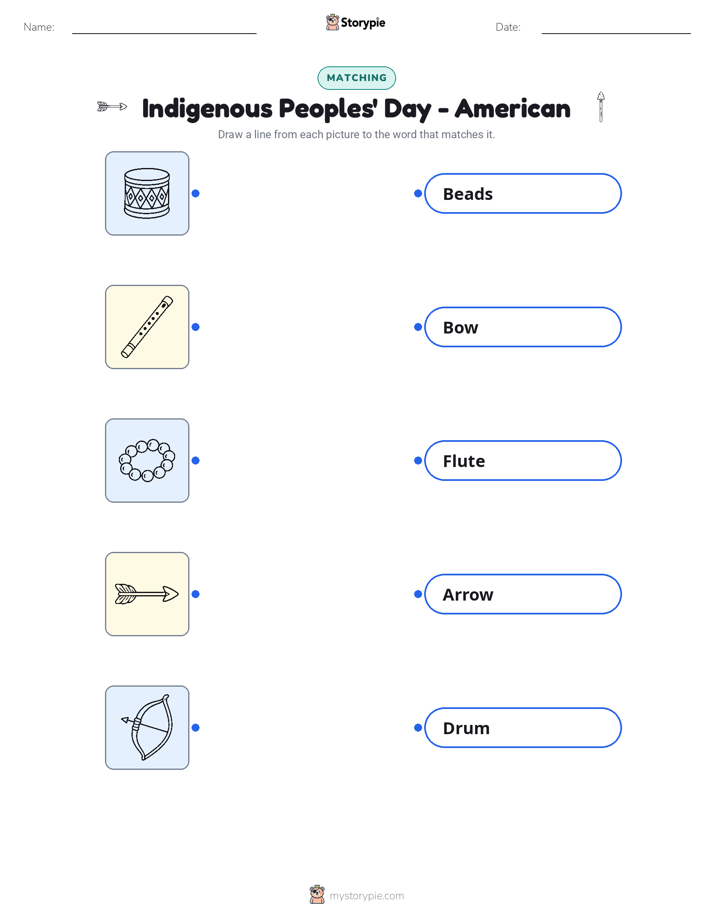
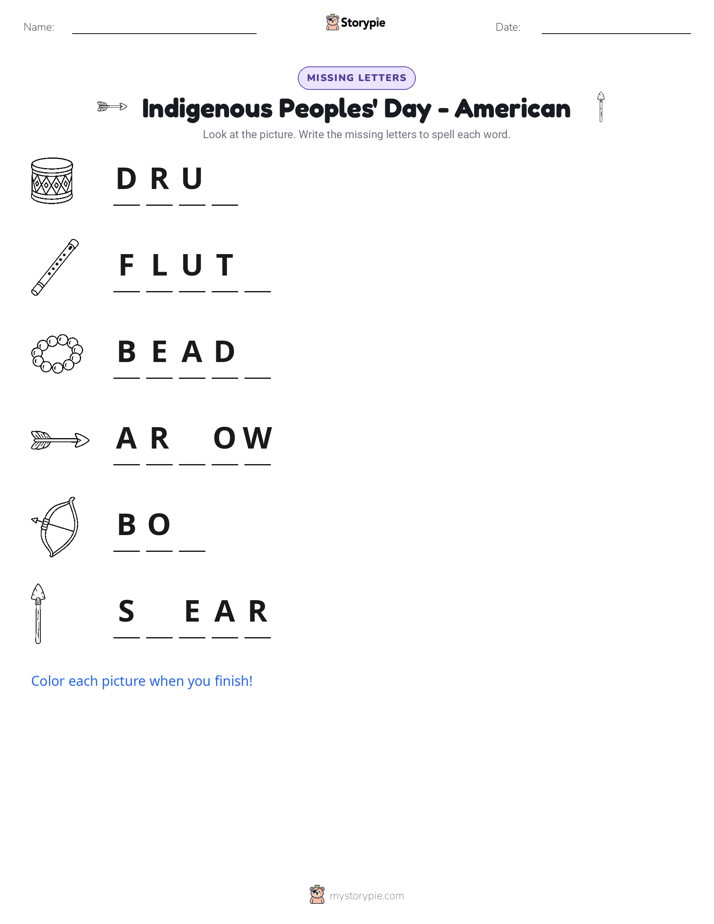
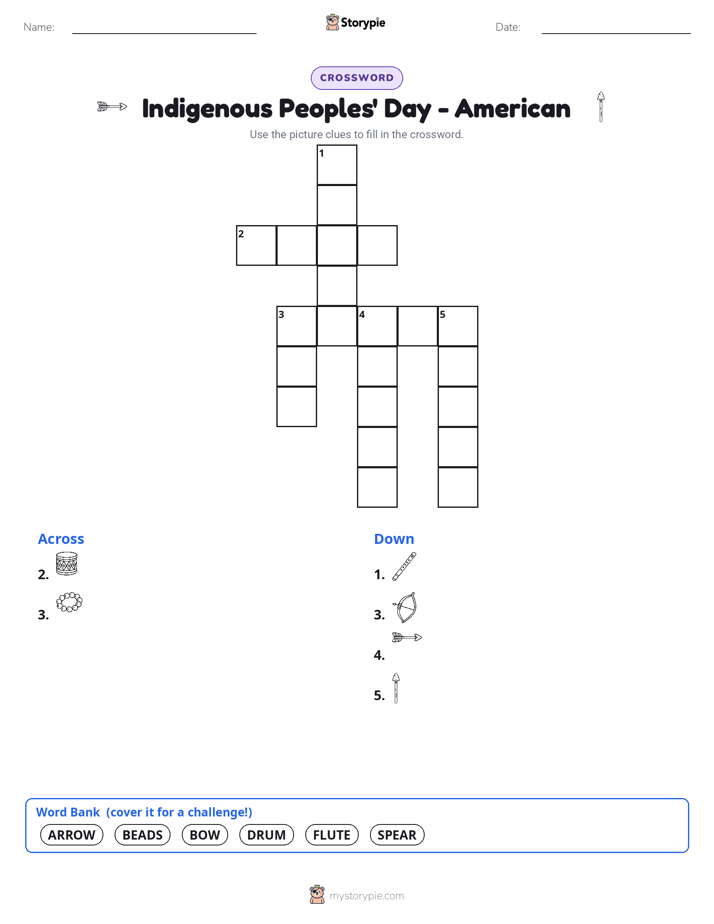
Print & create
Answer keys·No prep·Free with an account
28 worksheets · answer keys · full story · quiz · Ages 10-12 · CEFR B2
Plus adds 273,000+ more stories in 27 languages, audio for every one, and printables for all of them.
Just want Indigenous Peoples' Day - American?
I am Indigenous Peoples' Day. My purpose is to honor the histories, cultures, and resilience of the first peoples of this land. This includes the many diverse Native American nations, Alaska Native peoples, and Native Hawaiians whose stories are woven into the very fabric of the continent. While some people know me as a day for celebration, I am also a day for learning and reflection. People observe me on the second Monday of October, a date that for a long time was known in many places only as Columbus Day. My existence provides a different way to think about that day and about the history of the Americas.
My story doesn't begin with a single event, but with an idea that traveled across the globe. The concept for a day like me was first officially proposed in 1977. The setting was an important international conference on discrimination against Indigenous populations, sponsored by the United Nations in Geneva, Switzerland. At this gathering, Indigenous delegates from many different nations and continents came together. They shared their experiences and discussed ways to protect their rights and cultures. During these discussions, they suggested creating a day dedicated to honoring Indigenous peoples worldwide. This proposal was also a direct response to the way history was often taught. They wanted to challenge and counter the widespread celebration of figures like Christopher Columbus. The delegates sought to replace the narrative of 'discovery'—the idea that European explorers arrived in an empty or unknown land—with a more truthful account that acknowledged the millions of people who were already here, with their own established civilizations, governments, and cultures.
Indigenous Peoples' Day - American: A Day of Honor and Truth
I am Indigenous Peoples' Day. My purpose is to honor the histories, cultures, and resilience of the first peoples of this land. This includes the many diverse Native American nations, Alaska Native peoples, and Native Hawaiians whose stories are woven into the very fabric of the continent. While some people know me as a day for celebration, I am also a day for learning and reflection. People observe me on the second Monday of October, a date that for a long time was known in many places only as Columbus Day. My existence provides a different way to think about that day and about the history of the Americas.
My story doesn't begin with a single event, but with an idea that traveled across the globe. The concept for a day like me was first officially proposed in 1977. The setting was an important international conference on discrimination against Indigenous populations, sponsored by the United Nations in Geneva, Switzerland. At this gathering, Indigenous delegates from many different nations and continents came together. They shared their experiences and discussed ways to protect their rights and cultures. During these discussions, they suggested creating a day dedicated to honoring Indigenous peoples worldwide. This proposal was also a direct response to the way history was often taught. They wanted to challenge and counter the widespread celebration of figures like Christopher Columbus. The delegates sought to replace the narrative of 'discovery'—the idea that European explorers arrived in an empty or unknown land—with a more truthful account that acknowledged the millions of people who were already here, with their own established civilizations, governments, and cultures.
From that international stage, the idea took root and eventually grew into official observances in the United States. My first formal celebrations began in the early 1990s, starting with a significant step in South Dakota. In 1990, the state government decided to change how it marked the second Monday of October. Instead of Columbus Day, it became Native American Day, a day to honor the Lakota, Dakota, and Nakota peoples and other tribal nations with deep roots in that land. Two years later, in 1992, another major milestone occurred in Berkeley, California. The city council of Berkeley became the first in the country to formally adopt me by my name, Indigenous Peoples' Day. The timing of this decision was deeply intentional. The year 1992 marked the 500th anniversary of Christopher Columbus's first voyage to the Americas. By choosing this specific anniversary to establish a day honoring Indigenous people, the city of Berkeley made a powerful statement. It was a conscious act to shift the focus from the colonizer to the people who were colonized, and to begin a conversation about the full consequences of that arrival.
After those pioneering recognitions in South Dakota and California, my observance began to spread. What started in a few places grew into a nationwide movement. Throughout the 1990s and into the 2000s, activists, educators, and tribal leaders worked to persuade more communities to recognize me. One by one, other cities, towns, and eventually entire states followed Berkeley's lead. School districts also began to adopt me, changing their calendars and curricula to include more accurate histories of Indigenous peoples. This grassroots momentum built for decades, showing a growing desire to see a more complete version of American history acknowledged. Then, in 2021, I reached a new level of national significance. On October 8th of that year, the President of the United States, Joe Biden, issued the first-ever presidential proclamation of Indigenous Peoples' Day. This historic act gave me formal, federal recognition and signaled a major shift in the national conversation about history, memory, and justice.
Today, people observe me in many different ways, and these observances are as diverse as the Indigenous cultures they honor. There is no single correct way to mark the day. In some communities, people hold vibrant powwows, which are social gatherings filled with traditional singing, drumming, and dancing in brilliant regalia. These events are powerful celebrations of culture and community survival. Elsewhere, schools, libraries, and museums host educational events. They might feature guest speakers from local tribal nations, film screenings, or exhibits on Indigenous art and history. For others, the day is a time for activism and advocacy. People may participate in public rallies or marches to raise awareness about the critical issues that Indigenous communities face today. These issues include the protection of treaty rights, the fight for environmental justice, and the ongoing work of tribal sovereignty, which is the right of Indigenous nations to govern themselves. For many, I am both a day of celebration and a day of serious education.
Ultimately, my deeper meaning extends far beyond a single Monday in October. I am not just a holiday; I am part of a larger, ongoing movement to tell a more complete and accurate history of the Americas. My purpose is to encourage everyone to look beyond the simplified stories often told in textbooks and to learn about the complexities of the past. I invite people to ask questions, such as which specific tribal nations have ancestral ties to the land where they now live. Recognizing that Indigenous history is American history—not a separate story, but a central part of it—is essential to understanding the country today. By observing me, people help create a more just and truthful future. They participate in an effort to ensure that the stories, the immense contributions, and the enduring presence of Indigenous peoples are seen, respected, and honored not just on one day, but all year long.
Wow facts
About
A holiday observed in various states and cities across the United States on the second Monday of October to honor the history, cultures, and contributions of Native American, Alaska Native, and Native Hawaiian peoples.
Take a Quiz
Question 1 of 5
In your own words, retell the main events that led to the national recognition of Indigenous Peoples' Day.
Want to do even more?
Go beyond exploring. Unlock tools that turn every story into real learning.

Storypie Plus for families
Full stories, quizzes, and printables. Nights and car rides, sorted.
- Unlimited audio stories
- Create Mode: your child stars in the story
- Offline downloads
- Printable worksheets & coloring pages

Why Storypie for Schools
Students engaged. Prep in seconds. Evenings back to you.
- Worksheets & Quizzes
- Classroom Management
- Formative Assessment
- Custom Curriculum & Lesson Plans
- 27 Languages

Why Storypie for Homeschool
Curriculum done. They'll ask for more. Hours back in your day.
- Worksheet Generator
- First-Person Audio Stories
- Built-in Comprehension Quizzes
- Custom Curriculum & Lesson Plans
- Print & Go Activities