English

Indigenous Peoples' Day - American
A holiday observed in various states and cities across the United States on the second Monday of October to…
Reads at Grades 3–5 Listens at Grades 1–5
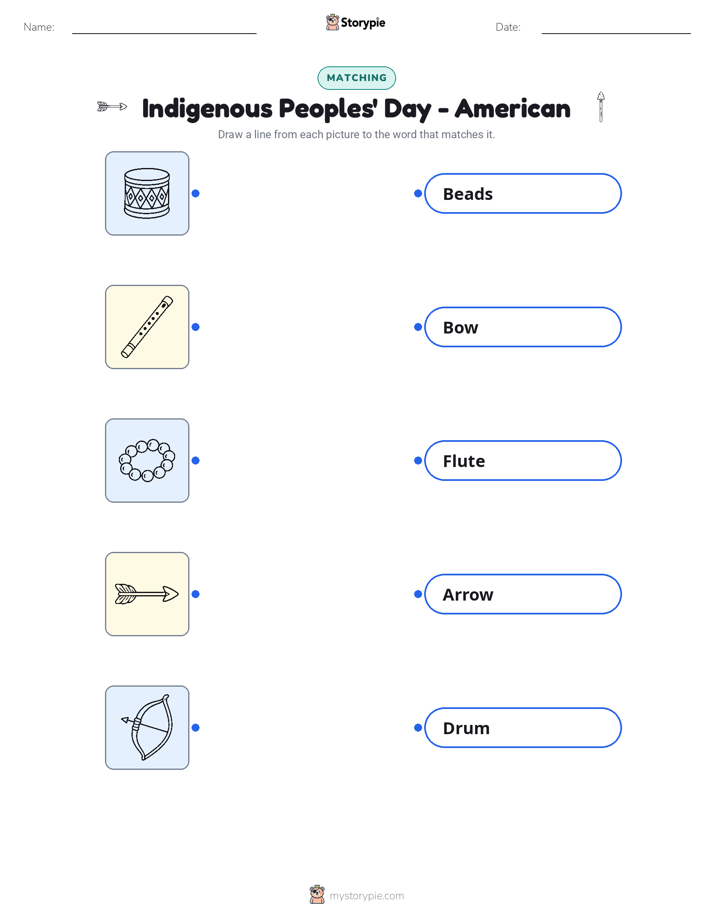
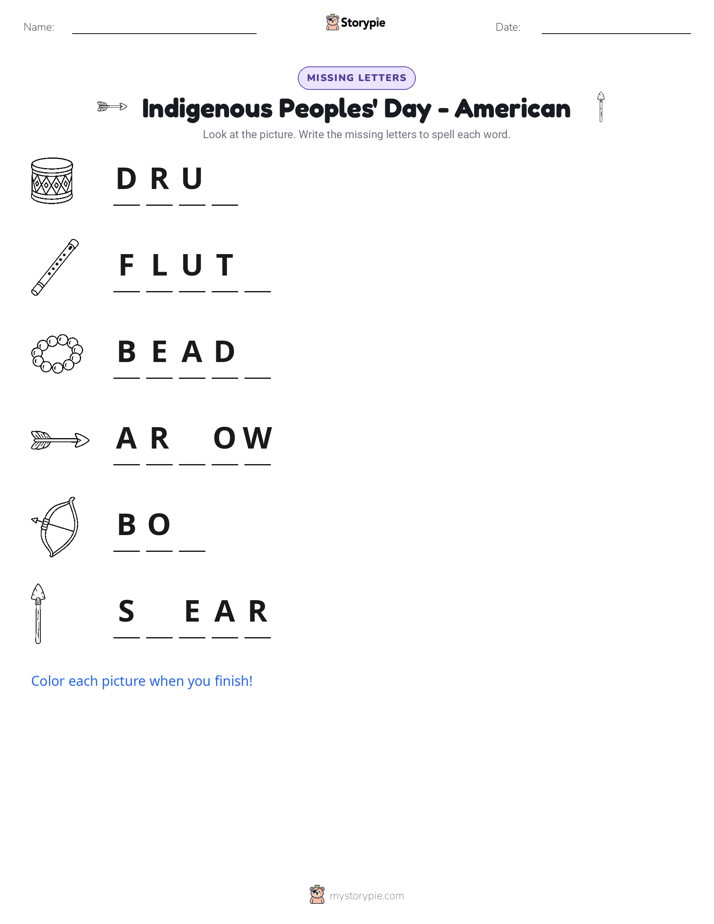
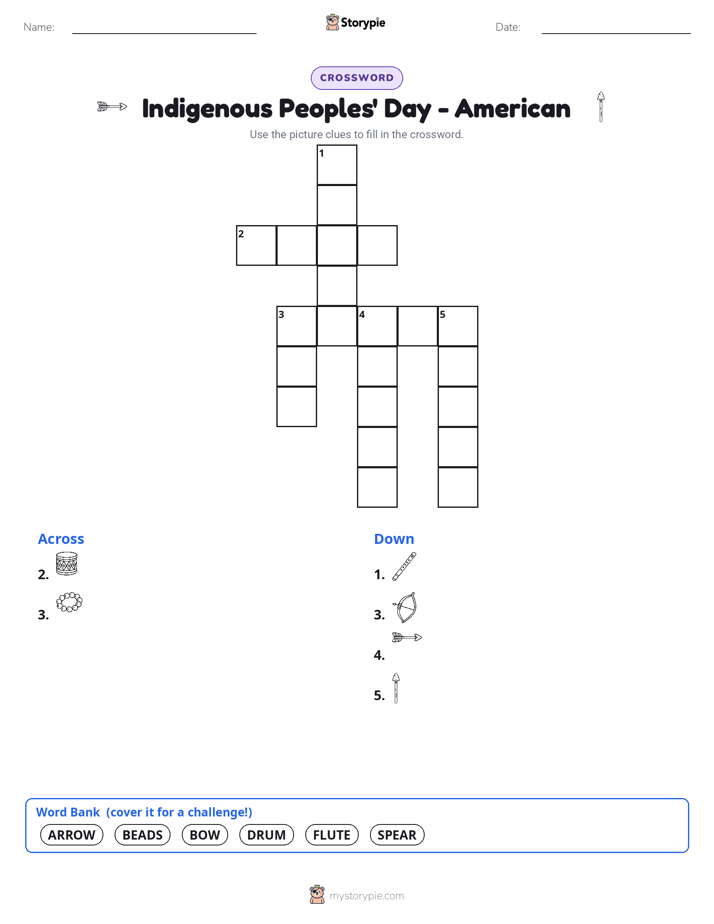
Print & create
Answer keys·No prep·Free with an account
28 worksheets · answer keys · full story · quiz · Ages 8-10 · CEFR B1
Plus adds 279,000+ more stories in 27 languages, audio for every one, and printables for all of them.
Just want Indigenous Peoples' Day - American?
Hello. I am Indigenous Peoples' Day. My purpose is to be a special time set aside to honor and learn about the first inhabitants of the land that is now the United States. This includes many diverse groups of people, such as American Indians, Alaska Natives, and Native Hawaiians. I exist to celebrate their rich and varied cultures, their long histories, and their resilience, which is their strength in continuing their traditions through many challenges. On the day people observe me, it is a chance for everyone to recognize the important contributions that Indigenous peoples have made and continue to make. My goal is to make sure their stories, past and present, are shared and respected.
My story begins not as a holiday, but as an idea. This idea was first suggested by Indigenous leaders who gathered at a special meeting called a United Nations conference way back in 1977. They proposed that a day should be created to honor the original peoples of the Americas. It took some time for this idea to grow. In 1990, the state of South Dakota took a big step. It became the first state to officially replace Columbus Day with a holiday it called Native American Day. A couple of years later, in 1992, something new happened in the city of Berkeley, California. The city decided to create a day to honor Indigenous peoples, and it was the very first to call it by my name: Indigenous Peoples' Day. The people of Berkeley made a clear choice to celebrate the people who were here first, instead of the explorer Christopher Columbus.
I Am Indigenous Peoples' Day
Hello. I am Indigenous Peoples' Day. My purpose is to be a special time set aside to honor and learn about the first inhabitants of the land that is now the United States. This includes many diverse groups of people, such as American Indians, Alaska Natives, and Native Hawaiians. I exist to celebrate their rich and varied cultures, their long histories, and their resilience, which is their strength in continuing their traditions through many challenges. On the day people observe me, it is a chance for everyone to recognize the important contributions that Indigenous peoples have made and continue to make. My goal is to make sure their stories, past and present, are shared and respected.
My story begins not as a holiday, but as an idea. This idea was first suggested by Indigenous leaders who gathered at a special meeting called a United Nations conference way back in 1977. They proposed that a day should be created to honor the original peoples of the Americas. It took some time for this idea to grow. In 1990, the state of South Dakota took a big step. It became the first state to officially replace Columbus Day with a holiday it called Native American Day. A couple of years later, in 1992, something new happened in the city of Berkeley, California. The city decided to create a day to honor Indigenous peoples, and it was the very first to call it by my name: Indigenous Peoples' Day. The people of Berkeley made a clear choice to celebrate the people who were here first, instead of the explorer Christopher Columbus.
My place on the calendar is very specific and meaningful. People in the United States observe me on the second Monday of every October. This date was not chosen by accident. It is the same day that the United States government recognizes as a federal holiday called Columbus Day. I was intentionally placed on this day to offer a different perspective. For many years, the story told on this date focused on the arrival of European explorers in the Americas. My creation provides an opportunity to shift that focus. It encourages people to think about and learn from the histories and cultures of the Indigenous peoples who had been living on these lands for thousands of years before any ships arrived from Europe. My date is a reminder to hear all parts of history, especially the stories of the land’s first peoples.
Since those early days, my observance has grown quite a lot. What began in one city has spread across the country. After my first official celebration in Berkeley, hundreds of other cities have decided to recognize me. More than a dozen states have also passed laws to officially observe me, choosing to honor Native communities. This growth shows that more and more people want to acknowledge and celebrate Indigenous history. A very important moment in my history came in 2021. For the first time, the President of the United States made a proclamation that officially recognized Indigenous Peoples' Day across the entire nation. This was a major step, showing that the idea first proposed in 1977 had become a nationally acknowledged day of honor and reflection.
Because the cultures of Indigenous peoples are so diverse, there is no single, correct way for people to observe me. Different communities celebrate in ways that are meaningful to them. Many hold gatherings called powwows, which are wonderful events filled with traditional drumming, singing, and dancing where people wear beautiful regalia. But there are many other ways to mark the day. Some people take the time to learn about the history of the specific tribes who originally lived in their own local area. Others might visit museums to see incredible Native art, historical artifacts, and modern creations. Another way people participate is by supporting businesses owned by Indigenous people. Many communities also host educational events, where speakers share knowledge, stories, and presentations about their culture and history. My observance is a day of celebration, education, and respect, open to all who wish to learn and honor the Indigenous peoples of the United States.
Wow facts
About
A holiday observed in various states and cities across the United States on the second Monday of October to honor the history, cultures, and contributions of Native American, Alaska Native, and Native Hawaiian peoples.
Take a Quiz
Question 1 of 5
Why was Indigenous Peoples' Day created to be on the same day as the federal holiday, Columbus Day?
Want to do even more?
Go beyond exploring. Unlock tools that turn every story into real learning.

Storypie Plus for families
Full stories, quizzes, and printables. Nights and car rides, sorted.
- Unlimited audio stories
- Create Mode: your child stars in the story
- Offline downloads
- Printable worksheets & coloring pages

Why Storypie for Schools
Students engaged. Prep in seconds. Evenings back to you.
- Worksheets & Quizzes
- Classroom Management
- Formative Assessment
- Custom Curriculum & Lesson Plans
- 27 Languages

Why Storypie for Homeschool
Curriculum done. They'll ask for more. Hours back in your day.
- Worksheet Generator
- First-Person Audio Stories
- Built-in Comprehension Quizzes
- Custom Curriculum & Lesson Plans
- Print & Go Activities