English

King's Day - Dutch
A national holiday in the Kingdom of the Netherlands celebrated on April 27th to mark the birth of King…
Reads at Grades 6–8 Listens at Grades 4–8
Print & create
Answer keys·No prep·Free with an account
28 worksheets · answer keys · full story · quiz · Ages 10-12 · CEFR B2
Plus adds 279,000+ more stories in 27 languages, audio for every one, and printables for all of them.
Just want King's Day - Dutch?
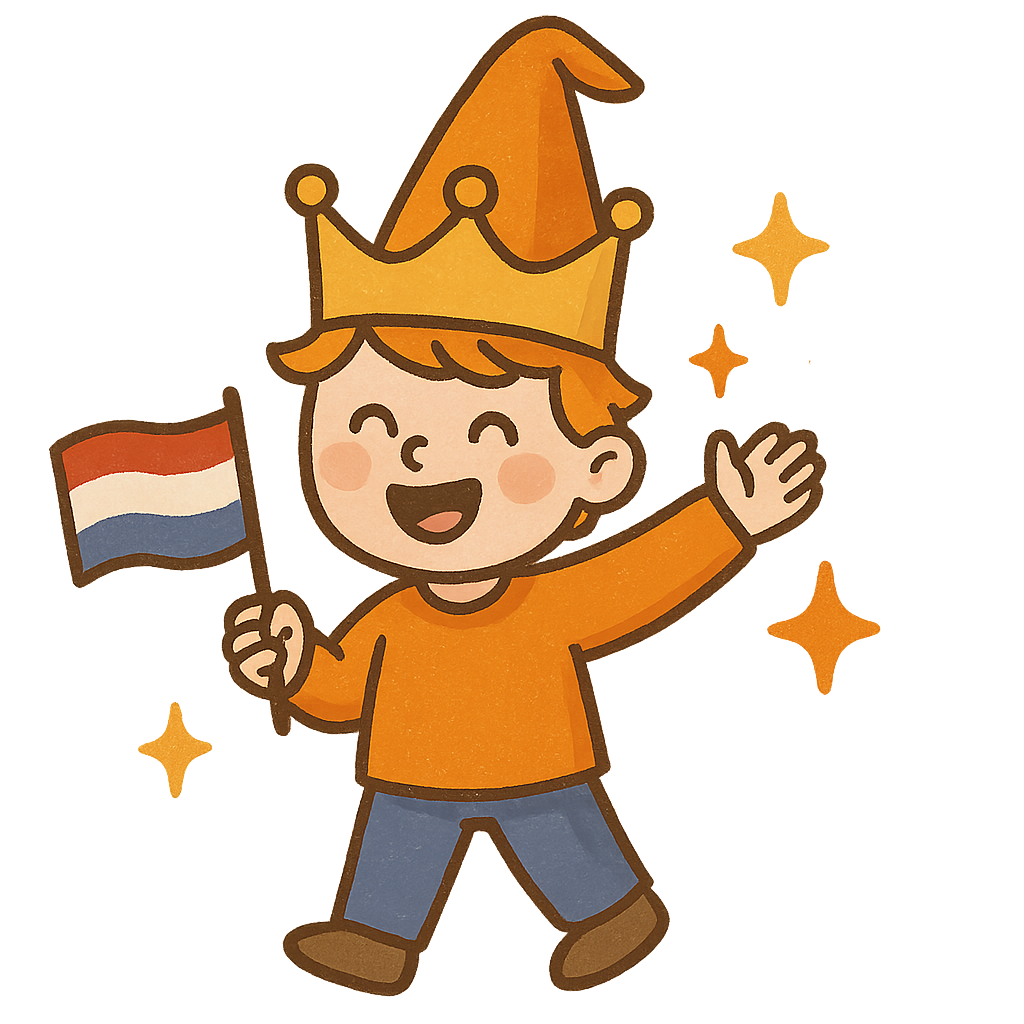
I am King's Day, or Koningsdag, as I am known throughout the Netherlands. I am a national holiday, a day set aside for the entire country to join together in a vibrant celebration honoring the birthday of the reigning Dutch monarch. Currently, that monarch is King Willem-Alexander, and my annual observance on April 27th marks his special day. From the bustling canals of Amsterdam to the quiet streets of small towns, my arrival transforms the nation into one enormous, cheerful party, uniting people in a shared expression of national pride and festivity.
My story, however, did not begin with a king. It started with a young princess. My earliest form was established on August 31st, 1885, to celebrate the fifth birthday of Princess Wilhelmina. At that time, I was called Prinsessedag, which means Princess's Day. The political climate of the late 19th century in the Netherlands was one of division, and the government sought ways to bring the people together. My creation was intended to be more than just a royal birthday party; it was a deliberate effort to foster a stronger sense of national unity and shared identity among the Dutch people, centered around the popular figure of the young princess who would one day be their queen.
Over more than a century, my identity has evolved right alongside the monarchy. My name and my date have changed several times to reflect the succession of rulers. When Princess Wilhelmina ascended to the throne, my name was changed from Prinsessedag to Koninginnedag, or Queen's Day, to honor her new status. After her long reign, her daughter Juliana became queen. My date was then moved to April 30th to coincide with Queen Juliana's birthday. She was a deeply loved monarch, and the April 30th date became a cherished tradition for decades. When her daughter, Queen Beatrix, took the throne, she made a decision that showed great respect for her mother and for the established tradition. Instead of moving my date to her own birthday in January, a month with colder weather, she chose to keep the celebration on April 30th. This continued until her abdication in 2013. In 2014, her son, Willem-Alexander, became the first Dutch king in over a century. With his coronation, my identity shifted once more. I became Koningsdag, King's Day, and my date officially moved to his birthday, April 27th, where it remains today.
King's Day - Dutch
I am King's Day, or Koningsdag, as I am known throughout the Netherlands. I am a national holiday, a day set aside for the entire country to join together in a vibrant celebration honoring the birthday of the reigning Dutch monarch. Currently, that monarch is King Willem-Alexander, and my annual observance on April 27th marks his special day. From the bustling canals of Amsterdam to the quiet streets of small towns, my arrival transforms the nation into one enormous, cheerful party, uniting people in a shared expression of national pride and festivity.
My story, however, did not begin with a king. It started with a young princess. My earliest form was established on August 31st, 1885, to celebrate the fifth birthday of Princess Wilhelmina. At that time, I was called Prinsessedag, which means Princess's Day. The political climate of the late 19th century in the Netherlands was one of division, and the government sought ways to bring the people together. My creation was intended to be more than just a royal birthday party; it was a deliberate effort to foster a stronger sense of national unity and shared identity among the Dutch people, centered around the popular figure of the young princess who would one day be their queen.
Over more than a century, my identity has evolved right alongside the monarchy. My name and my date have changed several times to reflect the succession of rulers. When Princess Wilhelmina ascended to the throne, my name was changed from Prinsessedag to Koninginnedag, or Queen's Day, to honor her new status. After her long reign, her daughter Juliana became queen. My date was then moved to April 30th to coincide with Queen Juliana's birthday. She was a deeply loved monarch, and the April 30th date became a cherished tradition for decades. When her daughter, Queen Beatrix, took the throne, she made a decision that showed great respect for her mother and for the established tradition. Instead of moving my date to her own birthday in January, a month with colder weather, she chose to keep the celebration on April 30th. This continued until her abdication in 2013. In 2014, her son, Willem-Alexander, became the first Dutch king in over a century. With his coronation, my identity shifted once more. I became Koningsdag, King's Day, and my date officially moved to his birthday, April 27th, where it remains today.
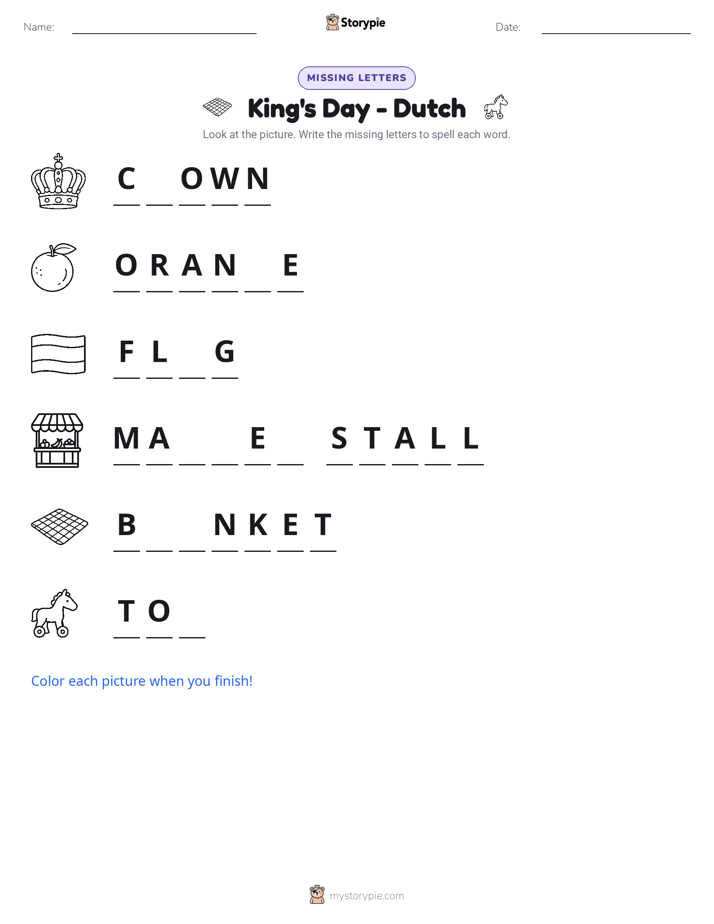
One of my most recognizable features is a brilliant and overwhelming splash of color: orange. On the day I am observed, the Netherlands is draped in this single, vibrant hue. The tradition is a direct tribute to the Dutch royal family, whose official name is the House of Orange-Nassau. The connection is so strong that orange has become the national color. People embrace this custom with incredible enthusiasm. They dress head-to-toe in orange clothing—from hats and scarves to shirts and trousers. Some even dye their hair orange for the occasion. Food stalls sell orange-colored treats, and drinks are tinted to match. This widespread phenomenon is affectionately known as oranjegekte, which translates to 'orange madness'. It is a powerful visual symbol of national pride and the festive spirit that defines me.
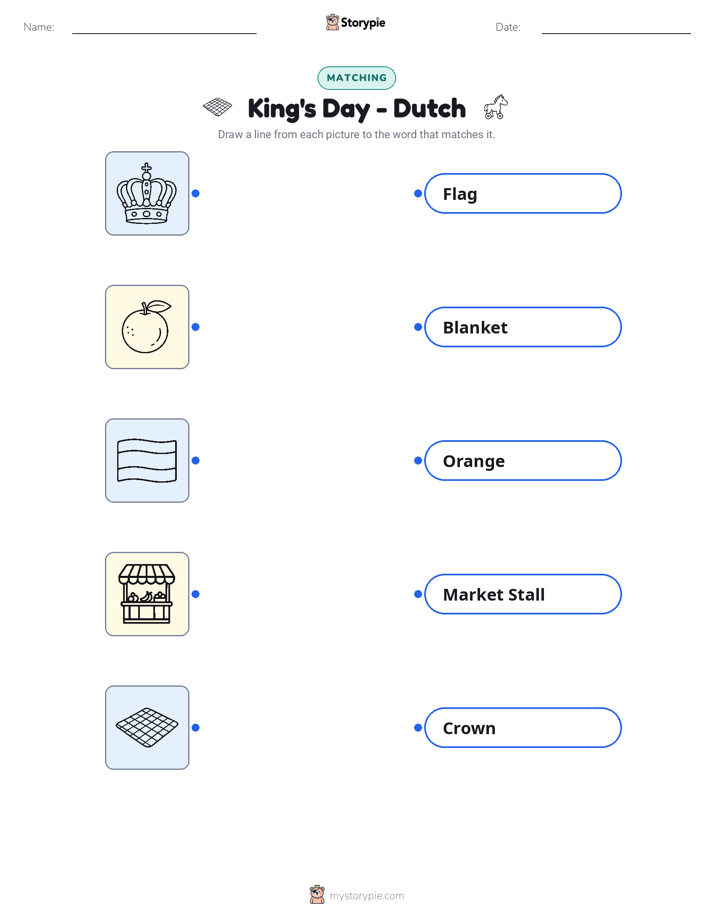
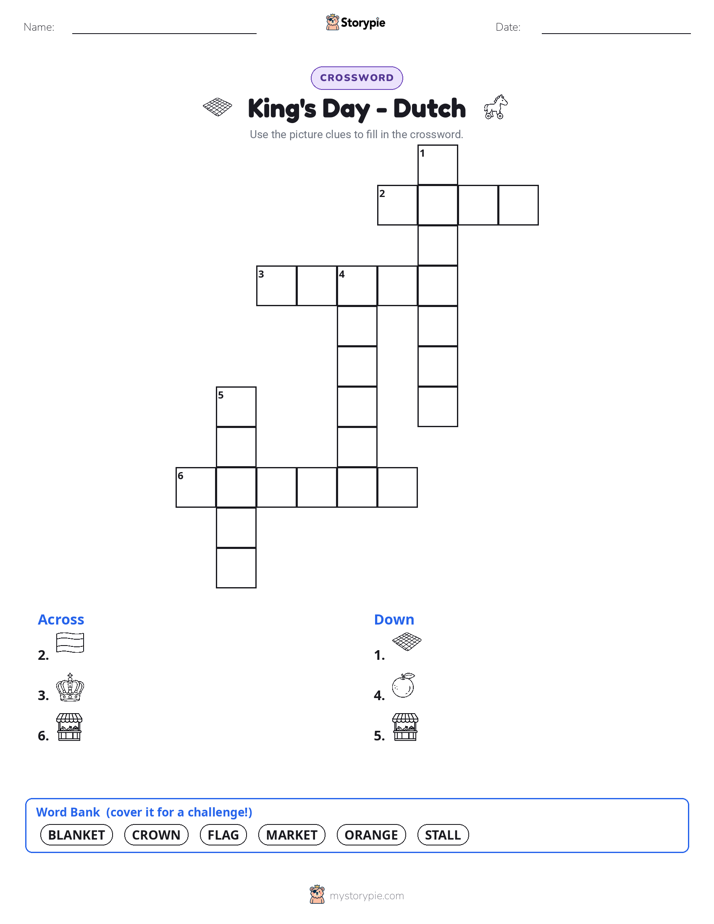
Beyond the sea of orange, another of my most cherished and unique traditions is the vrijmarkt, or 'free market.' For this one day of the year, the government lifts its usual regulations on street sales. This means that anyone, of any age, can set up a stall or simply lay out a blanket on the pavement to sell goods without needing a permit and without having to pay taxes on their earnings. The result is a massive, country-wide flea market. City parks, sidewalks, and town squares are filled with people selling secondhand items, from furniture and clothes to books and records. Children particularly enjoy this tradition. It becomes a wonderful opportunity for them to learn about commerce in a fun, practical way as they set up their own small spaces to sell old toys, outgrown clothes, and handmade crafts they have prepared just for the occasion. The vrijmarkt creates a lively, bustling atmosphere of community and treasure-hunting.
My modern celebrations are energetic and widespread. In major cities like Amsterdam, The Hague, and Utrecht, the parties can be immense, drawing huge crowds. The famous canals of Amsterdam become packed with boats of all sizes, each one decorated and filled with people celebrating on the water. Music is everywhere, with large-scale festivals and concerts taking over public squares and parks, featuring famous DJs and live bands that play late into the night. Of course, no celebration is complete without special food. One of the most popular treats is the tompouce, a rectangular, cream-filled pastry that is topped with a layer of bright orange icing specifically for my observance. Even the royal family actively participates in the public festivities. Each year, King Willem-Alexander and his family visit one or two different municipalities, joining the local celebrations and greeting the public, reinforcing the personal connection between the monarchy and the people.
While my heart is in the Netherlands, my spirit is celebrated by Dutch people all around the globe. Dutch embassies in foreign countries often host receptions or parties to mark the occasion. Communities of Dutch expatriates, people who live and work abroad, also find ways to come together and celebrate. They might organize picnics in a park, host social gatherings, or hold their own smaller versions of the vrijmarkt. These global festivities are an important way for Dutch citizens living far from home to maintain a connection to their cultural heritage and share their national pride with friends from other countries. From Europe to the Americas, Asia, and beyond, the 'orange madness' ensures that I am a day of Dutch celebration no matter where in the world one might be.
Wow facts
About
A national holiday in the Kingdom of the Netherlands celebrated on April 27th to mark the birth of King Willem-Alexander. It's known for its nationwide flea markets and orange-themed festivities.
Take a Quiz
Question 1 of 5
Based on the story, why have the name and date of this holiday changed multiple times?
Want to do even more?
Go beyond exploring. Unlock tools that turn every story into real learning.

Storypie Plus for families
Full stories, quizzes, and printables. Nights and car rides, sorted.
- Unlimited audio stories
- Create Mode: your child stars in the story
- Offline downloads
- Printable worksheets & coloring pages

Why Storypie for Schools
Students engaged. Prep in seconds. Evenings back to you.
- Worksheets & Quizzes
- Classroom Management
- Formative Assessment
- Custom Curriculum & Lesson Plans
- 27 Languages

Why Storypie for Homeschool
Curriculum done. They'll ask for more. Hours back in your day.
- Worksheet Generator
- First-Person Audio Stories
- Built-in Comprehension Quizzes
- Custom Curriculum & Lesson Plans
- Print & Go Activities