English

Kwanzaa - American
Kwanzaa is a seven-day cultural holiday celebrated from December 26 to January 1…
Reads at Grades K-2 Listens at K–3
Print & create
Answer keys·No prep·Free with an account
28 worksheets · answer keys · full story · quiz · Ages 6-8 · CEFR A2
Plus adds 279,000+ more stories in 27 languages, audio for every one, and printables for all of them.
Just want Kwanzaa - American?
Hello! I am the holiday Kwanzaa. People in the United States first began observing me in 1966. A man named Dr. Maulana Karenga created me. He was a professor who believed it was important for African Americans to have a special time to honor their heritage and culture. He wanted to create a celebration that would bring people together. My name, Kwanzaa, comes from a phrase in Swahili, a language spoken in parts of Africa. The phrase means 'first fruits,' which connects to harvest celebrations that have happened in Africa for a very long time. My creation was a way to bring those ancient traditions into a new, modern celebration for people in America.
I am a seven-day holiday, and my observance is built around seven special ideas. These are called the Nguzo Saba, which means 'the seven principles' in Swahili. Each day of my celebration is focused on one of these important principles. Some of them are Umoja, which means Unity, and Kujichagulia, which means Self-Determination, or making your own choices. Another principle is Imani, which stands for Faith. These ideas are meant to be more than just words spoken for one week. They are guides that can help people strengthen their families and their communities all year long.
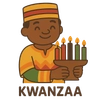
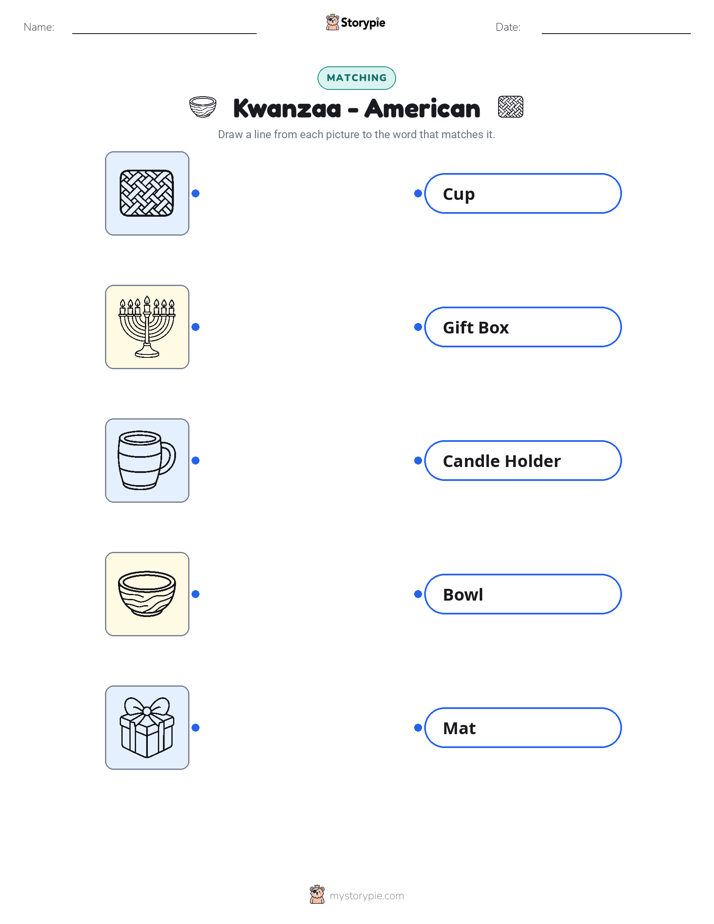
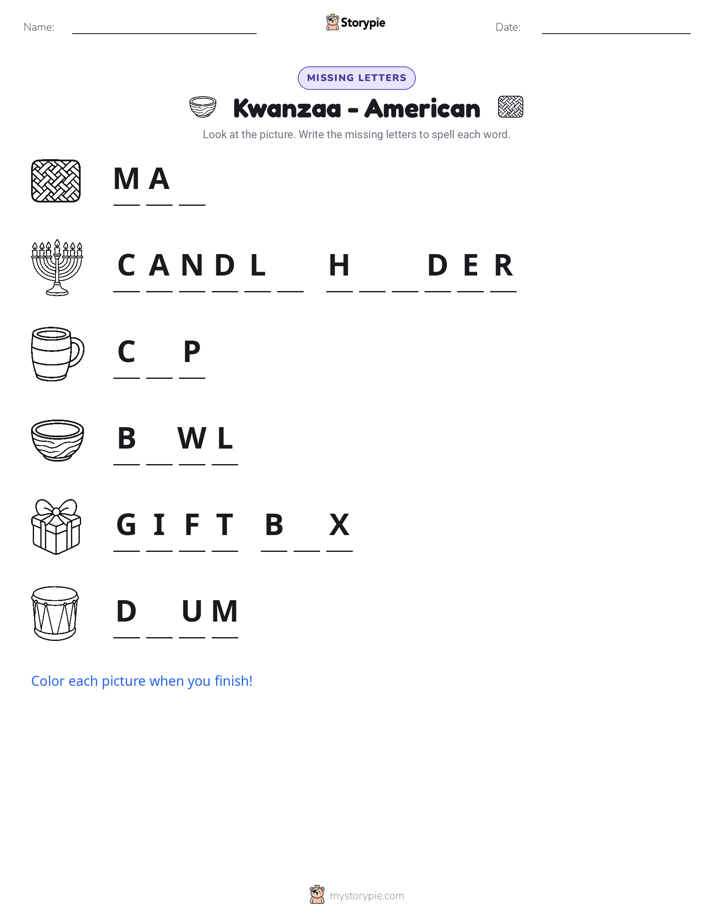
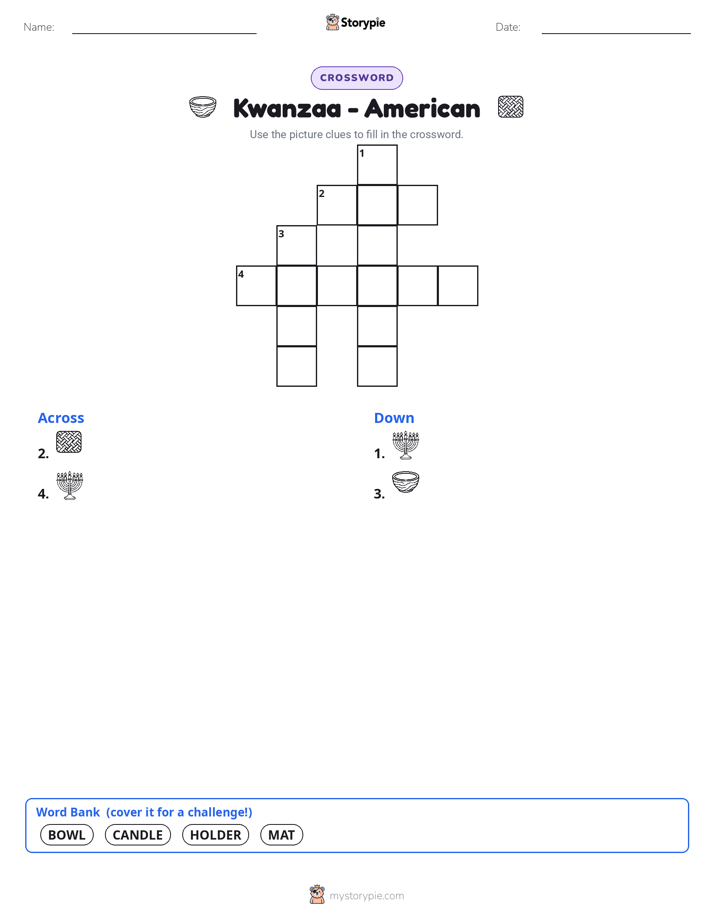
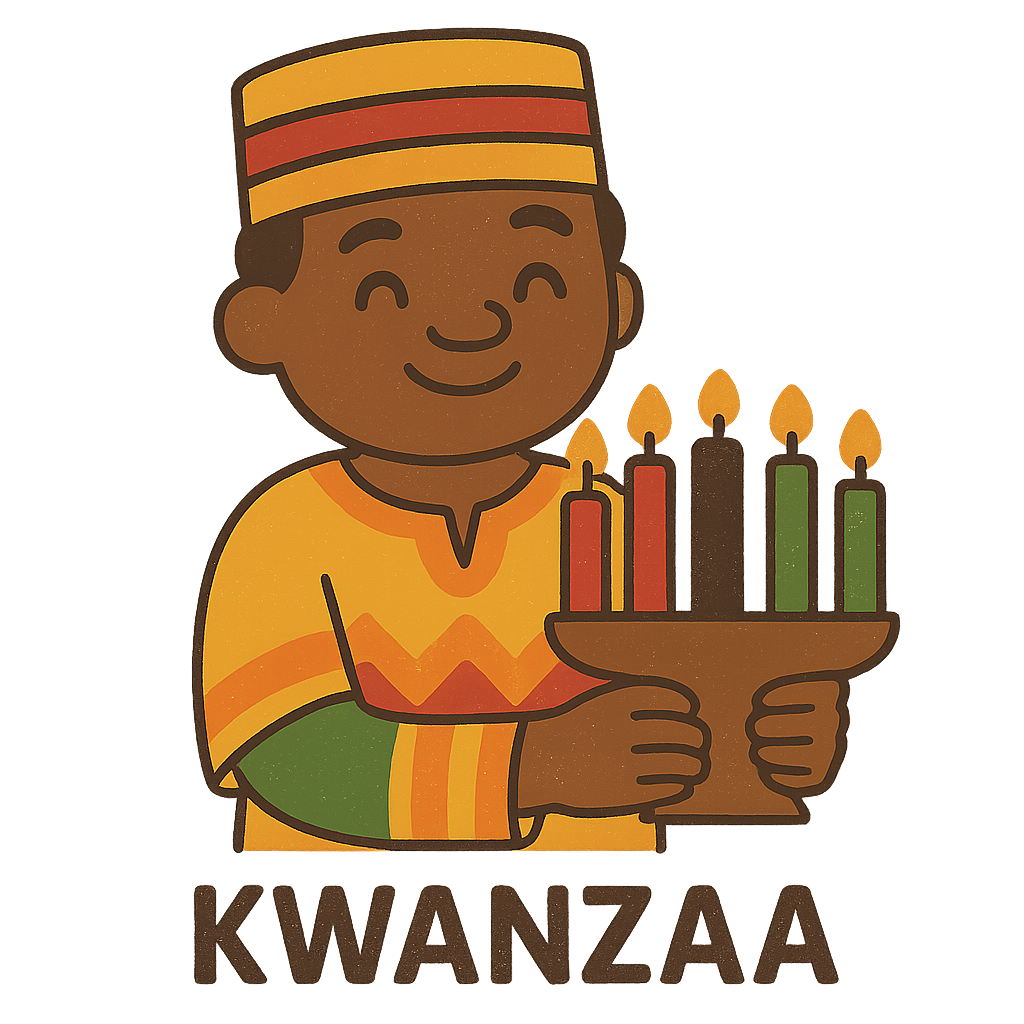
When people observe me, they use several important symbols that each have a special meaning. A central symbol is a candle holder called the Kinara. It holds seven candles. In the center is one black candle, with three red candles on one side and three green candles on the other. These colors are also very meaningful. Another symbol is a mat called the Mkeka, which is often placed on a table where the other symbols are arranged. People also display Mazao, which are crops like fruits and vegetables, to represent the harvest. For each child in the family, an ear of corn, called Vibunzi, is placed on the mat as a symbol of the family's hopes for them.
I Am Kwanzaa
Hello! I am the holiday Kwanzaa. People in the United States first began observing me in 1966. A man named Dr. Maulana Karenga created me. He was a professor who believed it was important for African Americans to have a special time to honor their heritage and culture. He wanted to create a celebration that would bring people together. My name, Kwanzaa, comes from a phrase in Swahili, a language spoken in parts of Africa. The phrase means 'first fruits,' which connects to harvest celebrations that have happened in Africa for a very long time. My creation was a way to bring those ancient traditions into a new, modern celebration for people in America.
I am a seven-day holiday, and my observance is built around seven special ideas. These are called the Nguzo Saba, which means 'the seven principles' in Swahili. Each day of my celebration is focused on one of these important principles. Some of them are Umoja, which means Unity, and Kujichagulia, which means Self-Determination, or making your own choices. Another principle is Imani, which stands for Faith. These ideas are meant to be more than just words spoken for one week. They are guides that can help people strengthen their families and their communities all year long.
When people observe me, they use several important symbols that each have a special meaning. A central symbol is a candle holder called the Kinara. It holds seven candles. In the center is one black candle, with three red candles on one side and three green candles on the other. These colors are also very meaningful. Another symbol is a mat called the Mkeka, which is often placed on a table where the other symbols are arranged. People also display Mazao, which are crops like fruits and vegetables, to represent the harvest. For each child in the family, an ear of corn, called Vibunzi, is placed on the mat as a symbol of the family's hopes for them.
My celebration begins each year on December 26th and lasts until January 1st. For seven evenings in a row, families often gather together. Each night, they light a new candle on the Kinara and take time to talk about the principle for that day. This is a time for sharing and connecting. People might tell stories that have been passed down through generations, or they might listen to music and dance together. Sharing delicious food is also a big part of the celebration. It is a time for people to remember their ancestors and the past, but also to look forward with hope to the future.
As my week of celebration continues, two special events take place. On the sixth day, many families and communities come together for a large feast called a Karamu. It is a joyful party with lots of food, music, and performances. Then, on my seventh and final day, January 1st, people exchange gifts. These gifts are called Zawadi. Unlike some other holidays, the focus is not on expensive store-bought items. Instead, the gifts are often handmade or educational. They are chosen to encourage creativity, learning, and growth, which reflects my guiding principles.
Wow facts
About
Kwanzaa is a seven-day cultural holiday celebrated from December 26 to January 1, primarily by African Americans, to honor their heritage, community, and culture.
Take a Quiz
Question 1 of 4
Why did Dr. Maulana Karenga create Kwanzaa?
Want to do even more?
Go beyond exploring. Unlock tools that turn every story into real learning.

Storypie Plus for families
Full stories, quizzes, and printables. Nights and car rides, sorted.
- Unlimited audio stories
- Create Mode: your child stars in the story
- Offline downloads
- Printable worksheets & coloring pages

Why Storypie for Schools
Students engaged. Prep in seconds. Evenings back to you.
- Worksheets & Quizzes
- Classroom Management
- Formative Assessment
- Custom Curriculum & Lesson Plans
- 27 Languages

Why Storypie for Homeschool
Curriculum done. They'll ask for more. Hours back in your day.
- Worksheet Generator
- First-Person Audio Stories
- Built-in Comprehension Quizzes
- Custom Curriculum & Lesson Plans
- Print & Go Activities