English


La Chandeleur - French
La Chandeleur is a French holiday celebrated on February 2nd…
Reads at Grades 6–8 Listens at Grades 4–8
Print & create
Answer keys·No prep·Free with an account
28 worksheets · answer keys · full story · quiz · Ages 10-12 · CEFR B2
Plus adds 279,000+ more stories in 27 languages, audio for every one, and printables for all of them.
Just want La Chandeleur - French?
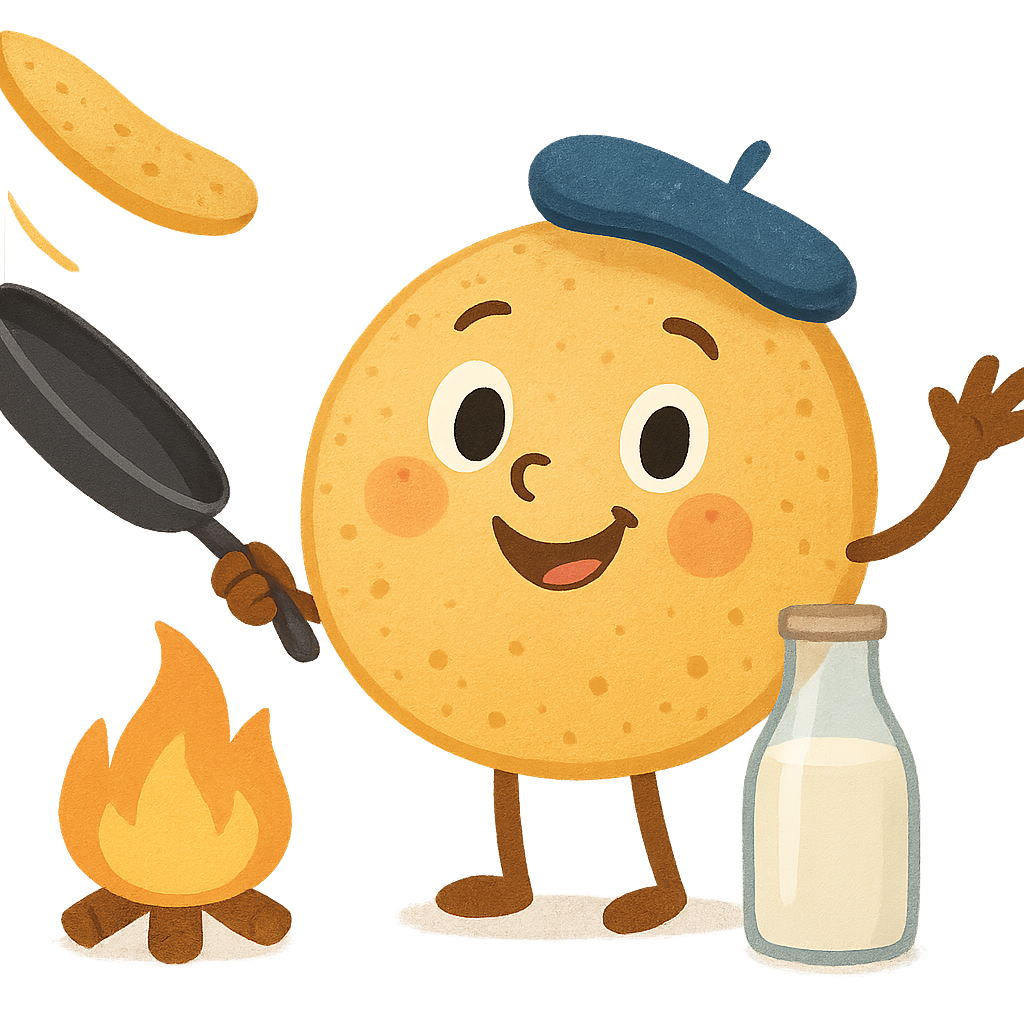
I am La Chandeleur, a French festival known for light and for the delicious, thin pancakes called crêpes. People in France, and in French-speaking communities across the world, observe me each year on a fixed date: February 2nd. My arrival marks a specific moment in the calendar, coming exactly 40 days after Christmas Day. This timing is significant, connecting me to the long cycle of winter observances. While many people today know me simply as 'Crêpe Day,' my identity is woven from threads of ancient history, religious meaning, and folk traditions that celebrate the slow return of light to the world after the darkest days of winter. My story is one of candles and coins, of faith and harvests, all centered around a simple, golden circle that looks very much like the sun.
My documented history as a formal Christian holiday began long ago, in the 5th century. It was then that Pope Gelasius I established me as an official feast day within the church. The purpose of my observance was to commemorate a specific event described in Christian scripture: the day that the infant Jesus was presented by his parents, Mary and Joseph, at the Temple in Jerusalem. This event holds deep significance in Christian belief. My very name, La Chandeleur, points to this religious origin. It is a French evolution of the Latin phrase 'festa candelarum,' which translates to the 'festival of candles.' This name wasn't chosen by accident. In my earliest Christian observances, a key feature was the holding of candlelight processions. Participants would light candles and carry them through the streets or in churches. This act was symbolic, meant to honor the Christian belief that Jesus was the 'light of the world,' a figure who brought spiritual light into a world of darkness. The physical light of the candles was a powerful representation of this core idea.
La Chandeleur: A Story of Light and Crêpes
I am La Chandeleur, a French festival known for light and for the delicious, thin pancakes called crêpes. People in France, and in French-speaking communities across the world, observe me each year on a fixed date: February 2nd. My arrival marks a specific moment in the calendar, coming exactly 40 days after Christmas Day. This timing is significant, connecting me to the long cycle of winter observances. While many people today know me simply as 'Crêpe Day,' my identity is woven from threads of ancient history, religious meaning, and folk traditions that celebrate the slow return of light to the world after the darkest days of winter. My story is one of candles and coins, of faith and harvests, all centered around a simple, golden circle that looks very much like the sun.
My documented history as a formal Christian holiday began long ago, in the 5th century. It was then that Pope Gelasius I established me as an official feast day within the church. The purpose of my observance was to commemorate a specific event described in Christian scripture: the day that the infant Jesus was presented by his parents, Mary and Joseph, at the Temple in Jerusalem. This event holds deep significance in Christian belief. My very name, La Chandeleur, points to this religious origin. It is a French evolution of the Latin phrase 'festa candelarum,' which translates to the 'festival of candles.' This name wasn't chosen by accident. In my earliest Christian observances, a key feature was the holding of candlelight processions. Participants would light candles and carry them through the streets or in churches. This act was symbolic, meant to honor the Christian belief that Jesus was the 'light of the world,' a figure who brought spiritual light into a world of darkness. The physical light of the candles was a powerful representation of this core idea.
While my Christian identity was formally shaped in the 5th century, some historians believe my roots reach even deeper into the past, echoing traditions from a much older time. Long before my association with the presentation of Jesus, people across Europe held festivals around this specific time of year. These ancient observances were not tied to a single religious narrative but were instead deeply connected to the natural rhythms of the earth and the changing seasons. The beginning of February marks an important astronomical point: the midpoint of winter, halfway between the winter solstice and the spring equinox. For agricultural societies, this was a time of anticipation. Festivals from both Roman and Celtic cultures took place around this period, and it is thought that some of my traditions carry on their legacy. A central element of these ancient celebrations was fire and light. People would light bonfires and carry torches, not just for practical warmth, but as a powerful symbol. This light was meant to encourage the return of the sun's strength, to chase away the darkness and cold of winter, and to represent the promise of spring and the renewal of life.
Of all my traditions, the one most famously associated with me today is the making and eating of crêpes. There isn't just one single reason why these thin pancakes became my signature food; instead, several stories and practical reasons have been passed down through generations. One of the most popular beliefs links the tradition directly to Pope Gelasius I, the same figure who established my Christian observance. According to this story, he was known for his generosity and would distribute thin, satisfying pancakes—an early form of crêpes—to the many hungry and tired pilgrims who arrived in Rome. This act of charity became associated with the day itself. Another compelling idea connects the crêpes to the very symbolism of light and sun that is so central to my history. With their round shape and golden-brown color, crêpes are said to look like the sun. Celebrating with them was therefore a way to honor the return of longer, sunnier days after the cold, dark months of winter. Each crêpe flipped in the pan could be seen as a small, edible symbol of the sun's triumphant return. Beyond these symbolic meanings, there was also a very practical, agricultural reason for this tradition. February was a time when the previous year's wheat harvest was dwindling. Making crêpes was an excellent way for households to use up the last of their stored flour, clearing the way for the new harvest that the coming spring and summer would bring. It was a custom born from the cycle of planting and harvesting that governed daily life.
A playful and hopeful superstition became a beloved part of my celebrations, turning the simple act of cooking into a test of skill with a promise of good fortune. This custom adds a bit of excitement and friendly competition to family gatherings. The tradition holds that to ensure a lucky year, a person must perform a specific challenge while making the crêpes. Holding the frying pan in their right hand, they must hold a gold coin, such as a Louis d'or, or any coin, in their left hand. Then, with a flick of the wrist, they must flip the crêpe high into the air and successfully catch it back in the pan. If the person manages this tricky maneuver without dropping or ruining the crêpe, it is said that their family will be blessed with prosperity for the rest of the year. This tradition connects the golden color of the crêpe with the gold of the coin, linking the symbolic sunshine on the plate with tangible wealth and well-being for the household. It’s a moment of fun that carries a hopeful wish for a bright and prosperous future.
Today, people observe me in a variety of ways, reflecting my layered history. While some people continue to mark the day with its original religious significance by attending special church services where candles are often blessed, many more celebrate me at home as a cherished cultural and family tradition. For countless families and friends across France and beyond, my arrival on February 2nd signals a time to gather together in the kitchen. The focus of the day is the shared activity of making and enjoying crêpes. The air fills with the warm, inviting scent of batter cooking as people take turns flipping them in the pan—perhaps even trying their luck with the coin tradition. The meal itself is a feast of variety. People enjoy sweet crêpes filled with simple sugar and lemon, rich chocolate-hazelnut spread, or jams, as well as savory versions filled with cheese, ham, mushrooms, or eggs. For many, I am known most simply and affectionately as 'Le Jour des Crêpes,' or 'Crêpe Day.' It has become a delicious and comforting ritual, a perfect way to bring warmth, light, and a taste of sweetness to brighten up a cold winter day.
Wow facts
About
La Chandeleur is a French holiday celebrated on February 2nd, with roots in both Christian and pagan traditions, most known for the custom of eating crêpes.
Take a Quiz
Question 1 of 5
The story mentions that my name, La Chandeleur, comes from the Latin 'festa candelarum'. What does this name mean, and how does it connect to my early Christian observances?
Want to do even more?
Go beyond exploring. Unlock tools that turn every story into real learning.

Storypie Plus for families
Full stories, quizzes, and printables. Nights and car rides, sorted.
- Unlimited audio stories
- Create Mode: your child stars in the story
- Offline downloads
- Printable worksheets & coloring pages

Why Storypie for Schools
Students engaged. Prep in seconds. Evenings back to you.
- Worksheets & Quizzes
- Classroom Management
- Formative Assessment
- Custom Curriculum & Lesson Plans
- 27 Languages

Why Storypie for Homeschool
Curriculum done. They'll ask for more. Hours back in your day.
- Worksheet Generator
- First-Person Audio Stories
- Built-in Comprehension Quizzes
- Custom Curriculum & Lesson Plans
- Print & Go Activities