English

Noche de San Juan - Spanish
A Spanish festival celebrated on the eve of June 23rd…
Reads at Grades 3–5 Listens at Grades 1–5
Print & create
Answer keys·No prep·Free with an account
28 worksheets · answer keys · full story · quiz · Ages 8-10 · CEFR B1
Plus adds 279,000+ more stories in 27 languages, audio for every one, and printables for all of them.
Just want Noche de San Juan - Spanish?
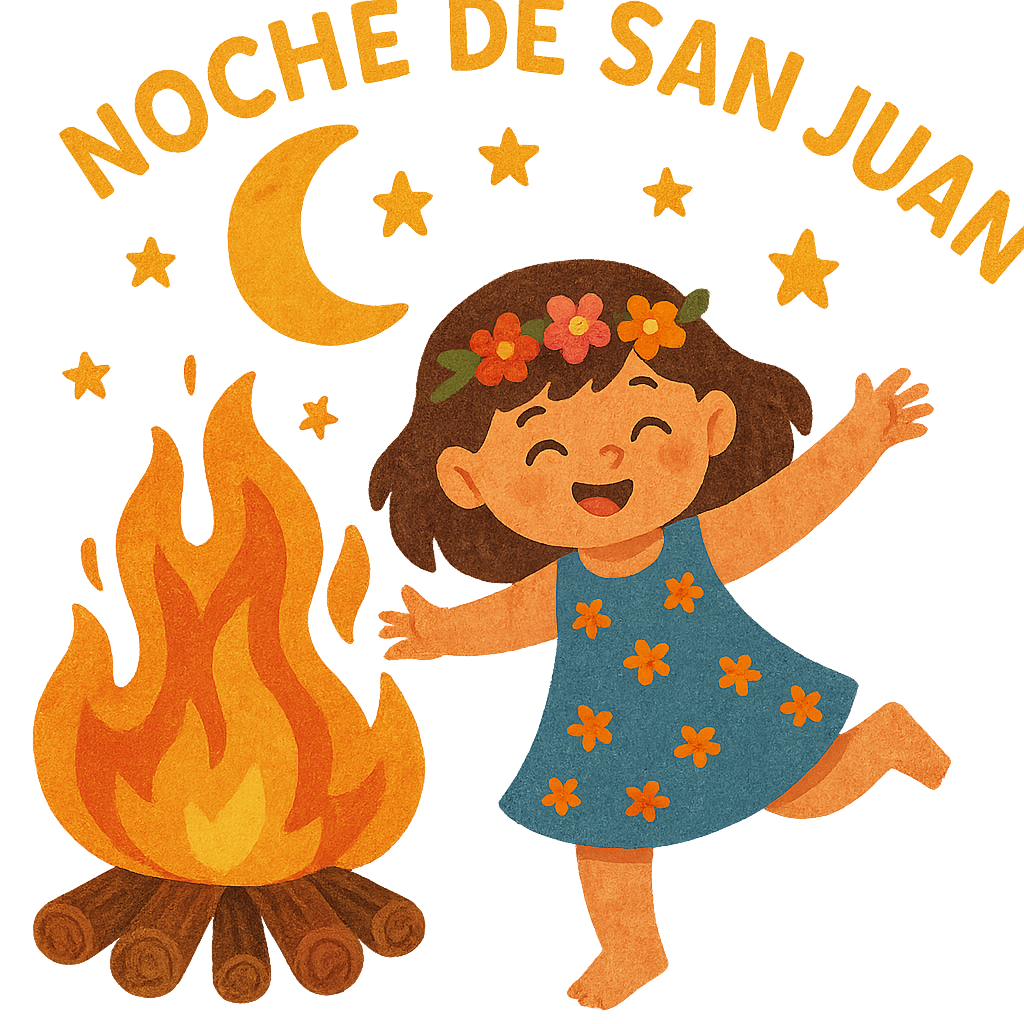
Hello, I am the Noche de San Juan, a special festival that lights up the coast of Spain. People gather to observe me on the night of June 23rd, a time that holds great meaning. My celebration is a welcoming of summer, taking place on what is the shortest night of the year in the Northern Hemisphere. On this night, the dark doesn't last for very long, and the air is filled with excitement for the warm season ahead. My traditions are a blend of old and new. While people celebrate the arrival of summer, they also use this time to honor a Christian figure named Saint John the Baptist. My celebration is a bridge between the natural cycles of the Earth and long-held cultural beliefs, bringing people together under the starry sky.
My oldest roots reach far back into history, to a time before I was known by my current name. For centuries, ancient communities in Europe held festivals to mark the summer solstice. The solstice is the longest day of the year, when the sun is at its highest point in the sky. After this day, the sun begins to set a little earlier each evening, and the days gradually become shorter. Ancient peoples watched the sun’s journey closely. Many believed that fire held a special, protective power. They would build enormous bonfires on hills and in open fields during their solstice festivals. They did this for two main reasons: to symbolically give strength to the sun for its journey into the darker half of the year, and to cleanse their communities, believing the flames could ward off bad spirits and bring protection to their homes and farms.
Noche de San Juan: A Night of Fire and Water
Hello, I am the Noche de San Juan, a special festival that lights up the coast of Spain. People gather to observe me on the night of June 23rd, a time that holds great meaning. My celebration is a welcoming of summer, taking place on what is the shortest night of the year in the Northern Hemisphere. On this night, the dark doesn't last for very long, and the air is filled with excitement for the warm season ahead. My traditions are a blend of old and new. While people celebrate the arrival of summer, they also use this time to honor a Christian figure named Saint John the Baptist. My celebration is a bridge between the natural cycles of the Earth and long-held cultural beliefs, bringing people together under the starry sky.
My oldest roots reach far back into history, to a time before I was known by my current name. For centuries, ancient communities in Europe held festivals to mark the summer solstice. The solstice is the longest day of the year, when the sun is at its highest point in the sky. After this day, the sun begins to set a little earlier each evening, and the days gradually become shorter. Ancient peoples watched the sun’s journey closely. Many believed that fire held a special, protective power. They would build enormous bonfires on hills and in open fields during their solstice festivals. They did this for two main reasons: to symbolically give strength to the sun for its journey into the darker half of the year, and to cleanse their communities, believing the flames could ward off bad spirits and bring protection to their homes and farms.
Over time, as Christianity spread across Spain, my ancient solstice traditions were woven into a new religious calendar. My observance became connected with the feast day of Saint John the Baptist, which falls on June 24th. This connection was made stronger by a story from Christian tradition. According to the story, Saint John’s father lit a large bonfire to joyfully announce his son’s birth to all the surrounding villages. This act of lighting a fire to share good news fit perfectly with the existing custom of lighting bonfires for the solstice. Because of this, the ancient tradition was able to continue, but it now carried a new Christian meaning alongside its older, seasonal one. My identity became a blend of honoring the sun's power and remembering the birth of an important religious figure.
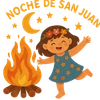
Today, my most important and recognizable traditions are centered around the powerful elements of fire and water. The huge bonfires, which are called ‘hogueras’ in Spanish, remain the heart of my celebration. People believe the fire has the power of purification, a way to cleanse away the old and make way for the new. In many coastal towns and cities, it is a popular custom for people to show their bravery and hope for good luck by jumping over the flickering flames of the bonfires. This tradition is balanced by another powerful element: water. Because Saint John the Baptist is known for baptizing people with water, this element is also central to my observance. At the stroke of midnight, many people walk into the sea to wash their faces and feet. They do this to wash away bad spirits and to make wishes for health and happiness in the year to come.
Across Spain, people celebrate me with great enthusiasm, especially on the sandy beaches that line the coast. The night of June 23rd turns into a massive party where the shore glows with the light of countless bonfires. The air is filled with the sound of music, the boom of fireworks, and the happy sounds of people dancing and talking. It is a time for communities to come together, and families and friends gather to share special foods and enjoy the festive atmosphere. In some places, my celebration is especially grand. For example, in the city of Alicante, the bonfires are not just piles of wood. Instead, artists and community groups spend months building enormous, detailed monuments from wood and cardboard. These impressive artistic structures are displayed for all to see before they are set alight in a spectacular blaze on the final night.
For many who participate, my night feels truly magical. It is seen as a powerful moment for renewal, a chance to let go of the past and look forward to the future with hope. People practice personal rituals to mark this fresh start. One common tradition is for a person to write down on a piece of paper all the things they wish to forget or leave behind from the past year. They then toss the paper into the crackling flames of a bonfire, watching it turn to ash as a symbol of letting go. At the same time, stepping into the cool ocean water at midnight is seen as a moment to make new wishes. As the waves wash over their feet, people hope for good fortune, love, and success in the summer season and the year ahead. Through these acts of fire and water, I offer a time for both celebration and quiet reflection.
Wow facts
About
A Spanish festival celebrated on the eve of June 23rd, blending pre-Christian summer solstice traditions of bonfires and water rituals with the Christian feast day of Saint John the Baptist.
Take a Quiz
Question 1 of 5
According to the story, what two things does the Noche de San Juan festival celebrate?
Want to do even more?
Go beyond exploring. Unlock tools that turn every story into real learning.

Storypie Plus for families
Full stories, quizzes, and printables. Nights and car rides, sorted.
- Unlimited audio stories
- Create Mode: your child stars in the story
- Offline downloads
- Printable worksheets & coloring pages

Why Storypie for Schools
Students engaged. Prep in seconds. Evenings back to you.
- Worksheets & Quizzes
- Classroom Management
- Formative Assessment
- Custom Curriculum & Lesson Plans
- 27 Languages

Why Storypie for Homeschool
Curriculum done. They'll ask for more. Hours back in your day.
- Worksheet Generator
- First-Person Audio Stories
- Built-in Comprehension Quizzes
- Custom Curriculum & Lesson Plans
- Print & Go Activities