English


Réveillon - Brazilian
Réveillon is Brazil's New Year's Eve celebration, known for its massive beach parties…
Reads at Grades 6–8 Listens at Grades 4–8
Print & create
Answer keys·No prep·Free with an account
28 worksheets · answer keys · full story · quiz · Ages 10-12 · CEFR B2
Plus adds 279,000+ more stories in 27 languages, audio for every one, and printables for all of them.
Just want Réveillon - Brazilian?

I am the Brazilian celebration of New Year's Eve, and my name is Réveillon. My name traveled to Brazil from the French language, where it means 'awakening.' It is a fitting name, because people observe me on the night of December 31st as a way to mark a great awakening: the end of one year and the fresh start of a new one. I represent a powerful moment of transition, a time for people to reflect on the months that have passed and to look forward with hope. When people gather to celebrate me, they are setting their intentions for the year ahead, focusing on renewal, peace, and new possibilities.
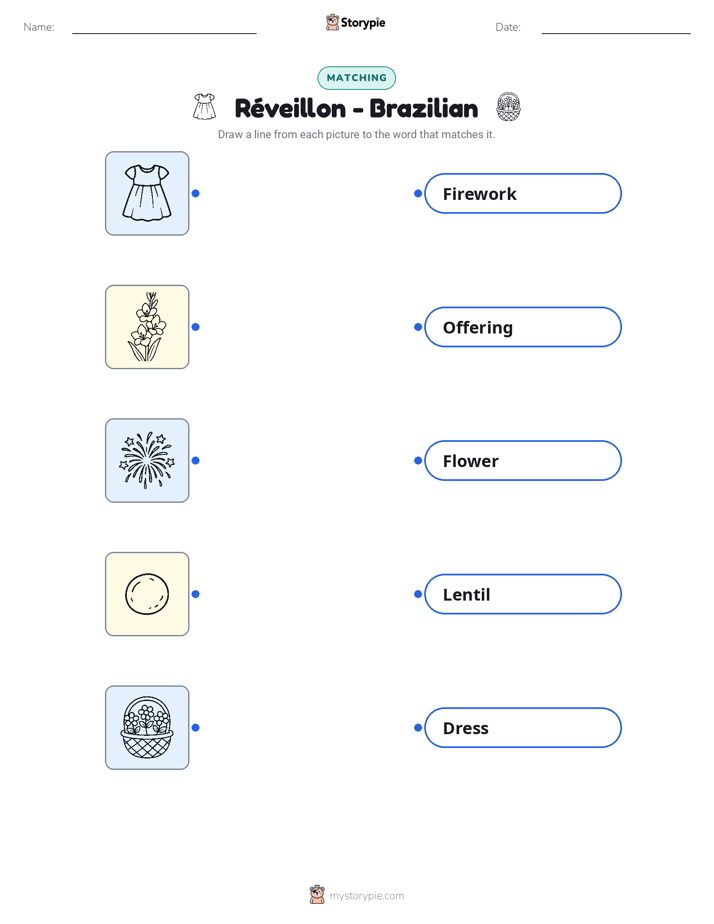
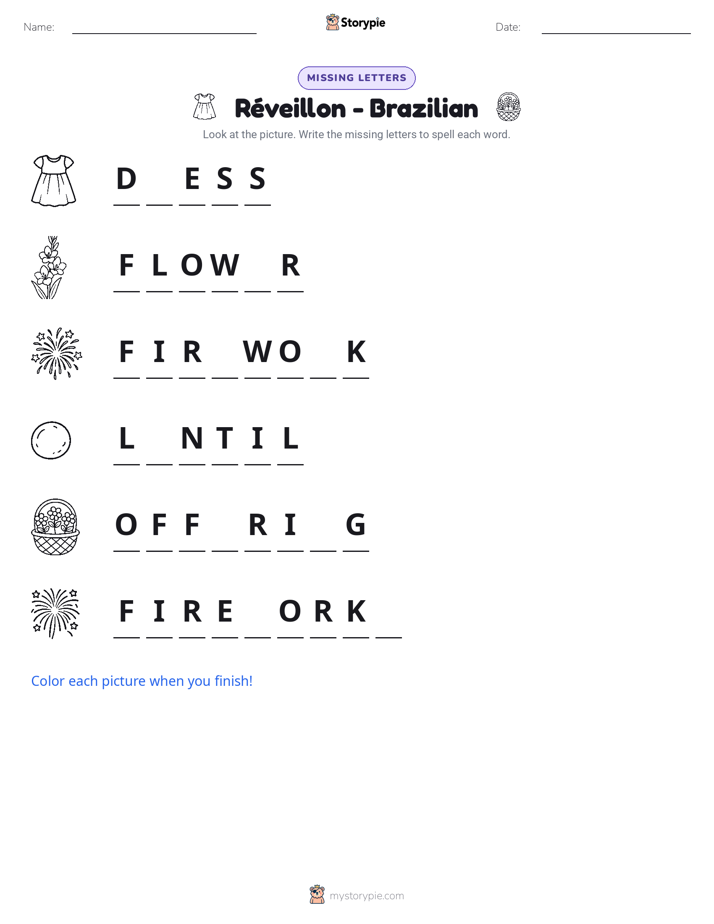
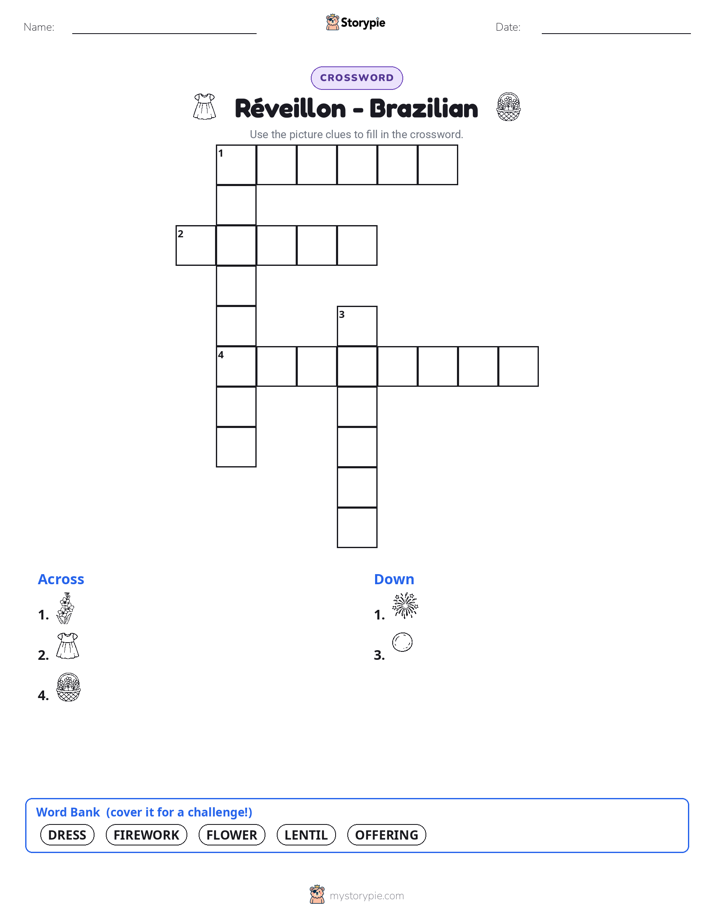
One of my most famous and beautiful traditions is the custom of wearing white clothing. As the sun sets on the last day of the year, beaches, streets, and homes fill with people dressed in brilliant white. This practice has its roots in Afro-Brazilian religions, such as Candomblé. For followers of these faiths, white is a sacred color that symbolizes peace and spiritual purity. Over time, this meaningful custom was embraced by millions of Brazilians from many different backgrounds. Today, wearing white is a shared symbol of a collective wish for a peaceful and clean slate in the coming year, uniting people in a sea of white under the night sky.
Many of my most memorable celebrations unfold along Brazil's extensive coastline. The ocean plays a central role in my observance, especially in traditions that honor Iemanjá, who is known in Afro-Brazilian beliefs as the Queen of the Sea. On the evening of December 31st, many people approach the water's edge to make offerings to her. They gently toss gifts, most often white flowers, into the ocean waves. These offerings are a sign of respect and a way to ask for blessings in the new year. According to the tradition, there is a special meaning in how the ocean responds. If the tide accepts the gifts and carries them out to sea, it is believed that Iemanjá is pleased and will help grant the wishes made for the year to come.
I Am Réveillon
I am the Brazilian celebration of New Year's Eve, and my name is Réveillon. My name traveled to Brazil from the French language, where it means 'awakening.' It is a fitting name, because people observe me on the night of December 31st as a way to mark a great awakening: the end of one year and the fresh start of a new one. I represent a powerful moment of transition, a time for people to reflect on the months that have passed and to look forward with hope. When people gather to celebrate me, they are setting their intentions for the year ahead, focusing on renewal, peace, and new possibilities.
One of my most famous and beautiful traditions is the custom of wearing white clothing. As the sun sets on the last day of the year, beaches, streets, and homes fill with people dressed in brilliant white. This practice has its roots in Afro-Brazilian religions, such as Candomblé. For followers of these faiths, white is a sacred color that symbolizes peace and spiritual purity. Over time, this meaningful custom was embraced by millions of Brazilians from many different backgrounds. Today, wearing white is a shared symbol of a collective wish for a peaceful and clean slate in the coming year, uniting people in a sea of white under the night sky.
Many of my most memorable celebrations unfold along Brazil's extensive coastline. The ocean plays a central role in my observance, especially in traditions that honor Iemanjá, who is known in Afro-Brazilian beliefs as the Queen of the Sea. On the evening of December 31st, many people approach the water's edge to make offerings to her. They gently toss gifts, most often white flowers, into the ocean waves. These offerings are a sign of respect and a way to ask for blessings in the new year. According to the tradition, there is a special meaning in how the ocean responds. If the tide accepts the gifts and carries them out to sea, it is believed that Iemanjá is pleased and will help grant the wishes made for the year to come.
Beyond the offerings to the sea, my observance is filled with rituals that people practice to invite good fortune. One of the most exciting happens exactly at the stroke of midnight. As the new year begins, many people standing by the ocean will try to jump over seven consecutive waves. It is a joyful, energetic act, and with each wave they leap, they make a different wish for the future. Another popular custom involves food. Many families make sure to eat lentils, a tradition based on a simple idea. The small, round shape of the lentils is thought to look like coins, so eating them is a way people express their hopes for financial well-being and prosperity. These rituals are not just actions; they are physical expressions of optimism for what the new year may hold.
While I am observed with parties and gatherings all across Brazil, my largest and most famous celebration takes place on Copacabana Beach in Rio de Janeiro. It is an event of incredible scale, drawing millions of people who cover the vast stretch of sand. They come together for a shared experience, and the highlight is the moment when midnight arrives. The sky above the ocean explodes with one of the world's most spectacular fireworks displays, a breathtaking show of light and sound that signals the start of the new year. The energy is electric, with massive stages set up along the beach hosting live music performances. The entire night creates an unforgettable atmosphere of shared joy, excitement, and human unity.
My modern identity is a result of a fascinating cultural blend. Celebrating the new year is a tradition that has existed in Brazil for a long time, but many of the specific customs that define me today became widely popular in the second half of the 20th century. The large public beach parties, the tradition of wearing white, and the offerings to Iemanjá all grew from the practices of Afro-Brazilian religions. Over the decades, these customs were embraced by the wider Brazilian culture. What started as specific spiritual practices have woven themselves into the fabric of a national event. Today, I am a unique celebration that combines quiet reflection, joyful festivity, and a shared, powerful hope for the future.
Wow facts
About
Réveillon is Brazil's New Year's Eve celebration, known for its massive beach parties, specific traditions like wearing white, and offerings to the Afro-Brazilian sea goddess, Iemanjá. It blends European, Indigenous, and African customs.
Take a Quiz
Question 1 of 5
How did traditions from Afro-Brazilian religions, like wearing white, become part of the wider Réveillon celebration?
Want to do even more?
Go beyond exploring. Unlock tools that turn every story into real learning.

Storypie Plus for families
Full stories, quizzes, and printables. Nights and car rides, sorted.
- Unlimited audio stories
- Create Mode: your child stars in the story
- Offline downloads
- Printable worksheets & coloring pages

Why Storypie for Schools
Students engaged. Prep in seconds. Evenings back to you.
- Worksheets & Quizzes
- Classroom Management
- Formative Assessment
- Custom Curriculum & Lesson Plans
- 27 Languages

Why Storypie for Homeschool
Curriculum done. They'll ask for more. Hours back in your day.
- Worksheet Generator
- First-Person Audio Stories
- Built-in Comprehension Quizzes
- Custom Curriculum & Lesson Plans
- Print & Go Activities