English


Sant Jordi - Catalan
A Catalan festival celebrated on April 23rd, known as the Day of the Rose and the Day of the Book…
Reads at Grades 6–8 Listens at Grades 4–8
Print & create
Answer keys·No prep·Free with an account
28 worksheets · answer keys · full story · quiz · Ages 10-12 · CEFR B2
Plus adds 273,000+ more stories in 27 languages, audio for every one, and printables for all of them.
Just want Sant Jordi - Catalan?
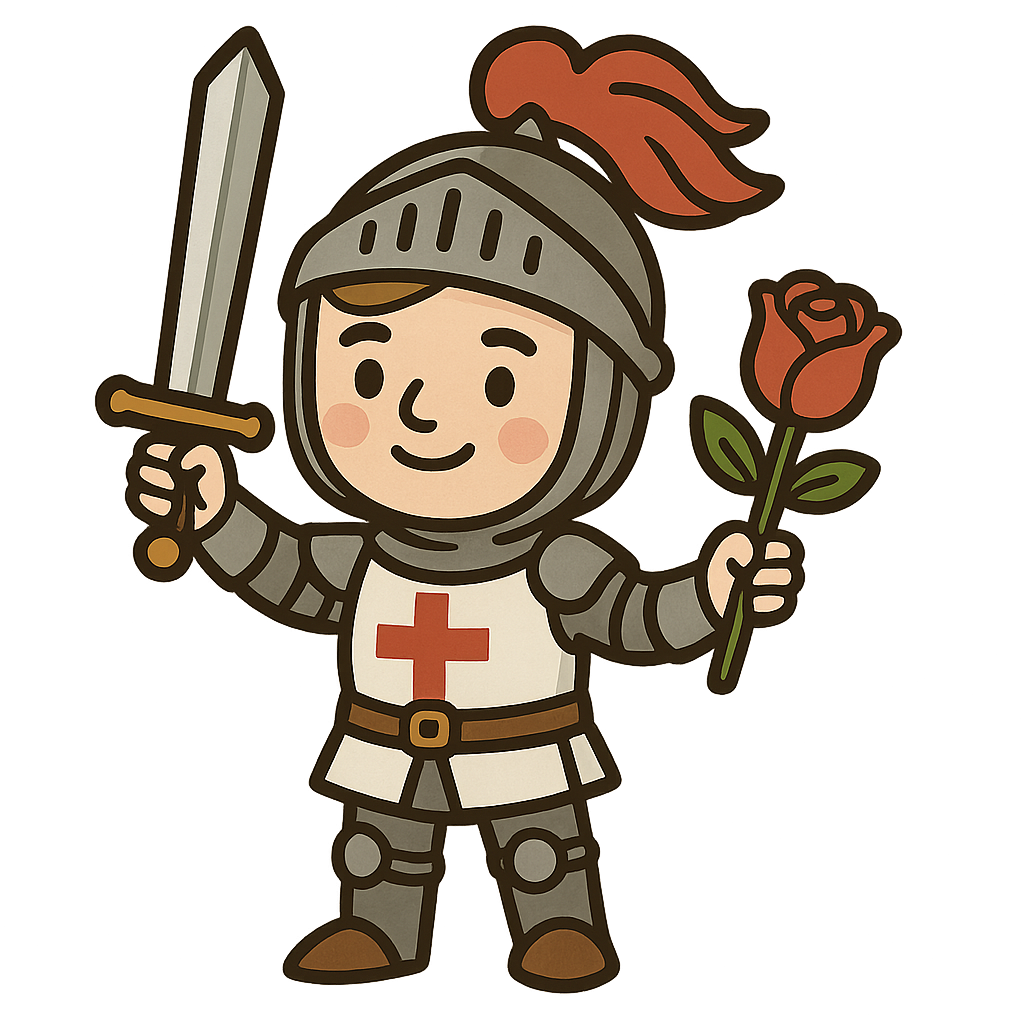
I am La Diada de Sant Jordi, known in English as the festival of Saint George. People in Catalonia, a distinctive region in the country of Spain, observe me each year on the fixed date of April 23rd. My day is a special combination of love and culture, making me one of the most significant and cherished celebrations for the Catalan people. I am observed in honor of Sant Jordi, who is the patron saint of Catalonia. A patron saint is a figure considered to be a special protector of a particular place or group of people. For Catalonians, Sant Jordi is a powerful symbol of their heritage. Therefore, my celebration is more than just a simple holiday; it is a profound expression of Catalan identity, a time when people celebrate the history, language, and culture that make their region unique.
At the very heart of my identity is a famous and dramatic legend that explains many of my traditions. The story, passed down through generations, tells of a time when a town was being terrorized by a fearsome dragon. To appease the beast, the townspeople had to make terrible sacrifices. The legend recounts how a brave knight named Sant Jordi arrived to find the town in despair, with even the king’s daughter, the princess, facing the dragon. Sant Jordi, showing great courage, confronted the terrifying creature and was victorious, slaying the dragon and freeing the princess and her people from its threat. According to the story, something magical happened next. From the spot on the ground where the dragon’s blood had spilled, a beautiful rose bush instantly grew, covered in vibrant red roses. To mark his victory and as a gesture of honor, Sant Jordi picked the most beautiful rose from the bush and presented it to the grateful princess. This single, powerful act of giving a rose is the legendary inspiration for one of my most beloved customs.
La Diada de Sant Jordi
I am La Diada de Sant Jordi, known in English as the festival of Saint George. People in Catalonia, a distinctive region in the country of Spain, observe me each year on the fixed date of April 23rd. My day is a special combination of love and culture, making me one of the most significant and cherished celebrations for the Catalan people. I am observed in honor of Sant Jordi, who is the patron saint of Catalonia. A patron saint is a figure considered to be a special protector of a particular place or group of people. For Catalonians, Sant Jordi is a powerful symbol of their heritage. Therefore, my celebration is more than just a simple holiday; it is a profound expression of Catalan identity, a time when people celebrate the history, language, and culture that make their region unique.
At the very heart of my identity is a famous and dramatic legend that explains many of my traditions. The story, passed down through generations, tells of a time when a town was being terrorized by a fearsome dragon. To appease the beast, the townspeople had to make terrible sacrifices. The legend recounts how a brave knight named Sant Jordi arrived to find the town in despair, with even the king’s daughter, the princess, facing the dragon. Sant Jordi, showing great courage, confronted the terrifying creature and was victorious, slaying the dragon and freeing the princess and her people from its threat. According to the story, something magical happened next. From the spot on the ground where the dragon’s blood had spilled, a beautiful rose bush instantly grew, covered in vibrant red roses. To mark his victory and as a gesture of honor, Sant Jordi picked the most beautiful rose from the bush and presented it to the grateful princess. This single, powerful act of giving a rose is the legendary inspiration for one of my most beloved customs.
My oldest tradition, the giving of roses, comes directly from the legend of my namesake. Historical records show that people were exchanging roses in my name as far back as the 15th century, making this a custom that has endured for hundreds of years. The rose itself is full of meaning. The single red rose given during my observance is meant to symbolize passion and deep affection. It also serves as a direct link back to the story of the brave knight, with its red petals representing the drops of blood from the slain dragon from which the first rose bush was said to have grown. For a very long time, this tradition followed a specific custom where it was mainly men who would give a single red rose to a woman they loved. This simple, elegant gift was a way to express romantic feelings, connecting the giver and receiver to the timeless story of Sant Jordi and the princess.
While the rose has been central to my observance for centuries, the tradition of giving books is a much more recent addition to my history. This literary custom began to take shape in the 1920s. The idea came from a clever bookseller in the city of Barcelona who was looking for a way to encourage reading and boost book sales. He proposed that April 23rd would be the perfect day to celebrate books, and his reasoning was quite remarkable. He pointed out that my date marked the day in the year 1616 when two of the most important writers in world history both died: Miguel de Cervantes, the Spanish author of Don Quixote, and William Shakespeare, the celebrated English playwright. This incredible coincidence made the date a natural fit for a literary tribute. As a result, a new custom was born. It became traditional for women, upon receiving a rose from a man, to give a book in return. This created a beautiful exchange of gifts, balancing the romance of the rose with the intellectual gift of a book.
As time has passed, my traditions have continued to evolve. Today, the older, more rigid customs have softened and blended together, creating a more inclusive and modern celebration. The once-separate traditions of giving a rose and giving a book are now intertwined. People in Catalonia no longer follow the old rules where a man gives a rose and a woman gives a book. Instead, these gifts are exchanged freely between everyone. A person might give a book to their best friend, a rose to their mother, or both to a romantic partner. The exchange is no longer limited by gender or the type of relationship. This wonderful shift has expanded my meaning. I am no longer just a day for romantic couples. I have become a broader celebration of love and friendship in all of their many forms, honoring the connections between family members, close friends, and partners alike. Anyone can give or receive a book, a rose, or both, making me a day for everyone to share affection and appreciation.
When April 23rd arrives, my presence is felt most vividly in the streets of towns and cities all across Catalonia. The entire region seems to transform into a massive open-air festival of culture. This is especially true in Barcelona, where the famous boulevard called Las Ramblas becomes the heart of the celebration. From early in the morning until late at night, the streets fill with thousands of temporary stalls, creating a vibrant marketplace dedicated to literature and love. These stalls are piled high with books of every genre imaginable and countless beautiful roses, their red petals adding a splash of color everywhere. The air itself feels charged with a special kind of excitement. It's a day for strolling, browsing, and soaking in the festive atmosphere. Adding to the literary spirit, many authors hold public signings, giving readers a chance to meet the creators of their favorite stories. My celebration is a very public affair, a day when people come together to express their shared love for reading and to celebrate their unique Catalan culture out in the open for all to see.
My unique blend of celebrating love, culture, and literature has had an impact that reaches far beyond the borders of Catalonia. The special way that books are honored during my observance eventually inspired a global event. In the year 1995, the United Nations Educational, Scientific and Cultural Organization, also known as UNESCO, was looking for a date to celebrate reading and authorship worldwide. They declared April 23rd as World Book and Copyright Day. Their choice of this specific date was made in part because of my long-standing Catalan custom of giving books as a gift of affection and respect. This international recognition formally connected the regional celebration in Catalonia with book lovers all over the planet. Today, when people around the world celebrate World Book Day, they are sharing in a spirit that has been a core part of my identity for nearly a century, linking a beautiful local tradition to a global appreciation for the power of literature.
Wow facts
About
A Catalan festival celebrated on April 23rd, known as the Day of the Rose and the Day of the Book, which combines the feast day of Saint George with a celebration of love and literature.
Take a Quiz
Question 1 of 5
What is the main idea of the section titled 'How My Traditions Combine Today'?
Want to do even more?
Go beyond exploring. Unlock tools that turn every story into real learning.

Storypie Plus for families
Full stories, quizzes, and printables. Nights and car rides, sorted.
- Unlimited audio stories
- Create Mode: your child stars in the story
- Offline downloads
- Printable worksheets & coloring pages

Why Storypie for Schools
Students engaged. Prep in seconds. Evenings back to you.
- Worksheets & Quizzes
- Classroom Management
- Formative Assessment
- Custom Curriculum & Lesson Plans
- 27 Languages

Why Storypie for Homeschool
Curriculum done. They'll ask for more. Hours back in your day.
- Worksheet Generator
- First-Person Audio Stories
- Built-in Comprehension Quizzes
- Custom Curriculum & Lesson Plans
- Print & Go Activities