English

Sint-Maarten - Dutch
A Dutch festival celebrated on November 11th, where children go door-to-door with handmade lanterns…
Reads at Grades 3–5 Listens at Grades 1–5
Print & create
Answer keys·No prep·Free with an account
28 worksheets · answer keys · full story · quiz · Ages 8-10 · CEFR B1
Plus adds 279,000+ more stories in 27 languages, audio for every one, and printables for all of them.
Just want Sint-Maarten - Dutch?
I am the festival of Sint-Maarten, a special day of light and song that people observe in the Netherlands and other parts of Europe. My date is always the same: November 11th. On this evening, as the air grows crisp and cool, you can see the warm glow of lanterns and hear the cheerful sound of singing. I exist to honor the memory of a very kind man who lived a long, long time ago. His name was Martin of Tours, and one famous story about him explains the heart of my celebration. The story tells of a day when Martin, who was a soldier, was riding near a city gate. There, he saw a beggar who was shivering from the cold and had very little to wear. Martin didn't have money or food to give, but he did have a warm wool cloak. Without hesitating, he took his sword, cut the large cloak into two pieces, and gave one half to the man to keep him warm. This simple act of sharing and compassion is the reason I am remembered each year.
My own history as a celebration began many centuries after Martin of Tours lived, during the time period known as the Middle Ages. For communities that depended on farming, November 11th was a very important date on the calendar. It marked a major turning point in the year. The hard work of the harvest was finally over, and all the crops were gathered and stored away safely for the winter. This date signaled the end of the busy autumn season and the beginning of the quiet, colder months of winter. For many Christians during that time, this was also the beginning of a period of fasting that would lead up to Christmas. Because of this, the day became a natural time for a large meal or feast, a final celebration before the leaner weeks ahead. My traditions of sharing food and bringing light into the darkness fit perfectly into this seasonal rhythm of life.
The Story of Sint-Maarten
I am the festival of Sint-Maarten, a special day of light and song that people observe in the Netherlands and other parts of Europe. My date is always the same: November 11th. On this evening, as the air grows crisp and cool, you can see the warm glow of lanterns and hear the cheerful sound of singing. I exist to honor the memory of a very kind man who lived a long, long time ago. His name was Martin of Tours, and one famous story about him explains the heart of my celebration. The story tells of a day when Martin, who was a soldier, was riding near a city gate. There, he saw a beggar who was shivering from the cold and had very little to wear. Martin didn't have money or food to give, but he did have a warm wool cloak. Without hesitating, he took his sword, cut the large cloak into two pieces, and gave one half to the man to keep him warm. This simple act of sharing and compassion is the reason I am remembered each year.
My own history as a celebration began many centuries after Martin of Tours lived, during the time period known as the Middle Ages. For communities that depended on farming, November 11th was a very important date on the calendar. It marked a major turning point in the year. The hard work of the harvest was finally over, and all the crops were gathered and stored away safely for the winter. This date signaled the end of the busy autumn season and the beginning of the quiet, colder months of winter. For many Christians during that time, this was also the beginning of a period of fasting that would lead up to Christmas. Because of this, the day became a natural time for a large meal or feast, a final celebration before the leaner weeks ahead. My traditions of sharing food and bringing light into the darkness fit perfectly into this seasonal rhythm of life.
As the days grew noticeably shorter and the nights became longer and colder, the symbol of light became more and more powerful. In the earliest years of my observance, people would hold large processions, walking together through the streets carrying fire on torches to light up the dark. It was a way for the whole community to create brightness and warmth together. Over many, many years, this tradition evolved and changed. The large public fires were gradually replaced by smaller, personal lights that children could carry themselves. This made the celebration more personal and magical for them. To make their lanterns, children would take vegetables that had just been harvested, like turnips or large sugar beets. They would carefully hollow them out and carve a design into the side, then place a small candle inside to make it glow from within.
Today, this beautiful tradition of carrying light continues, but the lanterns themselves look a little different. Instead of using turnips, children now craft their own beautiful and creative lanterns out of colorful paper. They might decorate them with drawings of stars, suns, or animals. The lanterns come in all shapes and sizes, showing each child's unique creativity. For safety, many of the lanterns now hold a small battery-powered electric light instead of a real candle, but their warm glow still shines just as brightly in the evening darkness. Walking with these glowing creations, children bring light with them as they travel through their neighborhoods.
Music is another very important part of my celebration, and it combines with the light to create a special atmosphere. As children walk with their shining lanterns, they travel in small groups from one house to the next. When they arrive at a doorstep, they stop and sing special Sint-Maarten songs that have been passed down for generations. The streets and neighborhoods become filled with the sweet sound of their voices. This singing is part of a tradition of sharing. In return for the gift of a song, the people who live in the house give the children a treat. This might be a piece of candy, some fruit like a mandarin orange, or a small, sweet cake made for the occasion. The exchange of a song for a treat makes the evening a joyful event for everyone.
Every year on November 11th, families and children in the Netherlands continue these traditions with great excitement. The day is filled with creativity as they design and build their unique paper lanterns. Then, as evening falls, they gather in their groups and head out into the streets. Going door-to-door, they share their songs and watch as their bags slowly fill with treats. Through the glowing lanterns, the shared songs, and the giving of treats, my central story continues to be told. Each lantern is a small spark in the darkness, and each song is an act of sharing. In this way, the simple act of kindness from Martin of Tours—sharing his cloak to bring warmth to someone in need—is remembered and passed on to a new generation.
Wow facts
About
A Dutch festival celebrated on November 11th, where children go door-to-door with handmade lanterns, sing songs, and receive treats. The holiday honors Saint Martin of Tours and symbolizes sharing light and kindness.
Take a Quiz
Question 1 of 5
According to the story, why do people observe the festival of Sint-Maarten?
Want to do even more?
Go beyond exploring. Unlock tools that turn every story into real learning.

Storypie Plus for families
Full stories, quizzes, and printables. Nights and car rides, sorted.
- Unlimited audio stories
- Create Mode: your child stars in the story
- Offline downloads
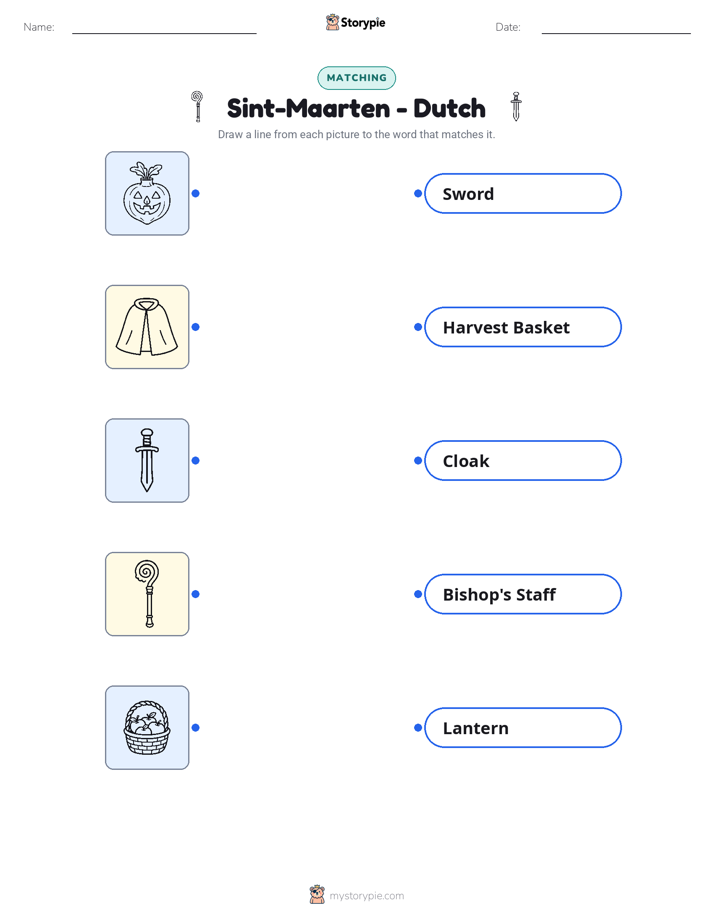
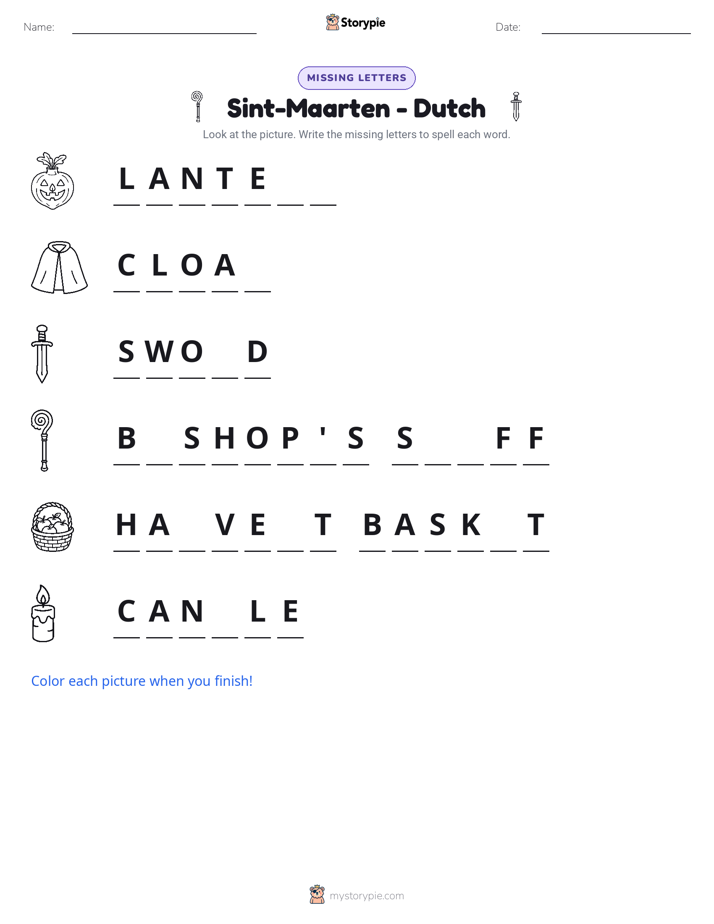
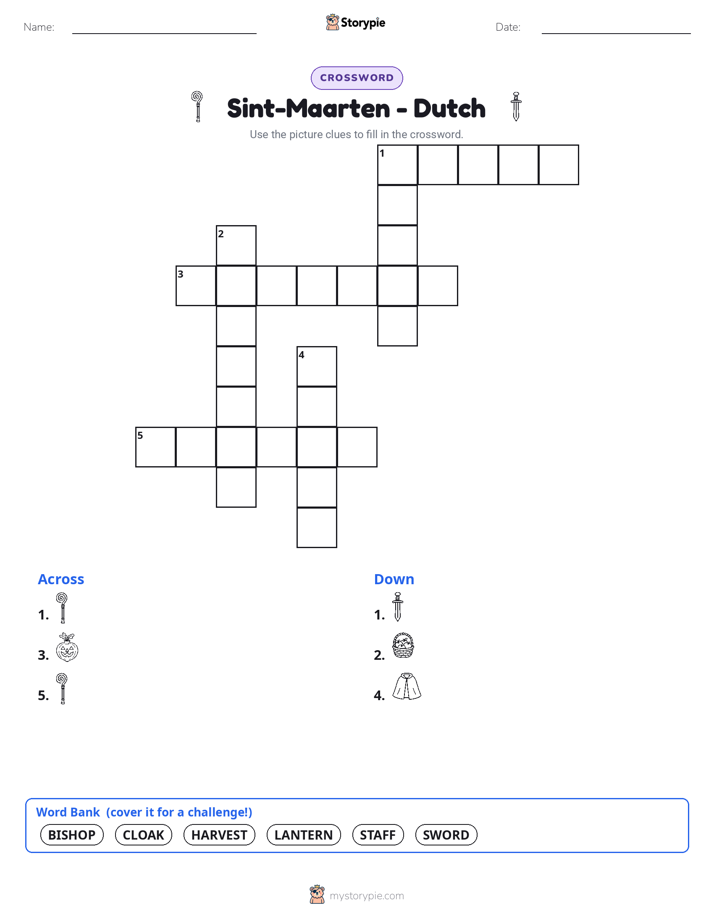
- Printable worksheets & coloring pages

Why Storypie for Schools
Students engaged. Prep in seconds. Evenings back to you.
- Worksheets & Quizzes
- Classroom Management
- Formative Assessment
- Custom Curriculum & Lesson Plans
- 27 Languages

Why Storypie for Homeschool
Curriculum done. They'll ask for more. Hours back in your day.
- Worksheet Generator
- First-Person Audio Stories
- Built-in Comprehension Quizzes
- Custom Curriculum & Lesson Plans
- Print & Go Activities