English

St. Patrick's Day - Irish
A cultural and religious holiday celebrated annually on March 17th to commemorate Saint Patrick…
Reads at Grades 6–8 Listens at Grades 4–8
Print & create
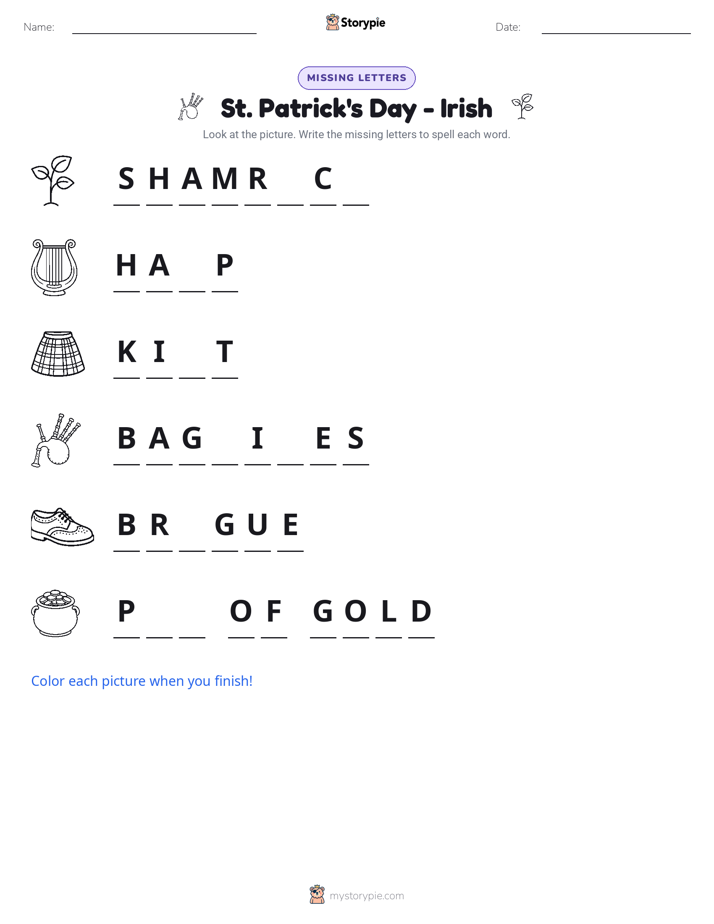
Answer keys·No prep·Free with an account
28 worksheets · answer keys · full story · quiz · Ages 10-12 · CEFR B2
Plus adds 279,000+ more stories in 27 languages, audio for every one, and printables for all of them.
Just want St. Patrick's Day - Irish?
I am St. Patrick's Day, a cultural and religious holiday observed each year on the 17th of March. People all over the world know my name, but my story begins in Ireland. I am named in honor of Saint Patrick, who is recognized as the patron saint of Ireland. The date of my observance, March 17th, was chosen because it marks the anniversary of his death in the 5th century. For many hundreds of years, I have been a day for people to commemorate his life and the historical arrival of Christianity in Ireland. While many people associate me with parades and the color green, my beginnings were much quieter and more reflective.
My official establishment as a Christian feast day occurred in the early 17th century. During that time, my observance in Ireland was a serious and devout occasion. There were no large parades or public festivals filling the streets. Instead, families typically spent the morning attending church services to honor Saint Patrick. The afternoon might involve a modest celebration at home. For a significant period of my history, my religious nature was so central that a law required all pubs in Ireland to remain closed on March 17th. This early version of me was a day for faith and family, a stark contrast to the large-scale public events that would later define me in other parts of the world.
My transformation from a solemn feast day into the lively, public celebration known today did not begin in Ireland. It started thousands of miles away, in America, carried in the hearts of Irish immigrants. For those who had left their homeland, I became a powerful way to maintain a connection to their Irish heritage and to find community in a new country. The very first parade held in my honor took place not on Irish soil, but in 1601 in a Spanish colony that is now the city of St. Augustine, Florida. Over a century later, in 1762, another key moment in my history occurred when Irish soldiers serving in the British military marched through New York City. These early American parades planted the seeds for my future as a global celebration of Irish identity.
The Story of St. Patrick's Day
I am St. Patrick's Day, a cultural and religious holiday observed each year on the 17th of March. People all over the world know my name, but my story begins in Ireland. I am named in honor of Saint Patrick, who is recognized as the patron saint of Ireland. The date of my observance, March 17th, was chosen because it marks the anniversary of his death in the 5th century. For many hundreds of years, I have been a day for people to commemorate his life and the historical arrival of Christianity in Ireland. While many people associate me with parades and the color green, my beginnings were much quieter and more reflective.
My official establishment as a Christian feast day occurred in the early 17th century. During that time, my observance in Ireland was a serious and devout occasion. There were no large parades or public festivals filling the streets. Instead, families typically spent the morning attending church services to honor Saint Patrick. The afternoon might involve a modest celebration at home. For a significant period of my history, my religious nature was so central that a law required all pubs in Ireland to remain closed on March 17th. This early version of me was a day for faith and family, a stark contrast to the large-scale public events that would later define me in other parts of the world.
My transformation from a solemn feast day into the lively, public celebration known today did not begin in Ireland. It started thousands of miles away, in America, carried in the hearts of Irish immigrants. For those who had left their homeland, I became a powerful way to maintain a connection to their Irish heritage and to find community in a new country. The very first parade held in my honor took place not on Irish soil, but in 1601 in a Spanish colony that is now the city of St. Augustine, Florida. Over a century later, in 1762, another key moment in my history occurred when Irish soldiers serving in the British military marched through New York City. These early American parades planted the seeds for my future as a global celebration of Irish identity.
During the 19th century, my parades grew into one of my most famous and visible traditions, especially across the United States. This period saw a massive wave of Irish immigration as millions fled the Great Famine in their homeland. In American cities, these new communities often faced hardship and discrimination. Parades became a vital way for them to stand together and publicly display their strength, unity, and unwavering pride in their Irish identity. What started as simple marches organized by community groups gradually evolved. Over the decades, they grew into the elaborate festivals people recognize today, complete with decorative floats, lively marching bands playing Irish music, and troupes of dancers performing traditional steps.
When people think of me, they almost always think of the color green. However, this was not always the case. For a long time, the color traditionally associated with Saint Patrick was actually blue. My connection with green became popular much later, during the 18th century. There are several reasons for this shift. The color is linked to the shamrock, a plant that became one of my key symbols. It was also adopted by various Irish independence movements as a symbol of rebellion and national pride. Furthermore, Ireland itself is often called the 'Emerald Isle' because of its beautiful, rolling green landscapes. Today, this association is so strong that people all over the world wear green on March 17th to join in my celebration.
The shamrock, a small plant with three leaves, is one of my most enduring and recognizable symbols. Its importance is tied to a popular legend about Saint Patrick himself. According to this story, he used the three leaves of a single shamrock to explain a core Christian concept—the Holy Trinity, which holds that God is one being in three persons. He used this simple visual aid to help the Irish people understand a complex religious idea. While this is a traditional story passed down through generations rather than a documented historical fact, the shamrock has become a powerful and beloved symbol of Ireland. Many people wear a shamrock on my day as a nod to this legend and as a symbol of their connection to Irish culture.
As I became a major global festival celebrating Irish culture, my observance in Ireland itself began to change. For most of the 20th century, I remained a much more solemn and religious day there compared to the large festivities happening abroad, particularly in the United States. That began to shift in the mid-1990s. The Irish government launched a campaign to reimagine me as a vibrant, multi-day festival. The goal was to use my global popularity to showcase Ireland's unique culture and attract visitors. This initiative transformed me in my homeland, leading to the creation of huge parades, concerts, and cultural events, especially in the capital city of Dublin, which now hosts one of the largest festivals in the world.
Today, I am observed by people of many different backgrounds in countries all across the globe. My traditions are diverse and vary widely from place to place. For many, my observance involves attending large parades in cities like New York and Dublin or enjoying lively sessions of Irish music and traditional dance performances. Some customs are unique to specific locations, such as the famous dyeing of the Chicago River a brilliant shade of green. Even the food people eat can be part of the tradition. For instance, eating a meal of corned beef and cabbage is a distinctly Irish-American custom that has become strongly associated with my celebration. I have grown from a quiet feast day into a worldwide acknowledgment of Irish heritage and culture, shared and enjoyed by millions.
Wow facts
About
A cultural and religious holiday celebrated annually on March 17th to commemorate Saint Patrick, who is widely recognized as the patron saint of Ireland, and to celebrate Irish heritage and culture.
Take a Quiz
Question 1 of 5
Summarize the main reasons why St. Patrick's Day transformed from a quiet religious day in Ireland to a large public festival in America.
Want to do even more?
Go beyond exploring. Unlock tools that turn every story into real learning.

Storypie Plus for families
Full stories, quizzes, and printables. Nights and car rides, sorted.
- Unlimited audio stories
- Create Mode: your child stars in the story
- Offline downloads
- Printable worksheets & coloring pages

Why Storypie for Schools
Students engaged. Prep in seconds. Evenings back to you.
- Worksheets & Quizzes
- Classroom Management
- Formative Assessment
- Custom Curriculum & Lesson Plans
- 27 Languages

Why Storypie for Homeschool
Curriculum done. They'll ask for more. Hours back in your day.
- Worksheet Generator
- First-Person Audio Stories
- Built-in Comprehension Quizzes
- Custom Curriculum & Lesson Plans
- Print & Go Activities