English

Tanabata - Japanese
Tanabata, also known as the Star Festival…
Reads at Grades 3–5 Listens at Grades 1–5
Print & create
Answer keys·No prep·Free with an account
28 worksheets · answer keys · full story · quiz · Ages 8-10 · CEFR B1
Plus adds 279,000+ more stories in 27 languages, audio for every one, and printables for all of them.
Just want Tanabata - Japanese?
I am Tanabata, the Star Festival of Japan. My celebration is inspired by a famous story about two stars that shine brightly in the summer night sky. This traditional tale tells of Orihime, a princess who was a wonderfully skilled weaver. She represents the star known as Vega. The story also features Hikoboshi, a dedicated and hardworking cowherd, who represents the star Altair. According to the legend, Orihime and Hikoboshi fell deeply in love, but they were separated by the vast, shimmering river of stars called the Milky Way. As a result of their separation, they are only allowed to reunite for a single night each year. This special meeting is said to happen on the 7th night of the 7th month, a time that has become central to my observance.
My story and traditions, however, did not begin in Japan. My origins trace back to China, where people celebrate a similar festival known as Qixi. These customs journeyed across the sea and were introduced to the Japanese Imperial Court during the 8th century. Life in the court was very different from the rest of Japan at that time, and it was there that my observances first took root. In fact, one of my earliest documented celebrations in Japan was held by a ruler, Empress Kōken, in the year 755. This historical record shows how long I have been a part of Japanese culture, starting with the highest levels of society before spreading to everyone.
People celebrate me on a very specific date: the 7th day of the 7th month. In modern times, Japan uses the Gregorian calendar, which is the same calendar used in many parts of the world. Because of this, many people know my date as July 7th. However, my timing can be a little more complicated. The original observances followed an older lunisolar calendar, which is based on the cycles of both the moon and the sun. The 7th day of the 7th month on that calendar falls later in the summer, usually in August. For this reason, some of my biggest and most famous festivals are still held in August to be closer to the original timing of the season. This is why you can find people celebrating me on different dates depending on the region of Japan.
The Story of Tanabata
I am Tanabata, the Star Festival of Japan. My celebration is inspired by a famous story about two stars that shine brightly in the summer night sky. This traditional tale tells of Orihime, a princess who was a wonderfully skilled weaver. She represents the star known as Vega. The story also features Hikoboshi, a dedicated and hardworking cowherd, who represents the star Altair. According to the legend, Orihime and Hikoboshi fell deeply in love, but they were separated by the vast, shimmering river of stars called the Milky Way. As a result of their separation, they are only allowed to reunite for a single night each year. This special meeting is said to happen on the 7th night of the 7th month, a time that has become central to my observance.
My story and traditions, however, did not begin in Japan. My origins trace back to China, where people celebrate a similar festival known as Qixi. These customs journeyed across the sea and were introduced to the Japanese Imperial Court during the 8th century. Life in the court was very different from the rest of Japan at that time, and it was there that my observances first took root. In fact, one of my earliest documented celebrations in Japan was held by a ruler, Empress Kōken, in the year 755. This historical record shows how long I have been a part of Japanese culture, starting with the highest levels of society before spreading to everyone.
People celebrate me on a very specific date: the 7th day of the 7th month. In modern times, Japan uses the Gregorian calendar, which is the same calendar used in many parts of the world. Because of this, many people know my date as July 7th. However, my timing can be a little more complicated. The original observances followed an older lunisolar calendar, which is based on the cycles of both the moon and the sun. The 7th day of the 7th month on that calendar falls later in the summer, usually in August. For this reason, some of my biggest and most famous festivals are still held in August to be closer to the original timing of the season. This is why you can find people celebrating me on different dates depending on the region of Japan.
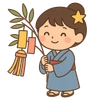
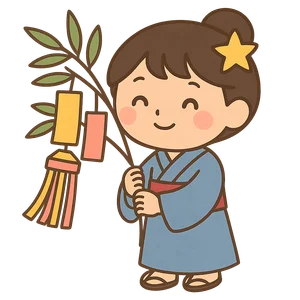
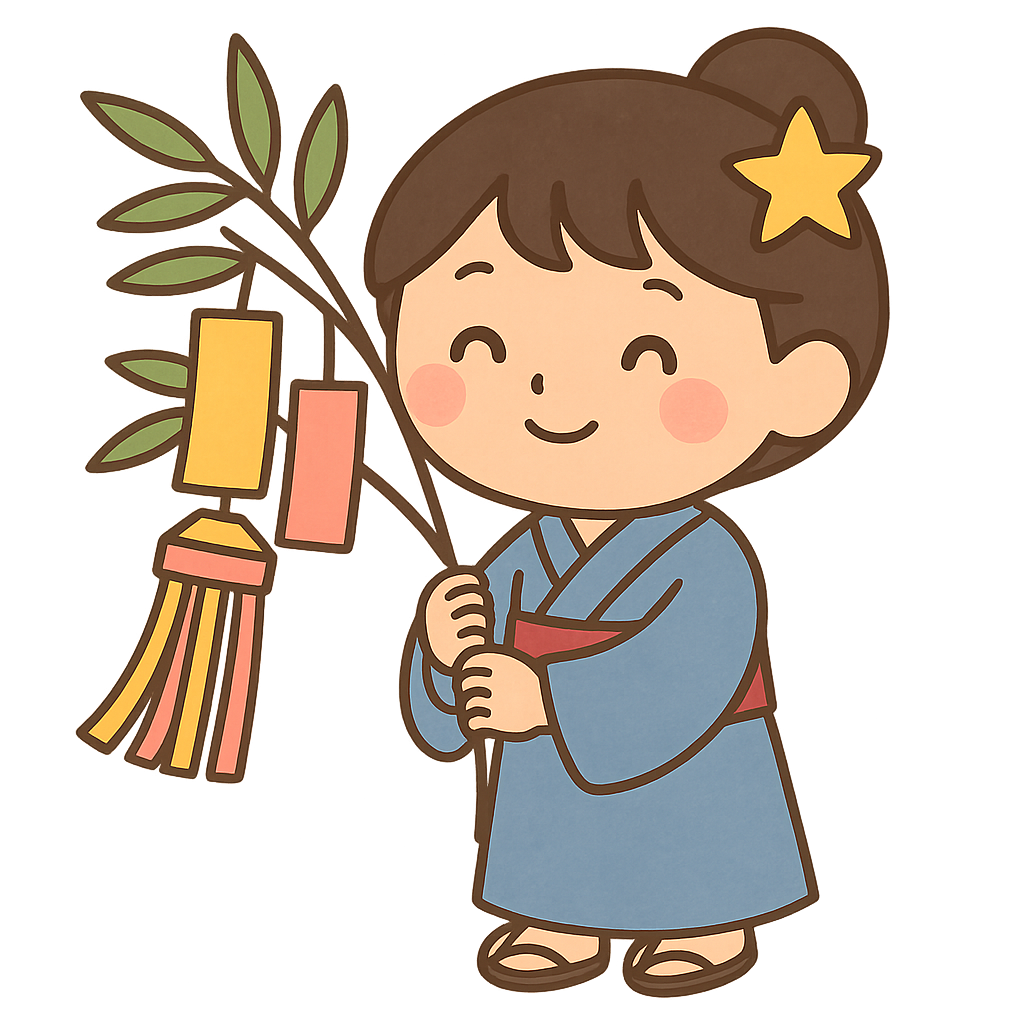
Over the centuries, many unique customs have become part of my celebration. One of my most famous traditions is the practice of writing wishes on small, colorful strips of paper. These special papers are called 'tanzaku'. This particular custom became very popular with the public during Japan's Edo period, a long era of peace that lasted from 1603 to 1868. During this time, more people learned to read and write, and they began writing down their personal hopes and dreams. They might wish for skills to improve, like becoming better at handwriting, or for personal happiness, like finding love. After writing down their wishes, people carefully tie the tanzaku onto the branches of freshly cut bamboo trees, hoping the stars above will help their wishes come true.
The 'tanzaku' wishes are not the only decorations you will see during my celebration. People create many other beautiful and meaningful paper decorations to hang alongside them. There are seven traditional types of these decorations, and each one carries its own special meaning and wish. For instance, you might see long, colorful streamers called 'fukinagashi'. These flowing decorations represent the threads that Orihime used in her weaving, and they are hung as a wish for improving one's own skills. Another traditional decoration is a paper net, known as a 'toami'. These are carefully crafted and hung to express a wish for good fishing and bountiful harvests from the land and sea, ensuring that people have plenty of food.
Today, people celebrate me with large, vibrant festivals that take place all across Japan. While families might have small bamboo trees at home, some of the most spectacular displays are in public spaces. Cities like Sendai and Hiratsuka are especially famous for their grand Tanabata festivals. During these events, the city streets are filled with enormous, colorful bamboo decorations that can tower several meters high. The entire area comes alive as people walk among the beautiful displays, enjoy food from special stalls, watch parades, and soak in the lively, festive atmosphere. These modern celebrations show how my traditions continue to evolve and bring joy to many people each summer.
Wow facts
About
Tanabata, also known as the Star Festival, is a Japanese festival that celebrates the legendary annual meeting of the deities Orihime and Hikoboshi, represented by the stars Vega and Altair.
Take a Quiz
Question 1 of 5
Why are some of the biggest Tanabata festivals held in August instead of July?
Want to do even more?
Go beyond exploring. Unlock tools that turn every story into real learning.

Storypie Plus for families
Full stories, quizzes, and printables. Nights and car rides, sorted.
- Unlimited audio stories
- Create Mode: your child stars in the story
- Offline downloads
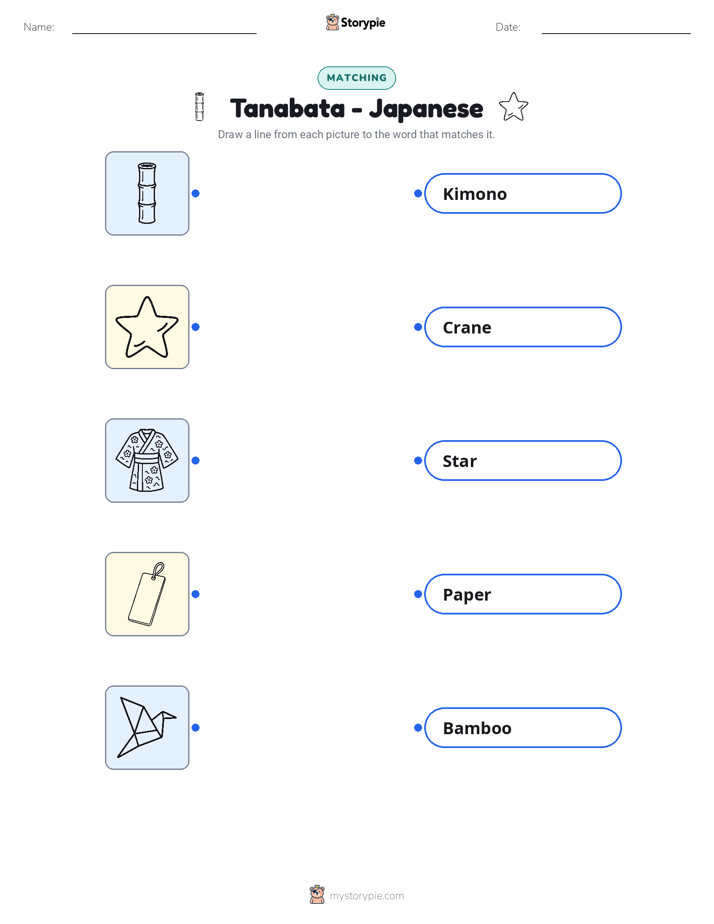
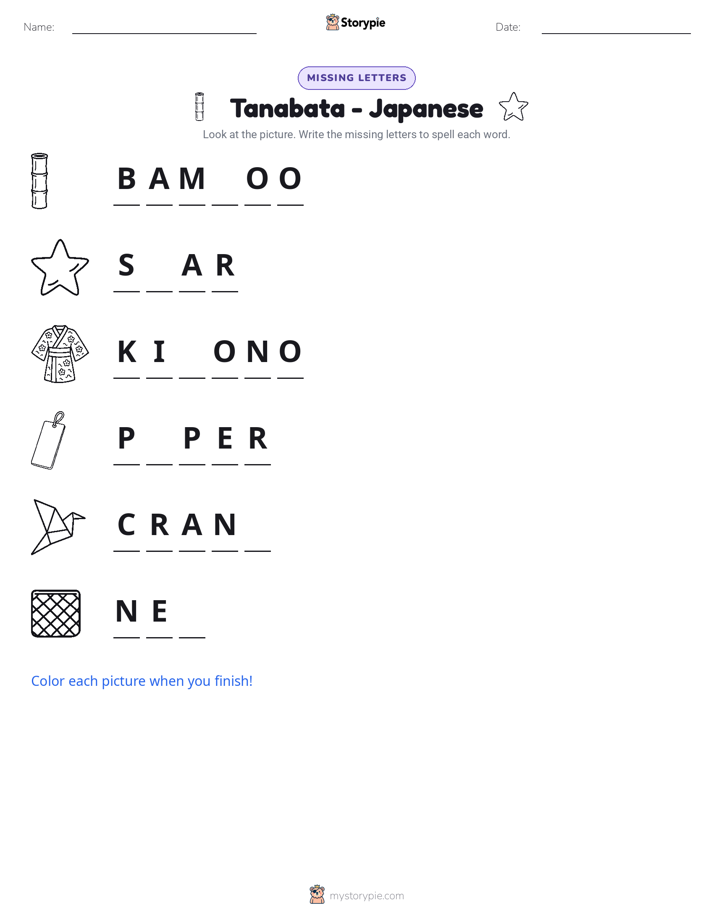
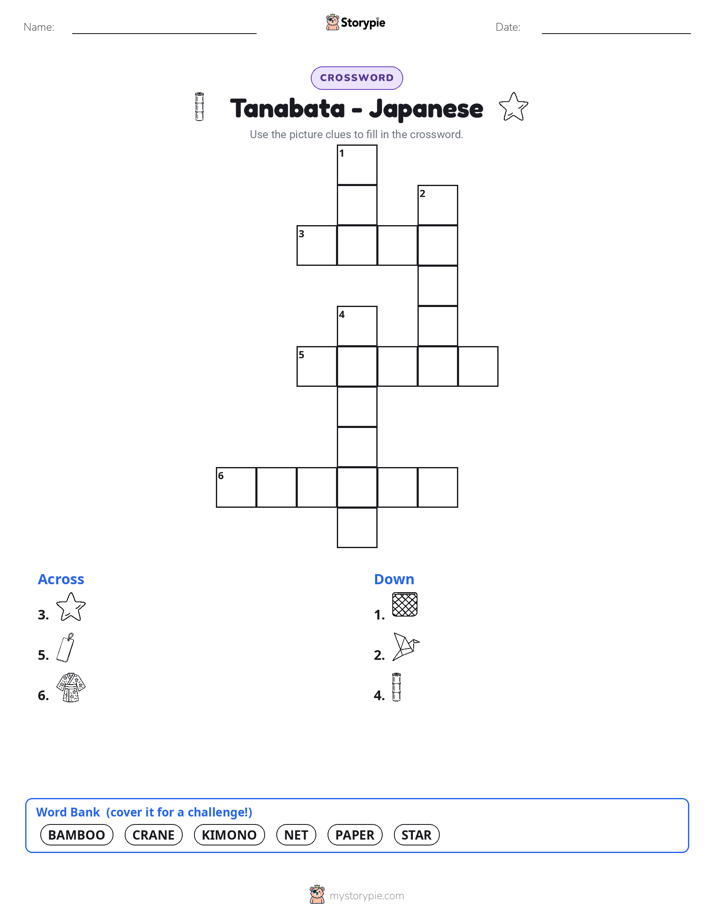
- Printable worksheets & coloring pages

Why Storypie for Schools
Students engaged. Prep in seconds. Evenings back to you.
- Worksheets & Quizzes
- Classroom Management
- Formative Assessment
- Custom Curriculum & Lesson Plans
- 27 Languages

Why Storypie for Homeschool
Curriculum done. They'll ask for more. Hours back in your day.
- Worksheet Generator
- First-Person Audio Stories
- Built-in Comprehension Quizzes
- Custom Curriculum & Lesson Plans
- Print & Go Activities