English

Tanabata - Japanese
Tanabata, also known as the Star Festival…
Reads at Grades K-2 Listens at K–3
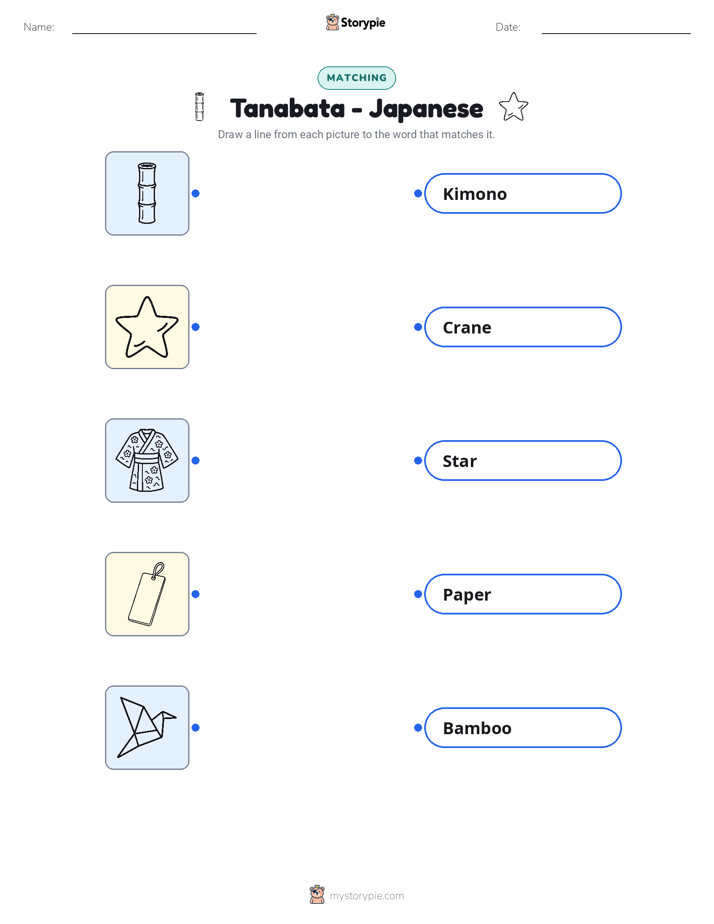
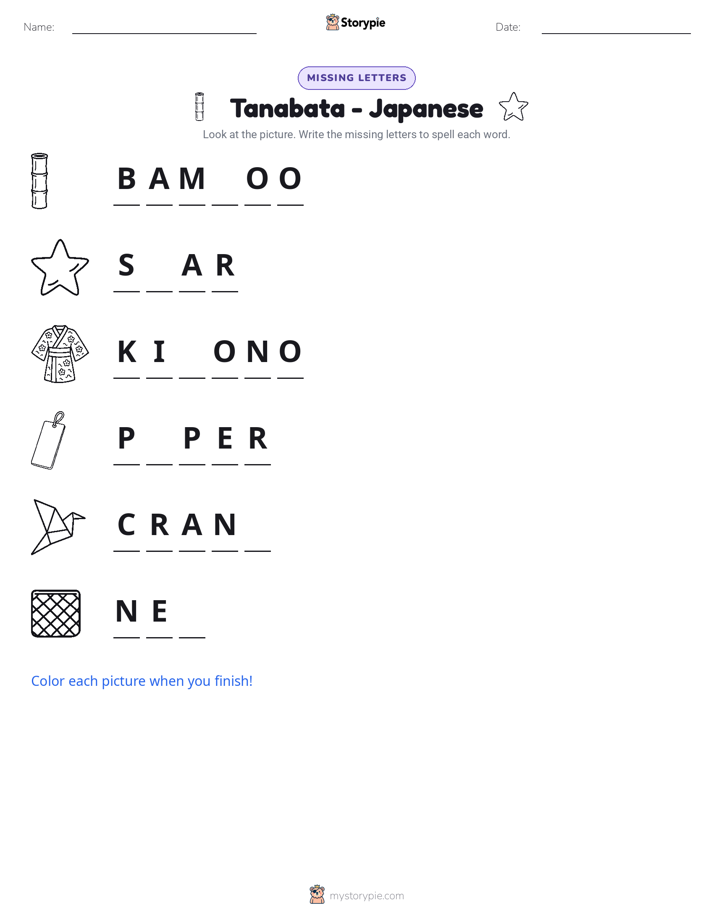
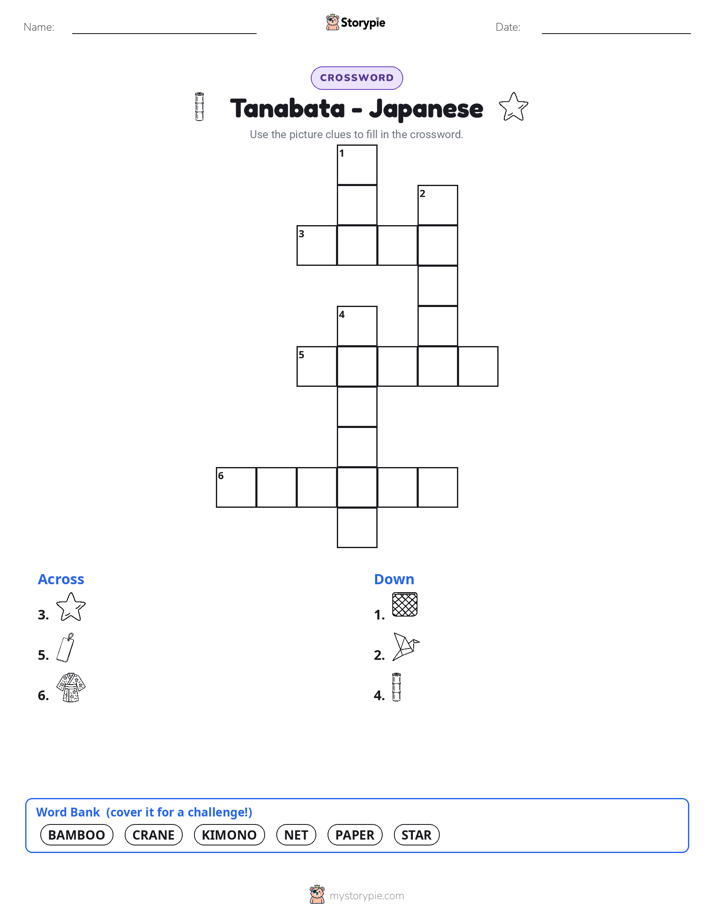
Print & create
Answer keys·No prep·Free with an account
28 worksheets · answer keys · full story · quiz · Ages 6-8 · CEFR A2
Plus adds 279,000+ more stories in 27 languages, audio for every one, and printables for all of them.
Just want Tanabata - Japanese?
Hello! I am a Japanese festival called Tanabata. My name means “Evening of the Seventh,” but many people also know me as the Star Festival. I celebrate a famous story about two stars named Orihime and Hikoboshi. The story says that they are lovers who live in the night sky. A wide, sparkling river, which is the Milky Way, separates them. Because they are so far apart, they are only allowed to meet one time each year. This special meeting happens on the seventh night of the seventh month, which is the night when people celebrate me.
My traditions began in Japan a very long time ago, during the 8th century. The idea for my celebration came from an older Chinese festival called Qixi. When I was first observed in Japan, it was mainly by the nobles who lived and worked at the Imperial Court. They had special ceremonies and wrote poems about the stars. As the years went by, my customs and the story of the star-crossed lovers became more popular. Soon, people all across Japan began to celebrate me, and my traditions grew and changed to become what they are today.
People celebrate me on the 7th day of the 7th month. On the modern calendar that most people use, this date is July 7th. You can find many of my festivals happening on this day. However, in some parts of Japan, people celebrate me about a month later, in August. This is because they follow an older calendar that was used long ago, and the date in August is closer to the original timing of the festival. So, whether it's July or August, my celebration is always tied to that special seventh night.
Tanabata, the Star Festival
Hello! I am a Japanese festival called Tanabata. My name means “Evening of the Seventh,” but many people also know me as the Star Festival. I celebrate a famous story about two stars named Orihime and Hikoboshi. The story says that they are lovers who live in the night sky. A wide, sparkling river, which is the Milky Way, separates them. Because they are so far apart, they are only allowed to meet one time each year. This special meeting happens on the seventh night of the seventh month, which is the night when people celebrate me.
My traditions began in Japan a very long time ago, during the 8th century. The idea for my celebration came from an older Chinese festival called Qixi. When I was first observed in Japan, it was mainly by the nobles who lived and worked at the Imperial Court. They had special ceremonies and wrote poems about the stars. As the years went by, my customs and the story of the star-crossed lovers became more popular. Soon, people all across Japan began to celebrate me, and my traditions grew and changed to become what they are today.
People celebrate me on the 7th day of the 7th month. On the modern calendar that most people use, this date is July 7th. You can find many of my festivals happening on this day. However, in some parts of Japan, people celebrate me about a month later, in August. This is because they follow an older calendar that was used long ago, and the date in August is closer to the original timing of the festival. So, whether it's July or August, my celebration is always tied to that special seventh night.
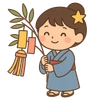
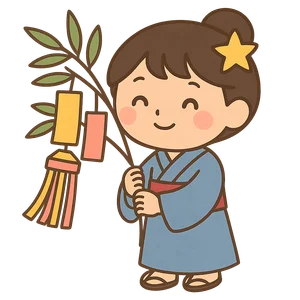
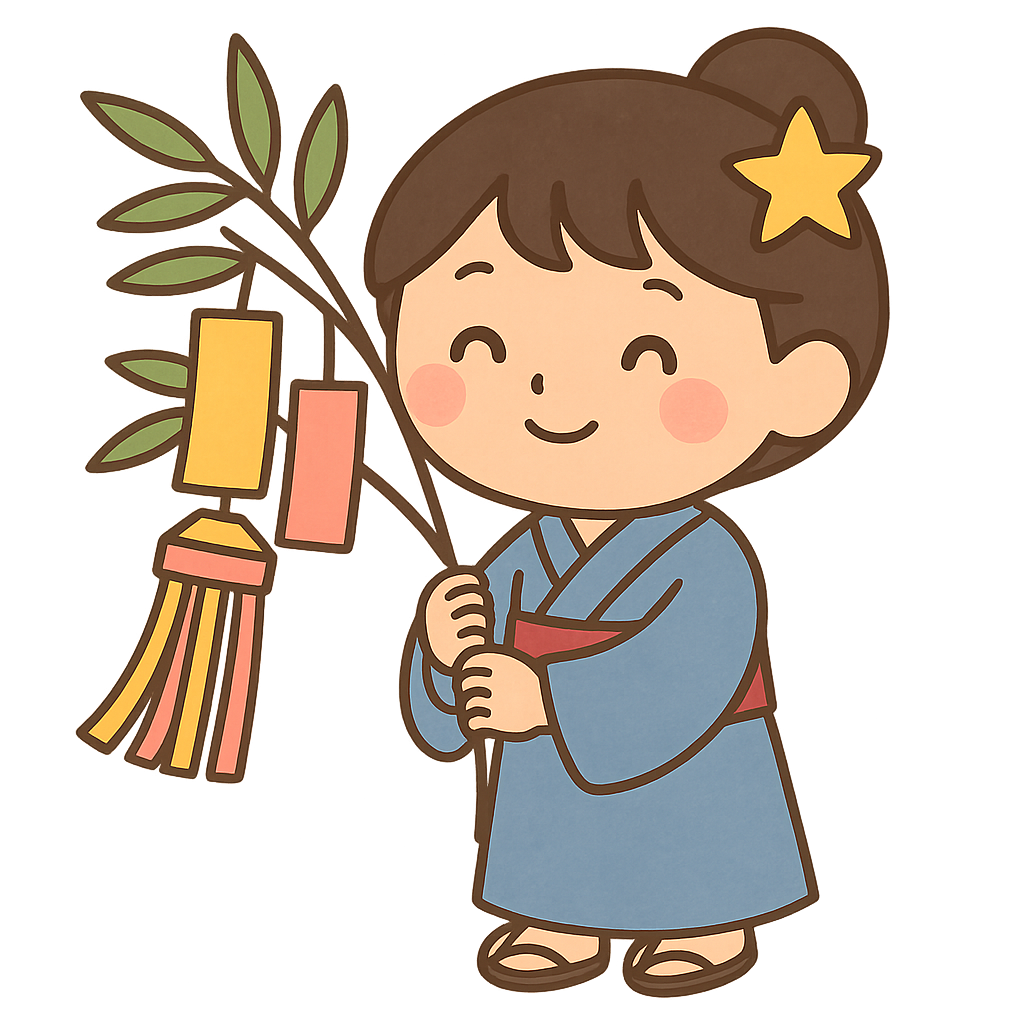
One of my most famous and colorful traditions is about making wishes. People write their hopes and dreams on small, rectangular strips of colorful paper. These paper strips are called tanzaku. A person might write a wish to become a better soccer player, to learn how to draw, or to wish for good health for their family. After writing their wishes, they tie the tanzaku to the leafy branches of bamboo trees. They also add other beautiful paper decorations, like lanterns and streamers, making the bamboo look bright and festive. People hope that their wishes will be carried up to the heavens and come true.
Today, I am celebrated with big, lively festivals in many cities and towns throughout Japan. During my celebrations, entire streets and shopping areas are filled with decorations. You can see huge, colorful paper streamers hanging from high above, dancing in the summer breeze. It's a wonderful time for communities to come together. Families and friends walk through the decorated streets, enjoy fun parades, play games at stalls, and eat special festival foods. It is a time for everyone to share in the magic of the stars and the hope of wishes.
Wow facts
About
Tanabata, also known as the Star Festival, is a Japanese festival that celebrates the legendary annual meeting of the deities Orihime and Hikoboshi, represented by the stars Vega and Altair.
Take a Quiz
Question 1 of 4
What does the name Tanabata mean in English?
Want to do even more?
Go beyond exploring. Unlock tools that turn every story into real learning.

Storypie Plus for families
Full stories, quizzes, and printables. Nights and car rides, sorted.
- Unlimited audio stories
- Create Mode: your child stars in the story
- Offline downloads
- Printable worksheets & coloring pages

Why Storypie for Schools
Students engaged. Prep in seconds. Evenings back to you.
- Worksheets & Quizzes
- Classroom Management
- Formative Assessment
- Custom Curriculum & Lesson Plans
- 27 Languages

Why Storypie for Homeschool
Curriculum done. They'll ask for more. Hours back in your day.
- Worksheet Generator
- First-Person Audio Stories
- Built-in Comprehension Quizzes
- Custom Curriculum & Lesson Plans
- Print & Go Activities