English

Tanabata - Japanese
Tanabata, also known as the Star Festival…
Reads at Grades 6–8 Listens at Grades 4–8
Print & create
Answer keys·No prep·Free with an account
28 worksheets · answer keys · full story · quiz · Ages 10-12 · CEFR B2
Plus adds 279,000+ more stories in 27 languages, audio for every one, and printables for all of them.
Just want Tanabata - Japanese?
I am Tanabata, a name that means “Evening of the Seventh.” In Japan, many people know me as the Star Festival. My observance is centered around the ancient and romantic story of two celestial lovers: Orihime, the Weaver Princess, and Hikoboshi, the Cowherd. According to the legend that inspires my celebration, Orihime was a gifted weaver who made beautiful clothes for her father, the Sky King. Hikoboshi was a dedicated cowherd. When they met, they fell so deeply in love that they neglected their duties. The Sky King grew angry and separated them, placing them on opposite sides of the great Amanogawa, or Heavenly River, which you see in the night sky as the Milky Way. The two are represented by the bright stars Vega (Orihime) and Altair (Hikoboshi). Moved by Orihime's sadness, her father allows them to reunite for just one night each year, on this special evening.
My story, though deeply cherished in Japan, has its roots in another country. The legend originally came from an ancient Chinese folktale and is connected to a festival there known as Qixi. This story was first introduced to Japan’s imperial court during the Nara Period, a time of significant cultural exchange in the 8th century. For many centuries, my observance was quite exclusive. I was celebrated primarily by the emperor and the aristocracy, the noble and wealthy members of society. They would hold elegant poetry parties, composing verses inspired by the stars and the tale of the separated lovers while gazing up at the night sky. These early celebrations were refined and artistic, reflecting the culture of the imperial court.
Tanabata: The Star Festival
I am Tanabata, a name that means “Evening of the Seventh.” In Japan, many people know me as the Star Festival. My observance is centered around the ancient and romantic story of two celestial lovers: Orihime, the Weaver Princess, and Hikoboshi, the Cowherd. According to the legend that inspires my celebration, Orihime was a gifted weaver who made beautiful clothes for her father, the Sky King. Hikoboshi was a dedicated cowherd. When they met, they fell so deeply in love that they neglected their duties. The Sky King grew angry and separated them, placing them on opposite sides of the great Amanogawa, or Heavenly River, which you see in the night sky as the Milky Way. The two are represented by the bright stars Vega (Orihime) and Altair (Hikoboshi). Moved by Orihime's sadness, her father allows them to reunite for just one night each year, on this special evening.
My story, though deeply cherished in Japan, has its roots in another country. The legend originally came from an ancient Chinese folktale and is connected to a festival there known as Qixi. This story was first introduced to Japan’s imperial court during the Nara Period, a time of significant cultural exchange in the 8th century. For many centuries, my observance was quite exclusive. I was celebrated primarily by the emperor and the aristocracy, the noble and wealthy members of society. They would hold elegant poetry parties, composing verses inspired by the stars and the tale of the separated lovers while gazing up at the night sky. These early celebrations were refined and artistic, reflecting the culture of the imperial court.
My traditions did not remain confined within palace walls forever. Over a long period, my popularity grew and spread to people all over Japan. A major shift occurred during the country's Edo period, which lasted from 1603 to 1868. It was during this time that my customs and the story of Orihime and Hikoboshi became widely known among the common people. As my observance spread, it began to blend with existing local customs. Some of these traditions were borrowed from the Obon festival, an important time for honoring the spirits of ancestors. This mixing of different beliefs and practices helped shape me into the vibrant and colorful festival that many people recognize today. The popular, community-focused aspects of my celebration began to truly flourish during this era.
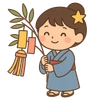
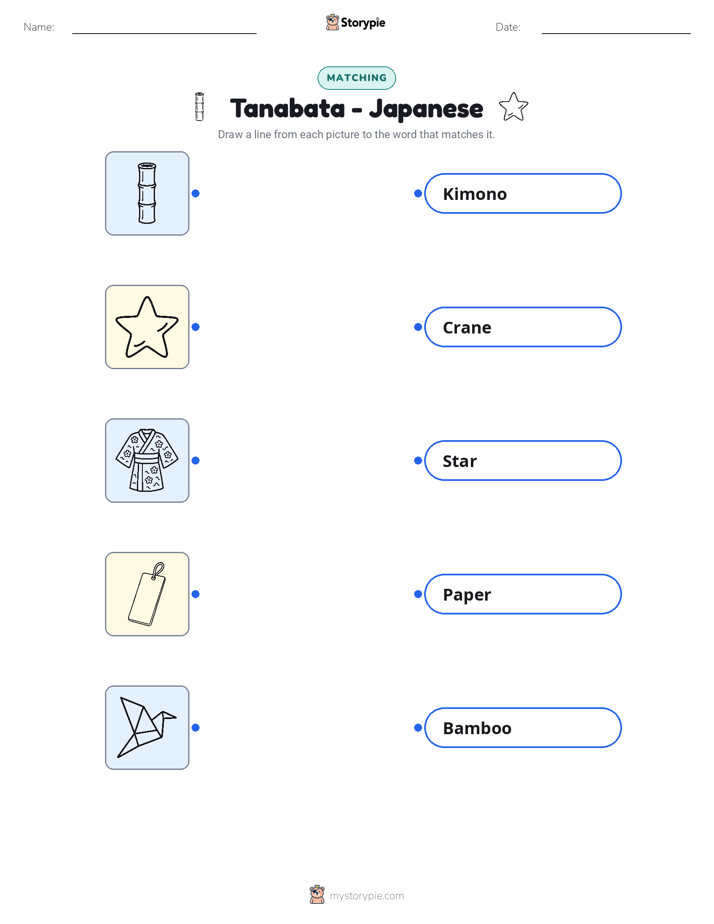
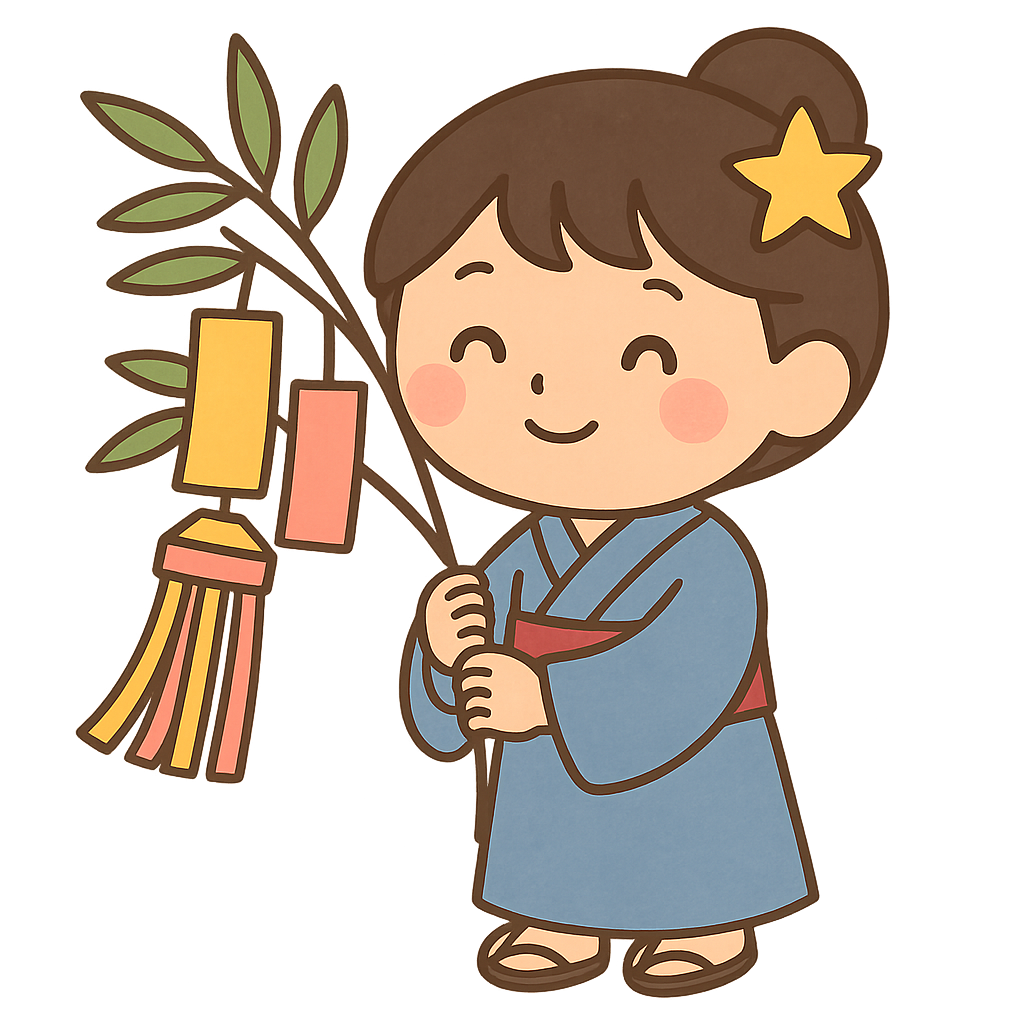
Of all my customs, the most famous involves writing wishes on small, colorful strips of paper. These are called 'tanzaku.' When this tradition first began, people’s wishes were often related to the skills of Orihime, the Weaver Princess. Participants would wish for better abilities in crafts, particularly weaving and calligraphy. It was a way to seek improvement in one’s own artistic and practical talents. Today, the tradition has expanded, and people write down all kinds of personal hopes and dreams, from passing an exam to wishing for good health for their families. Once the wishes are written, the tanzaku are carefully tied to the branches of freshly cut bamboo. The bamboo, with its long, straight stalks reaching upward, is believed to act as a conduit, carrying these heartfelt wishes toward the heavens where Orihime and Hikoboshi can receive and grant them.
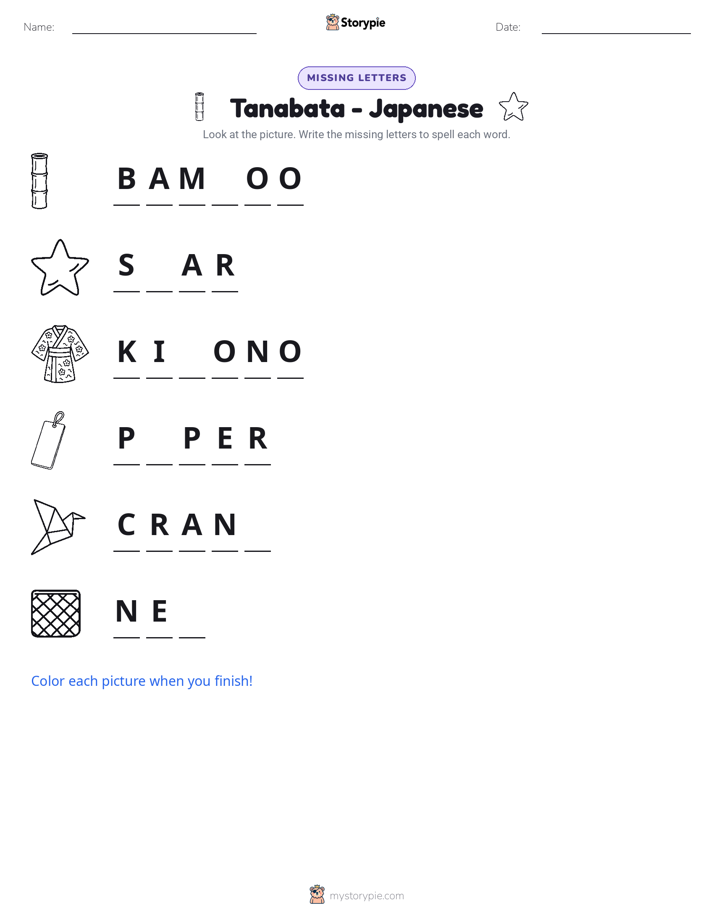
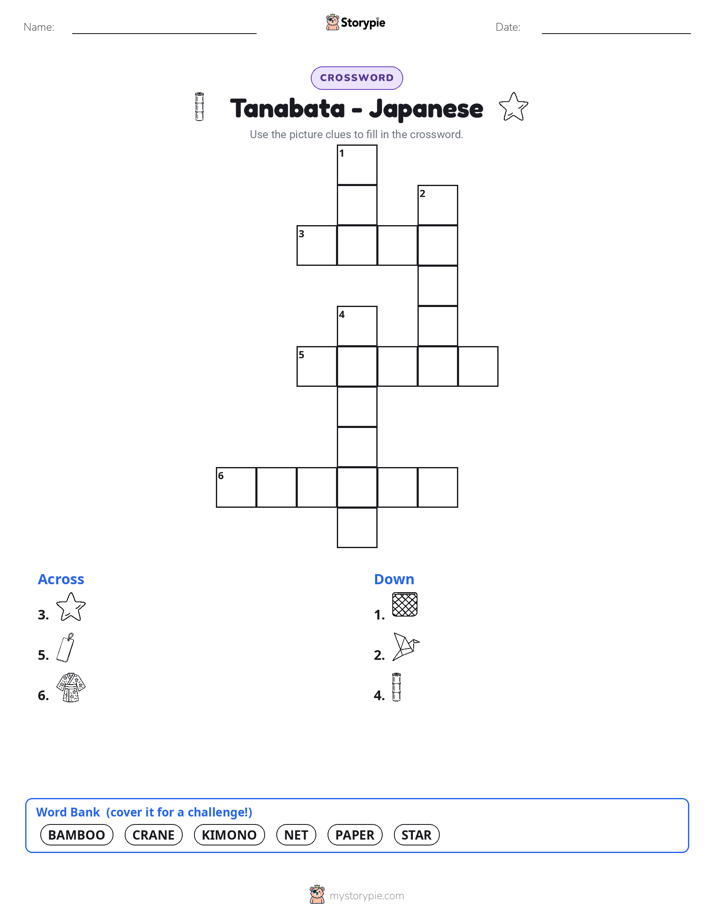
While tanzaku are the most visible of my decorations, they are just one part of a set of seven traditional ornaments. Each of these decorations has its own special meaning and purpose, contributing to the hopeful atmosphere of the festival. For example, people create paper kimonos called 'kamigoromo.' These are not for wearing but are hung as a charm to ward off bad health and accidents. Another important decoration is the 'orizuru,' or paper crane, which is a powerful symbol of longevity and is folded with a wish for a long and healthy life. People also make 'toami,' which are paper nets. These decorations represent a wish for a good harvest for farmers or a plentiful catch for fishermen. Together, these seven types of decorations create a beautiful and meaningful display, filling streets and homes with color and symbolism.
My celebration is officially set on the 7th day of the 7th month, a date that echoes the meaning of my name, “Evening of the Seventh.” On the modern Gregorian calendar that is used in most parts of the world, this date is July 7th. However, my historical roots are tied to the older lunisolar calendar that was based on the cycles of the moon. Because of this, the timing of my celebration can vary. In some regions of Japan, people observe me about a month later, sometime in August. This later date often aligns more closely with the traditional seasonal timing of the festival in the old calendar. It is also a time when the summer sky is clearer, making it easier to see the stars Vega and Altair shining brightly on either side of the Milky Way.
Today, I am celebrated with great enthusiasm across Japan. Many cities host large, lively festivals that draw huge crowds. In these places, public spaces like main streets and shopping arcades are transformed by enormous, spectacular decorations. Long, flowing streamers, some many meters in length, hang alongside towering bamboo displays adorned with countless tanzaku and other paper ornaments. Some of my most famous modern festivals, such as those held in the cities of Sendai and Hiratsuka, attract millions of visitors each year. People come to admire the stunning decorations, enjoy delicious food from street stalls, and sometimes watch parades or other performances. These grand public celebrations have made me one of the five great seasonal festivals, or 'gosekku,' of Japan, a cherished part of the summer season for many people.
Wow facts
About
Tanabata, also known as the Star Festival, is a Japanese festival that celebrates the legendary annual meeting of the deities Orihime and Hikoboshi, represented by the stars Vega and Altair.
Take a Quiz
Question 1 of 5
What is the central conflict in the legend that Tanabata commemorates?
Want to do even more?
Go beyond exploring. Unlock tools that turn every story into real learning.

Storypie Plus for families
Full stories, quizzes, and printables. Nights and car rides, sorted.
- Unlimited audio stories
- Create Mode: your child stars in the story
- Offline downloads
- Printable worksheets & coloring pages

Why Storypie for Schools
Students engaged. Prep in seconds. Evenings back to you.
- Worksheets & Quizzes
- Classroom Management
- Formative Assessment
- Custom Curriculum & Lesson Plans
- 27 Languages

Why Storypie for Homeschool
Curriculum done. They'll ask for more. Hours back in your day.
- Worksheet Generator
- First-Person Audio Stories
- Built-in Comprehension Quizzes
- Custom Curriculum & Lesson Plans
- Print & Go Activities