English

World Children's Day
An international day of observance on November 20th…
Reads at Grades 6–8 Listens at Grades 4–8
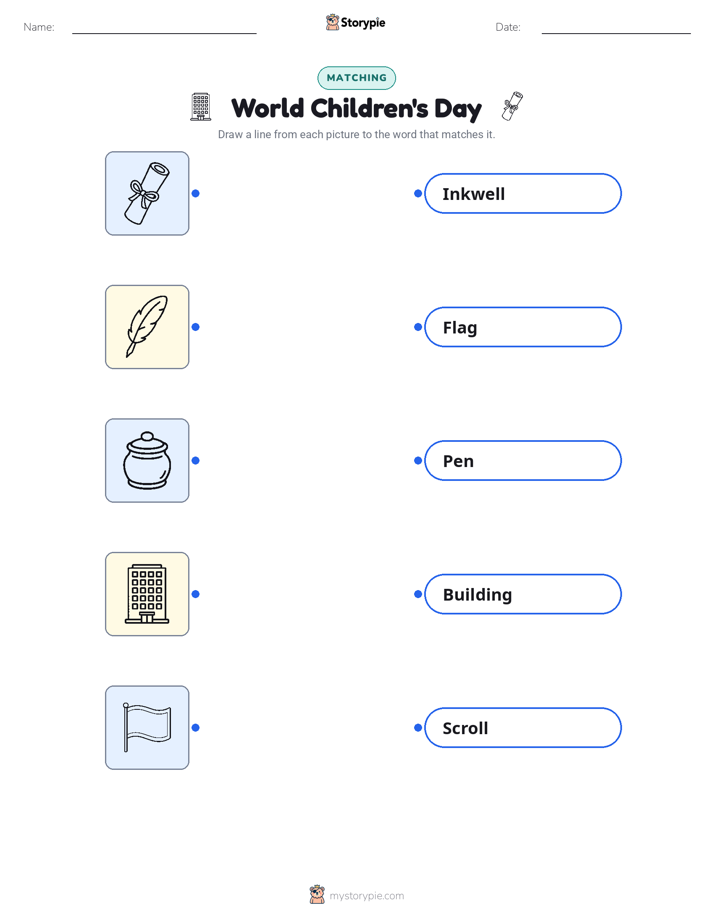
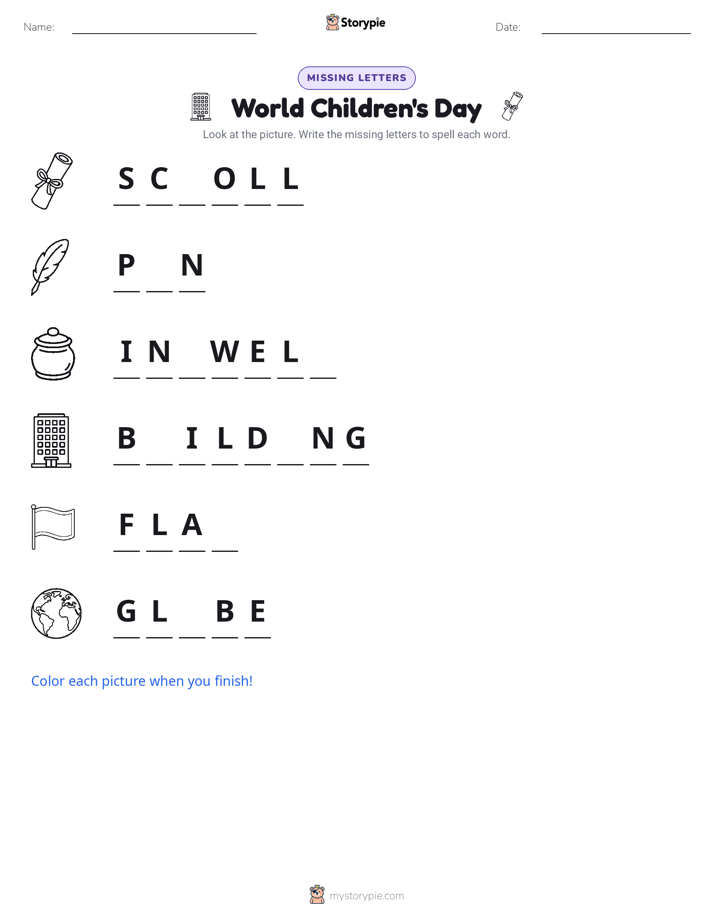
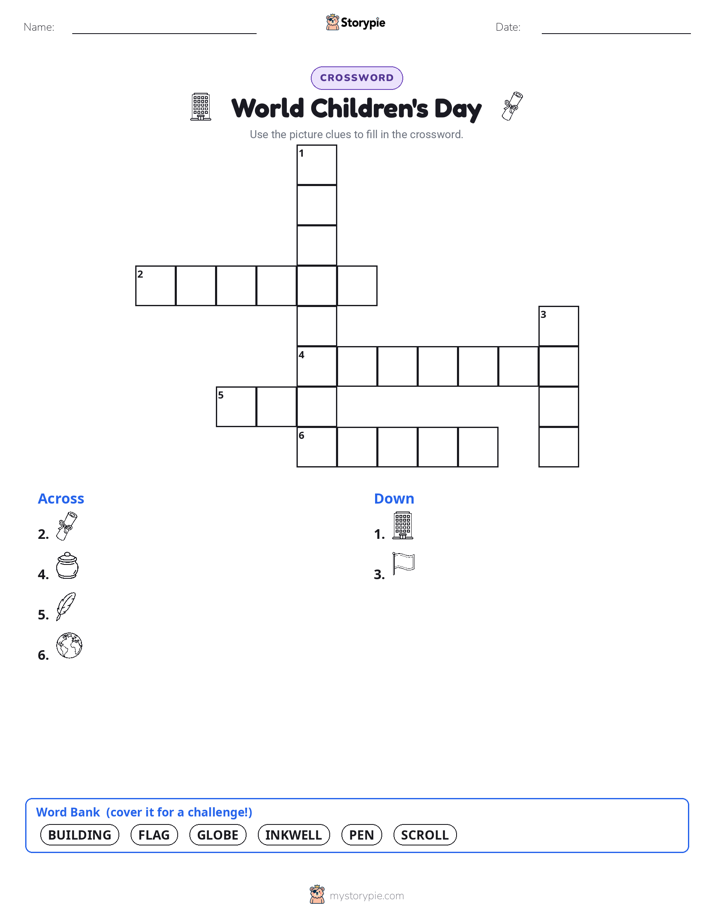
Print & create
Answer keys·No prep·Free with an account
28 worksheets · answer keys · full story · quiz · Ages 10-12 · CEFR B2
Plus adds 279,000+ more stories in 27 languages, audio for every one, and printables for all of them.
Just want World Children's Day?
I am World Children's Day, a day dedicated to children all over the world. My story began in 1954 when the United Nations, an organization of countries that work together for peace and security, created me through a formal decision called a resolution. The purpose behind my creation was twofold. First, it was to encourage international togetherness, bringing people from different nations closer by focusing on a shared goal. Second, and most importantly, it was to raise awareness about the well-being of children everywhere. The idea was to set aside one day each year for the world to think about its youngest citizens, to celebrate them, and to renew its commitment to protecting their future and ensuring they can grow up happy and healthy.
When I was first established, countries were encouraged to observe me on a date that made sense for them. This meant I was observed on many different days depending on the country. However, over time, a specific date became central to my identity. Today, the United Nations officially observes me every year on November 20th. This date was not selected at random or for convenience. It was chosen because it holds a profound significance in the history of children's rights. It marks the anniversary of two of the most important promises ever made to children by the global community, turning my observance into a powerful reminder of those commitments. My date is a direct link to the progress made in recognizing that children have unique and fundamental rights.
I Am World Children's Day
I am World Children's Day, a day dedicated to children all over the world. My story began in 1954 when the United Nations, an organization of countries that work together for peace and security, created me through a formal decision called a resolution. The purpose behind my creation was twofold. First, it was to encourage international togetherness, bringing people from different nations closer by focusing on a shared goal. Second, and most importantly, it was to raise awareness about the well-being of children everywhere. The idea was to set aside one day each year for the world to think about its youngest citizens, to celebrate them, and to renew its commitment to protecting their future and ensuring they can grow up happy and healthy.
When I was first established, countries were encouraged to observe me on a date that made sense for them. This meant I was observed on many different days depending on the country. However, over time, a specific date became central to my identity. Today, the United Nations officially observes me every year on November 20th. This date was not selected at random or for convenience. It was chosen because it holds a profound significance in the history of children's rights. It marks the anniversary of two of the most important promises ever made to children by the global community, turning my observance into a powerful reminder of those commitments. My date is a direct link to the progress made in recognizing that children have unique and fundamental rights.
The first of these historic milestones occurred on November 20th, 1959. On that day, the UN General Assembly formally adopted a groundbreaking document known as the Declaration of the Rights of the Child. A declaration is a strong statement of principles and goals. This one laid out ten key principles that aimed to guide how children should be treated and cared for. It stated that every child has a right to a name and a nationality from birth, ensuring their legal identity. It also affirmed that children who have physical, mental, or social disabilities should receive special care, treatment, and education. These principles were a major step forward, establishing a global consensus that children everywhere deserve protection and the opportunity to thrive.
Thirty years passed, and on that very same date, November 20th, 1989, an even more powerful promise was made. The United Nations adopted the Convention on the Rights of the Child. A convention is different from a declaration; it is an international treaty, which means it is a legally binding agreement for the countries that sign it. This document is far more detailed, defining the specific civil, political, economic, social, health, and cultural rights that belong to every child. These include the right to an education, the right to the highest possible standard of health care, and the right to be protected from violence, abuse, and neglect. This Convention has become the most widely accepted human rights treaty in history, showing a near-universal commitment to upholding the dignity and rights of every child.
Today, people around the world observe my anniversary in a wide variety of ways. A key organization in these efforts is UNICEF, which stands for the United Nations Children's Fund. UNICEF works in over 190 countries and territories to save children's lives, to defend their rights, and to help them fulfill their potential. On my day, UNICEF often launches global campaigns to draw attention to pressing issues affecting children. Many schools also participate in my observance. They might hold special assemblies, lessons, or projects where students learn about the rights they are guaranteed under the Convention. These activities also encourage students to think about the challenges that children in other parts of the world face, fostering a sense of global citizenship and empathy.
A central idea of my modern observance is that I should be a day 'for children, by children.' This principle recognizes that young people are not just subjects to be protected, but are also individuals with their own valuable ideas, experiences, and perspectives. To put this idea into action, events are organized to provide a platform for children and teenagers to speak out on the issues that matter most to them, from education reform to environmental protection. In some of the most visible demonstrations of this principle, children 'take over' high-profile roles for the day. A young person might become the editor of a major newspaper, host a television program, or even sit in on meetings with government leaders to advocate for their peers and share their vision for a better world.
To help focus global attention, my annual observance often has a specific theme. This theme highlights a particular challenge to children's well-being, such as the impact of climate change on future generations or the importance of mental health support for young people. This allows organizations, governments, and individuals to coordinate their efforts and make a bigger impact. I also have an official color: blue. The 'Go Blue' campaign is a simple but powerful way for anyone to show their support for children's rights. People are encouraged to wear blue clothes or share blue images on social media. In a dramatic display of solidarity, famous landmarks and buildings around the world—from ancient monuments to modern skyscrapers—are lit up in blue light on November 20th, sending a bright, visible message of hope and commitment to every child.
Wow facts
About
An international day of observance on November 20th, established by the United Nations to promote children's rights, welfare, and international togetherness.
Take a Quiz
Question 1 of 5
What is the main difference between the 1959 Declaration and the 1989 Convention mentioned in the story?
Want to do even more?
Go beyond exploring. Unlock tools that turn every story into real learning.

Storypie Plus for families
Full stories, quizzes, and printables. Nights and car rides, sorted.
- Unlimited audio stories
- Create Mode: your child stars in the story
- Offline downloads
- Printable worksheets & coloring pages

Why Storypie for Schools
Students engaged. Prep in seconds. Evenings back to you.
- Worksheets & Quizzes
- Classroom Management
- Formative Assessment
- Custom Curriculum & Lesson Plans
- 27 Languages

Why Storypie for Homeschool
Curriculum done. They'll ask for more. Hours back in your day.
- Worksheet Generator
- First-Person Audio Stories
- Built-in Comprehension Quizzes
- Custom Curriculum & Lesson Plans
- Print & Go Activities