English

Yennayer - Amazigh
Yennayer is the Amazigh (Berber) New Year, celebrated annually, typically around January 12th…
Reads at Grades 3–5 Listens at Grades 1–5
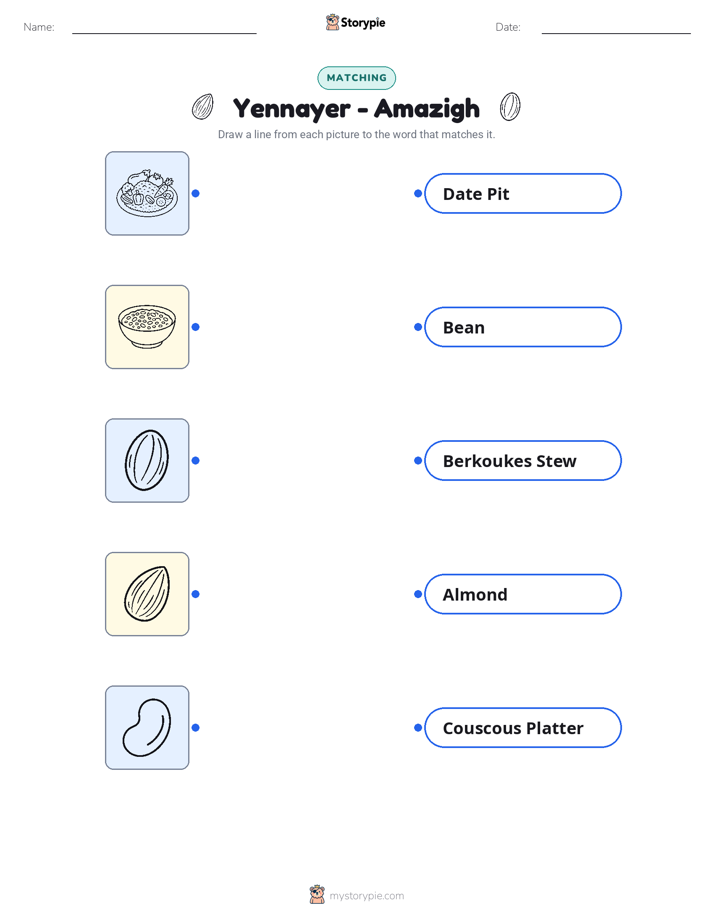
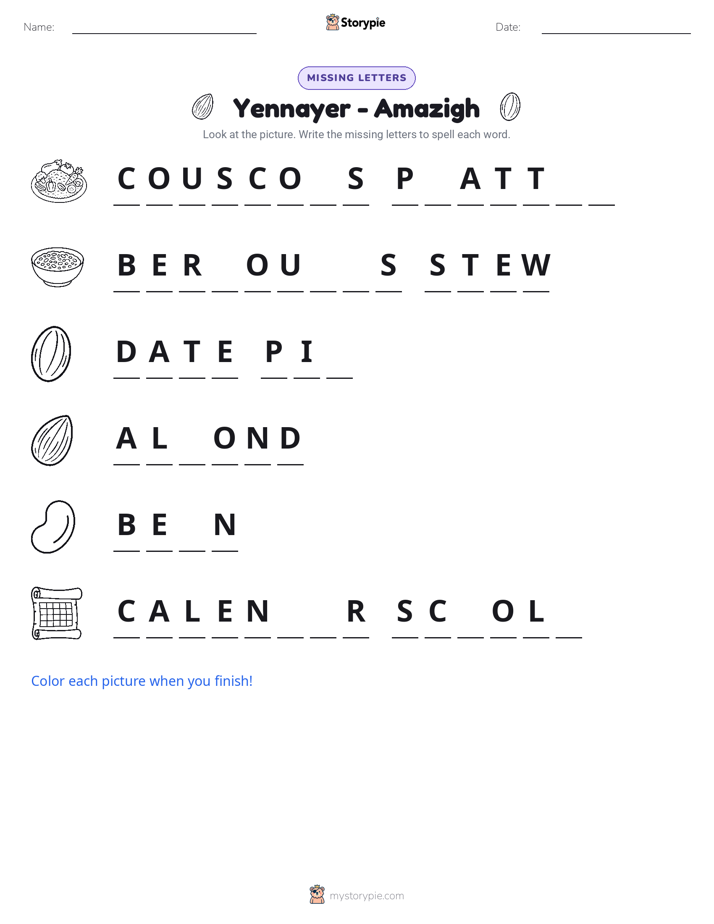
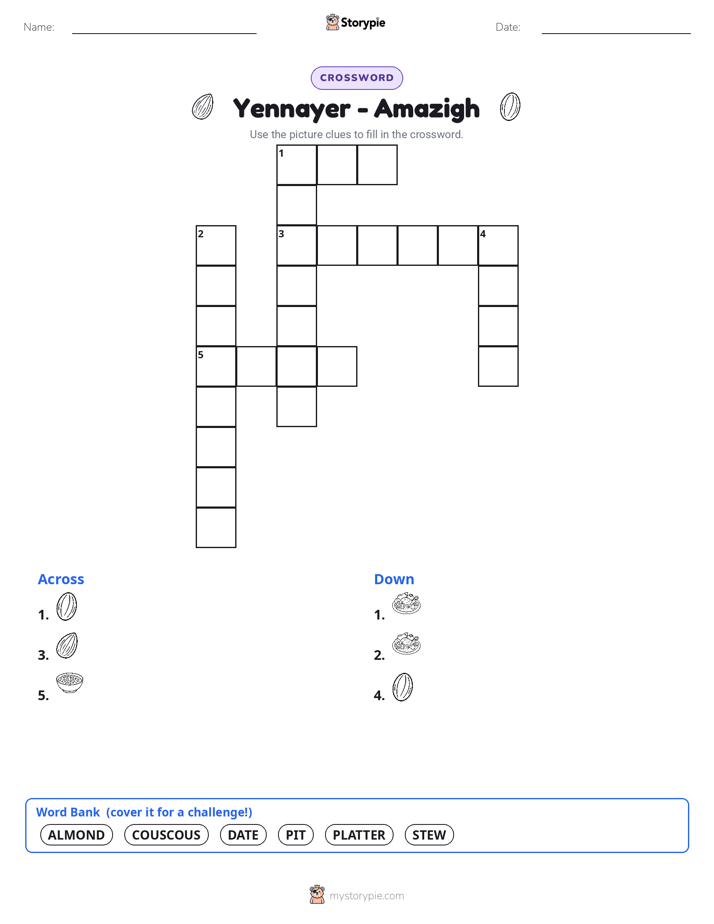
Print & create
Answer keys·No prep·Free with an account
28 worksheets · answer keys · full story · quiz · Ages 8-10 · CEFR B1
Plus adds 279,000+ more stories in 27 languages, audio for every one, and printables for all of them.
Just want Yennayer - Amazigh?
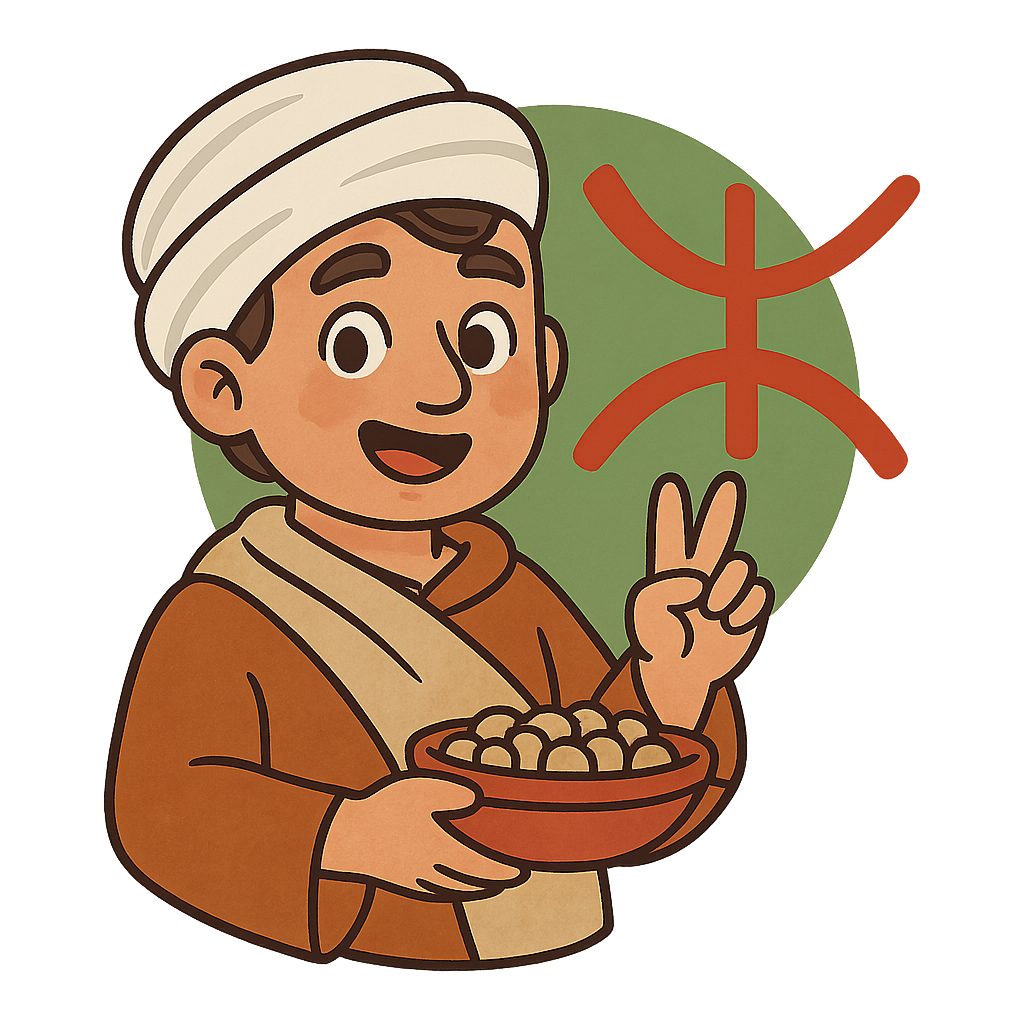
Hello, I am Yennayer, the Amazigh New Year. People across North Africa know me as a time of joy, hope, and connection to the land. My name itself tells a story about new beginnings. It comes from two words in the Amazigh language: 'Yenn,' which means 'one,' and 'Ayyur,' which means 'month.' Together, they mean 'the first month.' I mark the start of the year for the Amazigh people, who are also known as Berbers, an indigenous group with a rich history in the region. My celebration is a way to welcome a fresh start, honor the earth that provides food, and look forward to the beginning of the farming season. When people gather to observe me, they are celebrating the cycle of life and the promise of a bountiful year ahead.
My roots are ancient, stretching back for many centuries. My oldest traditions are not tied to a single historical event but to the rhythms of nature and the agricultural world. For thousands of years, the people of North Africa have depended on the land for their survival. To them, the start of the agricultural year was a deeply important moment. It was a time to prepare the fields and to hope for favorable weather and a successful harvest. These early customs are the heart of my modern celebrations. The community gatherings, shared meals, and festive atmosphere all grew from this long-standing tradition of honoring the powerful bond between people and the earth that sustains them.
If you look at a common calendar, you might be surprised by my timing. I don't arrive on January 1st. Instead, people celebrate me on either January 12th or January 13th. This is because my date is determined by the Julian calendar, which was a widely used calendar system in the past. It is slightly different from the Gregorian calendar that most of the world uses today. The calendar that I represent is unique to the Amazigh people. It has its own starting point for counting the years, which makes it distinct. This calendar connects my modern observance to a very specific and important moment in Amazigh history, which took place a very long time ago.
I Am Yennayer, the Amazigh New Year
Hello, I am Yennayer, the Amazigh New Year. People across North Africa know me as a time of joy, hope, and connection to the land. My name itself tells a story about new beginnings. It comes from two words in the Amazigh language: 'Yenn,' which means 'one,' and 'Ayyur,' which means 'month.' Together, they mean 'the first month.' I mark the start of the year for the Amazigh people, who are also known as Berbers, an indigenous group with a rich history in the region. My celebration is a way to welcome a fresh start, honor the earth that provides food, and look forward to the beginning of the farming season. When people gather to observe me, they are celebrating the cycle of life and the promise of a bountiful year ahead.
My roots are ancient, stretching back for many centuries. My oldest traditions are not tied to a single historical event but to the rhythms of nature and the agricultural world. For thousands of years, the people of North Africa have depended on the land for their survival. To them, the start of the agricultural year was a deeply important moment. It was a time to prepare the fields and to hope for favorable weather and a successful harvest. These early customs are the heart of my modern celebrations. The community gatherings, shared meals, and festive atmosphere all grew from this long-standing tradition of honoring the powerful bond between people and the earth that sustains them.
If you look at a common calendar, you might be surprised by my timing. I don't arrive on January 1st. Instead, people celebrate me on either January 12th or January 13th. This is because my date is determined by the Julian calendar, which was a widely used calendar system in the past. It is slightly different from the Gregorian calendar that most of the world uses today. The calendar that I represent is unique to the Amazigh people. It has its own starting point for counting the years, which makes it distinct. This calendar connects my modern observance to a very specific and important moment in Amazigh history, which took place a very long time ago.
The starting point for the Amazigh calendar that I mark is the year 950 BCE. This date wasn't chosen when my agricultural traditions first began, but much more recently, during the 20th century. Scholars and cultural leaders selected this year to commemorate a powerful Amazigh king named Shoshenq I. In 950 BCE, King Shoshenq I achieved something remarkable: he became the Pharaoh of Egypt. He was so influential that he founded a new dynasty, the 22nd Dynasty, which ruled Egypt for many years. This event is remembered as a moment of great pride and a major achievement in Amazigh history. By starting the calendar from this year, my observance honors this legacy of strength and leadership.
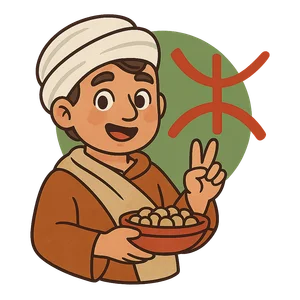
When my day arrives, homes fill with the sounds of joy and the delicious smells of cooking. My celebration is a time for families and friends to come together for large, happy meals. One of the most important and traditional dishes prepared for me is a special kind of couscous. It is often made with seven different vegetables. The number seven is not random; it is chosen to symbolize a rich, diverse, and plentiful year. Eating this meal is a way of expressing a wish for abundance and a good harvest. In some communities, my arrival brings another cheerful tradition. Children might walk from house to house in their neighborhoods, singing special songs for me. In return, their neighbors give them gifts of sweets, nuts, and dried fruits, sharing the festive spirit with the younger generation.
Today, I am more than just a new year celebration; I am an important and vibrant symbol of Amazigh culture. Observing me is a way for people to connect with their unique language, their deep history, and their identity. It is a time for older generations to pass down traditions and stories, ensuring that their heritage continues to thrive. In recent years, my significance has received even greater acknowledgment. Countries with large Amazigh populations, such as Algeria and Morocco, have officially recognized me as a national public holiday. This means that schools and businesses close, allowing even more people to join in the festivities and celebrate the rich cultural tapestry of the region. I continue to be a day of pride, community, and hope for the future.
Wow facts
About
Yennayer is the Amazigh (Berber) New Year, celebrated annually, typically around January 12th, but the exact date can vary, with some regions observing it on January 13th or 14th across North Africa. It marks the beginning of the agrarian year according to the Julian calendar and is a celebration of Amazigh culture and heritage.
Take a Quiz
Question 1 of 5
The story says that the Amazigh calendar's starting point honors a 'great achievement.' What clues in the story tell you why King Shoshenq I becoming Pharaoh was considered a great achievement?
Want to do even more?
Go beyond exploring. Unlock tools that turn every story into real learning.

Storypie Plus for families
Full stories, quizzes, and printables. Nights and car rides, sorted.
- Unlimited audio stories
- Create Mode: your child stars in the story
- Offline downloads
- Printable worksheets & coloring pages

Why Storypie for Schools
Students engaged. Prep in seconds. Evenings back to you.
- Worksheets & Quizzes
- Classroom Management
- Formative Assessment
- Custom Curriculum & Lesson Plans
- 27 Languages

Why Storypie for Homeschool
Curriculum done. They'll ask for more. Hours back in your day.
- Worksheet Generator
- First-Person Audio Stories
- Built-in Comprehension Quizzes
- Custom Curriculum & Lesson Plans
- Print & Go Activities