English

Yennayer - Amazigh
Yennayer is the Amazigh (Berber) New Year, celebrated annually, typically around January 12th…
Reads at Grades 6–8 Listens at Grades 4–8
Print & create
Answer keys·No prep·Free with an account
28 worksheets · answer keys · full story · quiz · Ages 10-12 · CEFR B2
Plus adds 279,000+ more stories in 27 languages, audio for every one, and printables for all of them.
Just want Yennayer - Amazigh?

I am Yennayer, the Amazigh New Year. My name may sound familiar, as it comes from the Latin word for January, but my spirit is deeply rooted in the culture of the Amazigh people, who are also known as Berbers. For communities across North Africa and for the Amazigh diaspora around the world, I am a cherished celebration of renewal, heritage, and identity. When people observe me, they are not just marking the start of a new calendar year; they are connecting with ancient traditions and expressing hope for a prosperous and fortunate year to come. I represent a bridge between the past and the future, a time for families to gather and for a culture to celebrate its enduring presence.
My oldest traditions are tied directly to the rhythms of the earth. For centuries, long before my date was linked to any single historical figure or event, people observed me to mark the beginning of the crucial agricultural season. In the fields and villages of North Africa, my arrival signaled a time of hope. Farmers would look to the sky and the soil, and my celebration was a collective prayer for plentiful rain and a bountiful harvest. These early observances were essential for survival, as a good harvest meant that the community would have enough food to sustain itself through the coming year. My purpose was to usher in a period of growth and to ward off the hardships of hunger, connecting people to the land that nourished them.
Today, people welcome my arrival on either the 12th or 13th of January. This date is the first day of the year in the Amazigh calendar, a unique timekeeping system with a long history in North Africa. This calendar is a form of the Julian calendar, which was used widely in the region for centuries, particularly during the time of Roman influence. Unlike purely solar or lunar calendars, the Amazigh calendar is closely aligned with the agricultural seasons. Its structure helps farmers know the best times for planting and harvesting, continuing my ancient connection to the land. My fixed date in the Gregorian month of January provides a consistent time for this important cultural and seasonal milestone.
I Am Yennayer, the Amazigh New Year
I am Yennayer, the Amazigh New Year. My name may sound familiar, as it comes from the Latin word for January, but my spirit is deeply rooted in the culture of the Amazigh people, who are also known as Berbers. For communities across North Africa and for the Amazigh diaspora around the world, I am a cherished celebration of renewal, heritage, and identity. When people observe me, they are not just marking the start of a new calendar year; they are connecting with ancient traditions and expressing hope for a prosperous and fortunate year to come. I represent a bridge between the past and the future, a time for families to gather and for a culture to celebrate its enduring presence.
My oldest traditions are tied directly to the rhythms of the earth. For centuries, long before my date was linked to any single historical figure or event, people observed me to mark the beginning of the crucial agricultural season. In the fields and villages of North Africa, my arrival signaled a time of hope. Farmers would look to the sky and the soil, and my celebration was a collective prayer for plentiful rain and a bountiful harvest. These early observances were essential for survival, as a good harvest meant that the community would have enough food to sustain itself through the coming year. My purpose was to usher in a period of growth and to ward off the hardships of hunger, connecting people to the land that nourished them.
Today, people welcome my arrival on either the 12th or 13th of January. This date is the first day of the year in the Amazigh calendar, a unique timekeeping system with a long history in North Africa. This calendar is a form of the Julian calendar, which was used widely in the region for centuries, particularly during the time of Roman influence. Unlike purely solar or lunar calendars, the Amazigh calendar is closely aligned with the agricultural seasons. Its structure helps farmers know the best times for planting and harvesting, continuing my ancient connection to the land. My fixed date in the Gregorian month of January provides a consistent time for this important cultural and seasonal milestone.
While my agricultural roots are ancient, a more recent layer of meaning was added to connect me with a moment of great historical pride. The current Amazigh calendar year is counted from the year 950 BCE. This specific starting point was chosen in the 20th century by Amazigh cultural advocates to honor a remarkable achievement. In 950 BCE, an Amazigh king named Shoshenq I rose to power in ancient Egypt, becoming Pharaoh and founding the 22nd Dynasty. This event represents a high point of Amazigh influence and strength in ancient history. By linking my observance to King Shoshenq's accession, people transformed me into a powerful symbol of Amazigh history, resilience, and pride in their heritage.
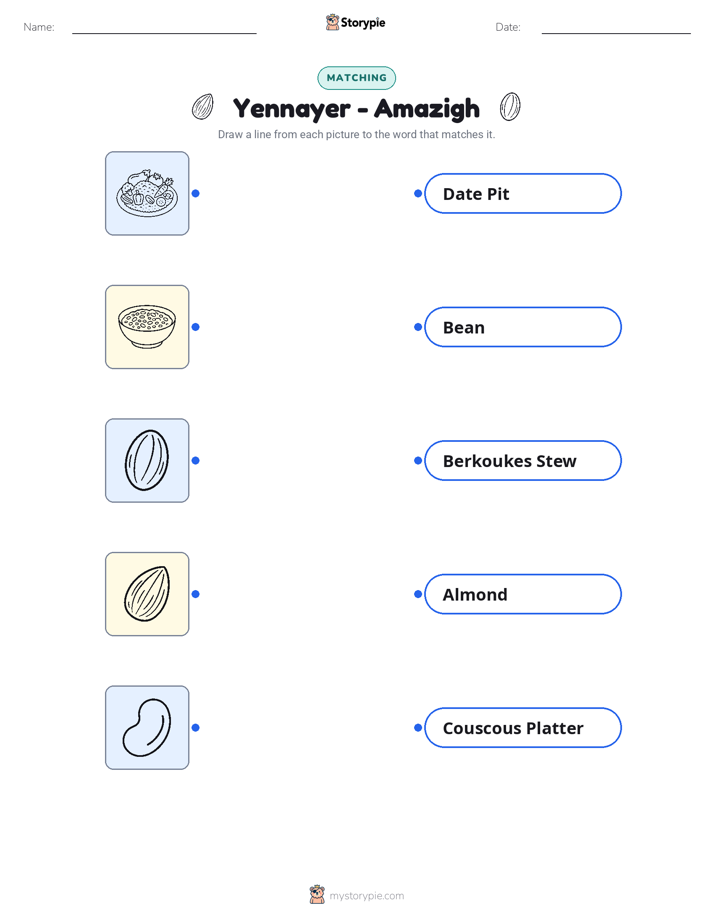
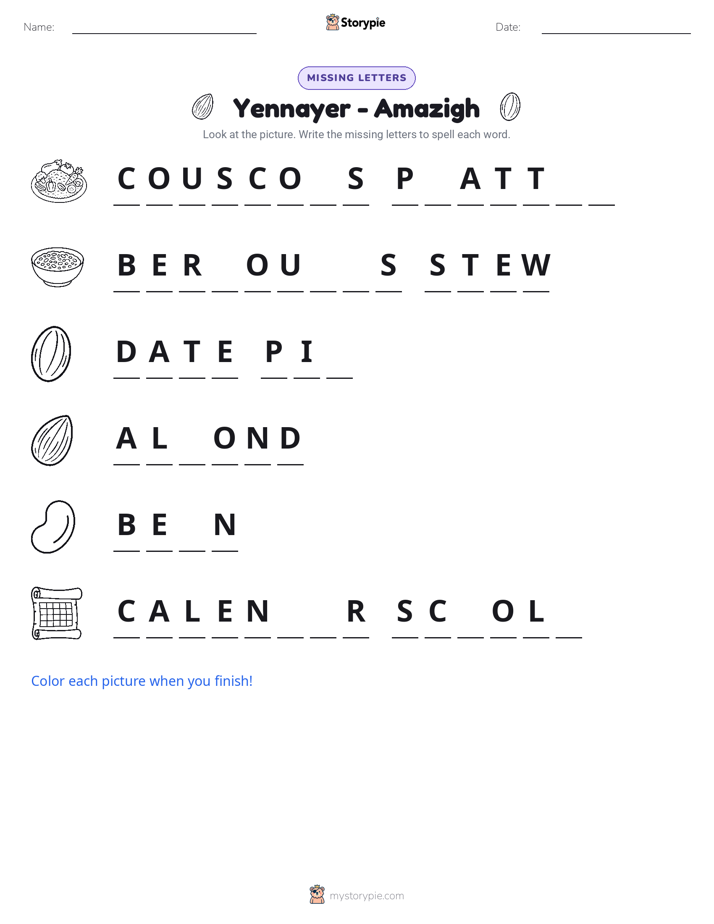
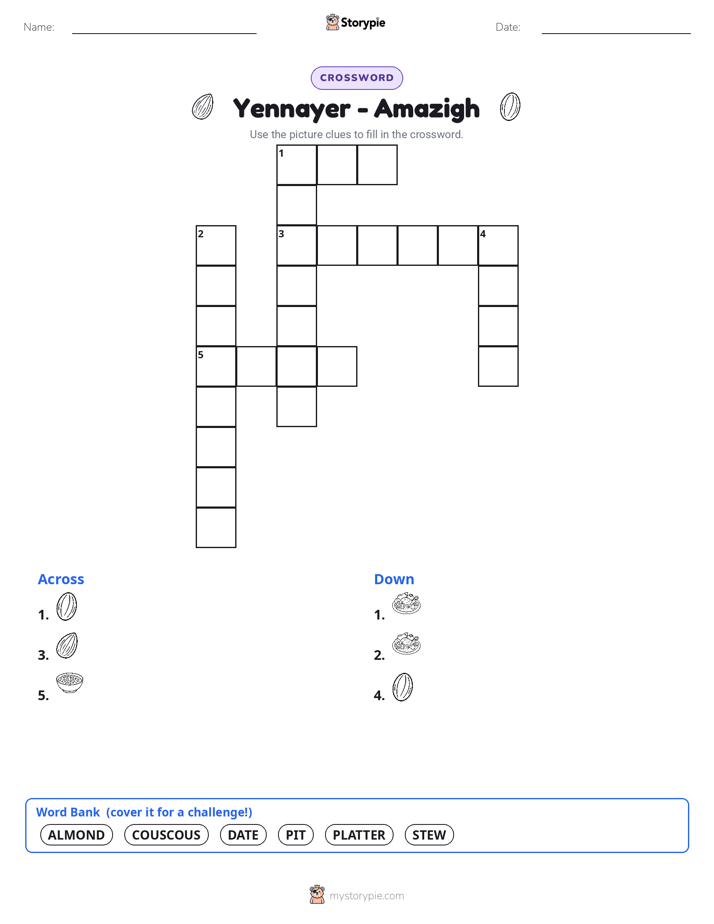
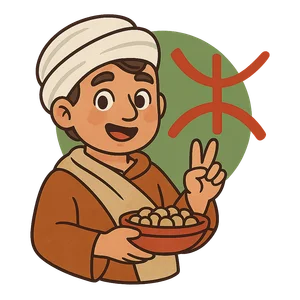
Food is one of the most important and joyous parts of my celebration. On the eve of the new year, families gather to prepare and share delicious meals that symbolize their hopes for wealth and abundance. A very common and beloved dish is a large platter of couscous served with seven different vegetables, a number that itself can represent good fortune. Another traditional meal is a hearty stew made with grains and beans called berkoukes. These dishes are more than just food; they are a central part of the celebration. The act of cooking and eating together strengthens family bonds and fills the home with a sense of shared happiness and optimism to begin the new year.
Beyond the feast, many families practice special customs meant to invite good fortune and bless the household for the year ahead. These traditions are often playful and filled with anticipation. In some regions, a single date pit, an almond, or a special bean is hidden somewhere inside the large communal dish of couscous or berkoukes. As everyone eats, they eagerly search for the hidden prize. According to tradition, the person who finds it in their serving is believed to be blessed with exceptional luck for the entire year. These customs are symbolic acts designed to ward off hunger and poverty, ensuring the home remains a place of prosperity and well-being.
In modern times, my observance has expanded beautifully from private family gatherings into the public sphere. I have become a vibrant, community-wide festival. In countries with large Amazigh populations, such as Algeria and Morocco, I am now officially recognized as a national holiday, a significant step that honors the culture and its contributions to the nation. Today, people celebrate me with lively street parades featuring traditional clothing and music, energetic dancing, and educational conferences that focus on preserving and promoting the Amazigh language and heritage. These public events are a joyful and powerful affirmation of Amazigh identity, allowing a rich culture to share its history and traditions with the world.
Wow facts
About
Yennayer is the Amazigh (Berber) New Year, celebrated annually, typically around January 12th, but the exact date can vary, with some regions observing it on January 13th or 14th across North Africa. It marks the beginning of the agrarian year according to the Julian calendar and is a celebration of Amazigh culture and heritage.
Take a Quiz
Question 1 of 5
Summarize the two different meanings or origins associated with the Yennayer celebration.
Want to do even more?
Go beyond exploring. Unlock tools that turn every story into real learning.

Storypie Plus for families
Full stories, quizzes, and printables. Nights and car rides, sorted.
- Unlimited audio stories
- Create Mode: your child stars in the story
- Offline downloads
- Printable worksheets & coloring pages

Why Storypie for Schools
Students engaged. Prep in seconds. Evenings back to you.
- Worksheets & Quizzes
- Classroom Management
- Formative Assessment
- Custom Curriculum & Lesson Plans
- 27 Languages

Why Storypie for Homeschool
Curriculum done. They'll ask for more. Hours back in your day.
- Worksheet Generator
- First-Person Audio Stories
- Built-in Comprehension Quizzes
- Custom Curriculum & Lesson Plans
- Print & Go Activities