English

14-bis
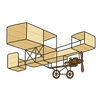
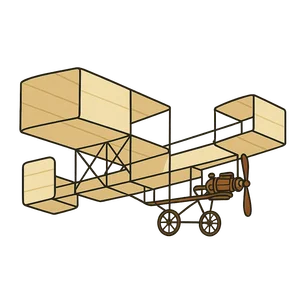
The 14-bis was a pioneering aircraft designed and flown by Brazilian inventor Alberto Santos-Dumont.
Reads at Grades 6–8 Listens at Grades 4–8
Print & create
Answer keys·No prep·Free with an account
28 worksheets · answer keys · full story · quiz · Ages 10-12 · CEFR B2
Plus adds 164,000+ more stories in 27 languages, audio for every one, and printables for all of them.
Just want 14-bis?
My story begins not with a roar, but with a dream in the heart of Paris around 1905. I am the 14-bis, an airplane that looked more like a collection of kites than a creature of the sky. My creator was a remarkable man named Alberto Santos-Dumont, a Brazilian inventor who had made Paris his home. He was already famous, a master of the air in his elegant balloons and steerable airships. But Alberto dreamed of something more. He yearned to conquer the skies not by floating, but by flying with a machine that was heavier than the air it moved through. The city around us buzzed with the thrill of the new century, a time of incredible invention. A great challenge had been issued, the Deutsch-Archdeacon Prize, promising fame and fortune to the first person who could pilot a heavier-than-air machine over a 1-kilometer course. This prize ignited a spark in Alberto. He looked at the birds, he studied the wind, and in his mind, he began to build me. He wasn't just chasing a prize; he was chasing the future, and I was to be his vessel.
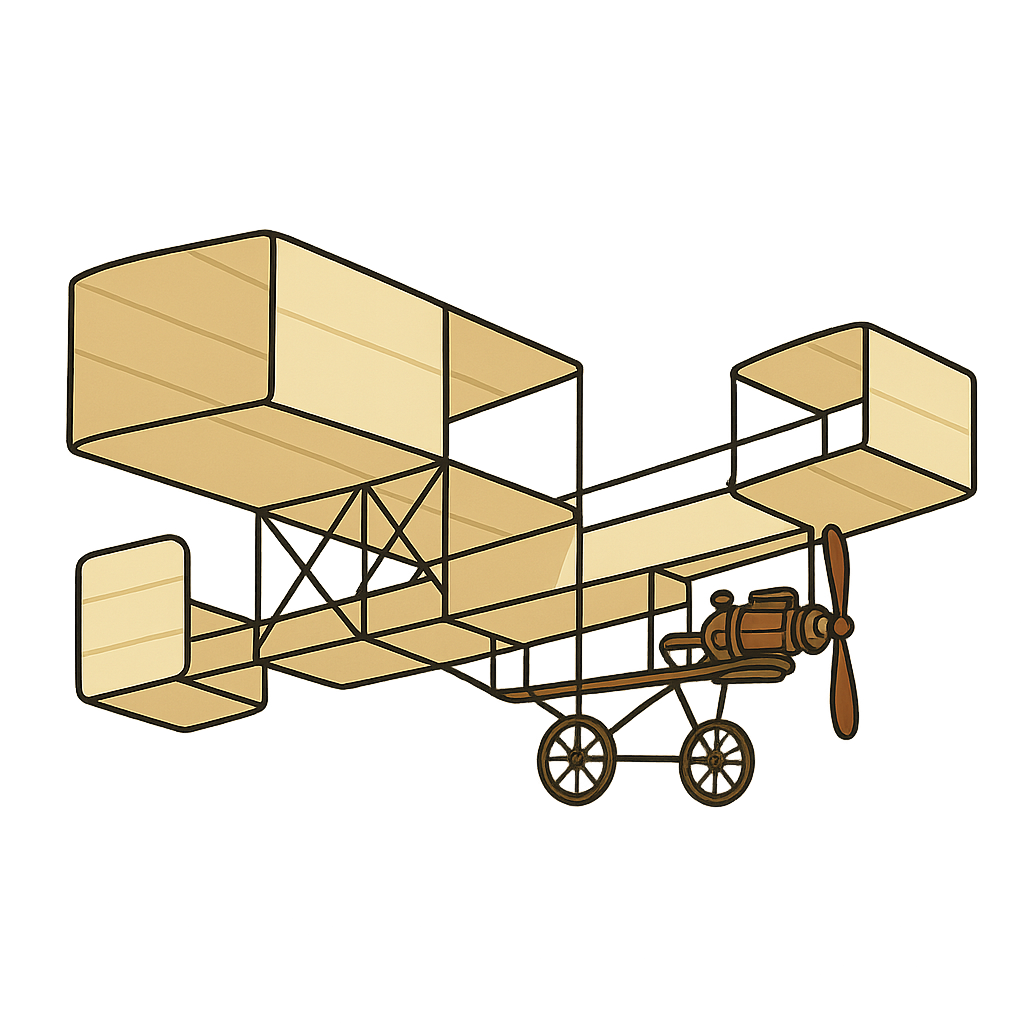
I came to life in 1906, a strange and wonderful creation. My skeleton was a delicate frame of pine and bamboo, chosen for its strength and lightness. My skin was fine Japanese silk, stretched taut to catch the wind. My appearance was unlike anything seen before. Alberto called my design a 'canard', the French word for duck, because my rudders and elevators—the parts used for steering—were positioned at my front, jutting forward like a duck's head and neck. Most people thought wings and a tail should be at the back, but Alberto was a man who thought differently. My body was a series of large, open-ended boxes, like box kites stitched together. This structure was meant to be stable and provide the lift I needed to defy gravity. My name, 14-bis, has a special story. Before I ever tried to fly on my own power, Alberto tested my aerodynamic design by hanging me underneath his graceful airship, the Number 14. Since I was an addition to that craft, I was named '14-bis', which means '14-again' or '14-plus' in French. I was an afterthought that was about to become the main event.
I Am the 14-bis
My story begins not with a roar, but with a dream in the heart of Paris around 1905. I am the 14-bis, an airplane that looked more like a collection of kites than a creature of the sky. My creator was a remarkable man named Alberto Santos-Dumont, a Brazilian inventor who had made Paris his home. He was already famous, a master of the air in his elegant balloons and steerable airships. But Alberto dreamed of something more. He yearned to conquer the skies not by floating, but by flying with a machine that was heavier than the air it moved through. The city around us buzzed with the thrill of the new century, a time of incredible invention. A great challenge had been issued, the Deutsch-Archdeacon Prize, promising fame and fortune to the first person who could pilot a heavier-than-air machine over a 1-kilometer course. This prize ignited a spark in Alberto. He looked at the birds, he studied the wind, and in his mind, he began to build me. He wasn't just chasing a prize; he was chasing the future, and I was to be his vessel.
I came to life in 1906, a strange and wonderful creation. My skeleton was a delicate frame of pine and bamboo, chosen for its strength and lightness. My skin was fine Japanese silk, stretched taut to catch the wind. My appearance was unlike anything seen before. Alberto called my design a 'canard', the French word for duck, because my rudders and elevators—the parts used for steering—were positioned at my front, jutting forward like a duck's head and neck. Most people thought wings and a tail should be at the back, but Alberto was a man who thought differently. My body was a series of large, open-ended boxes, like box kites stitched together. This structure was meant to be stable and provide the lift I needed to defy gravity. My name, 14-bis, has a special story. Before I ever tried to fly on my own power, Alberto tested my aerodynamic design by hanging me underneath his graceful airship, the Number 14. Since I was an addition to that craft, I was named '14-bis', which means '14-again' or '14-plus' in French. I was an afterthought that was about to become the main event.
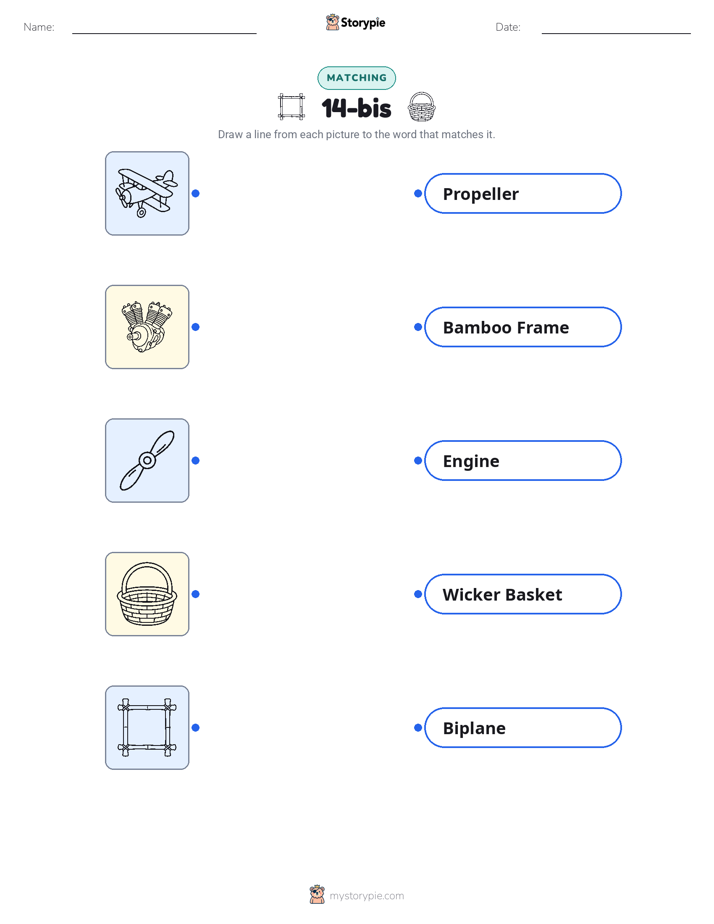
That summer and autumn of 1906 were filled with anticipation. Alberto brought me to the Bagatelle field, a wide-open space on the outskirts of Paris, to see if I could truly fly. At first, there were only short, clumsy hops as my wheels barely left the ground. With each attempt, Alberto made careful adjustments, tweaking my balance and learning my unique personality. The whole city seemed to be watching and waiting. Then came the day that would change everything: October 23rd, 1906. A huge crowd of Parisians gathered, their faces turned to the sky in hope. Officials from the Aéro-Club de France stood ready with their stopwatches and measuring tapes. I could feel the tension and excitement in the air. Alberto climbed into his wicker basket cockpit, and my powerful Antoinette engine sputtered, then roared to life. I trembled as I rolled forward, faster and faster. Then, it happened. I felt the earth fall away beneath me. For a glorious few seconds, I was flying. I soared for 60 meters, a short distance, but it was enough. I had done it. I was the first officially witnessed, powered, heavier-than-air flight in all of Europe. The crowd erupted in a thunderous cheer that I felt in every spar and wire of my frame.
One flight, however spectacular, was not enough for my ambitious creator. Alberto knew I had more to give. Just a few weeks later, on November 12th, 1906, we returned to the Bagatelle field. The autumn air was crisp, and the stakes were higher. That day, I didn't just fly once. I made several flights, each one a little longer, a little more confident than the last. On my final attempt, I flew a remarkable 220 meters, staying airborne for nearly 22 seconds. That flight was more than just a personal best; it set the very first official world aviation record for distance, a record recognized by the newly formed Fédération Aéronautique Internationale. The importance of this moment cannot be overstated. While other pioneers, like the Wright brothers in America, had already flown, their achievements were made in private, far from public view. My flights were different. They were a public spectacle, verified by officials and celebrated by thousands. I proved to the world, in a way that no one could deny, that the age of the airplane had arrived. I was the flying machine that everyone saw, the one that made the impossible feel real.
My time in the spotlight was brief. The world of aviation was moving at a breathtaking pace, and my box-kite design was soon surpassed by more advanced and efficient aircraft. But my purpose was never to be the final word in aviation. My purpose was to be the first word, spoken loud and clear for all to hear. I was a pioneer. My public flights in Paris inspired a generation of inventors, pilots, and dreamers across Europe. I showed them not only that flight was possible, but that it was here, now. The spirit of my brilliant creator, Alberto Santos-Dumont, who dedicated his life to the dream of flight and shared his inventions freely with the world, lives on. My own adventurous heart beats in every modern jet that streaks across the continents, in every helicopter that performs a daring rescue, and in every rocket that reaches for the stars. I am the 14-bis, and my story is a reminder that with enough curiosity, courage, and determination, even the grandest dreams can take wing and change the world forever.
Wow facts
About
The 14-bis was a pioneering aircraft designed and flown by Brazilian inventor Alberto Santos-Dumont. In 1906, on October 23, it made the first officially witnessed, self-propelled, heavier-than-air flight in Europe.
Take a Quiz
Question 1 of 5
Retell the main events of the 14-bis's story in your own words, from its creation to its record-setting flights.
Explore next


Want to do even more?
Go beyond exploring. Unlock tools that turn every story into real learning.

Storypie Plus for families
Full stories, quizzes, and printables. Nights and car rides, sorted.
- Unlimited audio stories
- Create Mode: your child stars in the story
- Offline downloads
- Printable worksheets & coloring pages

Why Storypie for Schools
Students engaged. Prep in seconds. Evenings back to you.
- Worksheets & Quizzes
- Classroom Management
- Formative Assessment
- Custom Curriculum & Lesson Plans
- 27 Languages

Why Storypie for Homeschool
Curriculum done. They'll ask for more. Hours back in your day.
- Worksheet Generator
- First-Person Audio Stories
- Built-in Comprehension Quizzes
- Custom Curriculum & Lesson Plans
- Print & Go Activities