English

Antikythera Mechanism
An ancient Greek hand-powered astronomical calculator, discovered in a shipwreck in 1901…
Reads at Grades 6–8 Listens at Grades 4–8
Print & create
Answer keys·No prep·Free with an account
28 worksheets · answer keys · full story · quiz · Ages 10-12 · CEFR B2
Plus adds 244,000+ more stories in 27 languages, audio for every one, and printables for all of them.
Just want Antikythera Mechanism?

For nearly two millennia, my world was a silent, blue-green twilight. I lay on the seafloor, a mysterious collection of bronze gears resting among the remnants of a great ship. The only sounds were the gentle currents and the slow crawl of sea creatures across my encrusted surface. I felt the immense pressure of the water above me, a heavy blanket that hid me from the sun and the moon I was built to track. Then, in the spring of 1900, everything changed. A sudden light pierced the darkness, and strange figures, sponge divers from the island of Symi, gently lifted me from my sandy tomb. I was brought into a world of bright air and loud noises, a world I hadn't seen since my ship went down in a violent storm around 70 BCE. I was a relic, a puzzle from a forgotten time, and I held the secrets of the stars within my corroded heart.
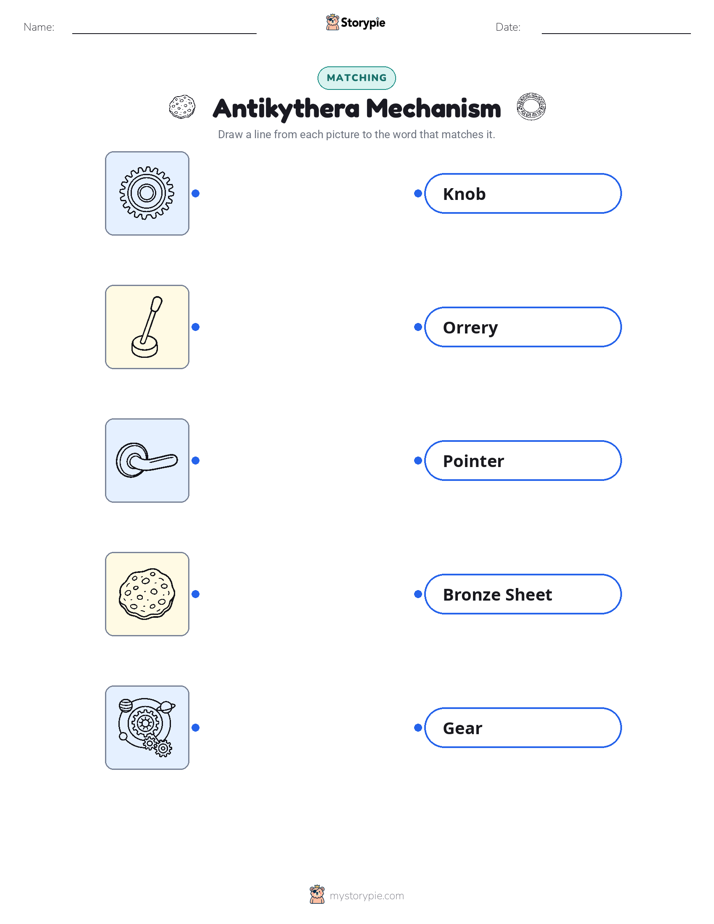
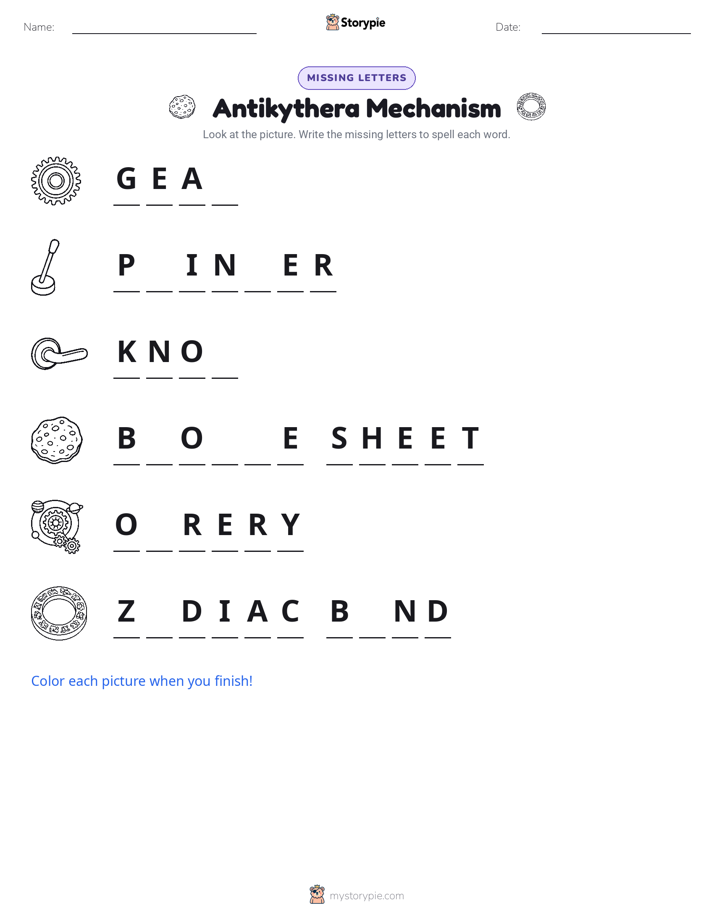
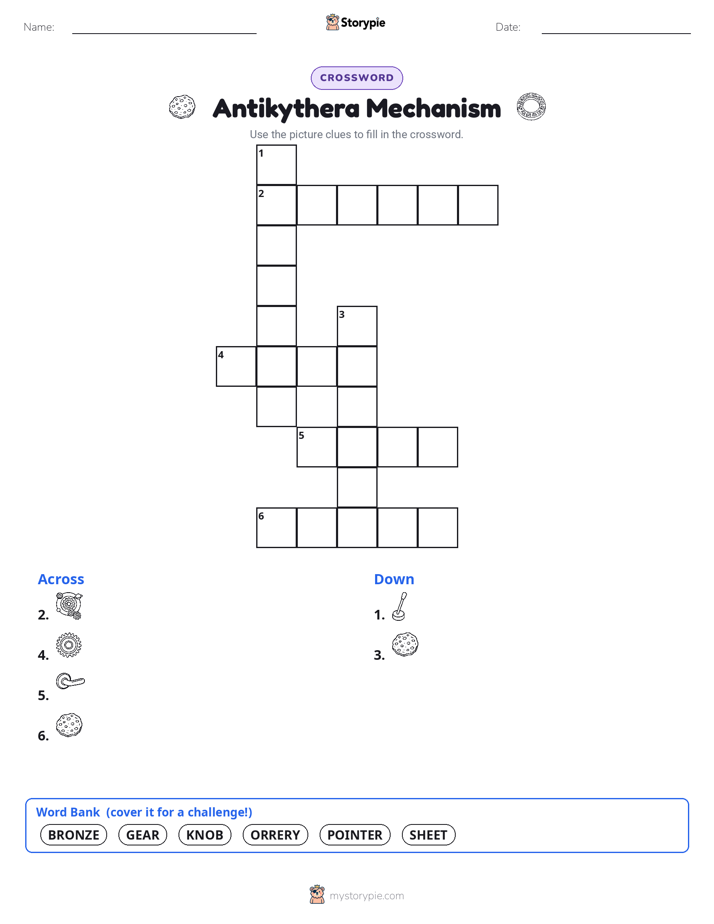
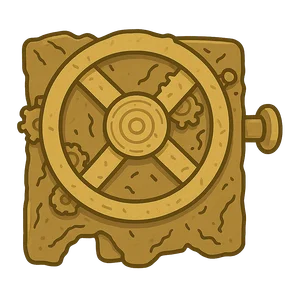
But I remember a time of light and air, of skilled hands and brilliant minds. I was born in a workshop in ancient Greece, sometime around 150 BCE. My creators were masters of astronomy and engineering, though their names are lost to history. With incredible precision, they cut more than 30 intricate gears from sheets of bronze, each one designed for a specific cosmic purpose. I wasn't just a simple clock. I was a map of the cosmos, a mechanical model of the heavens as they understood them. Turning a knob on my side set my gears in motion, and my pointers would move across my front and back dials. I could show the position of the sun and the moon against the zodiac. I could predict when a solar or lunar eclipse was likely to happen. I even had a special dial to track the four-year cycle of the great athletic contests, including the Olympic Games. I was a marvel of my age, a portable universe crafted from metal and genius.
The Antikythera Mechanism: A Voice from the Deep
For nearly two millennia, my world was a silent, blue-green twilight. I lay on the seafloor, a mysterious collection of bronze gears resting among the remnants of a great ship. The only sounds were the gentle currents and the slow crawl of sea creatures across my encrusted surface. I felt the immense pressure of the water above me, a heavy blanket that hid me from the sun and the moon I was built to track. Then, in the spring of 1900, everything changed. A sudden light pierced the darkness, and strange figures, sponge divers from the island of Symi, gently lifted me from my sandy tomb. I was brought into a world of bright air and loud noises, a world I hadn't seen since my ship went down in a violent storm around 70 BCE. I was a relic, a puzzle from a forgotten time, and I held the secrets of the stars within my corroded heart.
But I remember a time of light and air, of skilled hands and brilliant minds. I was born in a workshop in ancient Greece, sometime around 150 BCE. My creators were masters of astronomy and engineering, though their names are lost to history. With incredible precision, they cut more than 30 intricate gears from sheets of bronze, each one designed for a specific cosmic purpose. I wasn't just a simple clock. I was a map of the cosmos, a mechanical model of the heavens as they understood them. Turning a knob on my side set my gears in motion, and my pointers would move across my front and back dials. I could show the position of the sun and the moon against the zodiac. I could predict when a solar or lunar eclipse was likely to happen. I even had a special dial to track the four-year cycle of the great athletic contests, including the Olympic Games. I was a marvel of my age, a portable universe crafted from metal and genius.
My life in the sun was destined to be short. I was carefully packed and placed aboard a large Roman cargo ship, perhaps as a gift for a wealthy scholar or a treasure being taken to Rome. The journey across the Mediterranean Sea was smooth at first, but as we sailed near the small Greek island of Antikythera, the sky turned dark. A ferocious storm descended upon us. I remember the terrifying roar of the wind, the crash of waves against the hull, and the splintering of wood. The ship was torn apart, and I plunged into the churning sea, sinking rapidly into the cold, dark depths. Around 70 BCE, my journey ended. I came to rest on the ocean floor, surrounded by marble statues and clay amphorae. There I lay, forgotten, as centuries passed and the world above changed in ways my creators could never have imagined.
My rediscovery in the spring of 1900 was just the beginning of a new chapter. The sponge divers who found me, led by a man named Elias Stadiatis, brought me to the surface along with other treasures from the wreck. I was taken to the National Archaeological Museum in Athens, but no one knew what to make of me. I looked like a lump of corroded rock, my bronze body fused with sand and sea life. For two years, I sat on a shelf, an overlooked curiosity. Then, on May 17th, 1902, an archaeologist named Valerios Stais examined me more closely. He noticed something incredible embedded in my rocky exterior: a gear wheel. His discovery caused a wave of excitement and deep confusion. How could people from ancient Greece, over two thousand years ago, have created such a complex, gear-driven machine? It seemed impossible. I was an anomaly, a puzzle that baffled the world's greatest minds for decades.
For many years, I held my secrets tightly. My outer layers were too fragile to be removed, and my inner workings were a tangled mess of corroded metal. Scientists knew I was important, but they couldn't figure out how I worked. The breakthrough came with technology my own creators could never have dreamed of. In the 1970s, scientists used X-rays to peer inside my stone-like shell, revealing the faint outlines of my hidden gears for the first time. It was a glimpse into my soul. Then, in the early 2000s, an international team of researchers used advanced CT scanners and high-resolution imaging to create a complete three-dimensional model of my interior. They could finally see every single one of my 30 gears, read the faint inscriptions on my dials, and understand how I was designed to map the heavens. After two thousand years of silence, I was finally understood.
Now, I am no longer just a corroded lump of bronze. I am recognized as the world's first known analog computer, a testament to the incredible ingenuity of the ancient world. My story proves that my creators were not just philosophers and artists, but also brilliant scientists and engineers who were centuries ahead of their time. I am a bridge to the past, reminding everyone that great ideas can be lost to history, only to be rediscovered. My journey from a Greek workshop, to the bottom of the sea, and finally to a museum display shows the timeless human desire to understand the universe and our place within it. I am a lesson in perseverance, both for the scientists who unlocked my secrets and for the human spirit that never stops reaching for the stars.
Wow facts
About
An ancient Greek hand-powered astronomical calculator, discovered in a shipwreck in 1901, that is considered the world's first known analog computer.
Take a Quiz
Question 1 of 5
What was the main problem scientists faced when studying the mechanism, and how was it finally resolved?
Explore next






Want to do even more?
Go beyond exploring. Unlock tools that turn every story into real learning.

Storypie Plus for families
Full stories, quizzes, and printables. Nights and car rides, sorted.
- Unlimited audio stories
- Create Mode: your child stars in the story
- Offline downloads
- Printable worksheets & coloring pages

Why Storypie for Schools
Students engaged. Prep in seconds. Evenings back to you.
- Worksheets & Quizzes
- Classroom Management
- Formative Assessment
- Custom Curriculum & Lesson Plans
- 27 Languages

Why Storypie for Homeschool
Curriculum done. They'll ask for more. Hours back in your day.
- Worksheet Generator
- First-Person Audio Stories
- Built-in Comprehension Quizzes
- Custom Curriculum & Lesson Plans
- Print & Go Activities