English

Antikythera Mechanism
An ancient Greek hand-powered astronomical calculator, discovered in a shipwreck in 1901…
Reads at Grades 3–5 Listens at Grades 1–5
Print & create
Answer keys·No prep·Free with an account
28 worksheets · answer keys · full story · quiz · Ages 8-10 · CEFR B1
Plus adds 244,000+ more stories in 27 languages, audio for every one, and printables for all of them.
Just want Antikythera Mechanism?
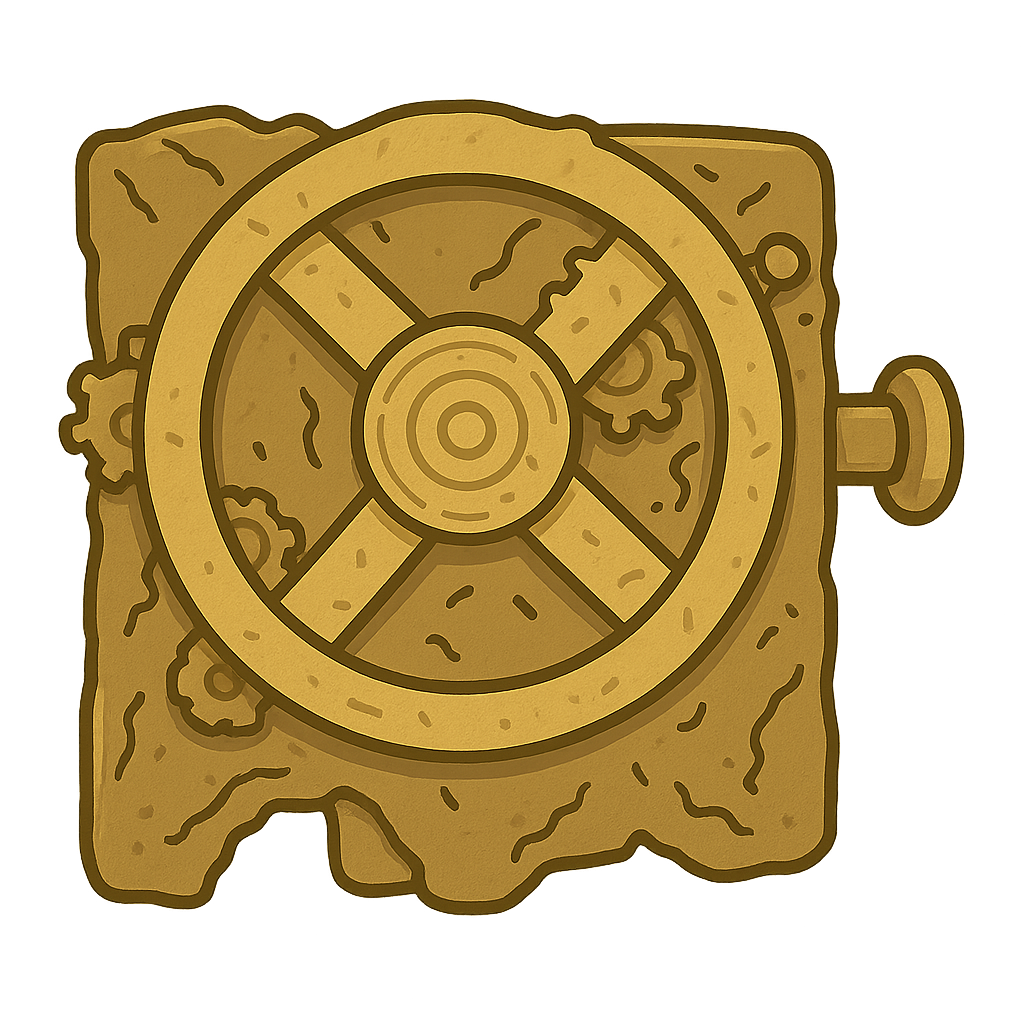
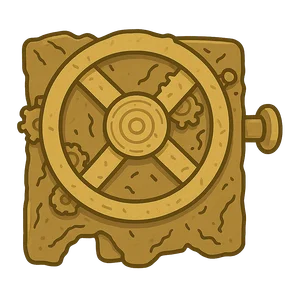
For nearly two thousand years, the sea was my silent, dark home. I slept on the sandy floor of the Mediterranean, tucked away inside the belly of a sunken Roman ship. Over the centuries, my bronze body grew a crusty green shell, and I looked more like a lumpy rock than the marvel of engineering I once was. Then, on May 17th, 1901, the silence was broken. Sunlight pierced the water as Greek sponge divers explored the shipwreck near the island of Antikythera. One of them found me. He pulled me from the sand and brought me to the surface, a forgotten treasure. The divers and the archaeologists who saw me were puzzled. They saw a lump of corroded bronze and splintered wood. They had no idea they were holding the mind of an ancient genius.
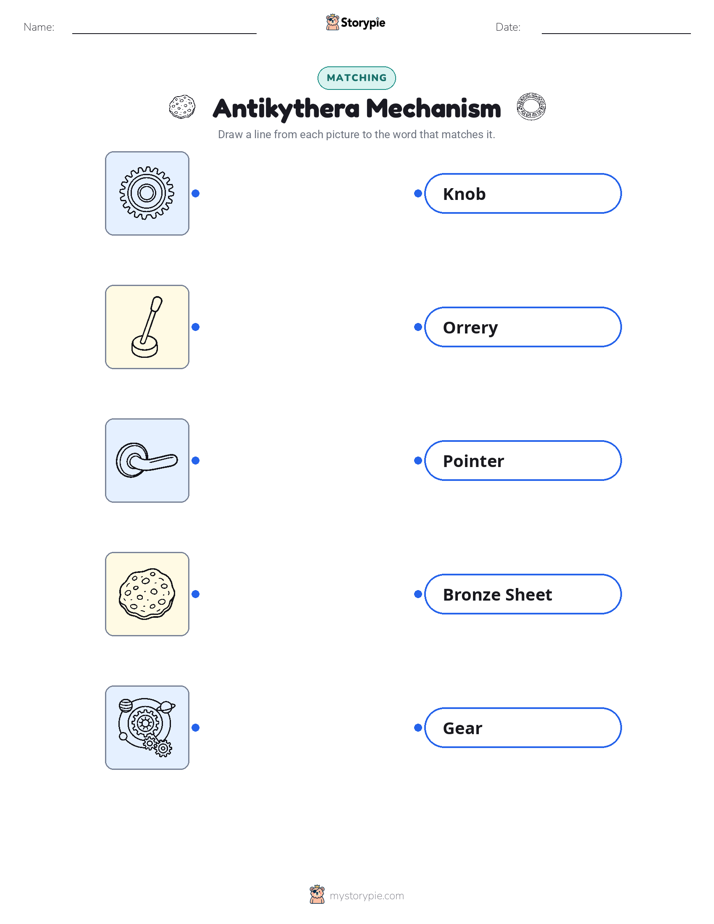
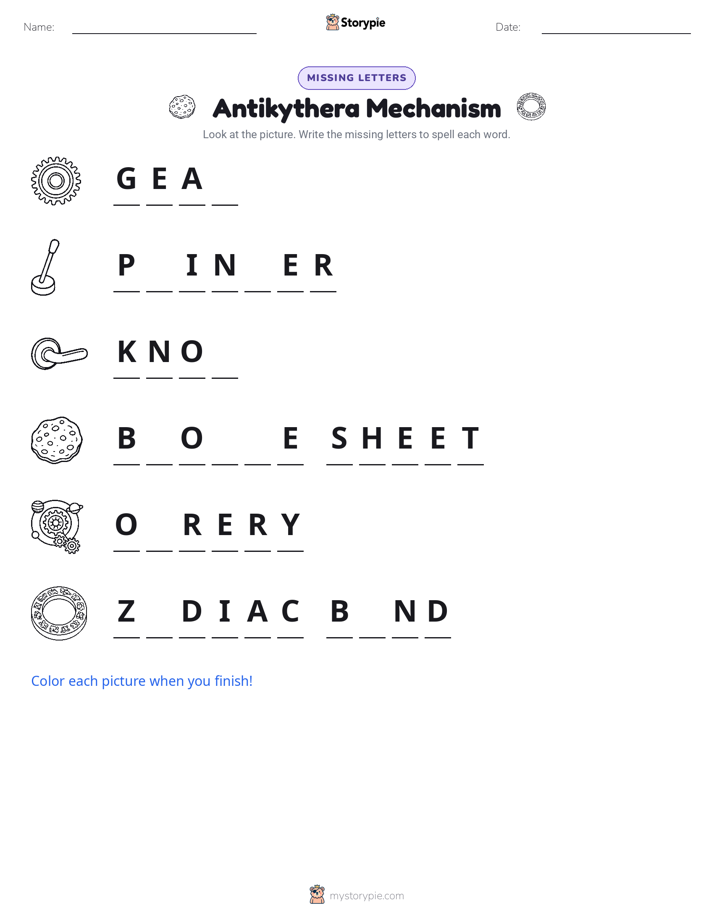
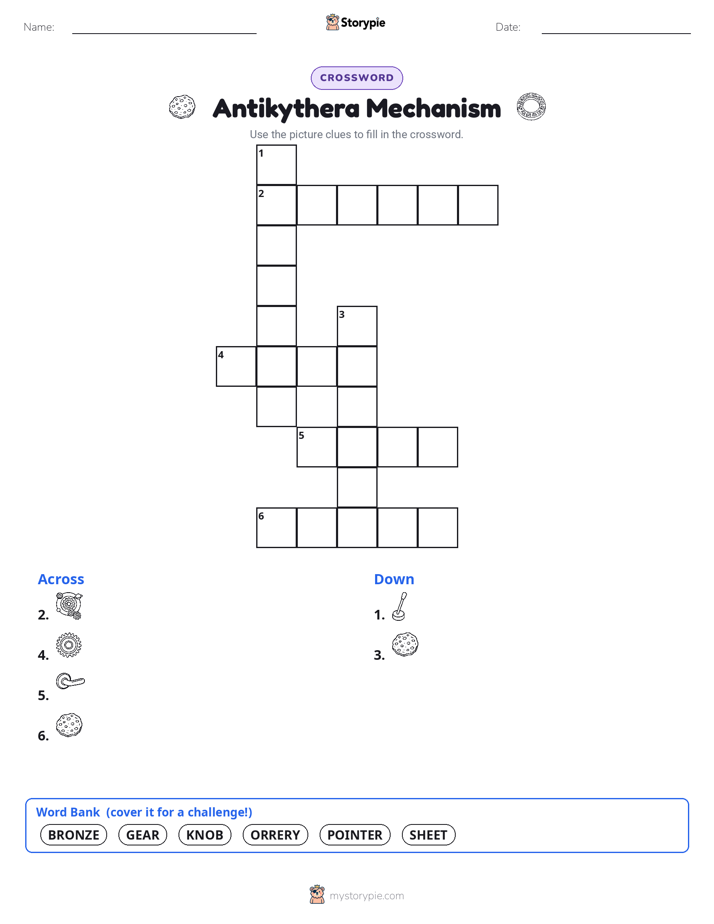
But I was not always a forgotten lump. I remember the time before the sea, when I was new and gleaming. I was born in a workshop in ancient Greece, sometime around the 2nd century BCE. My creators were brilliant people who spent their nights gazing at the heavens, mapping the slow dance of the stars and planets. They wanted to understand the universe, and they built me to hold that understanding in a box. I was a portable cosmos. They carefully cut thirty-seven intricate bronze gears, each one by hand. These gears fit together in a complex pattern, a metal brain designed to think about the sky. When someone turned my handle, my dials would move to show the position of the Sun, the Moon, and the five planets they knew: Mercury, Venus, Mars, Jupiter, and Saturn. I could even do more amazing things. I could predict when a solar or lunar eclipse would happen, and I had a special dial that showed the four-year schedule for the next Olympic Games, a very important event for the ancient Greeks.
The Star-Finder from the Sea
For nearly two thousand years, the sea was my silent, dark home. I slept on the sandy floor of the Mediterranean, tucked away inside the belly of a sunken Roman ship. Over the centuries, my bronze body grew a crusty green shell, and I looked more like a lumpy rock than the marvel of engineering I once was. Then, on May 17th, 1901, the silence was broken. Sunlight pierced the water as Greek sponge divers explored the shipwreck near the island of Antikythera. One of them found me. He pulled me from the sand and brought me to the surface, a forgotten treasure. The divers and the archaeologists who saw me were puzzled. They saw a lump of corroded bronze and splintered wood. They had no idea they were holding the mind of an ancient genius.
But I was not always a forgotten lump. I remember the time before the sea, when I was new and gleaming. I was born in a workshop in ancient Greece, sometime around the 2nd century BCE. My creators were brilliant people who spent their nights gazing at the heavens, mapping the slow dance of the stars and planets. They wanted to understand the universe, and they built me to hold that understanding in a box. I was a portable cosmos. They carefully cut thirty-seven intricate bronze gears, each one by hand. These gears fit together in a complex pattern, a metal brain designed to think about the sky. When someone turned my handle, my dials would move to show the position of the Sun, the Moon, and the five planets they knew: Mercury, Venus, Mars, Jupiter, and Saturn. I could even do more amazing things. I could predict when a solar or lunar eclipse would happen, and I had a special dial that showed the four-year schedule for the next Olympic Games, a very important event for the ancient Greeks.
After my rescue from the sea, I was taken to a museum in Athens, where I became a great puzzle for a new world. For decades, scientists would look at my broken pieces, trying to guess my purpose. Because I was so damaged and corroded, my secrets were locked away. They knew I was important, but they couldn't imagine how advanced I truly was. They thought people from my time could only make simple tools, not something as complex as me. Then, in 2005, everything changed. A team of scientists brought a powerful new tool, a special X-ray scanner that could see through my layers of corrosion without breaking me. As they scanned my fragile body, their screens lit up with images of my hidden inner world. They saw all my intricate gears, packed together perfectly. They even discovered faint inscriptions, tiny Greek letters that were like an instruction manual, explaining how I worked. They were stunned. They realized I was not just a clock; I was the world's first analog computer.
My journey has been long, from an ancient workshop to the bottom of the sea, and now to a museum where people from all over the world come to see me. I am proof that people from long, long ago were incredibly curious and intelligent. They looked at the stars and asked big questions, and they had the skill to build a machine that could help find the answers. Looking back, I see that my story is not just about gears and bronze. It's about human wonder. I hope I inspire new generations of thinkers to look up at the sky, to ask their own questions, and to believe that they can build amazing things, too.
Wow facts
About
An ancient Greek hand-powered astronomical calculator, discovered in a shipwreck in 1901, that is considered the world's first known analog computer.
Take a Quiz
Question 1 of 5
In the story, the mechanism says it was a 'portable cosmos in a box.' What does the word 'cosmos' mean in this sentence?
Explore next






Want to do even more?
Go beyond exploring. Unlock tools that turn every story into real learning.

Storypie Plus for families
Full stories, quizzes, and printables. Nights and car rides, sorted.
- Unlimited audio stories
- Create Mode: your child stars in the story
- Offline downloads
- Printable worksheets & coloring pages

Why Storypie for Schools
Students engaged. Prep in seconds. Evenings back to you.
- Worksheets & Quizzes
- Classroom Management
- Formative Assessment
- Custom Curriculum & Lesson Plans
- 27 Languages

Why Storypie for Homeschool
Curriculum done. They'll ask for more. Hours back in your day.
- Worksheet Generator
- First-Person Audio Stories
- Built-in Comprehension Quizzes
- Custom Curriculum & Lesson Plans
- Print & Go Activities