English

Cuneiform
Cuneiform is one of the earliest known systems of writing, developed around 3000 B.C.
Reads at Grades 3–5 Listens at Grades 1–5
Print & create
Answer keys·No prep·Free with an account
28 worksheets · answer keys · full story · quiz · Ages 8-10 · CEFR B1
Plus adds 102,000+ more stories in 27 languages, audio for every one, and printables for all of them.
Just want Cuneiform?
Hello. My name is Cuneiform, and I am one of the very first ways people learned to write things down. Before I was born, the world was a place of forgotten words. Imagine living in a busy city in ancient Sumer, a land people now call Mesopotamia, around the year 3500 BCE. Cities like Uruk were growing bigger every day. People were trading grain, herding sheep, and building amazing temples. But they had a big problem. They couldn't remember everything. A farmer might promise to trade ten bags of barley for a healthy sheep, but a week later, they might forget the exact number. A priest needed to know how much grain was stored for the gods, but the numbers were too big to hold in his head. Their memories were overflowing, like a cup filled with too much water. Important agreements and records would simply vanish, like whispers carried away by the desert wind. They needed a way to make their words stay put, to give their thoughts a solid shape that wouldn't disappear.
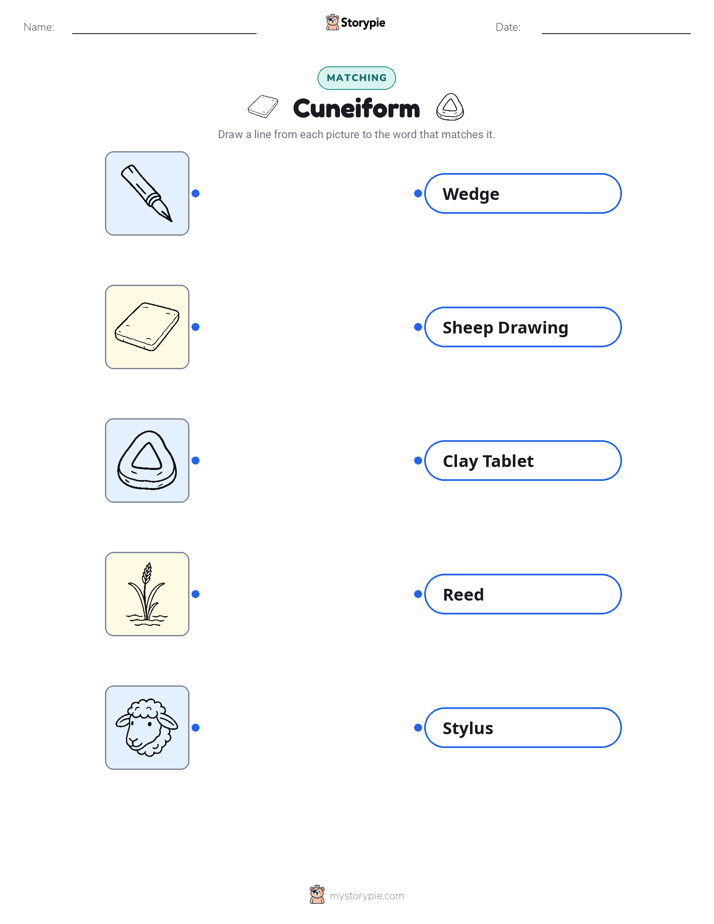
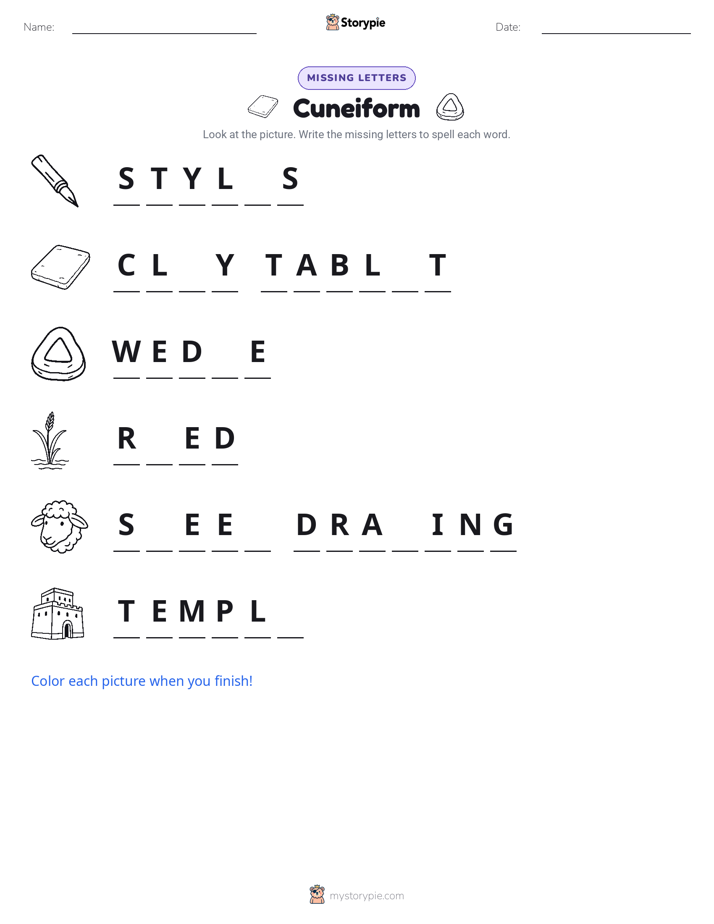
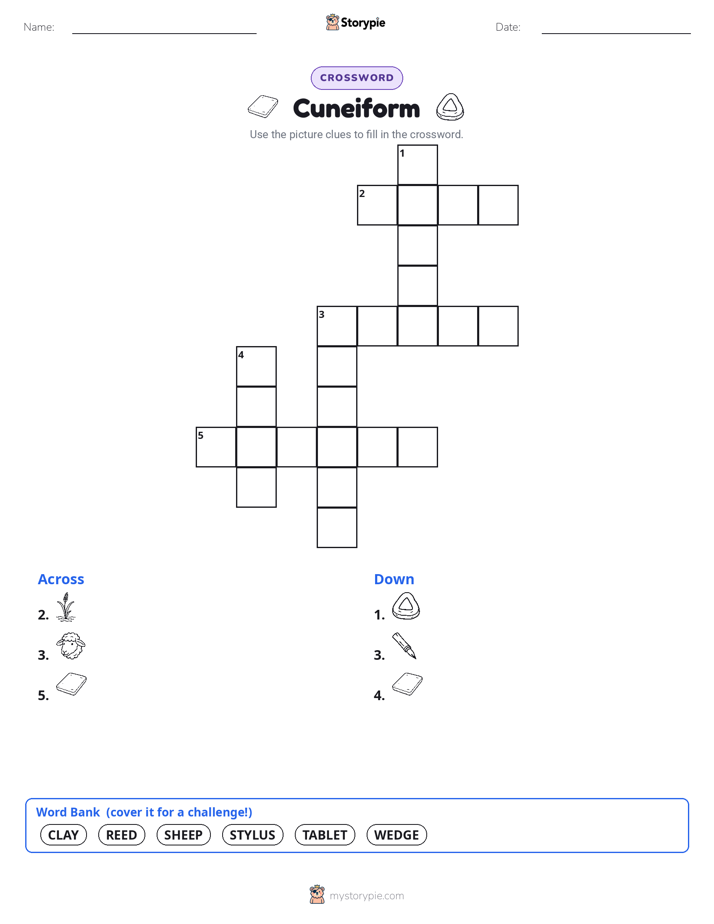
That’s where I came in. My first version was born around 3200 BCE. I wasn't made of wedges then. I was a collection of simple pictures, called pictographs. If someone wanted to record a cow, they would draw a little picture of a cow's head on a soft, wet piece of clay. A drawing of a stalk of barley meant barley. It was a good start, but it was very slow. The people who did the writing, called scribes, had to be skilled artists. They soon realized there had to be a faster way. So, around 2900 BCE, they had a brilliant idea. Instead of drawing, they took a reed, which is a type of plant stalk, and cut the tip into a triangle. They used this tool, called a stylus, to press marks into the wet clay. Each press made a perfect little wedge shape. By combining these wedges in different patterns, they could write much faster. This is how I got my name. The word 'cuneus' means 'wedge' in Latin, so Cuneiform means 'wedge-shaped.' To make me, a scribe would flatten a lump of clay into a small, pillow-shaped tablet. After they pressed my marks into it, they would leave the tablet to bake in the hot sun or fire it in a kiln. This made me hard as a rock, strong enough to last for thousands of years.
My Name is Cuneiform
Hello. My name is Cuneiform, and I am one of the very first ways people learned to write things down. Before I was born, the world was a place of forgotten words. Imagine living in a busy city in ancient Sumer, a land people now call Mesopotamia, around the year 3500 BCE. Cities like Uruk were growing bigger every day. People were trading grain, herding sheep, and building amazing temples. But they had a big problem. They couldn't remember everything. A farmer might promise to trade ten bags of barley for a healthy sheep, but a week later, they might forget the exact number. A priest needed to know how much grain was stored for the gods, but the numbers were too big to hold in his head. Their memories were overflowing, like a cup filled with too much water. Important agreements and records would simply vanish, like whispers carried away by the desert wind. They needed a way to make their words stay put, to give their thoughts a solid shape that wouldn't disappear.
That’s where I came in. My first version was born around 3200 BCE. I wasn't made of wedges then. I was a collection of simple pictures, called pictographs. If someone wanted to record a cow, they would draw a little picture of a cow's head on a soft, wet piece of clay. A drawing of a stalk of barley meant barley. It was a good start, but it was very slow. The people who did the writing, called scribes, had to be skilled artists. They soon realized there had to be a faster way. So, around 2900 BCE, they had a brilliant idea. Instead of drawing, they took a reed, which is a type of plant stalk, and cut the tip into a triangle. They used this tool, called a stylus, to press marks into the wet clay. Each press made a perfect little wedge shape. By combining these wedges in different patterns, they could write much faster. This is how I got my name. The word 'cuneus' means 'wedge' in Latin, so Cuneiform means 'wedge-shaped.' To make me, a scribe would flatten a lump of clay into a small, pillow-shaped tablet. After they pressed my marks into it, they would leave the tablet to bake in the hot sun or fire it in a kiln. This made me hard as a rock, strong enough to last for thousands of years.
At first, I was mostly used for making lists. Two sheep. Five jars of oil. Ten workers. It was useful, but it wasn't very exciting. But as the scribes got better at using me, they realized I could do so much more than count things. I could capture entire stories. I was used to write down one of the first great adventures in history, the Epic of Gilgamesh, which was full of heroes, gods, and monsters. I could also hold the rules that kept everyone safe and treated people fairly. Around 1754 BCE, a great king named Hammurabi had his famous code of laws carved onto a giant stone pillar using my script for all his people to see. I carried messages between kings, helped astronomers map the stars, and allowed doctors to share their medical knowledge. I let people from hundreds of years in the past speak to people in the future. I wasn't just a way to remember things anymore. I was a time machine for human thoughts and ideas.
Today, you won’t see people pressing my wedge shapes into clay tablets. New alphabets and easier ways of writing came along and took my place. But even though I am no longer used, the idea that I represent is more important than ever. The idea of writing things down so they can be saved, shared, and remembered started with me. Every book you read, every email you send, and every note you write in class is a distant echo of my journey from a simple picture to a powerful script. I was the first step in giving human ideas a permanent home, a way for them to live forever. My spirit lives on in every single word that is written down today.
Wow facts
About
Cuneiform is one of the earliest known systems of writing, developed around 3000 B.C. It is special because it has wedge-shaped marks on clay tablets. These marks were made using a reed stylus with a wedge-shaped tip. It was created by the ancient Sumerians of Mesopotamia.
Take a Quiz
Question 1 of 5
The story says, 'Their memories were overflowing.' What does the word 'overflowing' mean in this sentence?
Explore next

Want to do even more?
Go beyond exploring. Unlock tools that turn every story into real learning.

Storypie Plus for families
Full stories, quizzes, and printables. Nights and car rides, sorted.
- Unlimited audio stories
- Create Mode: your child stars in the story
- Offline downloads
- Printable worksheets & coloring pages

Why Storypie for Schools
Students engaged. Prep in seconds. Evenings back to you.
- Worksheets & Quizzes
- Classroom Management
- Formative Assessment
- Custom Curriculum & Lesson Plans
- 27 Languages

Why Storypie for Homeschool
Curriculum done. They'll ask for more. Hours back in your day.
- Worksheet Generator
- First-Person Audio Stories
- Built-in Comprehension Quizzes
- Custom Curriculum & Lesson Plans
- Print & Go Activities