English

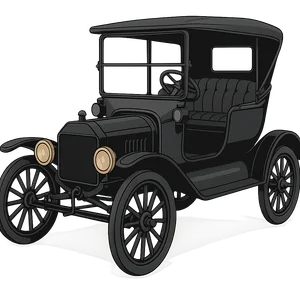
Ford Model T
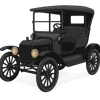
The Ford Model T, nicknamed the 'Tin Lizzie,' was among the first mass-produced automobiles…
Reads at Grades 6–8 Listens at Grades 4–8
Print & create
Answer keys·No prep·Free with an account
28 worksheets · answer keys · full story · quiz · Ages 10-12 · CEFR B2
Plus adds 244,000+ more stories in 27 languages, audio for every one, and printables for all of them.
Just want Ford Model T?
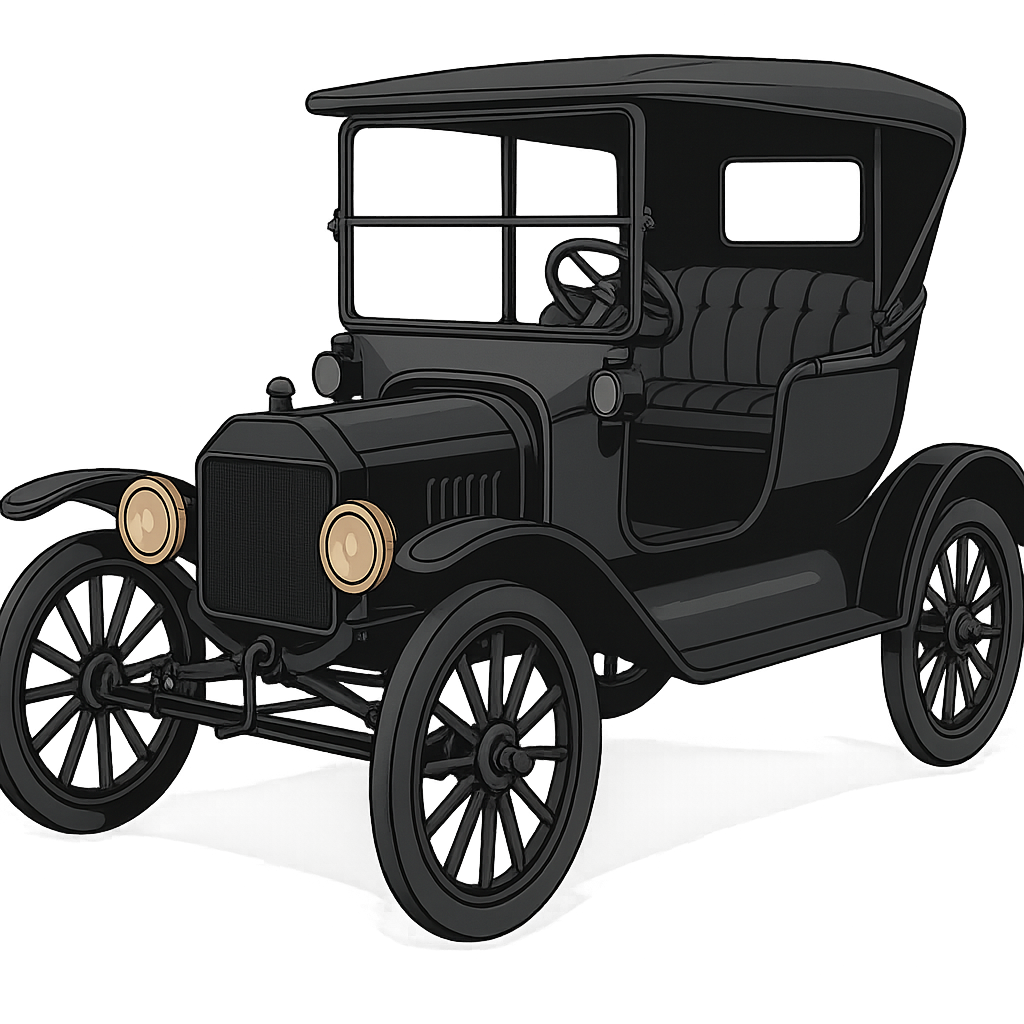
Before I rolled onto the dusty roads of America, the world moved at the pace of a horse's trot. My name is the Ford Model T, but many people affectionately called me the 'Tin Lizzie.' Imagine a time, around the year 1900, when a trip to the next town was a major undertaking, planned for days in advance. The rhythmic clop-clop of hooves on cobblestone was the soundtrack of every city, and the countryside felt vast and disconnected. Sure, there were other automobiles, but they were magnificent, complicated machines built by hand, one at a time. They were the prized possessions of the very wealthy, gleaming symbols of a life most people could only dream about. They sputtered and roared, but they didn't belong to the farmer, the factory worker, or the small-town doctor. But one man saw a different future. My creator, Henry Ford, was a visionary. He didn't just see a machine; he saw a tool for freedom. He had a powerful dream: to build a motor car for the great multitude. It would be simple enough for anyone to drive and maintain, strong enough to handle the rugged, unpaved roads of the era, and so low in price that any person with a good salary could own one. I was that dream, waiting to be forged from steel and ingenuity.
My journey into the world began on October 1st, 1908. The first of my kind emerged from a factory, ready to face a world that wasn't quite ready for me. The roads were little more than dirt tracks, filled with ruts and mud that could swallow a horse-drawn wagon whole. Because of this, I was designed with a high chassis to clear obstacles and built from a special, light, yet incredibly strong vanadium steel. I was tough, reliable, and ready for adventure. But my true transformation, the one that made me a legend, took place in 1913 at the Highland Park Ford Plant in Michigan. It was there that Henry Ford and his brilliant team perfected an idea that would change not just how I was made, but how everything was made. It was the moving assembly line. Before this, a team of skilled workers would gather around a single chassis, building me up piece by piece. It was a slow, meticulous process that took over twelve hours. I felt each part being carefully fitted, a bespoke creation. But the assembly line was something entirely new. Instead of the workers coming to me, I came to the workers. My frame would be placed on a conveyor belt, and as I glided through the factory, hundreds of workers stood at their stations, each performing one specific, repetitive task. One person would attach a wheel, the next would install a fender, and another would bolt on the engine. The work was constant, rhythmic, and incredibly efficient. Suddenly, the time it took to assemble one of my siblings dropped from over twelve hours to a mere ninety-three minutes. This incredible speed meant that my cost could be lowered again and again. You might have heard the famous saying that a customer could have me in 'any color so long as it is black.' This wasn't because Mr. Ford had a fondness for the color. It was purely a matter of efficiency. Black enamel paint was the only color that could dry quickly enough to keep up with the relentless pace of the assembly line. Speed was everything. This relentless focus on simplicity, strength, and efficiency was the secret to my success. I wasn't just a car anymore; I was a promise of accessibility, the first automobile that millions of ordinary families could finally afford.
The Tin Lizzie's Tale
Before I rolled onto the dusty roads of America, the world moved at the pace of a horse's trot. My name is the Ford Model T, but many people affectionately called me the 'Tin Lizzie.' Imagine a time, around the year 1900, when a trip to the next town was a major undertaking, planned for days in advance. The rhythmic clop-clop of hooves on cobblestone was the soundtrack of every city, and the countryside felt vast and disconnected. Sure, there were other automobiles, but they were magnificent, complicated machines built by hand, one at a time. They were the prized possessions of the very wealthy, gleaming symbols of a life most people could only dream about. They sputtered and roared, but they didn't belong to the farmer, the factory worker, or the small-town doctor. But one man saw a different future. My creator, Henry Ford, was a visionary. He didn't just see a machine; he saw a tool for freedom. He had a powerful dream: to build a motor car for the great multitude. It would be simple enough for anyone to drive and maintain, strong enough to handle the rugged, unpaved roads of the era, and so low in price that any person with a good salary could own one. I was that dream, waiting to be forged from steel and ingenuity.
My journey into the world began on October 1st, 1908. The first of my kind emerged from a factory, ready to face a world that wasn't quite ready for me. The roads were little more than dirt tracks, filled with ruts and mud that could swallow a horse-drawn wagon whole. Because of this, I was designed with a high chassis to clear obstacles and built from a special, light, yet incredibly strong vanadium steel. I was tough, reliable, and ready for adventure. But my true transformation, the one that made me a legend, took place in 1913 at the Highland Park Ford Plant in Michigan. It was there that Henry Ford and his brilliant team perfected an idea that would change not just how I was made, but how everything was made. It was the moving assembly line. Before this, a team of skilled workers would gather around a single chassis, building me up piece by piece. It was a slow, meticulous process that took over twelve hours. I felt each part being carefully fitted, a bespoke creation. But the assembly line was something entirely new. Instead of the workers coming to me, I came to the workers. My frame would be placed on a conveyor belt, and as I glided through the factory, hundreds of workers stood at their stations, each performing one specific, repetitive task. One person would attach a wheel, the next would install a fender, and another would bolt on the engine. The work was constant, rhythmic, and incredibly efficient. Suddenly, the time it took to assemble one of my siblings dropped from over twelve hours to a mere ninety-three minutes. This incredible speed meant that my cost could be lowered again and again. You might have heard the famous saying that a customer could have me in 'any color so long as it is black.' This wasn't because Mr. Ford had a fondness for the color. It was purely a matter of efficiency. Black enamel paint was the only color that could dry quickly enough to keep up with the relentless pace of the assembly line. Speed was everything. This relentless focus on simplicity, strength, and efficiency was the secret to my success. I wasn't just a car anymore; I was a promise of accessibility, the first automobile that millions of ordinary families could finally afford.
I quickly became more than just a machine; I was a part of the American family. I didn't just carry people; I carried their hopes and dreams. With me, families could finally visit relatives who lived hours away, turning a difficult journey into a weekend adventure. Farmers, who were once isolated by distance, could now transport their crops to market quickly, improving their livelihoods and connecting rural communities with growing cities. Doctors could reach sick patients in remote areas much faster, saving precious time and lives. I fundamentally changed the landscape of the country. People no longer had to live packed into crowded cities, right next to their workplaces. With me, they could move to quieter, more spacious areas and commute to their jobs. I helped give birth to the suburbs, creating a new way of life for millions. I was a symbol of independence and freedom, empowering people to explore the world beyond their own towns. The demand for me was astonishing. By the time the last of my kind rolled off the assembly line on May 26th, 1927, over fifteen million of my brothers and sisters had been built. My era had come to an end, as newer, more advanced cars were being designed, but my work was far from over. I am more than just an old car you might see in a museum. I am the physical embodiment of an idea: that a brilliant invention should benefit everyone, not just a privileged few. My spirit of innovation, efficiency, and accessibility lives on. It can be seen in every car that travels the roads today, continuing the mission I started over a century ago—to bring people, places, and possibilities closer together.
Wow facts
About
The Ford Model T, nicknamed the 'Tin Lizzie,' was among the first mass-produced automobiles, produced by the Ford Motor Company from 1908 to 1927. Its production on a moving assembly line revolutionized industry and made car ownership possible for the average American family.
Take a Quiz
Question 1 of 5
In your own words, describe the three main stages of the Ford Model T's story as it told them.
Explore next






Want to do even more?
Go beyond exploring. Unlock tools that turn every story into real learning.

Storypie Plus for families
Full stories, quizzes, and printables. Nights and car rides, sorted.
- Unlimited audio stories
- Create Mode: your child stars in the story
- Offline downloads
- Printable worksheets & coloring pages

Why Storypie for Schools
Students engaged. Prep in seconds. Evenings back to you.
- Worksheets & Quizzes
- Classroom Management
- Formative Assessment
- Custom Curriculum & Lesson Plans
- 27 Languages

Why Storypie for Homeschool
Curriculum done. They'll ask for more. Hours back in your day.
- Worksheet Generator
- First-Person Audio Stories
- Built-in Comprehension Quizzes
- Custom Curriculum & Lesson Plans
- Print & Go Activities