English


Hot Air Balloon
The first successful human-carrying flight technology, invented by the Montgolfier brothers in 1783 France…
Reads at Grades 6–8 Listens at Grades 4–8
Print & create
Answer keys·No prep·Free with an account
28 worksheets · answer keys · full story · quiz · Ages 10-12 · CEFR B2
Plus adds 164,000+ more stories in 27 languages, audio for every one, and printables for all of them.
Just want Hot Air Balloon?

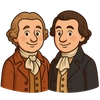
Before I was a vibrant globe of color drifting silently across the sky, I was an idea, a whisper of a dream. For centuries, humans had stared at the heavens, watching birds soar on currents of wind and envying their freedom. They dreamed of touching the clouds, but the sky remained just beyond their reach. My story begins in 18th-century France, a time of great curiosity and change. It was there, in the town of Annonay, that two brothers, Joseph-Michel and Jacques-Étienne Montgolfier, ran a successful paper factory. They were practical men, but like so many others, they shared that ancient dream of flight. My journey from a simple thought into a vessel of the skies started with a flicker of inspiration in the year 1782, sparked not by a grand machine, but by the simple, mesmerizing sight of smoke rising from a fire, dancing its way toward the heavens.
My creators were utterly captivated by this everyday magic. As they watched embers and ash float effortlessly upward from a hearth, a powerful question took hold of their minds: What if that lifting force could be captured? What if smoke, or whatever mysterious power it possessed, could be contained and put to work? Their scientific curiosity was ignited. In late 1782, they began their experiments, not with grand blueprints, but with simple materials they knew best. They crafted small bags from silk and paper and held them over open flames. I can still remember the feeling of that first successful test, a small silk envelope suddenly straining against their hands, filled with a power that made it want to leap into the air. It was a thrilling moment of discovery. The brothers theorized that the smoke itself had a special property, which they called 'Montgolfier gas.' They didn't yet understand that the true secret was much simpler: the air inside my fabric skin, when heated, became lighter and less dense than the cooler air surrounding me. It was this principle of buoyancy, this invisible hand of physics, that was desperate to lift me skyward. Their journey of trial and error had begun, turning a simple observation into a revolutionary possibility.
A Dream Takes Flight: The Story of the Hot Air Balloon
Before I was a vibrant globe of color drifting silently across the sky, I was an idea, a whisper of a dream. For centuries, humans had stared at the heavens, watching birds soar on currents of wind and envying their freedom. They dreamed of touching the clouds, but the sky remained just beyond their reach. My story begins in 18th-century France, a time of great curiosity and change. It was there, in the town of Annonay, that two brothers, Joseph-Michel and Jacques-Étienne Montgolfier, ran a successful paper factory. They were practical men, but like so many others, they shared that ancient dream of flight. My journey from a simple thought into a vessel of the skies started with a flicker of inspiration in the year 1782, sparked not by a grand machine, but by the simple, mesmerizing sight of smoke rising from a fire, dancing its way toward the heavens.
My creators were utterly captivated by this everyday magic. As they watched embers and ash float effortlessly upward from a hearth, a powerful question took hold of their minds: What if that lifting force could be captured? What if smoke, or whatever mysterious power it possessed, could be contained and put to work? Their scientific curiosity was ignited. In late 1782, they began their experiments, not with grand blueprints, but with simple materials they knew best. They crafted small bags from silk and paper and held them over open flames. I can still remember the feeling of that first successful test, a small silk envelope suddenly straining against their hands, filled with a power that made it want to leap into the air. It was a thrilling moment of discovery. The brothers theorized that the smoke itself had a special property, which they called 'Montgolfier gas.' They didn't yet understand that the true secret was much simpler: the air inside my fabric skin, when heated, became lighter and less dense than the cooler air surrounding me. It was this principle of buoyancy, this invisible hand of physics, that was desperate to lift me skyward. Their journey of trial and error had begun, turning a simple observation into a revolutionary possibility.
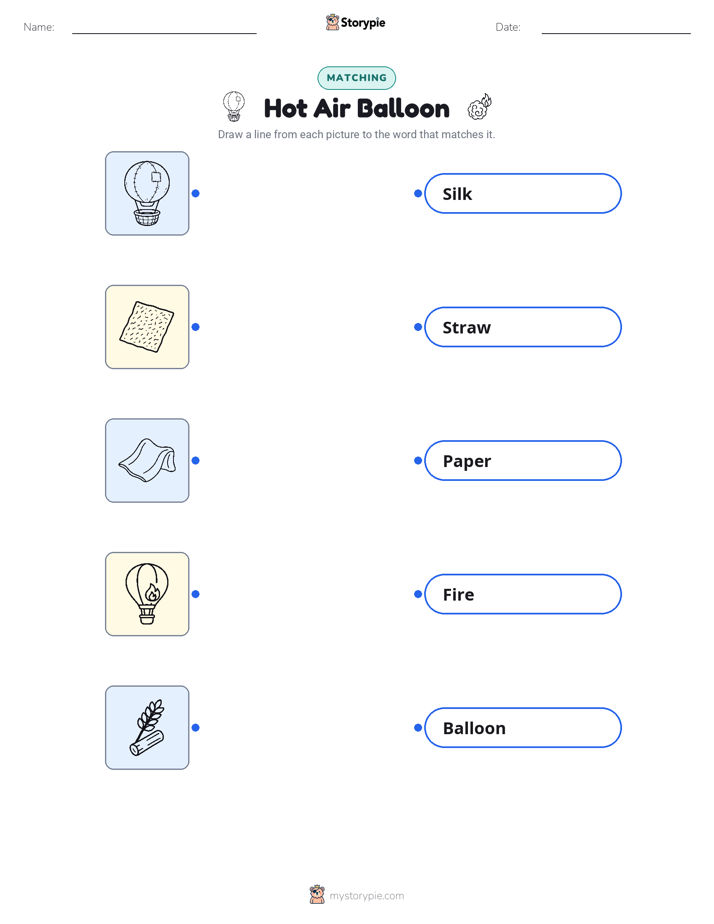
My first true moment to shine arrived on June 4th, 1783. The town square of Annonay was buzzing with anticipation. I was a magnificent sight, a colossal sphere nearly 38 feet in diameter, constructed from sackcloth and lined with three thin layers of paper to hold the air. My sections were fastened together with over 1,800 buttons, a testament to the careful craftsmanship of the brothers. On the ground, a pit fire blazed, fed with chopped straw and wool, which produced the thick, hot air needed to breathe life into me. I felt myself swell and grow, my paper and cloth skin becoming taut as I filled with warmth and purpose. I strained against the ropes that held me to the ground, eager to fulfill my destiny. When the moment came, the ropes were cut, and I surged upward with a silent, graceful power. The crowd below gasped in collective astonishment. For ten glorious minutes, I floated freely, carried by the wind for nearly two miles before gently settling in a nearby field. For the first time, an object built by human hands had touched the sky, and I had shown the world that the impossible was within reach.
My successful flight was the talk of France, but it raised a critical question: could a living creature survive a journey into the upper air? To answer this, my creators arranged a demonstration for the highest court in the land. On September 19th, 1783, I was brought to the grand Palace of Versailles, where King Louis XVI and Queen Marie Antoinette themselves were part of the enormous crowd. This time, I had a special wicker basket attached to me, and inside were the world's first air travelers: a sheep named Montauciel, a duck, and a rooster. The choice of animals was a clever scientific control. The sheep's physiology was thought to be similar to a human's, the duck was a control passenger since it could fly at high altitudes anyway, and the rooster, a bird that does not fly high, would show the effects of altitude. With my precious cargo, I rose gracefully into the air for about eight minutes, traveling two miles before landing safely. The animals were completely unharmed. This historic flight proved that the air above was not poisonous or deadly; the sky was a place living things could explore.
Finally, the ultimate test arrived. The dream that began with rising smoke was about to be fully realized by humankind. On November 21st, 1783, two brave and adventurous men became the first humans to experience untethered flight. Their names were Jean-François Pilâtre de Rozier, a science teacher, and François Laurent d'Arlandes, a military officer. They climbed into the circular gallery at my base, their hearts surely pounding with a mix of excitement and fear. From the grounds of the Château de la Muette in Paris, I lifted off, this time carrying not just my own weight, but the hopes of humanity. As we rose above the rooftops, a profound silence enveloped us, broken only by the occasional roar of the fire they tended to keep me afloat. Below, the city of Paris unfolded like an intricate map. They saw the winding River Seine, the grand buildings, and the tiny figures of people pointing up in wonder. For 25 minutes, we drifted across the sky, a journey of about five and a half miles. It was a moment of pure triumph, a quiet and beautiful dance between human ingenuity and the laws of nature. We had touched the sky.
That flight over Paris was just my beginning. I was the very first chapter in the incredible story of aviation. I proved that the sky was not a barrier but a new, vast frontier waiting to be explored. My simple principle of hot air lifting a craft inspired countless inventors, engineers, and dreamers who followed. My success paved the way for more advanced balloons, then airships, and eventually, the airplanes and spacecraft that connect our world and reach for the stars. Today, I continue my journey in a more peaceful role. You can see me at festivals, a silent giant painted with brilliant colors, dotting the morning sky. I no longer carry the weight of proving the impossible, but I still carry people's dreams. I am a beautiful reminder that with curiosity, courage, and a little bit of hot air, there is no limit to how high we can soar.
Wow facts
About
The first successful human-carrying flight technology, invented by the Montgolfier brothers in 1783 France, which works on the principle that heated air is lighter than cooler air.
Take a Quiz
Question 1 of 5
In your own words, describe the key events that led from the Montgolfier brothers' initial idea to the first successful manned flight.
Explore next




Want to do even more?
Go beyond exploring. Unlock tools that turn every story into real learning.

Storypie Plus for families
Full stories, quizzes, and printables. Nights and car rides, sorted.
- Unlimited audio stories
- Create Mode: your child stars in the story
- Offline downloads
- Printable worksheets & coloring pages

Why Storypie for Schools
Students engaged. Prep in seconds. Evenings back to you.
- Worksheets & Quizzes
- Classroom Management
- Formative Assessment
- Custom Curriculum & Lesson Plans
- 27 Languages

Why Storypie for Homeschool
Curriculum done. They'll ask for more. Hours back in your day.
- Worksheet Generator
- First-Person Audio Stories
- Built-in Comprehension Quizzes
- Custom Curriculum & Lesson Plans
- Print & Go Activities