English

Irrigation
Irrigation is the agricultural process of applying controlled amounts of water to land to assist in the…
Reads at Grades 6–8 Listens at Grades 4–8
Print & create
Answer keys·No prep·Free with an account
28 worksheets · answer keys · full story · quiz · Ages 10-12 · CEFR B2
Plus adds 244,000+ more stories in 27 languages, audio for every one, and printables for all of them.
Just want Irrigation?
I am not a single machine or a grand structure. I am an idea, a promise whispered on the dry wind to a thirsty world. My name is Irrigation, and I am the simple, powerful concept of bringing water to where it is needed most. Before I was born, humans were at the mercy of the clouds. They would plant their seeds and pray for rain, their survival hanging on the whims of unpredictable weather. A long drought could mean starvation, forcing entire communities to move or perish. I was the solution that allowed them to put down roots, to build permanent homes and villages. I gave them a measure of control over their destiny, allowing them to coax life from the parched earth even when the skies were clear. I am the friend of the farmer, the foundation of cities, and the lifeblood of civilization itself.
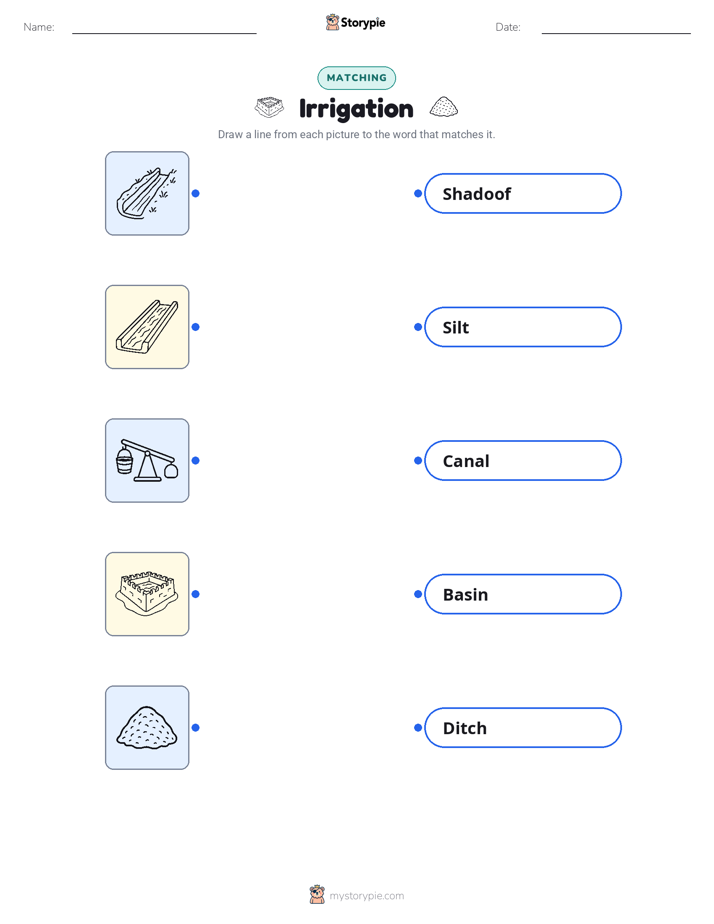
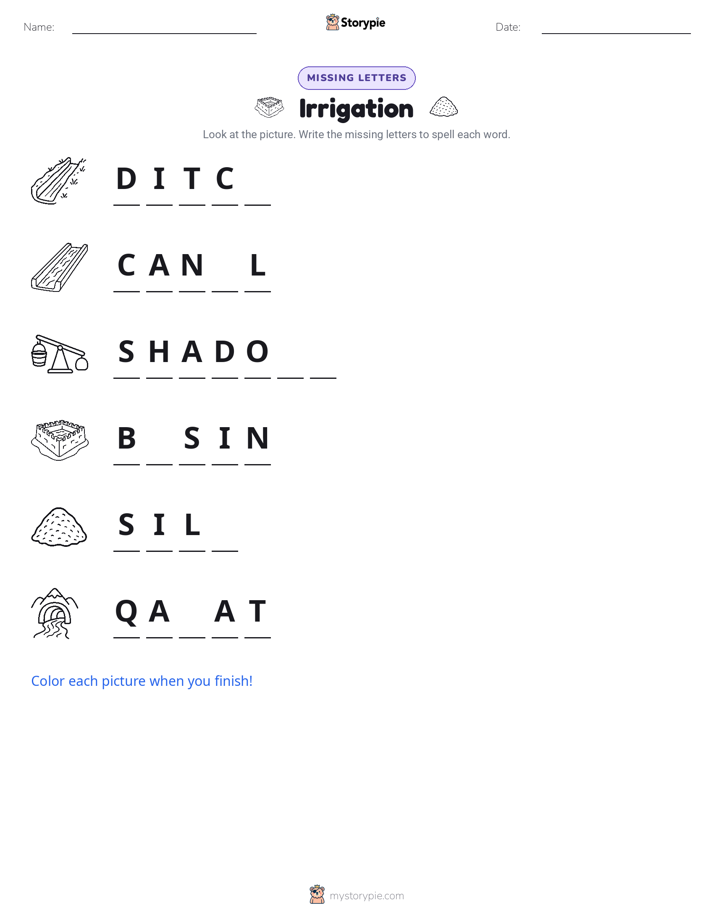
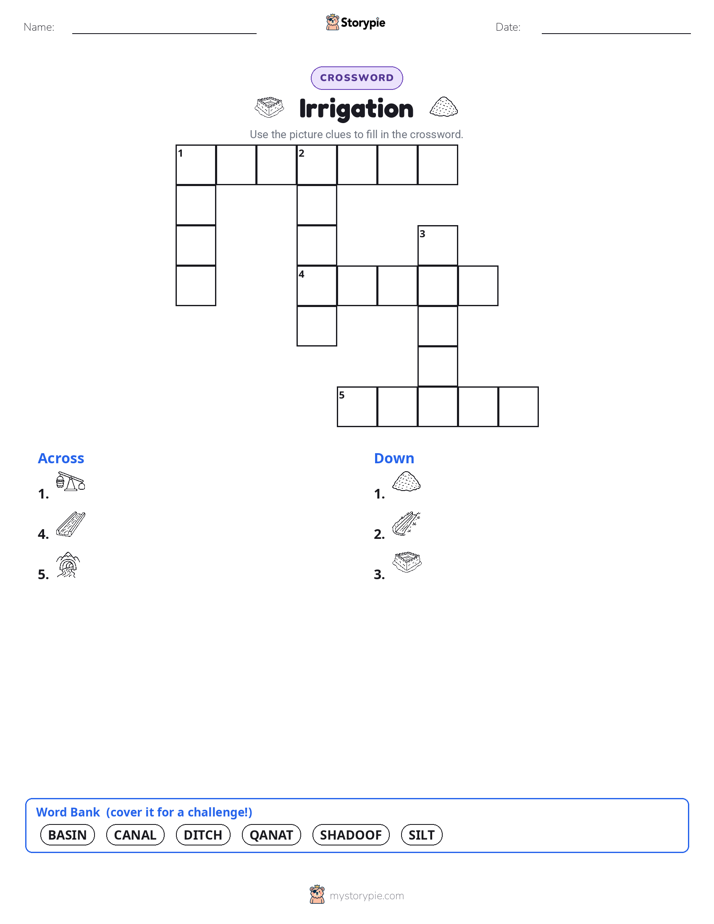
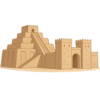
My first real steps were taken in the ancient lands of Mesopotamia, the fertile crescent nestled between the Tigris and Euphrates rivers, around 6000 BCE. The people there were clever and observant. They saw how the rivers swelled with life-giving water and thought, what if we could guide that water to our fields. They began digging simple ditches, small canals that would carry a piece of the river to their barley and wheat. It was hard work, carving channels into the earth with basic tools, but the reward was immense. For the first time, they could plant with confidence. A little farther away, in the land of the pharaohs, I took a different form around 3100 BCE. The people of ancient Egypt built their world around the mighty Nile River, which flooded its banks with astonishing regularity each year. They developed a system called basin irrigation, creating large, walled sections of land to trap the floodwaters. As the water slowly soaked into the soil, it left behind a rich, dark silt, perfect for growing crops. Around 1500 BCE, they invented one of my most elegant early tools: the shaduf. It was a simple lever, a long pole with a bucket on one end and a heavy counterweight on the other. With a gentle pull, a single farmer could lift water from the river or a canal and pour it onto their fields, a graceful, rhythmic motion that saved their backs and watered their hopes.
The Story of Irrigation
I am not a single machine or a grand structure. I am an idea, a promise whispered on the dry wind to a thirsty world. My name is Irrigation, and I am the simple, powerful concept of bringing water to where it is needed most. Before I was born, humans were at the mercy of the clouds. They would plant their seeds and pray for rain, their survival hanging on the whims of unpredictable weather. A long drought could mean starvation, forcing entire communities to move or perish. I was the solution that allowed them to put down roots, to build permanent homes and villages. I gave them a measure of control over their destiny, allowing them to coax life from the parched earth even when the skies were clear. I am the friend of the farmer, the foundation of cities, and the lifeblood of civilization itself.
My first real steps were taken in the ancient lands of Mesopotamia, the fertile crescent nestled between the Tigris and Euphrates rivers, around 6000 BCE. The people there were clever and observant. They saw how the rivers swelled with life-giving water and thought, what if we could guide that water to our fields. They began digging simple ditches, small canals that would carry a piece of the river to their barley and wheat. It was hard work, carving channels into the earth with basic tools, but the reward was immense. For the first time, they could plant with confidence. A little farther away, in the land of the pharaohs, I took a different form around 3100 BCE. The people of ancient Egypt built their world around the mighty Nile River, which flooded its banks with astonishing regularity each year. They developed a system called basin irrigation, creating large, walled sections of land to trap the floodwaters. As the water slowly soaked into the soil, it left behind a rich, dark silt, perfect for growing crops. Around 1500 BCE, they invented one of my most elegant early tools: the shaduf. It was a simple lever, a long pole with a bucket on one end and a heavy counterweight on the other. With a gentle pull, a single farmer could lift water from the river or a canal and pour it onto their fields, a graceful, rhythmic motion that saved their backs and watered their hopes.
As civilizations grew, so did I, becoming more complex and ambitious. In the vast and arid lands of Persia, around 1000 BCE, people engineered one of my most brilliant forms: the qanat. Imagine a hidden river, flowing for miles completely underground. That is what a qanat was. Workers would dig a long, gently sloping tunnel from a water source deep within a mountain all the way to their fields and villages. This was incredibly clever, as it prevented me from evaporating under the scorching sun. These qanats were masterpieces of engineering, requiring precise calculations and immense labor, and some are still in use today. Then came the Romans, who took engineering to a scale the world had never seen. Beginning around 312 BCE, they started building their famous aqueducts. While many people think of these magnificent arched structures as just bringing drinking water to cities like Rome, they were also vital for agriculture. They carried enormous volumes of water across valleys and through mountains, supplying large farming estates and helping to feed the sprawling Roman Empire. I was no longer just a ditch or a simple lever; I had become a monumental expression of human ingenuity and power, a stone river flowing across the landscape.
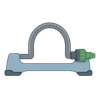
For centuries, I relied on gravity and human muscle. But the world was changing. In the 1700s and 1800s, the invention of powerful steam and eventually combustion engines gave me a new kind of strength. Humans could now build pumps that could lift me from deep underground or push me uphill, defying gravity in ways that would have seemed like magic to the ancient Egyptians. My modern transformation truly began, however, on a farm in Colorado. A farmer named Frank Zybach was tired of the back-breaking work of moving pipes to water his large fields. In 1940, he began experimenting with an idea. What if the pipe could move itself. After years of work, he perfected his invention in 1952: the center-pivot irrigation system. I became a long metal pipeline mounted on wheeled towers, anchored to a central point. Driven by water pressure or electric motors, I would slowly rotate in a massive circle, sprinkling water evenly across hundreds of acres. If you have ever flown in an airplane over the American Midwest, you have seen my work: vast landscapes covered in giant green circles. Thanks to Frank Zybach, a single person could now water a field that once would have required a whole team of workers, changing the face of modern agriculture forever.
My journey has been a long one, from a hand-dug ditch in Mesopotamia to a self-propelled sprinkler stretching a quarter-mile long. But my purpose has never changed: to help humanity grow the food it needs to thrive. Today, I am more sophisticated than ever. I can be a drip irrigation system, delivering water one drop at a time directly to the roots of a plant, ensuring not a single bit is wasted. I can be guided by sensors, computers, and satellites that tell farmers exactly when and how much to water their crops. The challenges are greater now, with a global population of billions to feed and a changing climate. But my story is one of human perseverance and creativity. I am a testament to our ability to solve problems and shape our world. My future, and the future of the food we all depend on, lies in continuing that legacy of innovation, always remembering to use our planet’s most precious resource, fresh water, wisely and with care.
Wow facts
About
Irrigation is the agricultural process of applying controlled amounts of water to land to assist in the production of crops, especially in areas with insufficient rainfall.
Take a Quiz
Question 1 of 5
Based on the story, what were the two main problems that the Persian qanats and Roman aqueducts were designed to solve?
Explore next


Want to do even more?
Go beyond exploring. Unlock tools that turn every story into real learning.

Storypie Plus for families
Full stories, quizzes, and printables. Nights and car rides, sorted.
- Unlimited audio stories
- Create Mode: your child stars in the story
- Offline downloads
- Printable worksheets & coloring pages

Why Storypie for Schools
Students engaged. Prep in seconds. Evenings back to you.
- Worksheets & Quizzes
- Classroom Management
- Formative Assessment
- Custom Curriculum & Lesson Plans
- 27 Languages

Why Storypie for Homeschool
Curriculum done. They'll ask for more. Hours back in your day.
- Worksheet Generator
- First-Person Audio Stories
- Built-in Comprehension Quizzes
- Custom Curriculum & Lesson Plans
- Print & Go Activities