English

Julian Calendar
A solar calendar introduced by Julius Caesar in 45 BCE that standardized timekeeping with a 365-day year and…
Reads at Grades 6–8 Listens at Grades 4–8
Print & create
Answer keys·No prep·Free with an account
28 worksheets · answer keys · full story · quiz · Ages 10-12 · CEFR B2
Plus adds 208,000+ more stories in 27 languages, audio for every one, and printables for all of them.
Just want Julian Calendar?
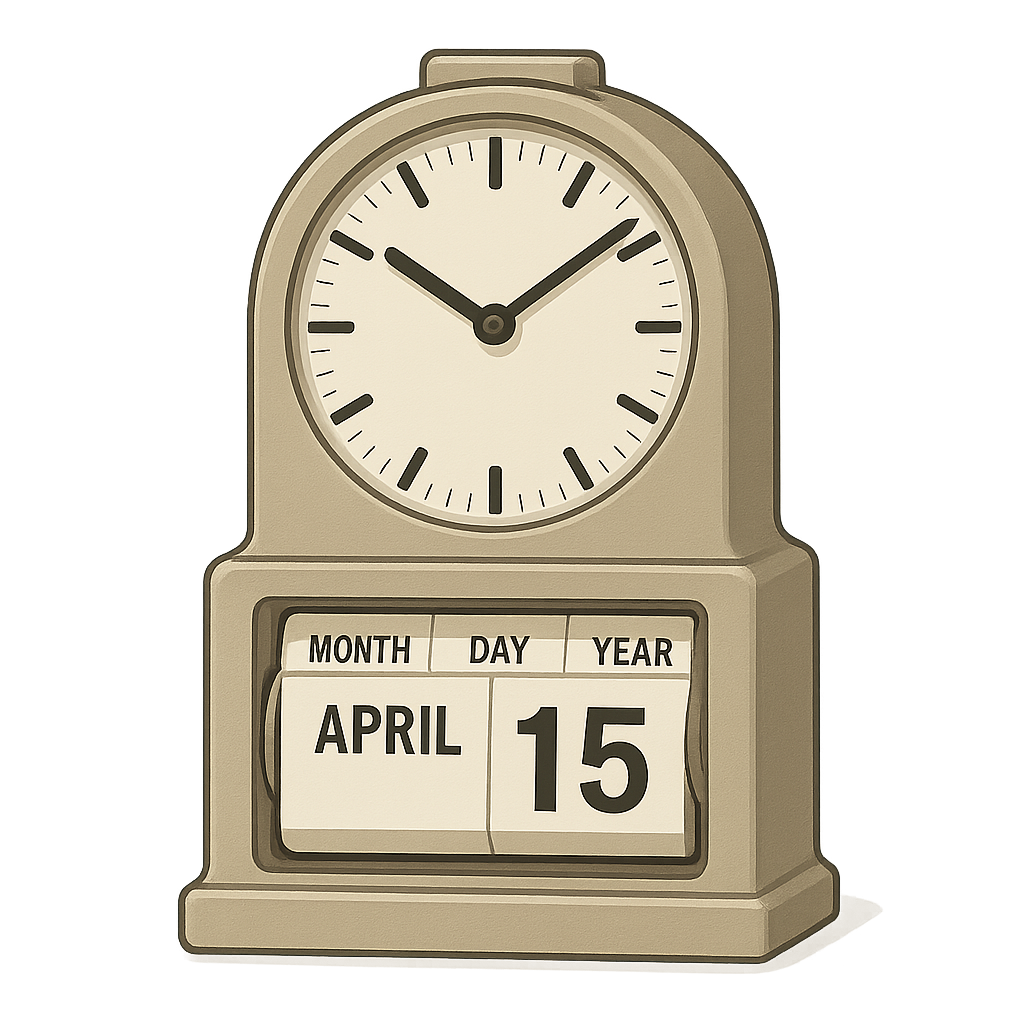
Before I existed, the world, or at least the Roman world, was adrift in a sea of confusing time. I am the Julian Calendar, and my story is one of bringing order out of chaos. For centuries, the Roman people used a calendar that was a tangled mess. It was called the Roman Republican calendar, and it tried to follow the cycles of the moon, but it was clumsy and unreliable. It had only 355 days, far too short to match the seasons. To fix this, priests were supposed to add an extra month every so often, but their decisions were often political, not scientific. Sometimes they would lengthen a year to keep their friends in office, or shorten it to get rid of an enemy. By the year 46 BCE, things had become a disaster. Winter months were falling in the autumn, and summer festivals were happening in the spring. Farmers didn't know the proper time to plant their crops, and religious ceremonies were completely out of sync with the seasons they were meant to celebrate. Imagine trying to plan your life when the calendar itself could not be trusted. That was the world that desperately needed me.
My creation began with a man of great vision and power: Julius Caesar. As the leader of Rome, he saw how the broken calendar was harming every aspect of Roman life, from its economy to its military. He knew that a great empire needed a reliable, predictable, and scientific way to measure time. He was a practical man, and he sought out the best mind he could find to solve this problem. In Egypt, he met Sosigenes of Alexandria, a brilliant Greek astronomer. Sosigenes understood something fundamental that the old Roman calendar had missed: the Earth revolves around the sun in approximately 365 and a quarter days. This was the key. Together, they designed me. I would have 365 days every year, neatly divided into the 12 months we still know today. And to account for that extra quarter of a day, Sosigenes devised an elegant solution: a single extra day would be added every fourth year. This was the birth of the leap year. But before I could begin my work on January 1st, 45 BCE, we had to fix the massive error of the past. To get the seasons back on track, Caesar decreed that the year 46 BCE would have 445 days. It became known as the 'Year of Confusion,' a long and necessary correction to pave the way for centuries of order. I was born from this bold act, a calendar based not on politics or superstition, but on the steady, unwavering rhythm of the sun.
I Am the Julian Calendar
Before I existed, the world, or at least the Roman world, was adrift in a sea of confusing time. I am the Julian Calendar, and my story is one of bringing order out of chaos. For centuries, the Roman people used a calendar that was a tangled mess. It was called the Roman Republican calendar, and it tried to follow the cycles of the moon, but it was clumsy and unreliable. It had only 355 days, far too short to match the seasons. To fix this, priests were supposed to add an extra month every so often, but their decisions were often political, not scientific. Sometimes they would lengthen a year to keep their friends in office, or shorten it to get rid of an enemy. By the year 46 BCE, things had become a disaster. Winter months were falling in the autumn, and summer festivals were happening in the spring. Farmers didn't know the proper time to plant their crops, and religious ceremonies were completely out of sync with the seasons they were meant to celebrate. Imagine trying to plan your life when the calendar itself could not be trusted. That was the world that desperately needed me.
My creation began with a man of great vision and power: Julius Caesar. As the leader of Rome, he saw how the broken calendar was harming every aspect of Roman life, from its economy to its military. He knew that a great empire needed a reliable, predictable, and scientific way to measure time. He was a practical man, and he sought out the best mind he could find to solve this problem. In Egypt, he met Sosigenes of Alexandria, a brilliant Greek astronomer. Sosigenes understood something fundamental that the old Roman calendar had missed: the Earth revolves around the sun in approximately 365 and a quarter days. This was the key. Together, they designed me. I would have 365 days every year, neatly divided into the 12 months we still know today. And to account for that extra quarter of a day, Sosigenes devised an elegant solution: a single extra day would be added every fourth year. This was the birth of the leap year. But before I could begin my work on January 1st, 45 BCE, we had to fix the massive error of the past. To get the seasons back on track, Caesar decreed that the year 46 BCE would have 445 days. It became known as the 'Year of Confusion,' a long and necessary correction to pave the way for centuries of order. I was born from this bold act, a calendar based not on politics or superstition, but on the steady, unwavering rhythm of the sun.
For over 1,600 years, I was the standard of time for the Western world. As the Roman Empire expanded, so did my influence. I traveled with legions, merchants, and scholars, bringing a shared sense of time and order to millions of people across Europe, North Africa, and the Middle East. I was a symbol of Roman engineering and logic, a tool that helped build an empire and shape a civilization. People planned their lives by my measure, from planting harvests to celebrating holidays. However, I must confess, I wasn't perfect. My creators had done a remarkable job, but their calculation was off by a tiny fraction. My year was just about 11 minutes and 14 seconds longer than the true solar year. It was a minuscule error, one that nobody would notice in a single lifetime. But over centuries, those minutes added up. Every 128 years, I drifted out of alignment with the seasons by one full day. By the 1500s, this small flaw had become a noticeable problem. I was about 10 days ahead of the sun. This was a serious issue for the Christian Church, as the date of Easter, a very important holiday, is calculated based on the spring equinox. My drift meant the equinox was happening 10 days earlier than I said it should, and this created great concern and debate among astronomers and religious leaders. My time in the sun was coming to an end, not because I had failed, but because humanity's understanding of the cosmos had grown even more precise.
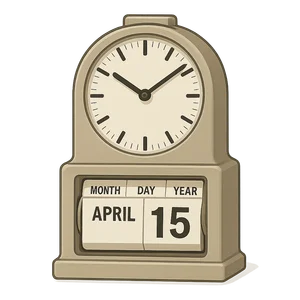
My story did not end in failure, but in evolution. In 1582, Pope Gregory XIII recognized that I needed an update. He introduced a reform, creating the calendar that most of the world uses today: the Gregorian calendar. But he did not throw me away. Instead, he built upon my foundation. My successor is simply a more refined version of me. It corrected my 10-day drift by skipping straight from October 4th to October 15th in the year 1582. It also adjusted the leap year rule slightly to prevent such a drift from happening again. My legacy is not that I was replaced, but that I was improved. I was the crucial step that moved humanity away from chaotic, lunar-based timekeeping and toward a stable, solar-based system. I brought predictability to the world for over a millennium and a half, and I am the direct ancestor of the calendar that hangs on your wall today. My story is a testament to human ingenuity—the drive to observe our world, to create order, and to constantly refine our best ideas as we learn more.
Wow facts
About
A solar calendar introduced by Julius Caesar in 45 BCE that standardized timekeeping with a 365-day year and a leap year every four years, serving as the predominant calendar in the Western world for over 1,600 years.
Take a Quiz
Question 1 of 5
What was the primary problem with the old Roman Republican calendar that led to the creation of the Julian Calendar?
Explore next






Want to do even more?
Go beyond exploring. Unlock tools that turn every story into real learning.

Storypie Plus for families
Full stories, quizzes, and printables. Nights and car rides, sorted.
- Unlimited audio stories
- Create Mode: your child stars in the story
- Offline downloads
- Printable worksheets & coloring pages

Why Storypie for Schools
Students engaged. Prep in seconds. Evenings back to you.
- Worksheets & Quizzes
- Classroom Management
- Formative Assessment
- Custom Curriculum & Lesson Plans
- 27 Languages

Why Storypie for Homeschool
Curriculum done. They'll ask for more. Hours back in your day.
- Worksheet Generator
- First-Person Audio Stories
- Built-in Comprehension Quizzes
- Custom Curriculum & Lesson Plans
- Print & Go Activities