English

Light Emitting Diode
A light-emitting diode (LED) is a semiconductor device that emits light when electric current flows through…
Reads at Grades 3–5 Listens at Grades 1–5
Print & create
Answer keys·No prep·Free with an account
28 worksheets · answer keys · full story · quiz · Ages 8-10 · CEFR B1
Plus adds 280,000+ more stories in 27 languages, audio for every one, and printables for all of them.
Just want Light Emitting Diode?
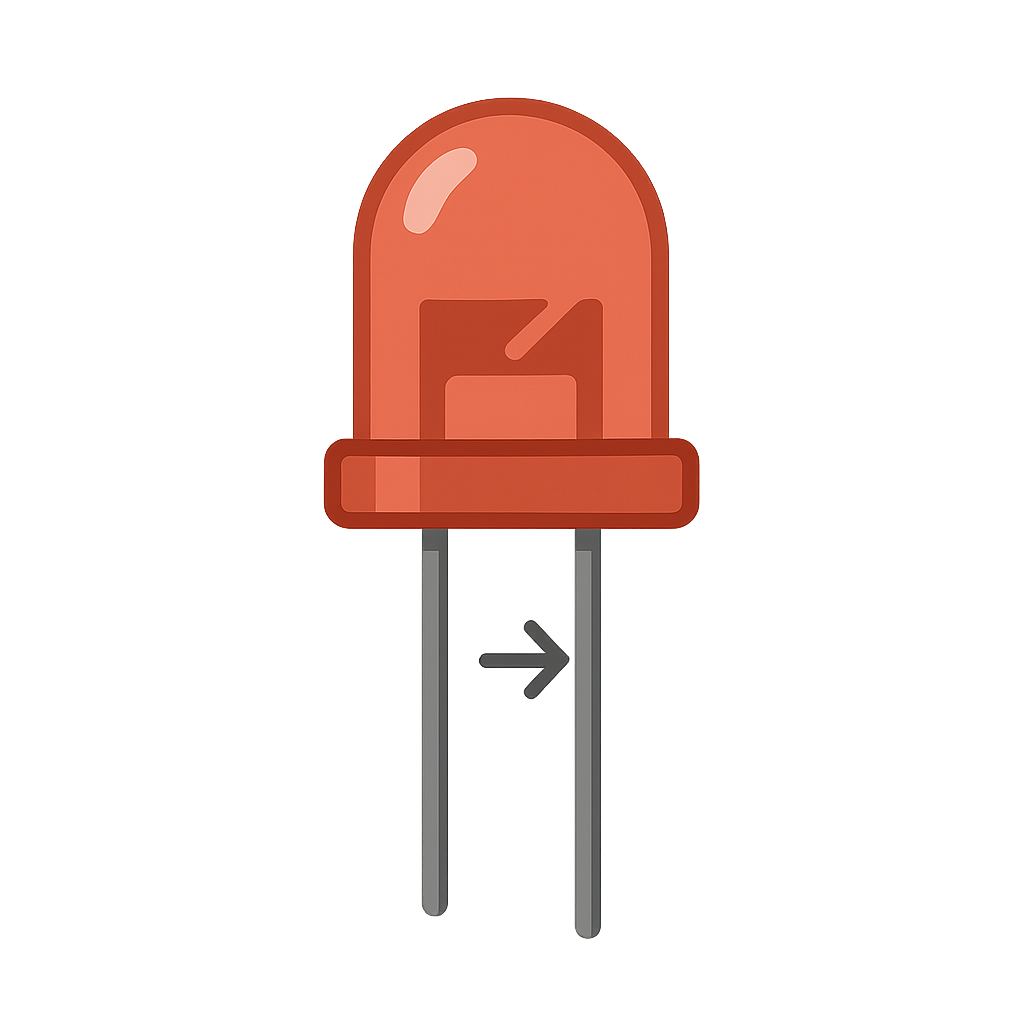
Hello there. You’ve probably seen me today without even realizing it. I am the tiny dot of light on your TV that tells you it’s on, the colorful glow in a traffic light, or even the flash on your parent's phone. My full name is Light Emitting Diode, but my friends just call me LED. I’m a special kind of light, very small, very tough, and I can shine in almost any color you can imagine. Before I came along, the world was lit by big, clumsy glass bulbs. They were like little ovens, getting incredibly hot and wasting most of their energy as heat instead of light. They were also very fragile. One little bump and POP, they were gone. People needed a light that was stronger, smaller, and smarter with its energy. They needed a light that could last for years, not just months. They needed me.
My story didn’t begin with a flash, but with a faint glimmer. A long, long time ago, back in 1907, a man named H. J. Round was experimenting with a crystal when he noticed it gave off a strange, weak glow. It was just a whisper of what I could become. Later, in the 1920s, a brilliant young Russian scientist named Oleg Losev studied this glow carefully. He was fascinated and wrote about how these crystals could make light, but sadly, the world was not ready for his ideas, and his work was forgotten for many years. My real journey began much later. A kind and very clever man named Nick Holonyak Jr. was working in his laboratory. He believed he could create a tiny, powerful light source. Then, on October 9th, 1962, it finally happened. He passed electricity through a special little chip, and for the very first time, I burst into the world, a tiny but brilliant speck of red light. I wasn't like the old bulbs with a thin wire that would burn out. I was a 'solid-state' light, which means I make light from solid material inside a tiny chip, turning electricity directly into a glow. It was a magical moment. Soon after I was born in red, other scientists, like M. George Craford, helped my colorful siblings come to life. First came the yellow me, then the green. We started showing up in calculators and digital watches, glowing proudly.
The Little Light with a Big Job
Hello there. You’ve probably seen me today without even realizing it. I am the tiny dot of light on your TV that tells you it’s on, the colorful glow in a traffic light, or even the flash on your parent's phone. My full name is Light Emitting Diode, but my friends just call me LED. I’m a special kind of light, very small, very tough, and I can shine in almost any color you can imagine. Before I came along, the world was lit by big, clumsy glass bulbs. They were like little ovens, getting incredibly hot and wasting most of their energy as heat instead of light. They were also very fragile. One little bump and POP, they were gone. People needed a light that was stronger, smaller, and smarter with its energy. They needed a light that could last for years, not just months. They needed me.
My story didn’t begin with a flash, but with a faint glimmer. A long, long time ago, back in 1907, a man named H. J. Round was experimenting with a crystal when he noticed it gave off a strange, weak glow. It was just a whisper of what I could become. Later, in the 1920s, a brilliant young Russian scientist named Oleg Losev studied this glow carefully. He was fascinated and wrote about how these crystals could make light, but sadly, the world was not ready for his ideas, and his work was forgotten for many years. My real journey began much later. A kind and very clever man named Nick Holonyak Jr. was working in his laboratory. He believed he could create a tiny, powerful light source. Then, on October 9th, 1962, it finally happened. He passed electricity through a special little chip, and for the very first time, I burst into the world, a tiny but brilliant speck of red light. I wasn't like the old bulbs with a thin wire that would burn out. I was a 'solid-state' light, which means I make light from solid material inside a tiny chip, turning electricity directly into a glow. It was a magical moment. Soon after I was born in red, other scientists, like M. George Craford, helped my colorful siblings come to life. First came the yellow me, then the green. We started showing up in calculators and digital watches, glowing proudly.
Even with my red, yellow, and green colors, there was a big piece of the puzzle missing. I couldn't create pure, white light. To do that, I needed a blue-colored me to mix with the others. For decades, creating a bright blue LED seemed impossible. It was the biggest challenge of my life. But three amazing scientists in Japan refused to give up. Their names were Isamu Akasaki, Hiroshi Amano, and Shuji Nakamura. Through the 1980s and into the early 1990s, they worked tirelessly, experimenting with tricky materials and never losing hope. Finally, they did it. They created a bright, beautiful blue me. It was the final key. By mixing my red, green, and new blue light together, I could finally shine with a brilliant, clean white light. This changed everything. Looking back, I see how that final breakthrough allowed me to light up the whole world. I now illuminate homes, stadiums, and city streets. I am the light behind the screen you are looking at right now. Because I use so little energy, I can bring light to villages that never had electricity before, powered by just a small solar panel. From a tiny, forgotten glow in a crystal, I grew up to make our planet brighter and help save its energy, too.
Wow facts
About
A light-emitting diode (LED) is a semiconductor device that emits light when electric current flows through it. It is a highly energy-efficient and long-lasting light source that revolutionized the lighting and display industries.
Take a Quiz
Question 1 of 5
Who was the first person to help the LED shine brightly in red on October 9th, 1962?
Explore next



Want to do even more?
Go beyond exploring. Unlock tools that turn every story into real learning.

Storypie Plus for families
Full stories, quizzes, and printables. Nights and car rides, sorted.
- Unlimited audio stories
- Create Mode: your child stars in the story
- Offline downloads
- Printable worksheets & coloring pages

Why Storypie for Schools
Students engaged. Prep in seconds. Evenings back to you.
- Worksheets & Quizzes
- Classroom Management
- Formative Assessment
- Custom Curriculum & Lesson Plans
- 27 Languages

Why Storypie for Homeschool
Curriculum done. They'll ask for more. Hours back in your day.
- Worksheet Generator
- First-Person Audio Stories
- Built-in Comprehension Quizzes
- Custom Curriculum & Lesson Plans
- Print & Go Activities