English

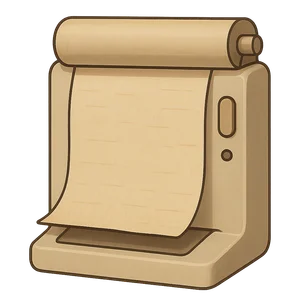
Papyrus
An early form of paper made from the pith of the papyrus plant…
Reads at Grades 3–5 Listens at Grades 1–5
I Am Papyrus, a Voice from Ancient Egypt
Hello there. My name is Papyrus, and I am one of the world's very first types of paper. My story begins a long, long time ago, around 3000 BCE, on the sunny, muddy banks of the great Nile River in ancient Egypt. The air was warm, and the water flowed gently, feeding the tall, green reeds that were my family. I come from a special plant, the Cyperus papyrus, which grew in thick, lush forests along the river. Before I was born, if you wanted to write something down, you had a very difficult job. You had to carve your words into hard stone walls or press them into heavy, wet clay tablets that had to be baked to last. Imagine trying to carry your schoolbooks if they were all made of stone. They would be so heavy. The clever people of ancient Egypt knew there had to be a better way. They needed something light, something portable, something that could carry their stories, laws, and messages far and wide. And so, from the heart of a river plant, they created me.
My transformation from a living plant into a smooth writing sheet was a kind of magic, a brilliant idea from the minds of the Egyptians. It all started when workers waded into the Nile's shallow waters to harvest the tallest, thickest stalks of my plant. They would carry these stalks to workshops where my journey truly began. First, they peeled away my tough, green outer skin, much like you might peel a banana. This revealed my inside, which was a soft, white, spongy material called pith. The workers then carefully sliced this pith into very thin, ribbon-like strips. The next step was the most important. They laid one layer of these sticky strips side-by-side, and then they placed another layer on top, but going in the opposite direction, creating a crisscross pattern like a checkerboard. The plant's own natural juices were very sticky and acted as a perfect glue. The two layers were then pressed together under heavy weights and left to dry in the warm Egyptian sun. As the water evaporated, the strips fused together, becoming one single, strong, flexible sheet. I was no longer a wet plant but a smooth, light-brown page, ready to hold the ink from a scribe's reed pen.
Once I was ready, my real job began, and it was the most important job in the ancient world. For thousands of years, I was the keeper of history. In Egypt, scribes would sit for hours, dipping their pens in ink and carefully painting beautiful pictures and symbols called hieroglyphs all over me. They wrote down the stories of their powerful pharaohs, their beliefs about the gods, and even simple things like how much grain a farmer had harvested. My lightness made it possible for messages to be sent up and down the Nile. But my journey didn't end in Egypt. Traders carried me across the sea to new lands. The ancient Greeks used me to write down their famous poems and plays. The Romans wrote their laws and recorded their great scientific discoveries on my surface. I was rolled into scrolls and stored in magnificent buildings filled with knowledge, like the famous Library of Alexandria. I carried the thoughts and ideas of brilliant people across centuries. Even though you use a different kind of paper today, I am its great-great-great-grandparent. I am proud that I was the beginning of a wonderful tradition, helping people share their ideas so that everyone, including you, can still read and learn from them today.
Wow facts
About
An early form of paper made from the pith of the papyrus plant, invented in ancient Egypt and used for writing throughout the ancient Mediterranean world.
Take a Quiz
Question 1 of 5
In the story, Papyrus says it comes from the 'pith' of the plant. What does 'pith' most likely mean in this sentence?
Explore next
Want to do even more?
Go beyond exploring. Unlock tools that turn every story into real learning.

Storypie Plus for families
Full stories, quizzes, and printables. Nights and car rides, sorted.
- Unlimited audio stories
- Create Mode: your child stars in the story
- Offline downloads
- Printable worksheets & coloring pages

Why Storypie for Schools
Students engaged. Prep in seconds. Evenings back to you.
- Worksheets & Quizzes
- Classroom Management
- Formative Assessment
- Custom Curriculum & Lesson Plans
- 27 Languages

Why Storypie for Homeschool
Curriculum done. They'll ask for more. Hours back in your day.
- Worksheet Generator
- First-Person Audio Stories
- Built-in Comprehension Quizzes
- Custom Curriculum & Lesson Plans
- Print & Go Activities