English

Roman Aqueducts
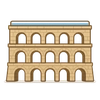
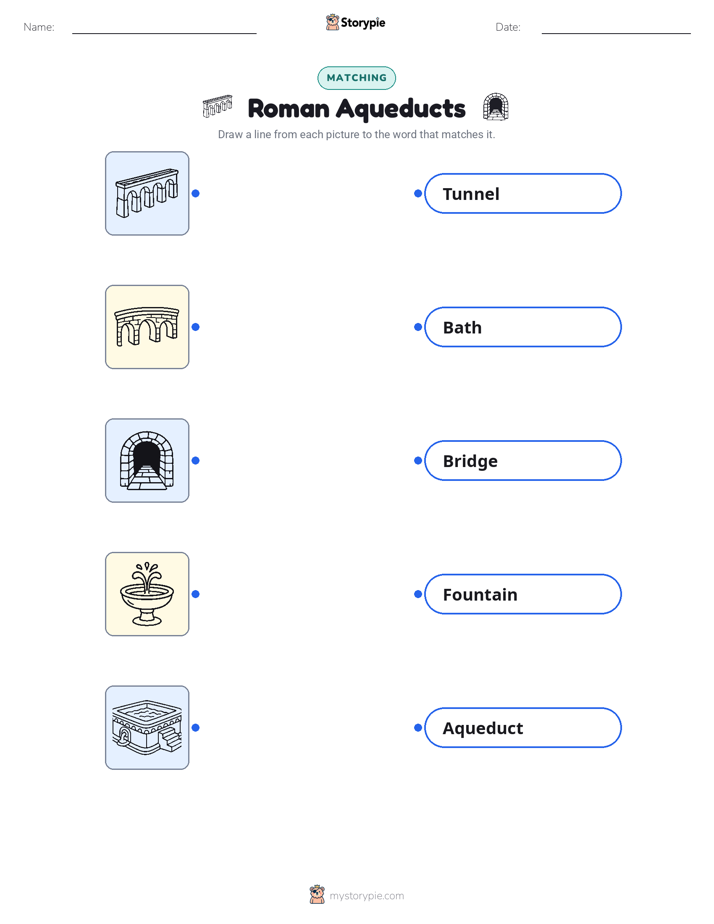
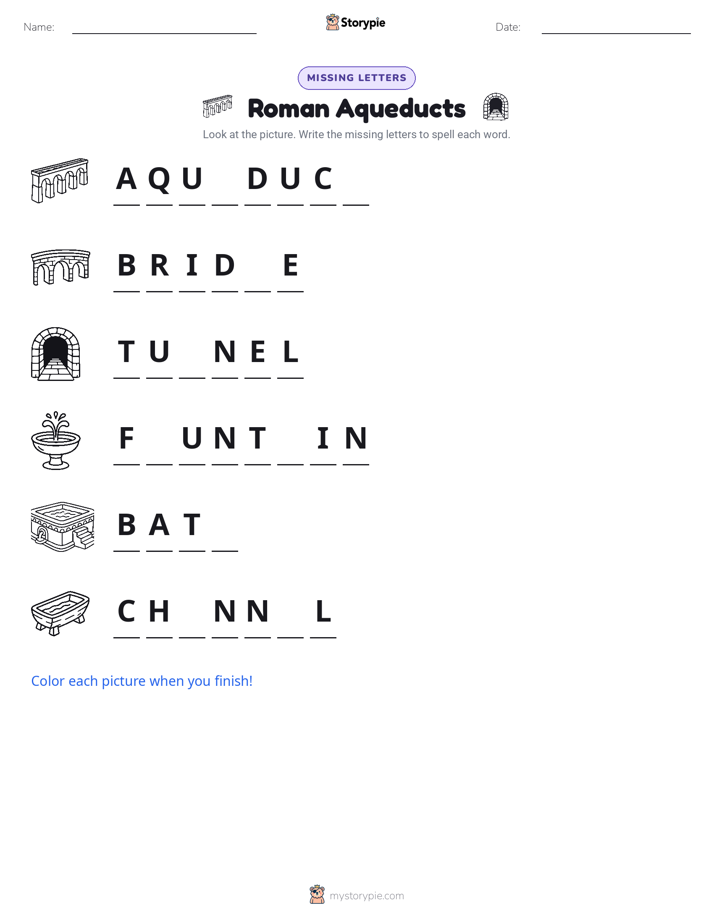
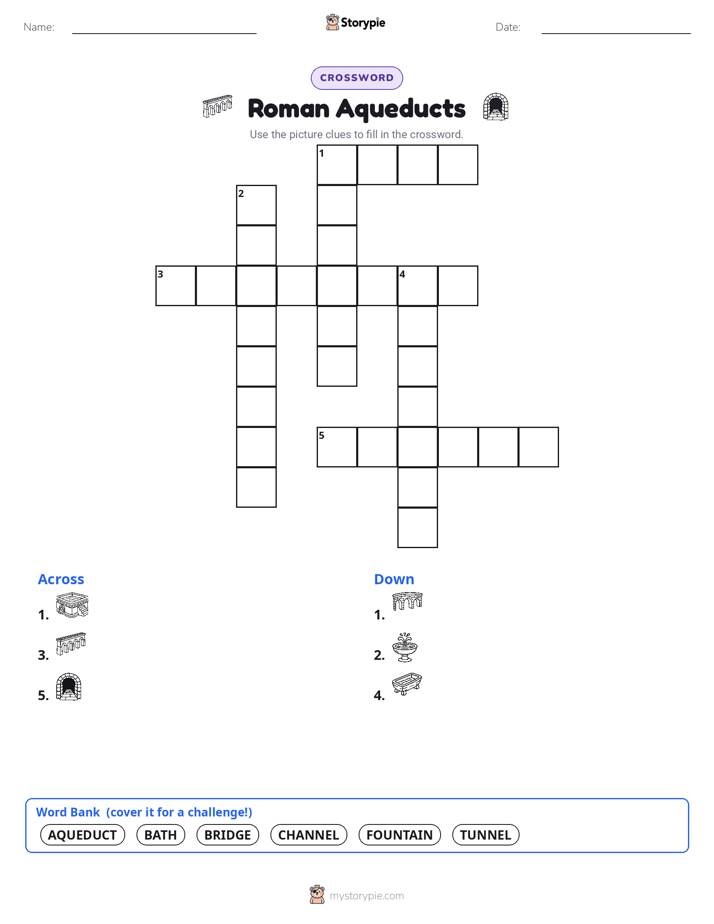
Roman aqueducts were sophisticated water transport systems, including channels, tunnels, and bridges…
Reads at Grades 6–8 Listens at Grades 4–8
Print & create
Answer keys·No prep·Free with an account
28 worksheets · answer keys · full story · quiz · Ages 10-12 · CEFR B2
Plus adds 102,000+ more stories in 27 languages, audio for every one, and printables for all of them.
Just want Roman Aqueducts?
I am a river of stone, a silent giant stretching across the landscape of ancient Italy. You know me as the Roman Aqueducts. My story begins in a time of great need, in a city bursting with life and energy. By the year 312 BCE, Rome was becoming the heart of a powerful republic, its population swelling with soldiers, merchants, and families. But as the city grew, its life source, the Tiber River, began to suffer. The water became murky and polluted, no longer safe or sufficient for the hundreds of thousands of people who depended on it. A city cannot thrive on dirty water. It was then that a brilliant man, a Roman official named Appius Claudius Caecus, looked to the distant hills. He saw the pure springs and clean rivers flowing there and imagined something extraordinary. He envisioned a way to capture that pristine water and guide it on a long journey, a journey that would end in the thirsty heart of Rome itself. His idea was not just to build a channel, but to create me, a man-made river that would give the city a new, clean lifeblood.
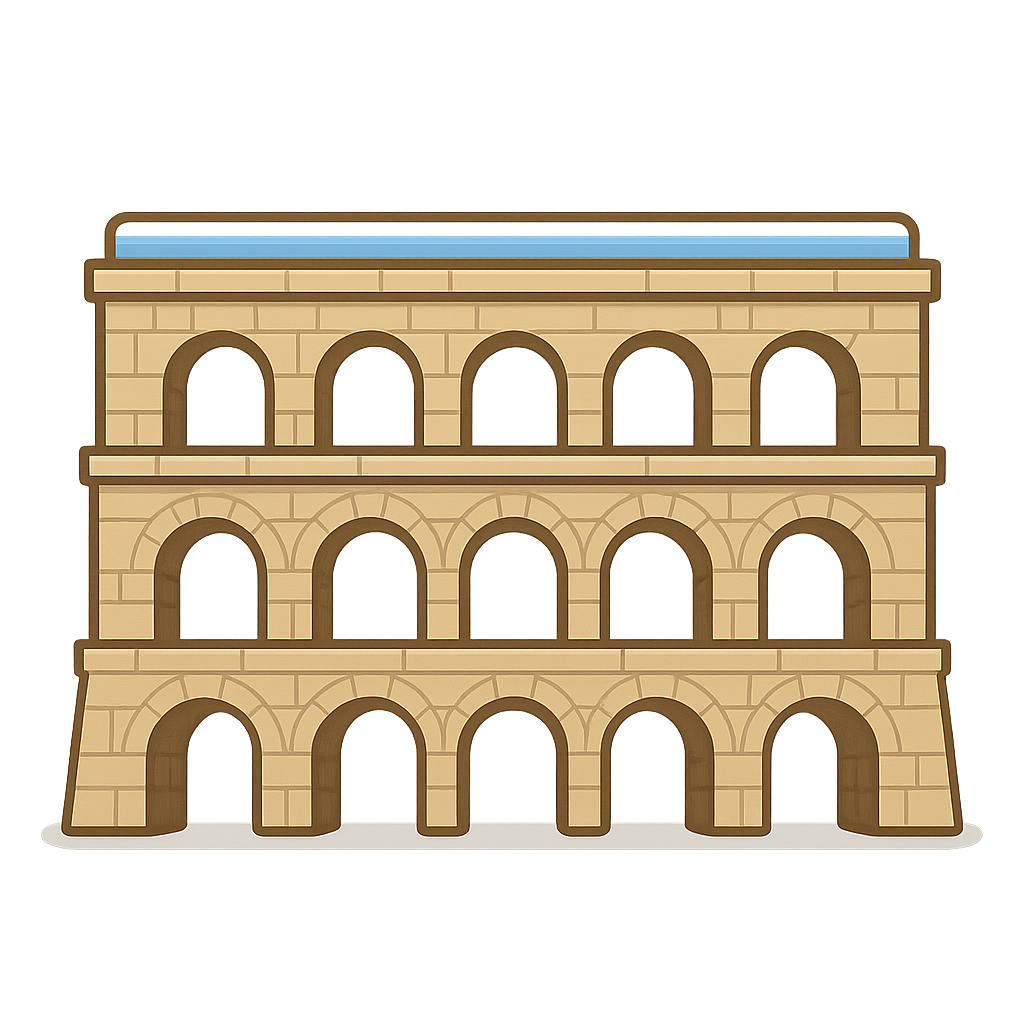
My secret, the magic that allowed me to carry my precious cargo for miles, was not power, but patience. My magic was gravity. The Roman engineers who designed me were masters of precision. Without lasers or modern computers, they used simple but effective tools to survey the land and calculate a perfect, gentle slope. For every hundred meters I traveled forward, I would drop only a few centimeters. This constant, almost invisible decline was enough to keep the water moving steadily on its long journey. It was a whisper of a slope, a carefully guarded secret that ensured my flow was constant but never destructive. My firstborn, the Aqua Appia, constructed in 312 BCE, was modest. It ran almost entirely underground in a covered stone trench, protecting the water from the sun and any impurities. But as Rome’s needs grew, so did my family. In 144 BCE, the Aqua Marcia was built, a far more ambitious project. This new channel stretched for over ninety kilometers. For much of its journey, it too was a hidden tunnel, but when it came to a deep valley or a low-lying plain, I rose from the earth. My engineers built magnificent bridges of stone arches, lifting my water channel high into the air so it could cross the landscape without losing its vital downward slope. They used incredible materials, including a special volcanic ash called pozzolana mixed into their concrete, which made my channels waterproof and incredibly strong. For centuries, I stood firm, a testament to their genius, my stone veins carrying a cool, clear river across the countryside.
The Stone River of Rome
I am a river of stone, a silent giant stretching across the landscape of ancient Italy. You know me as the Roman Aqueducts. My story begins in a time of great need, in a city bursting with life and energy. By the year 312 BCE, Rome was becoming the heart of a powerful republic, its population swelling with soldiers, merchants, and families. But as the city grew, its life source, the Tiber River, began to suffer. The water became murky and polluted, no longer safe or sufficient for the hundreds of thousands of people who depended on it. A city cannot thrive on dirty water. It was then that a brilliant man, a Roman official named Appius Claudius Caecus, looked to the distant hills. He saw the pure springs and clean rivers flowing there and imagined something extraordinary. He envisioned a way to capture that pristine water and guide it on a long journey, a journey that would end in the thirsty heart of Rome itself. His idea was not just to build a channel, but to create me, a man-made river that would give the city a new, clean lifeblood.
My secret, the magic that allowed me to carry my precious cargo for miles, was not power, but patience. My magic was gravity. The Roman engineers who designed me were masters of precision. Without lasers or modern computers, they used simple but effective tools to survey the land and calculate a perfect, gentle slope. For every hundred meters I traveled forward, I would drop only a few centimeters. This constant, almost invisible decline was enough to keep the water moving steadily on its long journey. It was a whisper of a slope, a carefully guarded secret that ensured my flow was constant but never destructive. My firstborn, the Aqua Appia, constructed in 312 BCE, was modest. It ran almost entirely underground in a covered stone trench, protecting the water from the sun and any impurities. But as Rome’s needs grew, so did my family. In 144 BCE, the Aqua Marcia was built, a far more ambitious project. This new channel stretched for over ninety kilometers. For much of its journey, it too was a hidden tunnel, but when it came to a deep valley or a low-lying plain, I rose from the earth. My engineers built magnificent bridges of stone arches, lifting my water channel high into the air so it could cross the landscape without losing its vital downward slope. They used incredible materials, including a special volcanic ash called pozzolana mixed into their concrete, which made my channels waterproof and incredibly strong. For centuries, I stood firm, a testament to their genius, my stone veins carrying a cool, clear river across the countryside.
Imagine the day my water first arrived. After years of construction, after traveling for miles through dark tunnels and across soaring arches, my flow reached the city limits. It poured into a large distribution tank called a castellum, and from there, it gushed into the public fountains of Rome. For the first time, people from every walk of life could come and collect all the clean, fresh water they needed. I was a revolution. I filled the grand public baths, the thermae, which became centers of Roman social life where citizens could bathe, exercise, and meet with friends. My constant flow flushed the city’s sewers, including the great Cloaca Maxima, carrying away waste and dramatically improving public health. For the wealthy, I even ran directly into their private homes, a luxury unheard of in most of the ancient world. With the seemingly endless supply of water I provided, Rome could sustain a population of over one million people. I made it possible for Rome to be the cleanest, most advanced, and most magnificent city of its time, a shining example of what engineering could achieve.
My builders are long gone, and the mighty Roman Empire has faded into history, but I remain. Many of my great arched bridges, like the spectacular Pont du Gard in modern-day France, still stand today, defying the ages. They are monuments to the ingenuity and perseverance of the people who created me. I am more than just stone and concrete; I am an idea. The fundamental principle I represent—using the simple, reliable power of gravity to deliver water—is a lesson that has never been forgotten. Modern cities around the world still rely on this same concept to build their own water systems. My story is a reminder that a clever solution, born from a great need and built with skill and determination, can not only solve a problem for one city but can also leave a legacy that inspires and serves humanity for thousands of years.
Wow facts
About
Roman aqueducts were sophisticated water transport systems, including channels, tunnels, and bridges, built by ancient Romans to bring fresh water from distant sources into their cities and towns for public baths, fountains, and homes.
Take a Quiz
Question 1 of 5
What was the central problem I was built to solve, and what was the main principle behind my design?
Explore next






Want to do even more?
Go beyond exploring. Unlock tools that turn every story into real learning.

Storypie Plus for families
Full stories, quizzes, and printables. Nights and car rides, sorted.
- Unlimited audio stories
- Create Mode: your child stars in the story
- Offline downloads
- Printable worksheets & coloring pages

Why Storypie for Schools
Students engaged. Prep in seconds. Evenings back to you.
- Worksheets & Quizzes
- Classroom Management
- Formative Assessment
- Custom Curriculum & Lesson Plans
- 27 Languages

Why Storypie for Homeschool
Curriculum done. They'll ask for more. Hours back in your day.
- Worksheet Generator
- First-Person Audio Stories
- Built-in Comprehension Quizzes
- Custom Curriculum & Lesson Plans
- Print & Go Activities