English

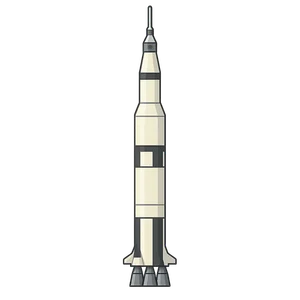
Saturn V
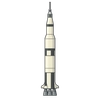
The Saturn V was an American super heavy-lift launch vehicle used by NASA between 1967 and 1973.
Reads at Grades 3–5 Listens at Grades 1–5
Print & create
Answer keys·No prep·Free with an account
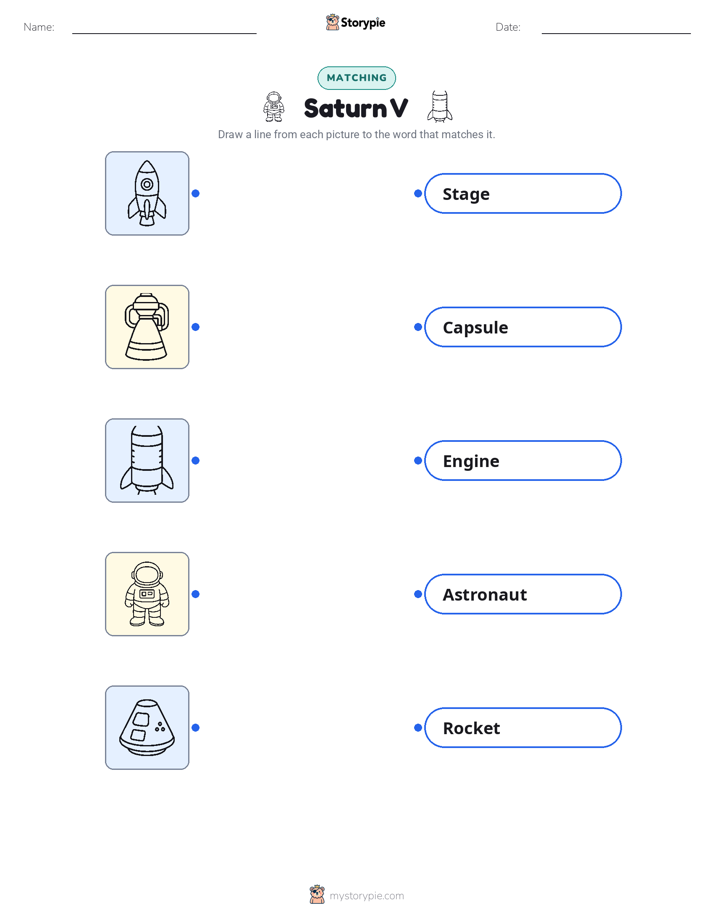
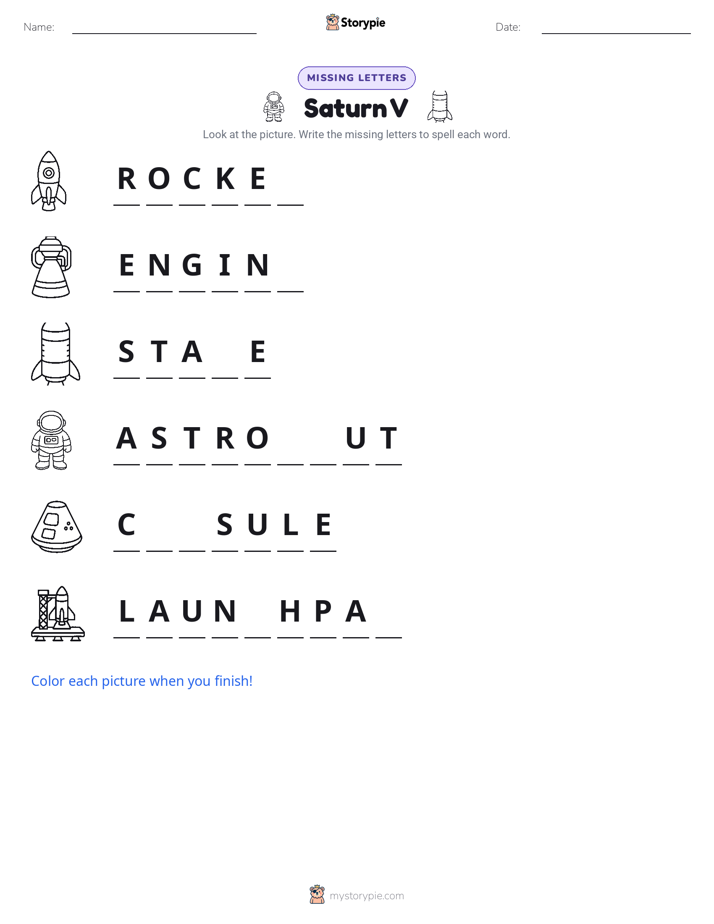
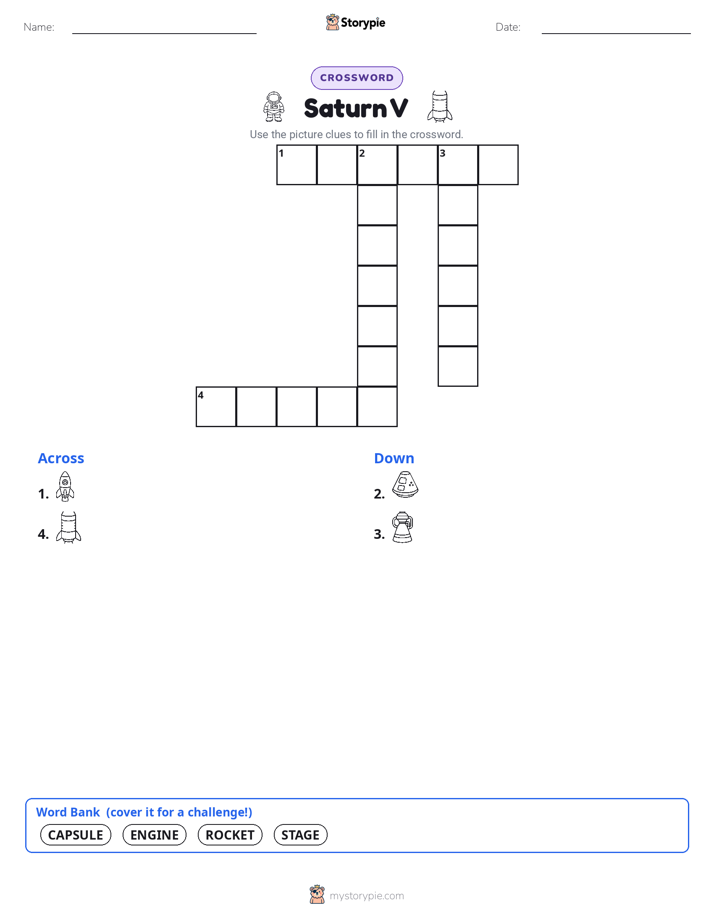
28 worksheets · answer keys · full story · quiz · Ages 8-10 · CEFR B1
Plus adds 164,000+ more stories in 27 languages, audio for every one, and printables for all of them.
Just want Saturn V?
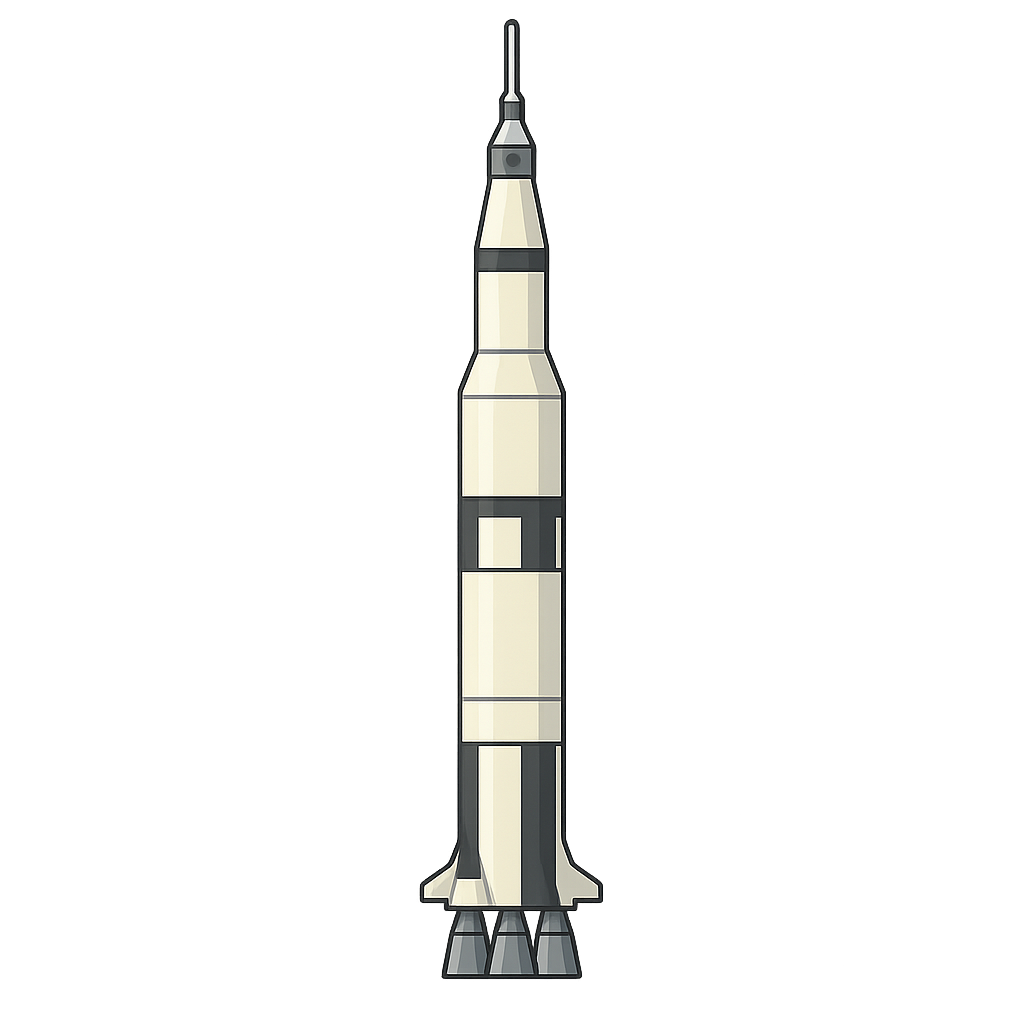
Hello there. You can call me Saturn V. I am the biggest, tallest, and most powerful rocket ever successfully flown. It’s hard to imagine just how big I am. If you were to stand me on my end, I would be taller than the Statue of Liberty, stretching 363 feet into the sky. If you put me on a giant scale, I would weigh more than 6 million pounds when I was full of fuel, which is as heavy as 400 elephants. I was a true giant, and I was built for a giant's dream. My purpose, the very reason I was created, was to carry human beings to a place they had only ever looked at from far away: the Moon. My story begins in the 1960s, a time filled with excitement and a friendly but serious competition called the "Space Race." The United States and the Soviet Union were racing to see who could achieve the greatest things in space. In 1961, a very determined President named John F. Kennedy stood before the world and announced a bold challenge. He said that America should commit itself to landing a man on the Moon and bringing him home safely before the 1960s were over. It was a promise that seemed almost impossible, but it filled people with hope and wonder. I was the answer to that promise, the mighty rocket designed to make that incredible journey happen.
It took an army of brilliant minds to create me. I was born from the ideas of a team of engineers and scientists at NASA, led by a man named Wernher von Braun. They worked at a place called the Marshall Space Flight Center in Alabama. Designing me was like solving the world's most difficult puzzle. I couldn't be just one solid piece. To escape Earth's gravity, I needed to be built in three separate parts, which they called "stages." Think of it like a team of runners in a relay race. The first runner is the strongest and gets things started, then passes the baton to the next, and so on. My first stage, the S-IC, was the powerhouse. It had five of the most powerful engines ever made, the F-1 engines. When they all fired up at once, they created a controlled explosion that generated more power than 85 Hoover Dams. The sound was a ground-shaking roar that rattled windows over a hundred miles away. This stage's only job was to lift all my weight off the ground and push me through the thickest part of Earth's air for about two and a half minutes before it used up all its fuel and fell away into the ocean. Then, my second stage, the S-II, would take over, pushing me even higher and faster. Finally, my third stage, the S-IVB, would give the final push to get the astronauts into orbit around the Earth and then, after a short coast, fire one more time to send them speeding toward the Moon. Before I could carry any people, I had to prove I could fly safely. My first big test was a mission called Apollo 4, which took place on November 9th, 1967. There were no astronauts on board, just my complicated computer brain and thousands of sensors. The countdown was tense, but when my engines ignited, I soared into the sky perfectly. I flew my mission exactly as planned, showing everyone that I was strong, reliable, and ready for my real job. The engineers who built me cheered with joy and relief. Their giant was ready.
The Story of the Saturn V Rocket
Hello there. You can call me Saturn V. I am the biggest, tallest, and most powerful rocket ever successfully flown. It’s hard to imagine just how big I am. If you were to stand me on my end, I would be taller than the Statue of Liberty, stretching 363 feet into the sky. If you put me on a giant scale, I would weigh more than 6 million pounds when I was full of fuel, which is as heavy as 400 elephants. I was a true giant, and I was built for a giant's dream. My purpose, the very reason I was created, was to carry human beings to a place they had only ever looked at from far away: the Moon. My story begins in the 1960s, a time filled with excitement and a friendly but serious competition called the "Space Race." The United States and the Soviet Union were racing to see who could achieve the greatest things in space. In 1961, a very determined President named John F. Kennedy stood before the world and announced a bold challenge. He said that America should commit itself to landing a man on the Moon and bringing him home safely before the 1960s were over. It was a promise that seemed almost impossible, but it filled people with hope and wonder. I was the answer to that promise, the mighty rocket designed to make that incredible journey happen.
It took an army of brilliant minds to create me. I was born from the ideas of a team of engineers and scientists at NASA, led by a man named Wernher von Braun. They worked at a place called the Marshall Space Flight Center in Alabama. Designing me was like solving the world's most difficult puzzle. I couldn't be just one solid piece. To escape Earth's gravity, I needed to be built in three separate parts, which they called "stages." Think of it like a team of runners in a relay race. The first runner is the strongest and gets things started, then passes the baton to the next, and so on. My first stage, the S-IC, was the powerhouse. It had five of the most powerful engines ever made, the F-1 engines. When they all fired up at once, they created a controlled explosion that generated more power than 85 Hoover Dams. The sound was a ground-shaking roar that rattled windows over a hundred miles away. This stage's only job was to lift all my weight off the ground and push me through the thickest part of Earth's air for about two and a half minutes before it used up all its fuel and fell away into the ocean. Then, my second stage, the S-II, would take over, pushing me even higher and faster. Finally, my third stage, the S-IVB, would give the final push to get the astronauts into orbit around the Earth and then, after a short coast, fire one more time to send them speeding toward the Moon. Before I could carry any people, I had to prove I could fly safely. My first big test was a mission called Apollo 4, which took place on November 9th, 1967. There were no astronauts on board, just my complicated computer brain and thousands of sensors. The countdown was tense, but when my engines ignited, I soared into the sky perfectly. I flew my mission exactly as planned, showing everyone that I was strong, reliable, and ready for my real job. The engineers who built me cheered with joy and relief. Their giant was ready.
Of all my journeys, the one everyone remembers is Apollo 11. That was my moment in history. The morning of July 16th, 1969, was bright and sunny at the Kennedy Space Center in Florida. Millions of people gathered on the beaches and roads nearby just to watch me. At my very top, nestled inside their command module, were three brave astronauts: Neil Armstrong, Buzz Aldrin, and Michael Collins. They trusted me to begin their incredible voyage. I could feel the excitement in the air as the famous countdown began. "Ten, nine, eight..." With every number, the tension grew. "...three, two, one, liftoff!" My five F-1 engines roared to life, unleashing their tremendous power. I shook the very ground beneath me, sending tremors for miles around as I slowly, then powerfully, climbed into the blue sky. I pushed against the pull of Earth with all my might, carrying my precious cargo higher and faster. My first stage did its job and fell away. My second stage fired and pushed us further. Finally, my third stage ignited, first to place the Apollo spacecraft into Earth's orbit, and then one last time to send it on a direct path to the Moon. My work was done. I had delivered them. I drifted away as they continued their three-day journey. And then, on July 20th, 1969, the whole world watched as Neil Armstrong stepped onto the Moon's surface. I may have been far away, but I felt a great sense of pride. I had started that historic journey. After the Moon missions, I had one more important job. In 1973, I launched Skylab, America's first space station. Though I don't fly anymore, my legacy lives on in every new rocket that reaches for the stars, reminding everyone that with courage and teamwork, even the biggest dreams can take flight.
Wow facts
About
The Saturn V was an American super heavy-lift launch vehicle used by NASA between 1967 and 1973. It was the tallest, heaviest, and most powerful rocket ever brought to operational status and was used to send astronauts to the Moon during the Apollo program.
Take a Quiz
Question 1 of 5
In the story, I compare my three parts to runners in a relay race. What does this comparison mean?
Explore next


Want to do even more?
Go beyond exploring. Unlock tools that turn every story into real learning.

Storypie Plus for families
Full stories, quizzes, and printables. Nights and car rides, sorted.
- Unlimited audio stories
- Create Mode: your child stars in the story
- Offline downloads
- Printable worksheets & coloring pages

Why Storypie for Schools
Students engaged. Prep in seconds. Evenings back to you.
- Worksheets & Quizzes
- Classroom Management
- Formative Assessment
- Custom Curriculum & Lesson Plans
- 27 Languages

Why Storypie for Homeschool
Curriculum done. They'll ask for more. Hours back in your day.
- Worksheet Generator
- First-Person Audio Stories
- Built-in Comprehension Quizzes
- Custom Curriculum & Lesson Plans
- Print & Go Activities