English

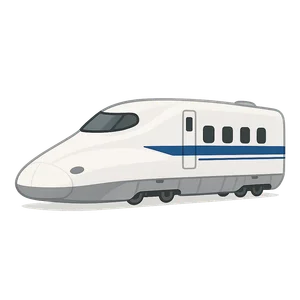
Shinkansen
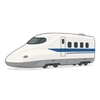
The Shinkansen, also known as the bullet train, is Japan's network of high-speed railway lines.
Reads at Grades 6–8 Listens at Grades 4–8
Print & create
Answer keys·No prep·Free with an account
28 worksheets · answer keys · full story · quiz · Ages 10-12 · CEFR B2
Plus adds 164,000+ more stories in 27 languages, audio for every one, and printables for all of them.
Just want Shinkansen?
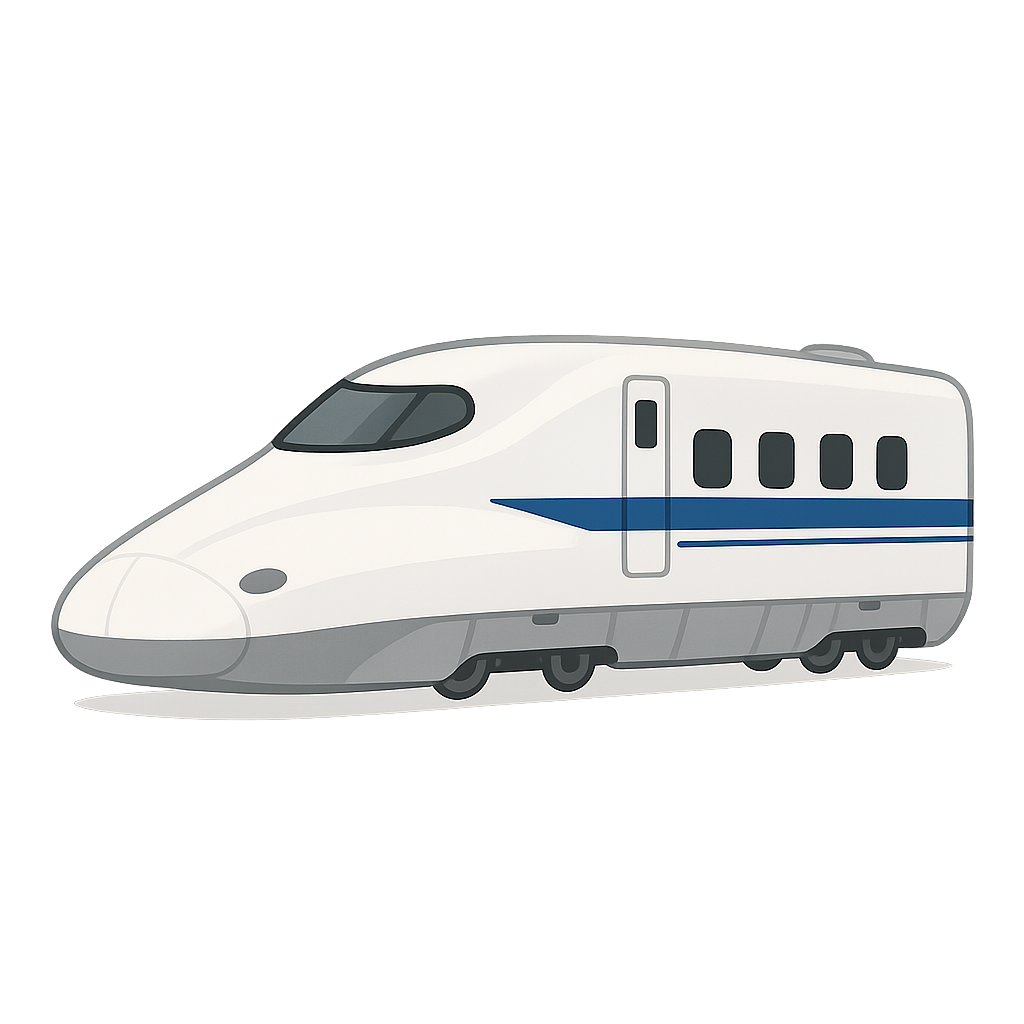
I am the Shinkansen, but the world came to know me as the bullet train. My body is a long, sleek ribbon of steel, and my nose is pointed and aerodynamic, designed not just to travel, but to slice through the very air itself. When I move, the world outside becomes a beautiful blur of greens and grays. I was born from a dream of speed in a country that was rebuilding itself with incredible energy. After World War II, Japan was a nation in motion, but its railways were stuck in the past. The old steam locomotives were slow and the tracks were crowded. The most important route in the country, the Tōkaidō line connecting the great cities of Tokyo and Osaka, was at its breaking point. A journey that should have been swift took nearly seven long hours, a bottleneck that slowed down business, separated families, and held back the country's potential. Two men looked at this problem and saw not an obstacle, but an opportunity for a revolutionary idea. They were my creators. One was Hideo Shima, a brilliant engineer who had a deep respect for the past but whose mind was always racing toward the future. The other was Shinji Sogō, the determined president of the Japanese National Railways, who had the courage to champion a project many thought was impossible. They envisioned a new kind of train, one that would not just be faster, but would represent the dawn of a new era. They dreamed of me, a train that could shrink the vast distances of their nation and tie it together with threads of steel and speed.
The Bullet Train's Story
I am the Shinkansen, but the world came to know me as the bullet train. My body is a long, sleek ribbon of steel, and my nose is pointed and aerodynamic, designed not just to travel, but to slice through the very air itself. When I move, the world outside becomes a beautiful blur of greens and grays. I was born from a dream of speed in a country that was rebuilding itself with incredible energy. After World War II, Japan was a nation in motion, but its railways were stuck in the past. The old steam locomotives were slow and the tracks were crowded. The most important route in the country, the Tōkaidō line connecting the great cities of Tokyo and Osaka, was at its breaking point. A journey that should have been swift took nearly seven long hours, a bottleneck that slowed down business, separated families, and held back the country's potential. Two men looked at this problem and saw not an obstacle, but an opportunity for a revolutionary idea. They were my creators. One was Hideo Shima, a brilliant engineer who had a deep respect for the past but whose mind was always racing toward the future. The other was Shinji Sogō, the determined president of the Japanese National Railways, who had the courage to champion a project many thought was impossible. They envisioned a new kind of train, one that would not just be faster, but would represent the dawn of a new era. They dreamed of me, a train that could shrink the vast distances of their nation and tie it together with threads of steel and speed.
My creation was one of the most ambitious engineering projects the world had ever seen, officially beginning in 1959. I couldn't simply run on the old, narrow tracks. They were winding and shared with slow freight trains. I needed a path of my own, a dedicated 'new trunk line,' which is what Shinkansen means in Japanese. This required building hundreds of miles of track that was perfectly straight and smooth. Where the mountainous landscape of Japan got in the way, my builders did not go around it; they went through it. They blasted 67 miles of tunnels through solid rock. Where valleys dipped, they constructed massive viaducts, raising my tracks high above the ground so my journey would be level and unwavering. My tracks were different, too. They were a wider, standard gauge for stability, and the rails were welded together into long, continuous ribbons to eliminate the familiar clickety-clack sound and create a ride of unparalleled smoothness. Hideo Shima designed my body with the precision of an aircraft engineer. He knew that at high speeds, air itself becomes a powerful force. My pointed nose was designed to reduce the sonic boom effect when I entered tunnels at high speed. My power was all-electric, drawn from overhead lines, and my axles had their own motors, giving me incredible acceleration. Most importantly, I was designed to be safe. My Automatic Train Control system was my brain, constantly monitoring my speed and the track ahead, ready to apply the brakes faster than any human could. The pressure to finish was immense, as the 1964 Tokyo Olympics were fast approaching, and Japan wanted to show its new face to the world. On October 1st, 1964, just before the games began, my moment came. I slid out of Tokyo Station, a symbol of hope and progress. I quickly accelerated to 130 miles per hour, a speed that felt like flying. I completed the journey to Osaka in just four hours, and the world was astonished. I had fulfilled the dream of my creators.
In the years that followed, I became more than just a fast way to travel; I became the circulatory system of a nation. The distances that had once separated cities and people seemed to vanish. Businesspeople could attend a meeting in Osaka and be home for dinner in Tokyo on the same day. Families could visit grandparents in a weekend instead of a week. I helped fuel Japan's economic miracle, connecting manufacturing hubs, business centers, and people with incredible efficiency. I became a profound symbol of Japan's post-war recovery, a testament to what a nation could achieve through innovation, precision, and sheer determination. My punctuality became legendary, with my average delay measured in seconds, not minutes. And my safety record was perfect, proving that great speed could be achieved without compromising well-being. My success sent ripples across the globe. Engineers from France, Germany, and beyond came to study me, and soon, they were inspired to build their own high-speed rail networks. I had started a worldwide revolution in travel. Today, my newer, even faster siblings continue to expand across Japan. We are a reminder that a bold vision has the power to change the world. We prove, every single day, that the biggest dreams are the ones that truly move us all forward.
Wow facts
About
The Shinkansen, also known as the bullet train, is Japan's network of high-speed railway lines. It is renowned for its exceptional speed, safety record, and punctuality, and it revolutionized travel within the country.
Take a Quiz
Question 1 of 5
Retell the story of the Shinkansen's creation, focusing on the main challenges and how they were solved.
Explore next



Want to do even more?
Go beyond exploring. Unlock tools that turn every story into real learning.

Storypie Plus for families
Full stories, quizzes, and printables. Nights and car rides, sorted.
- Unlimited audio stories
- Create Mode: your child stars in the story
- Offline downloads
- Printable worksheets & coloring pages

Why Storypie for Schools
Students engaged. Prep in seconds. Evenings back to you.
- Worksheets & Quizzes
- Classroom Management
- Formative Assessment
- Custom Curriculum & Lesson Plans
- 27 Languages

Why Storypie for Homeschool
Curriculum done. They'll ask for more. Hours back in your day.
- Worksheet Generator
- First-Person Audio Stories
- Built-in Comprehension Quizzes
- Custom Curriculum & Lesson Plans
- Print & Go Activities