English

Skyscraper
A very tall building with many floors…
Reads at Grades 6–8 Listens at Grades 4–8
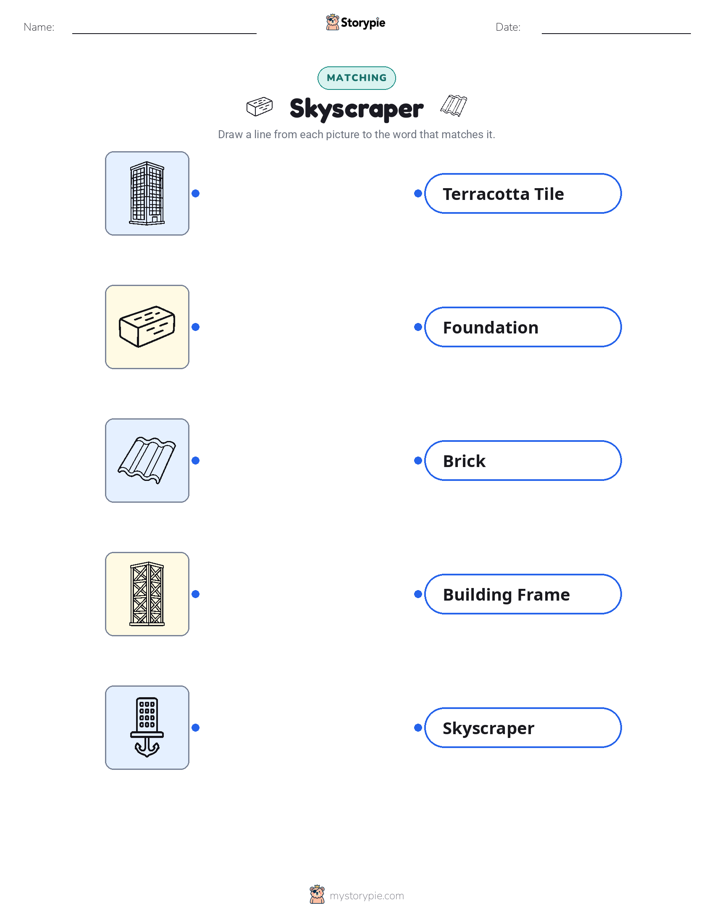
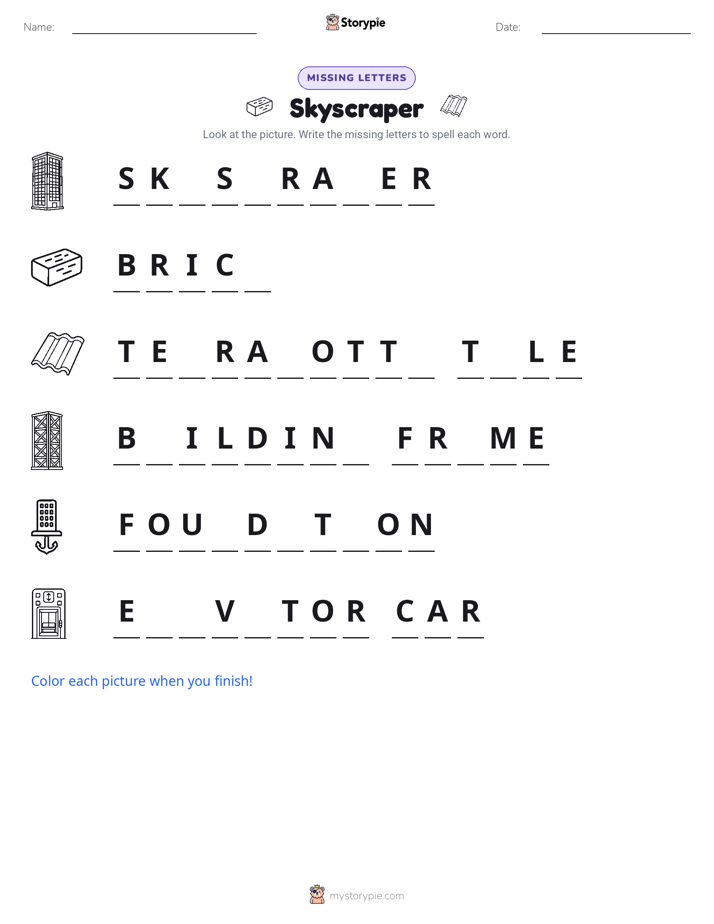
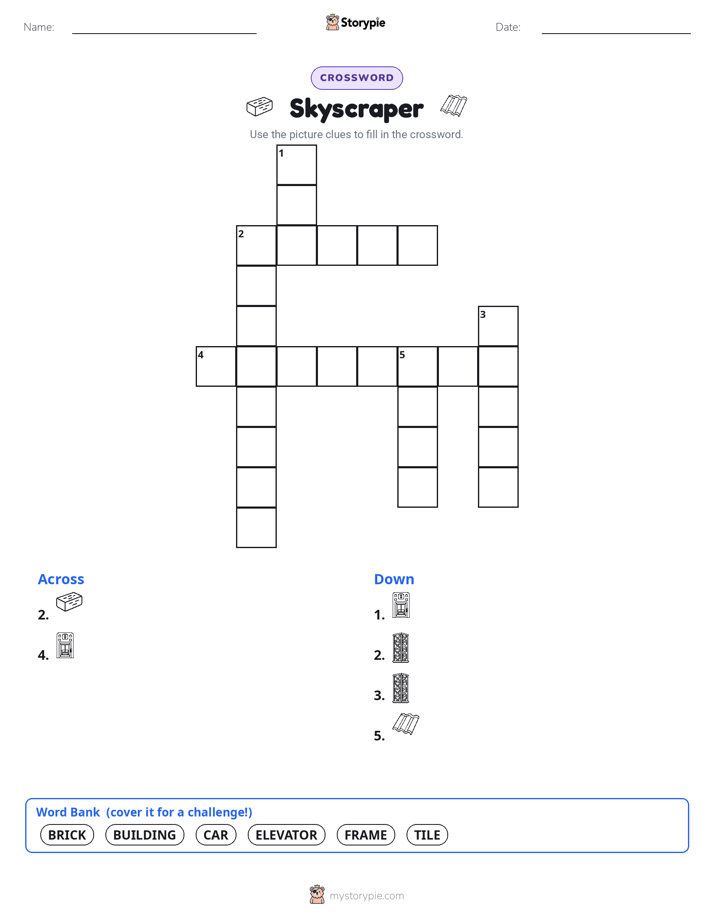
Print & create
Answer keys·No prep·Free with an account
28 worksheets · answer keys · full story · quiz · Ages 10-12 · CEFR B2
Plus adds 208,000+ more stories in 27 languages, audio for every one, and printables for all of them.
Just want Skyscraper?
Before I existed, the tops of cities were much closer to the ground. I am a Skyscraper, a building that learned to stretch, to climb, to reach for the clouds themselves. My story begins in the late 1800s, in bustling, booming cities like Chicago. People were flocking there for work and new opportunities, and the city was growing faster than anyone could have imagined. Soon, every inch of land was filled with homes, shops, and factories. There was simply no more room to build outwards. The only direction left to go was up. But this presented a huge problem. For centuries, buildings were made of heavy brick and stone. To build a taller stone building, the walls at the bottom had to be incredibly thick to support the immense weight above them. Imagine a 16-story building from that time; its ground-floor walls would be six feet thick, leaving little room for doors or windows and casting the inside in shadow. Then, a great tragedy created a unique opportunity. On October 8th, 1871, the Great Chicago Fire swept through the city, and in a few devastating days, a huge part of Chicago was turned to ash. It was a terrible loss, but from that blank slate, a new, stronger, and more innovative city was ready to rise. Architects and engineers were challenged to think differently, to build with new materials that were not only stronger but also more resistant to fire, setting the stage for my birth.
My true beginning took place on a street corner in Chicago in 1884. I was the Home Insurance Building, and my 'father' was a brilliant architect named William Le Baron Jenney. He had a daring and revolutionary idea that would change the world. He thought, what if the walls didn't have to hold all the weight? What if a building could have a skeleton, just like a person, to do all the heavy lifting? And so, he designed me with a hidden frame of strong, metal steel. This internal skeleton would carry my entire load, from the roof to the foundation. My outer walls of brick and terracotta were no longer a heavy burden; they were just a light 'skin' to protect my insides from the wind, rain, and cold. This idea was so new that as I was being built, some people were nervous. They watched my metal bones rise into the air and worried I might be too flimsy or wobbly. They even had a name for me: a 'skyscraper.' It was meant to sound a bit strange, but I liked it. When my construction was finally completed in 1885, I stood a proud 10 stories tall. It may not sound like much compared to my descendants today, but at the time, I was a true giant. I was the very first building of my kind, a new species of structure that proved humanity could build higher than ever before.
I Am the Skyscraper
Before I existed, the tops of cities were much closer to the ground. I am a Skyscraper, a building that learned to stretch, to climb, to reach for the clouds themselves. My story begins in the late 1800s, in bustling, booming cities like Chicago. People were flocking there for work and new opportunities, and the city was growing faster than anyone could have imagined. Soon, every inch of land was filled with homes, shops, and factories. There was simply no more room to build outwards. The only direction left to go was up. But this presented a huge problem. For centuries, buildings were made of heavy brick and stone. To build a taller stone building, the walls at the bottom had to be incredibly thick to support the immense weight above them. Imagine a 16-story building from that time; its ground-floor walls would be six feet thick, leaving little room for doors or windows and casting the inside in shadow. Then, a great tragedy created a unique opportunity. On October 8th, 1871, the Great Chicago Fire swept through the city, and in a few devastating days, a huge part of Chicago was turned to ash. It was a terrible loss, but from that blank slate, a new, stronger, and more innovative city was ready to rise. Architects and engineers were challenged to think differently, to build with new materials that were not only stronger but also more resistant to fire, setting the stage for my birth.
My true beginning took place on a street corner in Chicago in 1884. I was the Home Insurance Building, and my 'father' was a brilliant architect named William Le Baron Jenney. He had a daring and revolutionary idea that would change the world. He thought, what if the walls didn't have to hold all the weight? What if a building could have a skeleton, just like a person, to do all the heavy lifting? And so, he designed me with a hidden frame of strong, metal steel. This internal skeleton would carry my entire load, from the roof to the foundation. My outer walls of brick and terracotta were no longer a heavy burden; they were just a light 'skin' to protect my insides from the wind, rain, and cold. This idea was so new that as I was being built, some people were nervous. They watched my metal bones rise into the air and worried I might be too flimsy or wobbly. They even had a name for me: a 'skyscraper.' It was meant to sound a bit strange, but I liked it. When my construction was finally completed in 1885, I stood a proud 10 stories tall. It may not sound like much compared to my descendants today, but at the time, I was a true giant. I was the very first building of my kind, a new species of structure that proved humanity could build higher than ever before.
My creation was like the starting gun in a great race. A friendly but intense competition began between architects in Chicago and New York to see who could build the next tallest, most impressive version of me. This 'Race to the Sky' would define the look of modern cities. However, I must confess that I couldn't have achieved this incredible growth on my own. I had a very important partner: the safety elevator. You see, what good are 20, 50, or 100 floors if people have to climb the stairs? Long before I was born, back in 1853, an inventor named Elisha Otis demonstrated a remarkable device. It was a brake for elevators that would automatically stop the car from falling if the hoisting rope snapped. His invention made people feel safe riding to the highest floors, transforming elevators from simple freight lifts into reliable passenger vehicles. With this technology, my potential was unlocked. The Skyscraper Boom of the early 20th century was on. During the 1930s, magnificent new towers like the Chrysler Building and the Empire State Building rose in New York City, becoming global icons. Engineers perfected my design, learning how to brace my steel skeleton against powerful winds and how to anchor me securely to the ground, allowing me to climb higher and higher into the heavens.
My impact was far greater than just my height. I completely changed the face of the city. Before me, cities were wide and sprawling. After me, they gained a new dimension: a vertical one. I gave the world the 'skyline,' a unique fingerprint of a city's ambition etched against the horizon. I became the heart of the modern metropolis, bringing thousands of people and businesses together under one roof. Offices, shops, and even homes could now be stacked on top of one another, creating a buzzing, concentrated hub of energy, commerce, and new ideas. I also gave people a brand new way of seeing their world. From my upper floors, the city transformed into a breathtaking map of streets and parks, a view previously reserved only for birds. I am more than just steel, glass, and concrete. I am a symbol of human ingenuity, perseverance, and the courage to dream big. Today, my family of skyscrapers has spread to every corner of the globe. My newer relatives are smarter and more eco-friendly, but we all share the same purpose. We stand as monuments to what is possible, reminding everyone who walks in our shadows to look up and imagine what they, too, can build.
Wow facts
About
A very tall building with many floors, supported by an internal steel or concrete frame rather than load-bearing walls, which allows for greater height and stability.
Take a Quiz
Question 1 of 5
What was the main problem that led to the invention of the skyscraper, and how did its steel frame solve it?
Explore next





Want to do even more?
Go beyond exploring. Unlock tools that turn every story into real learning.

Storypie Plus for families
Full stories, quizzes, and printables. Nights and car rides, sorted.
- Unlimited audio stories
- Create Mode: your child stars in the story
- Offline downloads
- Printable worksheets & coloring pages

Why Storypie for Schools
Students engaged. Prep in seconds. Evenings back to you.
- Worksheets & Quizzes
- Classroom Management
- Formative Assessment
- Custom Curriculum & Lesson Plans
- 27 Languages

Why Storypie for Homeschool
Curriculum done. They'll ask for more. Hours back in your day.
- Worksheet Generator
- First-Person Audio Stories
- Built-in Comprehension Quizzes
- Custom Curriculum & Lesson Plans
- Print & Go Activities