English

Solar Panel
Solar panels, or photovoltaic (PV) panels…
Reads at Grades 6–8 Listens at Grades 4–8
Print & create
Answer keys·No prep·Free with an account
28 worksheets · answer keys · full story · quiz · Ages 10-12 · CEFR B2
Plus adds 280,000+ more stories in 27 languages, audio for every one, and printables for all of them.
Just want Solar Panel?
Hello there. You might have seen me resting quietly on a rooftop, gleaming in a wide-open field, or maybe even on a small calculator on your desk. I am a solar panel, but I like to think of myself as a sun-catcher. I am a flat, dark, shiny rectangle, and my special talent is to drink in the warm, golden rays of the sun. I take that brilliant sunlight and, like a magician, I transform it into clean, quiet electricity. Before I came along, the world often relied on noisy, smoky machines to create power, filling the air with haze. But long ago, people started dreaming of a cleaner way. The very first whisper of my existence came from a young French physicist named Edmond Becquerel. Way back in 1839, he discovered something amazing while experimenting in his father's laboratory. He realized that when light hit certain materials, it could create a tiny spark of electricity. He called it the photovoltaic effect. It was just a small glimmer of an idea, a seed of curiosity planted in the mind of a scientist, but it was my very beginning. It was the first moment someone realized that the sun’s light held a secret power just waiting to be unlocked.
For many decades, that idea remained just a scientific curiosity. I was more of a ghost than a real thing. My first physical form was quite clumsy. In 1883, an American inventor named Charles Fritts created a very early version of me. He coated a material called selenium with a thin layer of gold. When he pointed it at the sun, it made electricity, but not very much. I was incredibly inefficient back then, only able to turn less than one percent of the sunlight I soaked up into useful energy. I was more of a party trick than a practical power source, but Mr. Fritts proved it was possible. He proved I could exist. My true birthday, the day I became the strong, useful invention you know today, was on April 25th, 1954. It happened at a famous and bustling place called Bell Laboratories. Three brilliant scientists were working together on a problem. Daryl Chapin was trying to find a long-lasting power source for remote telephone systems. He was joined by Calvin Fuller, a chemist, and Gerald Pearson, a physicist. They decided to try using silicon, which is the main element found in common sand. Their work paid off. They created the first practical silicon solar cell, and I was finally born. I was suddenly much stronger, able to convert a respectable six percent of sunlight into electricity. It was a giant leap, and for the first time, I was ready to go to work.
I am a Sun-Catcher: The Story of the Solar Panel
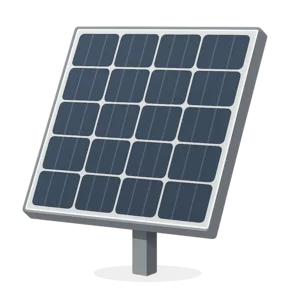
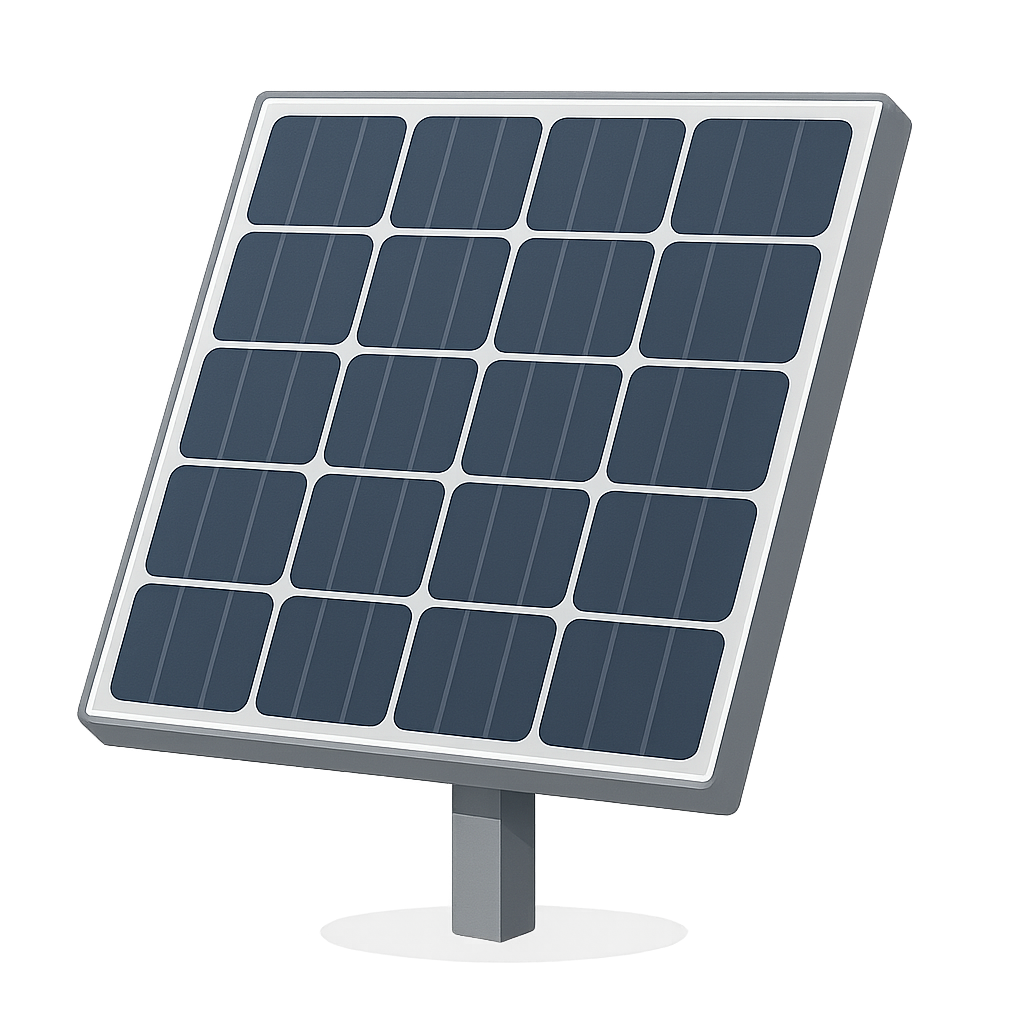
Hello there. You might have seen me resting quietly on a rooftop, gleaming in a wide-open field, or maybe even on a small calculator on your desk. I am a solar panel, but I like to think of myself as a sun-catcher. I am a flat, dark, shiny rectangle, and my special talent is to drink in the warm, golden rays of the sun. I take that brilliant sunlight and, like a magician, I transform it into clean, quiet electricity. Before I came along, the world often relied on noisy, smoky machines to create power, filling the air with haze. But long ago, people started dreaming of a cleaner way. The very first whisper of my existence came from a young French physicist named Edmond Becquerel. Way back in 1839, he discovered something amazing while experimenting in his father's laboratory. He realized that when light hit certain materials, it could create a tiny spark of electricity. He called it the photovoltaic effect. It was just a small glimmer of an idea, a seed of curiosity planted in the mind of a scientist, but it was my very beginning. It was the first moment someone realized that the sun’s light held a secret power just waiting to be unlocked.
For many decades, that idea remained just a scientific curiosity. I was more of a ghost than a real thing. My first physical form was quite clumsy. In 1883, an American inventor named Charles Fritts created a very early version of me. He coated a material called selenium with a thin layer of gold. When he pointed it at the sun, it made electricity, but not very much. I was incredibly inefficient back then, only able to turn less than one percent of the sunlight I soaked up into useful energy. I was more of a party trick than a practical power source, but Mr. Fritts proved it was possible. He proved I could exist. My true birthday, the day I became the strong, useful invention you know today, was on April 25th, 1954. It happened at a famous and bustling place called Bell Laboratories. Three brilliant scientists were working together on a problem. Daryl Chapin was trying to find a long-lasting power source for remote telephone systems. He was joined by Calvin Fuller, a chemist, and Gerald Pearson, a physicist. They decided to try using silicon, which is the main element found in common sand. Their work paid off. They created the first practical silicon solar cell, and I was finally born. I was suddenly much stronger, able to convert a respectable six percent of sunlight into electricity. It was a giant leap, and for the first time, I was ready to go to work.
Even though I was finally real and ready, I had one big problem. I was incredibly expensive to make. Each one of my early cells had to be crafted carefully by hand, so you couldn't just go buy me at a store. I was a piece of high-tech, futuristic equipment, reserved for only the most important and well-funded projects. My first big job interview was with the people exploring the final frontier: space. Scientists needed a way to power satellites for long periods without heavy batteries or fuel. I was the perfect candidate. On March 17th, 1958, I was attached to a small, spherical satellite called Vanguard 1 and launched into orbit around the Earth. It was my first grand adventure. Far above the clouds, I floated in the silent darkness of space, but every time my orbit brought me around to face the sun, I would soak in its unfiltered rays. I powered the satellite’s tiny radio transmitter, allowing it to send signals back to Earth. While the main batteries on Vanguard 1 died after just a few weeks, I kept on working. For six long years, I faithfully provided power, proving to the whole world that I was reliable, tough, and could make electricity anywhere the sun shone. My success in space made me a star, proving my potential and inspiring people to imagine what else I could do.
My journey in space was thrilling, but I always dreamed of coming back down to help people on Earth. For a long time, my high cost kept that dream out of reach. I was a technology for satellites and space probes, not for homes and schools. But all along, countless smart and dedicated scientists and engineers never gave up on me. They saw my potential for a cleaner world and worked tirelessly to improve my design. Year after year, they found clever ways to make me more efficient, meaning I could make more electricity from the same amount of sunlight. They also discovered new manufacturing techniques that made me much cheaper to produce. Then, in the 1970s, something happened that gave my development a huge push. The world faced an energy crisis, and people suddenly realized how much they depended on old, polluting fuels that were running out. They started searching urgently for new, cleaner, and more sustainable ways to get energy. Suddenly, everyone was looking at me. Governments and companies began investing more money into my research, and my journey from a space-age luxury to an everyday helper began to speed up. I was finally on my way to fulfilling my true purpose.
Today, my dream has come true. I am no longer a rare and expensive piece of technology. I am everywhere. You can see me in vast, shimmering fields called solar farms, soaking up the sunshine and sending clean power to entire cities. I am sitting on the rooftops of houses, helping families power their lights and refrigerators. I am in small, simple things too, like garden lights, calculators, and even backpacks that can charge your phone while you walk. My journey has been a long one, from a faint idea in a laboratory in 1839 to a global powerhouse for clean energy. I am proof that a simple idea, fueled by curiosity and perseverance, can change the world. By quietly catching the endless power of the sun, I am helping to create a healthier, brighter tomorrow for everyone. So the next time you feel the warm sun on your face, look around. You might just see me working, silently turning that beautiful light into a cleaner future for us all.
Wow facts
About
Solar panels, or photovoltaic (PV) panels, are devices that convert sunlight directly into electricity through the photovoltaic effect.
Take a Quiz
Question 1 of 5
Retell the story of the solar panel's journey, from its creation at Bell Labs to its first important job.
Explore next


Want to do even more?
Go beyond exploring. Unlock tools that turn every story into real learning.

Storypie Plus for families
Full stories, quizzes, and printables. Nights and car rides, sorted.
- Unlimited audio stories
- Create Mode: your child stars in the story
- Offline downloads
- Printable worksheets & coloring pages

Why Storypie for Schools
Students engaged. Prep in seconds. Evenings back to you.
- Worksheets & Quizzes
- Classroom Management
- Formative Assessment
- Custom Curriculum & Lesson Plans
- 27 Languages

Why Storypie for Homeschool
Curriculum done. They'll ask for more. Hours back in your day.
- Worksheet Generator
- First-Person Audio Stories
- Built-in Comprehension Quizzes
- Custom Curriculum & Lesson Plans
- Print & Go Activities