English

Sonar
Sonar, an acronym for Sound Navigation and Ranging, is a technology that uses sound propagation to navigate…
Reads at Grades 6–8 Listens at Grades 4–8
Print & create
Answer keys·No prep·Free with an account
28 worksheets · answer keys · full story · quiz · Ages 10-12 · CEFR B2
Plus adds 244,000+ more stories in 27 languages, audio for every one, and printables for all of them.
Just want Sonar?
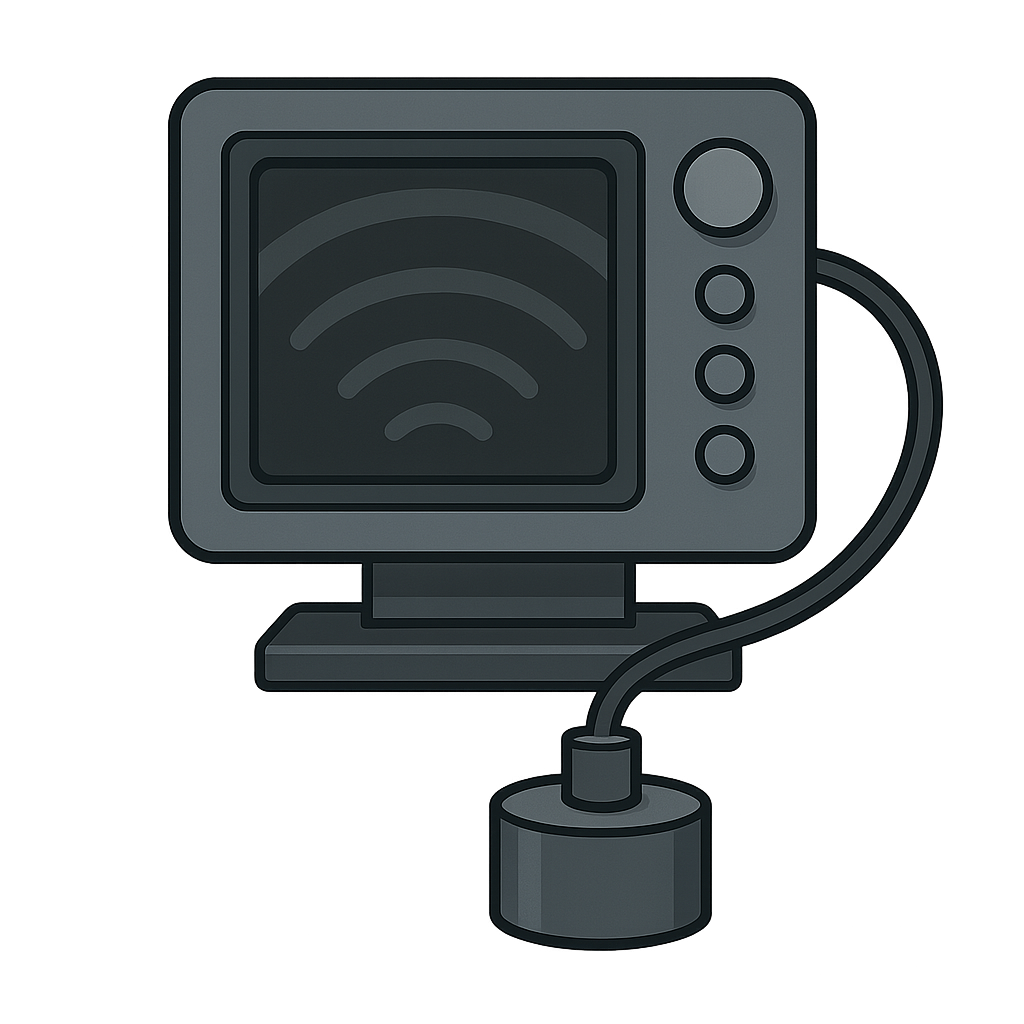
Hello. You may not know my name, but you have certainly heard my voice, even if you did not realize it. I am Sonar, the sound that sees. Before I was born, the ocean was a place of deep secrets, a world of beautiful and dangerous unknowns. Imagine floating on an endless surface of dark water, with no idea what mountains, valleys, or massive objects lurked just beneath the hull of your ship. For sailors and explorers, the world below the waves was a complete mystery, a vast and silent kingdom hidden from human sight. They could only guess at its depths and what they might encounter in the crushing darkness. My entire existence is built on a simple, elegant idea: sending out a pulse of sound, a sharp 'ping,' into the water and then listening with perfect patience. When that sound wave travels and hits something, like the seafloor, a hidden shipwreck, or a dangerous obstacle, it bounces back as an echo. By measuring the precise time it takes for that echo to return, I can paint a picture, a detailed map of the unseen world. It is much like how a bat navigates a pitch-black cave, using its voice to 'see' the path ahead. The concept of listening underwater was not entirely new. As far back as 1490, the brilliant artist and inventor Leonardo da Vinci wrote about putting a long tube in the water to hear the sound of distant ships. But his idea was just a whisper in the pages of history. For me to be truly born, for the world to feel the desperate need for my underwater ears, it would take a great and terrible tragedy to shake humanity into action.
The Sound That Sees
Hello. You may not know my name, but you have certainly heard my voice, even if you did not realize it. I am Sonar, the sound that sees. Before I was born, the ocean was a place of deep secrets, a world of beautiful and dangerous unknowns. Imagine floating on an endless surface of dark water, with no idea what mountains, valleys, or massive objects lurked just beneath the hull of your ship. For sailors and explorers, the world below the waves was a complete mystery, a vast and silent kingdom hidden from human sight. They could only guess at its depths and what they might encounter in the crushing darkness. My entire existence is built on a simple, elegant idea: sending out a pulse of sound, a sharp 'ping,' into the water and then listening with perfect patience. When that sound wave travels and hits something, like the seafloor, a hidden shipwreck, or a dangerous obstacle, it bounces back as an echo. By measuring the precise time it takes for that echo to return, I can paint a picture, a detailed map of the unseen world. It is much like how a bat navigates a pitch-black cave, using its voice to 'see' the path ahead. The concept of listening underwater was not entirely new. As far back as 1490, the brilliant artist and inventor Leonardo da Vinci wrote about putting a long tube in the water to hear the sound of distant ships. But his idea was just a whisper in the pages of history. For me to be truly born, for the world to feel the desperate need for my underwater ears, it would take a great and terrible tragedy to shake humanity into action.
My story truly begins with a moment of profound sadness that echoed around the globe. On the cold, clear night of April 15th, 1912, the magnificent ocean liner RMS Titanic, a ship believed to be unsinkable, was on its maiden voyage across the Atlantic. The lookouts strained their eyes in the darkness, but they could not see the colossal iceberg floating silently in their path until it was too late. The collision was a disaster, and the great ship sank into the icy depths, taking more than 1,500 people with it. The world was stunned, heartbroken, and suddenly very aware of its blindness to the dangers hidden in the ocean. This tragedy was my call to action. The loss of the Titanic created an urgent, desperate need for a way to detect underwater objects before they could cause such devastation again. Almost immediately, inventors around the world began to work on turning the idea of underwater listening into a practical tool. In England, a man named Lewis Fry Richardson filed a patent for a device that used echoes to detect objects underwater, inspired directly by the sinking. In America, a Canadian-born inventor named Reginald Fessenden was already working with sound waves. He had developed a powerful device he called the 'Fessenden Oscillator.' On April 27th, 1914, less than two years after the Titanic disaster, he tested it from the deck of the U.S. Revenue Cutter Miami. He sent my sound waves into the foggy waters and listened. Soon, an echo returned. He had detected an iceberg from two miles away. It was a monumental success. For the first time, humanity had a pair of eyes that could see through water and darkness. That echo was my first real word, the first proof that I could be the guardian the world so desperately needed.
Just as I was taking my first breaths, the world was plunged into the chaos of World War I, which began in 1914. My purpose, which had been born from a desire for safety, was about to become much more urgent and complex. A new and terrifying threat emerged from the deep: silent, stealthy submarines, known as U-boats, that could sink ships without warning. The need to find these hidden metal hunters became a top priority. My development accelerated rapidly. In France, a brilliant physicist named Paul Langevin, along with his team, was working tirelessly to improve me. Around 1917, he made a groundbreaking discovery that would change everything. He found that he could use special quartz crystals, which have a property called piezoelectricity, to generate and detect very high-frequency sound waves, far beyond the range of human hearing. These ultrasonic waves were more focused and powerful than anything used before. His invention, an 'ultrasonic submarine detector,' was a huge leap forward. I could now send out a focused 'ping' and listen for the faint echo bouncing off a submarine's hull, or even listen passively for the quiet hum of its engines deep underwater. I became a protector, a silent sentinel for naval convoys. Years later, during the next global conflict, World War II, American scientists refined me even further. It was then, in the heat of another battle for the seas, that they gave me my official name, the one I carry today: SONAR, an acronym for Sound Navigation and Ranging. I had grown from an idea into a crucial tool for defense and survival.
When the great wars finally ended, my life changed dramatically. My days of listening for enemy submarines were over, and I was free to explore the world for reasons of peace and curiosity. I put my military past behind me and became an explorer, a mapper, and a scientist's most trusted friend. My voice, once used for defense, now sings out to uncover the wonders of the deep. Today, I am used to map the entire ocean floor. My pings travel down to the darkest trenches and bounce back, revealing vast mountain ranges, deep canyons, and mysterious volcanoes that no human eye had ever seen. I am an underwater archaeologist, helping scientists locate ancient shipwrecks, like the very Titanic that inspired my creation, preserving pieces of history that were thought to be lost forever. I am also a friend to marine life. Biologists use my gentle sounds to track the migration of great whales across thousands of miles and to study the secret social lives of dolphins without ever disturbing them in their natural home. I even help fishing vessels find schools of fish, guiding them to more sustainable practices. From a single, heartbreaking tragedy, I was born. I grew up in the shadow of conflict, but I emerged into a world of endless discovery. I am a constant reminder that even from the darkest moments, incredible light, knowledge, and hope can emerge, echoing into the future.
Wow facts
About
Sonar, an acronym for Sound Navigation and Ranging, is a technology that uses sound propagation to navigate, measure distances, communicate with or detect objects on or under the surface of the water.
Take a Quiz
Question 1 of 5
In your own words, describe the main events that led to the creation and development of Sonar as told in the story.
Explore next




Want to do even more?
Go beyond exploring. Unlock tools that turn every story into real learning.

Storypie Plus for families
Full stories, quizzes, and printables. Nights and car rides, sorted.
- Unlimited audio stories
- Create Mode: your child stars in the story
- Offline downloads
- Printable worksheets & coloring pages

Why Storypie for Schools
Students engaged. Prep in seconds. Evenings back to you.
- Worksheets & Quizzes
- Classroom Management
- Formative Assessment
- Custom Curriculum & Lesson Plans
- 27 Languages

Why Storypie for Homeschool
Curriculum done. They'll ask for more. Hours back in your day.
- Worksheet Generator
- First-Person Audio Stories
- Built-in Comprehension Quizzes
- Custom Curriculum & Lesson Plans
- Print & Go Activities