English


Steam Locomotive
A railway vehicle that provides the motive power for a train.
Reads at Grades 6–8 Listens at Grades 4–8
 Screen-free speaker. Built for your kids.
No card, no commitment. One email when there is real news, and one click to stop.
Print & create
Answer keys·No prep·Free with an account
28 worksheets · answer keys · full story · quiz · Ages 10-12 · CEFR B2
Plus adds 102,000+ more stories in 27 languages, audio for every one, and printables for all of them.
Just want Steam Locomotive?
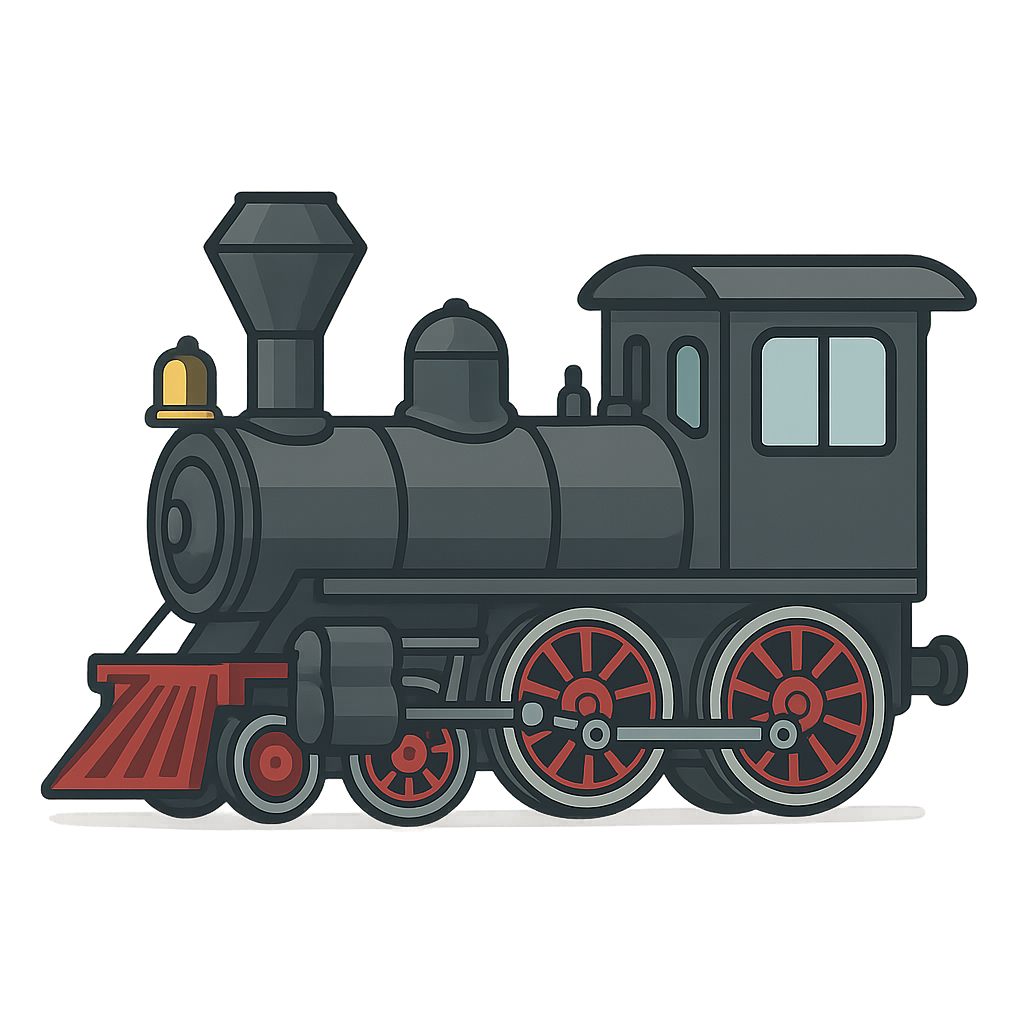
Before I was born, the world moved at the pace of a horse's walk or the gentle drift of a canal boat. Life was quiet, and distances were vast and challenging. News traveled slowly, and a journey to a neighboring city could take days of rattling along muddy, rutted roads. But in the smoky workshops of Britain, a new kind of power was hissing and bubbling to life: the power of steam. It was an age of great change, and people dreamed of harnessing this energy to do incredible things. I am the result of one of those dreams. You can call me a Locomotive, but in my early days, people looked at me with wonder and called me the 'Iron Horse.' My story begins with a brilliant but often overlooked inventor from Cornwall named Richard Trevithick. He saw the potential in steam not just for pumping water from mines, but for movement. He imagined a powerful engine that could pull immense weight along iron rails, far more than any team of horses ever could. On February 21st, 1804, his vision became a reality. My earliest ancestor, a clanking, puffing machine, successfully hauled ten tons of iron and seventy people nearly ten miles in Wales. It was a slow and bumpy ride, and the heavy engine broke the very rails it ran on, but it was a start. A spark had been lit, proving that an engine could indeed do the work of many horses.
For years after that first journey, many people remained skeptical. My early relatives were seen as noisy, dirty, and unreliable novelties. That all changed in October of 1829. A new railway was being built between the bustling cities of Liverpool and Manchester, and the owners needed to know what kind of engine could handle the work. They announced a grand competition, the Rainhill Trials, with a prize for the locomotive that could prove its speed, power, and reliability. The air at Rainhill was electric with anticipation. Crowds gathered to watch the strange and wonderful machines compete. Among the contenders was a remarkable engine, a cousin of mine named the 'Rocket.' It was the creation of a father-and-son team, the brilliant engineers George and Robert Stephenson. They were not just building an engine; they were perfecting an idea. The Rocket’s secret was its multi-tube boiler, a revolutionary design that passed hot air through many small tubes running through the water tank. This created a much larger heating surface, generating steam faster and more efficiently than any engine before it. When the trials began, the Rocket left its competitors in its dust, reaching a breathtaking speed of thirty miles per hour. It completed the trials with ease while other engines broke down. The world was stunned. The Rocket didn't just win a competition; it proved that I, the steam locomotive, was the future of travel and transport. The age of the railway had truly begun.
The Iron Horse's Tale
Before I was born, the world moved at the pace of a horse's walk or the gentle drift of a canal boat. Life was quiet, and distances were vast and challenging. News traveled slowly, and a journey to a neighboring city could take days of rattling along muddy, rutted roads. But in the smoky workshops of Britain, a new kind of power was hissing and bubbling to life: the power of steam. It was an age of great change, and people dreamed of harnessing this energy to do incredible things. I am the result of one of those dreams. You can call me a Locomotive, but in my early days, people looked at me with wonder and called me the 'Iron Horse.' My story begins with a brilliant but often overlooked inventor from Cornwall named Richard Trevithick. He saw the potential in steam not just for pumping water from mines, but for movement. He imagined a powerful engine that could pull immense weight along iron rails, far more than any team of horses ever could. On February 21st, 1804, his vision became a reality. My earliest ancestor, a clanking, puffing machine, successfully hauled ten tons of iron and seventy people nearly ten miles in Wales. It was a slow and bumpy ride, and the heavy engine broke the very rails it ran on, but it was a start. A spark had been lit, proving that an engine could indeed do the work of many horses.
For years after that first journey, many people remained skeptical. My early relatives were seen as noisy, dirty, and unreliable novelties. That all changed in October of 1829. A new railway was being built between the bustling cities of Liverpool and Manchester, and the owners needed to know what kind of engine could handle the work. They announced a grand competition, the Rainhill Trials, with a prize for the locomotive that could prove its speed, power, and reliability. The air at Rainhill was electric with anticipation. Crowds gathered to watch the strange and wonderful machines compete. Among the contenders was a remarkable engine, a cousin of mine named the 'Rocket.' It was the creation of a father-and-son team, the brilliant engineers George and Robert Stephenson. They were not just building an engine; they were perfecting an idea. The Rocket’s secret was its multi-tube boiler, a revolutionary design that passed hot air through many small tubes running through the water tank. This created a much larger heating surface, generating steam faster and more efficiently than any engine before it. When the trials began, the Rocket left its competitors in its dust, reaching a breathtaking speed of thirty miles per hour. It completed the trials with ease while other engines broke down. The world was stunned. The Rocket didn't just win a competition; it proved that I, the steam locomotive, was the future of travel and transport. The age of the railway had truly begun.
After the triumph at Rainhill, my family of iron horses grew at an incredible pace. I became the very heart of the Industrial Revolution, my rhythmic chuffing the soundtrack of progress. My iron veins—the railway tracks—spread across countries like a vast network, connecting people and places as never before. I hauled tons of black coal from the mines to power the hungry furnaces of factories. I carried the goods those factories produced—textiles, steel, and machinery—to ports where they could be shipped across the world. My impact was not just industrial; it was deeply personal. For the first time, a person could afford to visit family in a distant town for a holiday. A farmer could send his crops to a city market hundreds of miles away before they spoiled. I carried mail, newspapers, and ideas, shrinking the world and fostering a sense of shared national identity. I even helped build nations. In America, my tracks stretched across the vast plains, mountains, and deserts of the West, uniting the country from coast to coast and encouraging settlement in new territories. I was more than a machine; I was a promise of connection, opportunity, and a new, faster way of life.
My journey has been a long one, spanning centuries. The world I was born into is almost unrecognizable today. My loud steam whistle has largely been replaced by the hum of diesel engines and the silent glide of electric trains. These newer, more powerful locomotives are my descendants, carrying on the work I began. Sometimes you might see one of my steam-powered ancestors lovingly preserved in a museum or chugging along a heritage railway, a beautiful reminder of a bygone era. Seeing them fills me with immense pride. Though my form has changed, my spirit endures. Every time a modern train speeds across a country, carrying commuters to work, families on vacation, or essential goods to market, it is fulfilling the purpose I was created for. I was born from a simple, powerful idea: to use human ingenuity to overcome distance and bring people closer together. That idea is as important today as it was over two hundred years ago, and I am proud to be the Iron Horse that set the world in motion.
Wow facts
About
A railway vehicle that provides the motive power for a train. Initially powered by steam, it revolutionized transportation and industry during the 19th century.
Take a Quiz
Question 1 of 5
In your own words, describe the main events of the Rainhill Trials and explain why they were so important for the locomotive.
Explore next



Want to do even more?
Go beyond exploring. Unlock tools that turn every story into real learning.

Storypie Plus for families
Full stories, quizzes, and printables. Nights and car rides, sorted.
- Unlimited audio stories
- Create Mode: your child stars in the story
- Offline downloads
- Printable worksheets & coloring pages

Why Storypie for Schools
Students engaged. Prep in seconds. Evenings back to you.
- Worksheets & Quizzes
- Classroom Management
- Formative Assessment
- Custom Curriculum & Lesson Plans
- 27 Languages

Why Storypie for Homeschool
Curriculum done. They'll ask for more. Hours back in your day.
- Worksheet Generator
- First-Person Audio Stories
- Built-in Comprehension Quizzes
- Custom Curriculum & Lesson Plans
- Print & Go Activities