English

Submarine
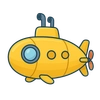
A watercraft capable of independent operation underwater, used for military, scientific…
Reads at Grades 6–8 Listens at Grades 4–8
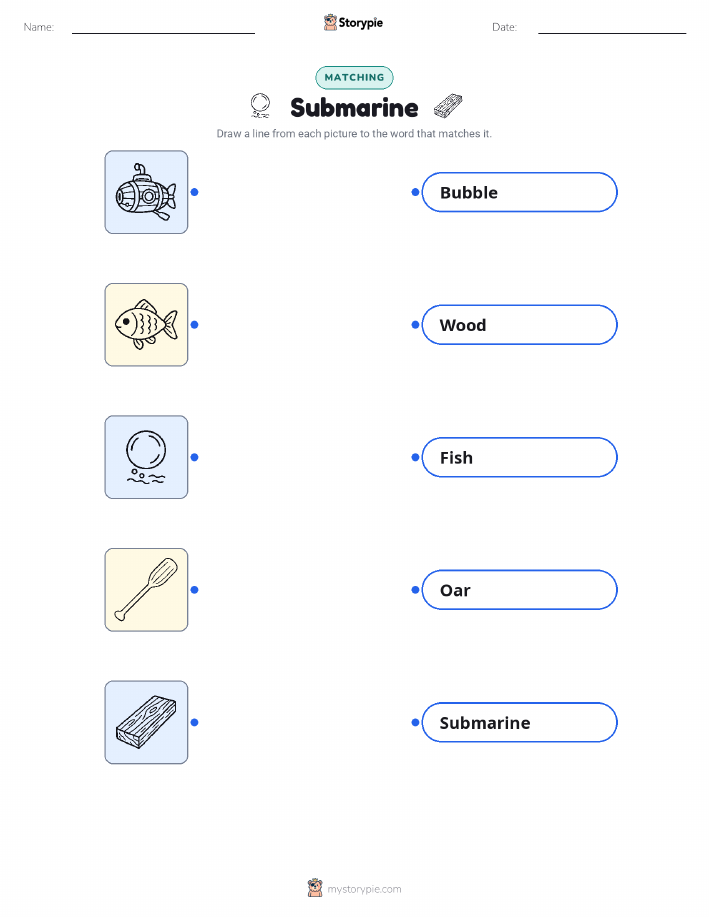
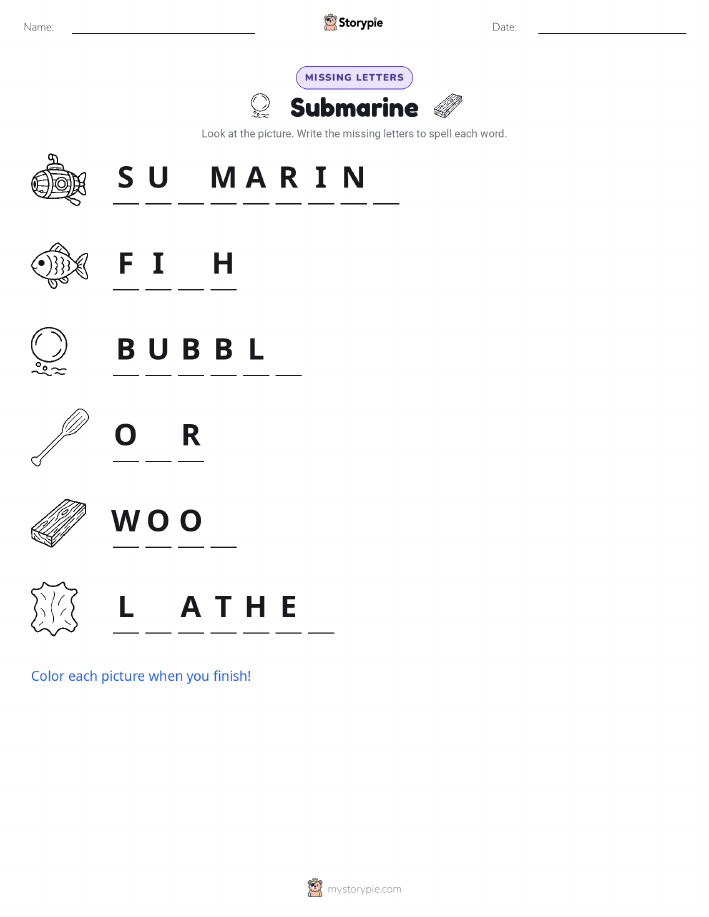
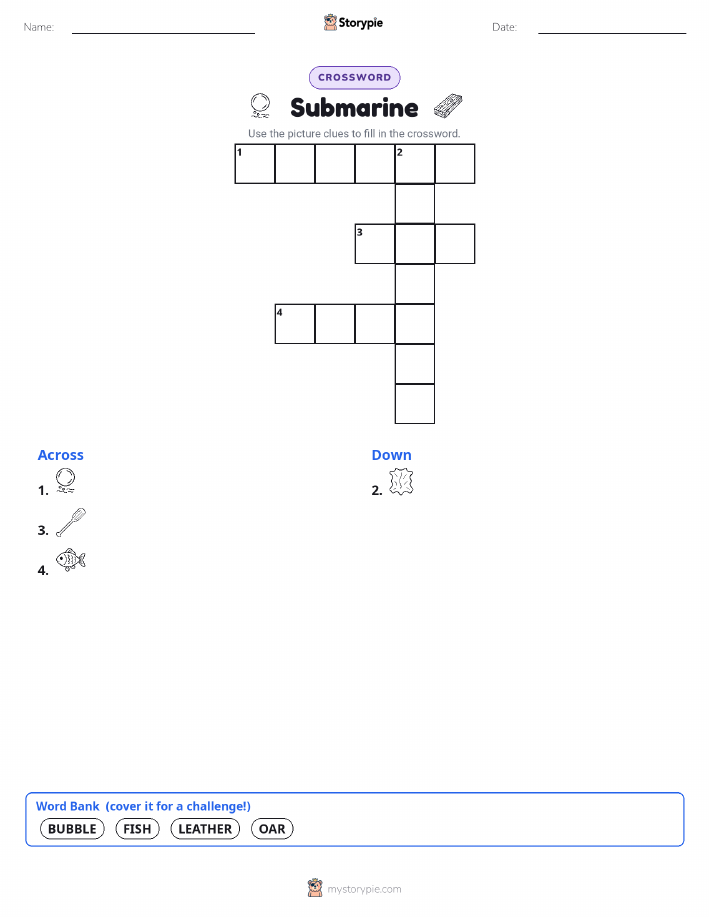
Print & create
Answer keys·No prep·Free with an account
28 worksheets · answer keys · full story · quiz · Ages 10-12 · CEFR B2
Plus adds 279,000+ more stories in 27 languages, audio for every one, and printables for all of them.
Just want Submarine?
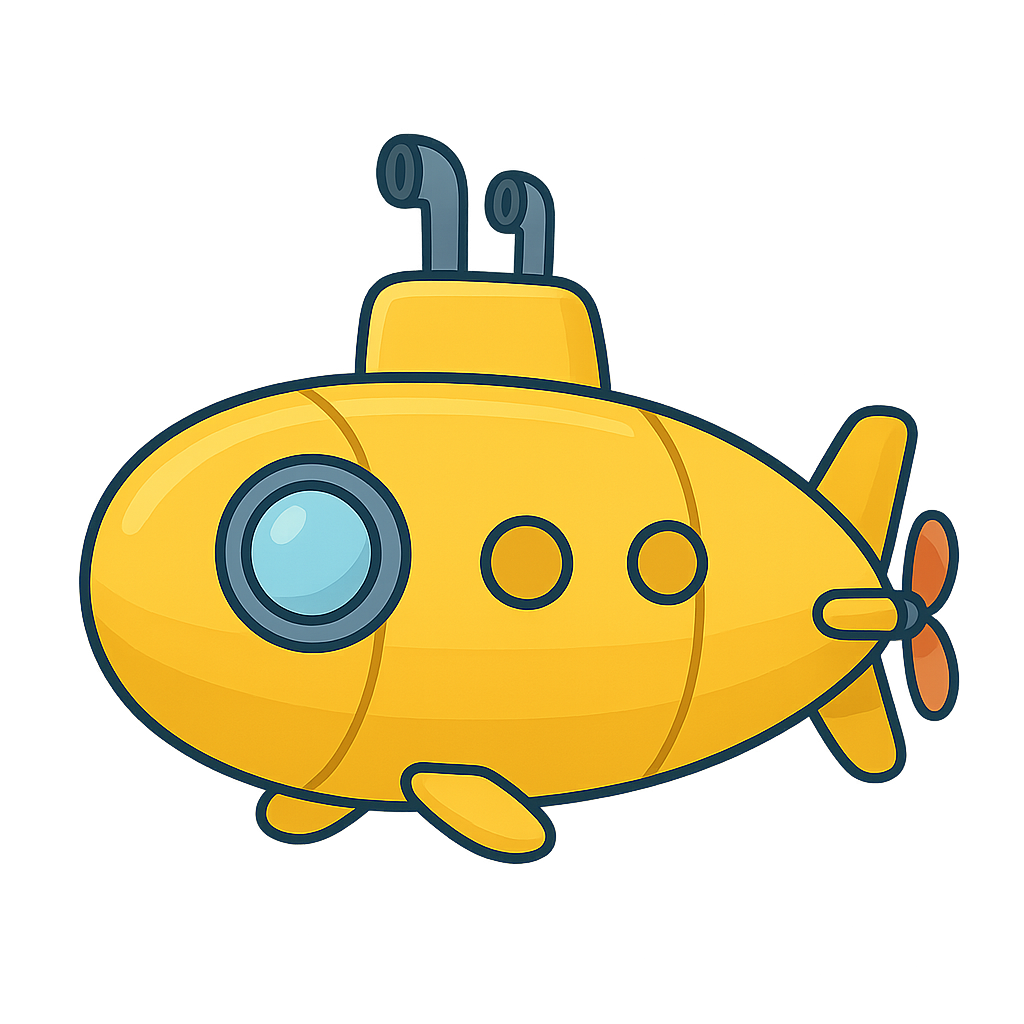
For thousands of years, humanity sailed upon the surface of a great mystery. They looked out from the decks of their wooden ships and saw a vast, shimmering blanket of blue and green, but they could only guess at the world that thrived beneath it. They dreamed of coral castles, mountains taller than any on land, and creatures of unimaginable shape and color. But the ocean guarded its secrets fiercely, its immense pressure and lack of air forming an impassable barrier. The world below was as distant as the stars. I am the Submarine, and I was born from the desire to pierce that veil, to journey into the silent, dark frontier that covers most of our world. My story is one of courage, curiosity, and the relentless human spirit that refuses to accept that some places are forever out of reach. Before I existed, the deep was a realm of myth and imagination. I was the key that would turn fantasy into fact, a vessel designed not to float upon the water, but to become a part of it.
My first true breaths underwater were tentative and clumsy. Long before I became the sleek vessel you might imagine, I was a humble idea taking shape in the mind of a Dutch inventor named Cornelius Drebbel. Around the year 1620, he built my earliest ancestor. I was a wooden frame, wrapped tightly in greased leather to keep the water out, propelled by oars that poked through sealed openings. I was rowed beneath the surface of London’s River Thames for hours, to the astonishment of onlookers, including King James I himself. It was a marvelous feat, but I was still more of a curiosity than a practical tool. Over a century later, during the American Revolution, I was given a more serious purpose. An inventor named David Bushnell created a version of me called the Turtle in 1775. I was shaped like a small, upright acorn, just big enough for one person. The operator would sit inside, hand-cranking one propeller to move forward and another to move up or down. He would let water into ballast tanks to sink and use a foot pump to push it out to rise. My mission was secret and dangerous: to sneak up on a British warship and attach a mine to its hull. The mission wasn't a success, but the idea was revolutionary. I had proven that a single person could pilot a vessel underwater to perform a specific task. These first attempts were fraught with challenges—leaks, limited air, and the sheer physical effort required to move me—but they were the essential first steps on my long journey.
I Am the Submarine: A Voice from the Deep
For thousands of years, humanity sailed upon the surface of a great mystery. They looked out from the decks of their wooden ships and saw a vast, shimmering blanket of blue and green, but they could only guess at the world that thrived beneath it. They dreamed of coral castles, mountains taller than any on land, and creatures of unimaginable shape and color. But the ocean guarded its secrets fiercely, its immense pressure and lack of air forming an impassable barrier. The world below was as distant as the stars. I am the Submarine, and I was born from the desire to pierce that veil, to journey into the silent, dark frontier that covers most of our world. My story is one of courage, curiosity, and the relentless human spirit that refuses to accept that some places are forever out of reach. Before I existed, the deep was a realm of myth and imagination. I was the key that would turn fantasy into fact, a vessel designed not to float upon the water, but to become a part of it.
My first true breaths underwater were tentative and clumsy. Long before I became the sleek vessel you might imagine, I was a humble idea taking shape in the mind of a Dutch inventor named Cornelius Drebbel. Around the year 1620, he built my earliest ancestor. I was a wooden frame, wrapped tightly in greased leather to keep the water out, propelled by oars that poked through sealed openings. I was rowed beneath the surface of London’s River Thames for hours, to the astonishment of onlookers, including King James I himself. It was a marvelous feat, but I was still more of a curiosity than a practical tool. Over a century later, during the American Revolution, I was given a more serious purpose. An inventor named David Bushnell created a version of me called the Turtle in 1775. I was shaped like a small, upright acorn, just big enough for one person. The operator would sit inside, hand-cranking one propeller to move forward and another to move up or down. He would let water into ballast tanks to sink and use a foot pump to push it out to rise. My mission was secret and dangerous: to sneak up on a British warship and attach a mine to its hull. The mission wasn't a success, but the idea was revolutionary. I had proven that a single person could pilot a vessel underwater to perform a specific task. These first attempts were fraught with challenges—leaks, limited air, and the sheer physical effort required to move me—but they were the essential first steps on my long journey.
For another century, inventors tinkered with my design, but I was missing a crucial element: a reliable heart. Hand cranks and steam engines that needed air just weren't enough for sustained underwater travel. That all changed thanks to an Irish-American inventor named John Philip Holland. He dreamed of a submarine that could travel long distances on the surface and then dive to move silently and unseen. His brilliant solution, which he perfected in the late 1800s, was to give me two hearts. For surface travel, I had a gasoline engine that propelled me through the waves and, just as importantly, charged my electric batteries. When it was time to dive, the gasoline engine would shut down, and I would switch to my second heart: a quiet, powerful electric motor that didn't need any air to run. This dual-propulsion system was the breakthrough I had been waiting for. On May 17th, 1897, my most successful early form, the Holland VI, was launched. After rigorous testing, the United States Navy saw my potential. On April 11th, 1900, they purchased me, and I was commissioned as the USS Holland, the navy's very first submarine. I was no longer an experiment; I was a capable and strategic vessel, ready to change the very nature of naval power and exploration.
While my early life was often defined by conflict, my purpose has evolved in wonderful ways. The same principles that allowed me to move unseen through the water now allow scientists to visit places no human has ever been. I have become a vessel of discovery, an explorer of Earth’s last frontier. My modern descendants are research submersibles, built to withstand the crushing pressure of the deepest parts of the ocean. I carry oceanographers to the midnight zone, where sunlight never reaches, and we witness the ghostly dance of bioluminescent creatures that create their own light. I help geologists study hydrothermal vents on the seafloor, chimneys of superheated water that support bizarre ecosystems of tube worms and giant clams. I map underwater mountain ranges and vast canyons that dwarf anything on the continents. Each dive reveals new species, new geological formations, and a deeper understanding of our planet’s lifeblood. My journey began as a dream to see what lay beneath the waves, and today, that dream is still unfolding. I continue to carry humanity's curiosity into the silent, beautiful dark, reminding everyone that there are always more secrets waiting to be discovered.
Wow facts
About
A watercraft capable of independent operation underwater, used for military, scientific, and recreational purposes to explore the depths of the world's oceans.
Take a Quiz
Question 1 of 5
What was the main challenge that inventors like Cornelius Drebbel, David Bushnell, and John Philip Holland were trying to solve when creating the submarine?
Explore next






Want to do even more?
Go beyond exploring. Unlock tools that turn every story into real learning.

Storypie Plus for families
Full stories, quizzes, and printables. Nights and car rides, sorted.
- Unlimited audio stories
- Create Mode: your child stars in the story
- Offline downloads
- Printable worksheets & coloring pages

Why Storypie for Schools
Students engaged. Prep in seconds. Evenings back to you.
- Worksheets & Quizzes
- Classroom Management
- Formative Assessment
- Custom Curriculum & Lesson Plans
- 27 Languages

Why Storypie for Homeschool
Curriculum done. They'll ask for more. Hours back in your day.
- Worksheet Generator
- First-Person Audio Stories
- Built-in Comprehension Quizzes
- Custom Curriculum & Lesson Plans
- Print & Go Activities