English

Television
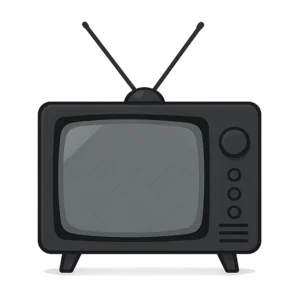
An electronic device that receives signals and translates them into images and sound…
Reads at Grades 3–5 Listens at Grades 1–5
Print & create
Answer keys·No prep·Free with an account
28 worksheets · answer keys · full story · quiz · Ages 8-10 · CEFR B1
Plus adds 280,000+ more stories in 27 languages, audio for every one, and printables for all of them.
Just want Television?

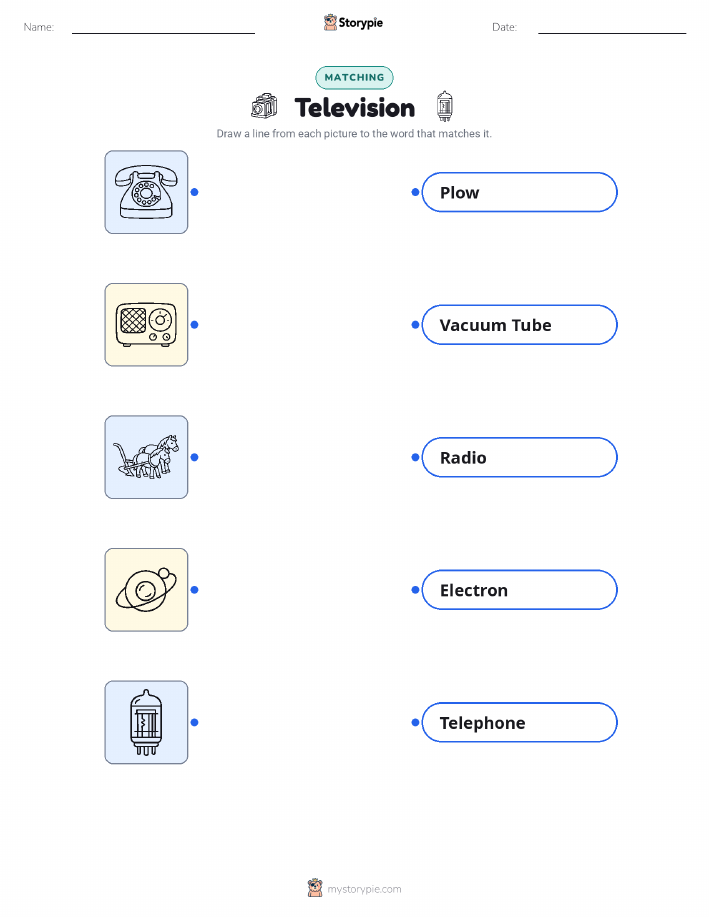
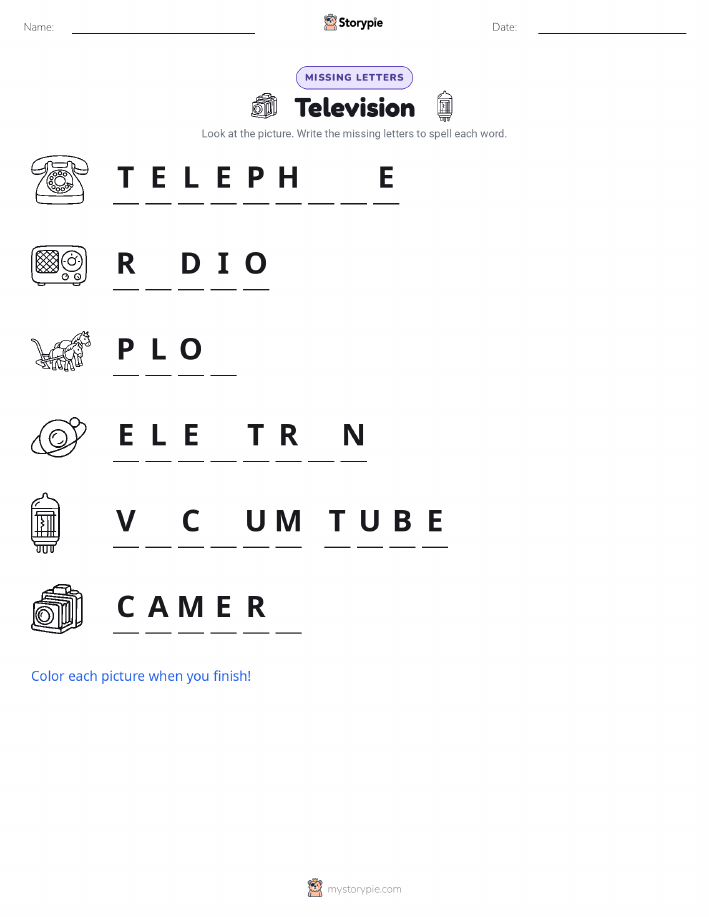
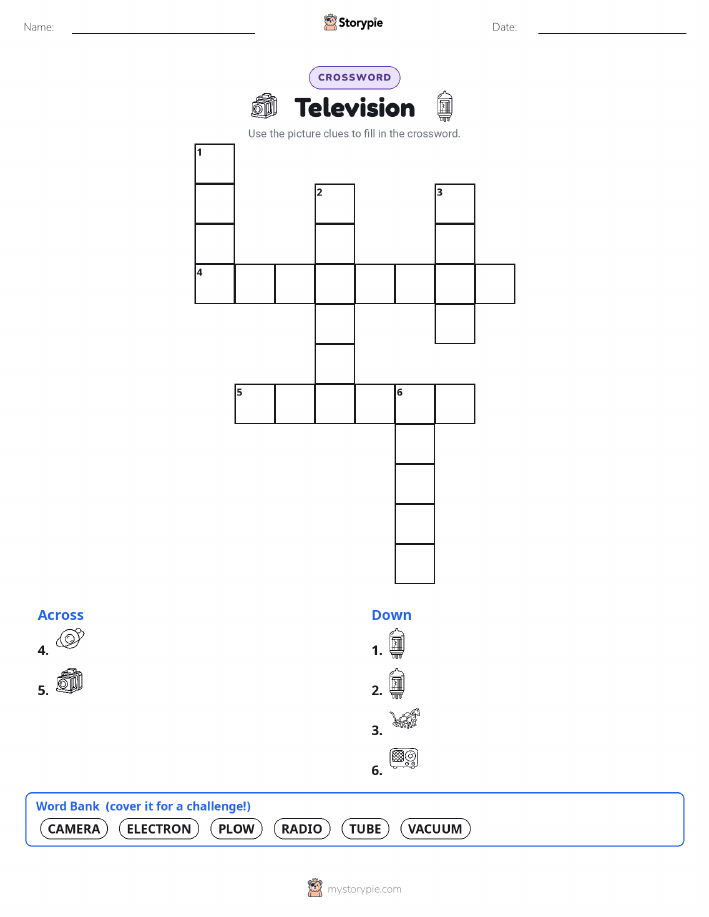
Hello there. My name is John Logie Baird, and long before you could watch cartoons on a Saturday morning, I was just a curious boy in Scotland with a head full of wild ideas. When I was young, the telephone was the most magical invention in the world. You could hear a voice from miles away. I used to wonder, if sounds could travel through a wire, why couldn't pictures? It was a question that buzzed in my mind like a busy bee. Back then, families would huddle around a crackling radio to listen to stories, music, and news. It was wonderful, but I imagined something more. I dreamed of a machine, a special box that could show moving pictures of events as they happened, right in your own living room. I wanted to invent a way to see the world through a wire, and that burning curiosity led me on the greatest adventure of my life, the story of how I invented the television.
My first laboratory wasn't fancy at all. In fact, you might have giggled if you saw it. It was a jumble of odds and ends I had collected. My greatest invention, which I called the 'Televisor,' was built from things most people would call junk. Can you imagine building a world-changing machine out of a hatbox, an old biscuit tin, and some lenses I took from bicycle lights? It sounds silly, doesn't it? I held it all together with bits of string, sealing wax, and a whole lot of hope. The most important part was a spinning cardboard circle called a Nipkow disk, which I had punched with a pattern of holes. Think of it like a super-fast flipbook. As the disk whirled around, it scanned an image piece by piece and put it back together so quickly that your eyes were tricked into seeing a moving picture. For months, all I saw were blurry smudges and flickers. But then came one incredible day in October 1925. I placed my ventriloquist's dummy, a little fellow with a cheeky painted face named Stooky Bill, in front of my machine. I hurried to the other room where my receiver was waiting. My heart pounded in my chest. And then… I saw it. It was fuzzy, it flickered, but it was unmistakably a face. It was Stooky Bill, looking right back at me from a glowing screen. I had done it. I had sent a picture through the air.
The Boy Who Dreamed of Pictures in a Box
Hello there. My name is John Logie Baird, and long before you could watch cartoons on a Saturday morning, I was just a curious boy in Scotland with a head full of wild ideas. When I was young, the telephone was the most magical invention in the world. You could hear a voice from miles away. I used to wonder, if sounds could travel through a wire, why couldn't pictures? It was a question that buzzed in my mind like a busy bee. Back then, families would huddle around a crackling radio to listen to stories, music, and news. It was wonderful, but I imagined something more. I dreamed of a machine, a special box that could show moving pictures of events as they happened, right in your own living room. I wanted to invent a way to see the world through a wire, and that burning curiosity led me on the greatest adventure of my life, the story of how I invented the television.
My first laboratory wasn't fancy at all. In fact, you might have giggled if you saw it. It was a jumble of odds and ends I had collected. My greatest invention, which I called the 'Televisor,' was built from things most people would call junk. Can you imagine building a world-changing machine out of a hatbox, an old biscuit tin, and some lenses I took from bicycle lights? It sounds silly, doesn't it? I held it all together with bits of string, sealing wax, and a whole lot of hope. The most important part was a spinning cardboard circle called a Nipkow disk, which I had punched with a pattern of holes. Think of it like a super-fast flipbook. As the disk whirled around, it scanned an image piece by piece and put it back together so quickly that your eyes were tricked into seeing a moving picture. For months, all I saw were blurry smudges and flickers. But then came one incredible day in October 1925. I placed my ventriloquist's dummy, a little fellow with a cheeky painted face named Stooky Bill, in front of my machine. I hurried to the other room where my receiver was waiting. My heart pounded in my chest. And then… I saw it. It was fuzzy, it flickered, but it was unmistakably a face. It was Stooky Bill, looking right back at me from a glowing screen. I had done it. I had sent a picture through the air.
After my success with Stooky Bill, I knew I had to show my invention to the world. A few months later, in January 1926, I invited a group of very important scientists and newspaper reporters to a room in London. They were skeptical, whispering to each other and looking doubtfully at my strange contraption of wires and cardboard. I took a deep breath and turned it on. In another room, an assistant moved in front of the transmitter, and on the small screen in front of the scientists, a live, moving human face appeared. You should have heard the gasps. They couldn't believe their eyes. They called it 'seeing by wireless,' and it was front-page news. Of course, my mechanical television was just the very first step. Other brilliant inventors, like an American named Philo Farnsworth, later developed electronic televisions that created much clearer pictures. But that day, the magic began. That little box started to change the world, promising a future where families could watch a king’s coronation, explore the bottom of the ocean, or laugh at a comedy show, all from the comfort of their home.
Today, when you watch movies on a giant, colorful high-definition screen, it’s hard to imagine it all started with a biscuit tin and a ventriloquist's dummy. But it did. My dream, built from scraps and powered by determination, grew into the amazing technology that connects our entire world. It fills me with so much joy to know that a simple question I asked as a boy in Scotland helped create something that brings so many stories and so much knowledge to all of you. It just goes to show you that a little bit of curiosity, a lot of imagination, and the courage to try something new can truly change everything.
Wow facts
About
An electronic device that receives signals and translates them into images and sound, bringing moving pictures and entertainment into people's homes.
Take a Quiz
Question 1 of 5
The story says my workshop was full of 'makeshift' parts. What do you think the word 'makeshift' means, and what clues from the story help you understand it?
Explore next





Want to do even more?
Go beyond exploring. Unlock tools that turn every story into real learning.

Storypie Plus for families
Full stories, quizzes, and printables. Nights and car rides, sorted.
- Unlimited audio stories
- Create Mode: your child stars in the story
- Offline downloads
- Printable worksheets & coloring pages

Why Storypie for Schools
Students engaged. Prep in seconds. Evenings back to you.
- Worksheets & Quizzes
- Classroom Management
- Formative Assessment
- Custom Curriculum & Lesson Plans
- 27 Languages

Why Storypie for Homeschool
Curriculum done. They'll ask for more. Hours back in your day.
- Worksheet Generator
- First-Person Audio Stories
- Built-in Comprehension Quizzes
- Custom Curriculum & Lesson Plans
- Print & Go Activities