English

The Story of the Light Bulb
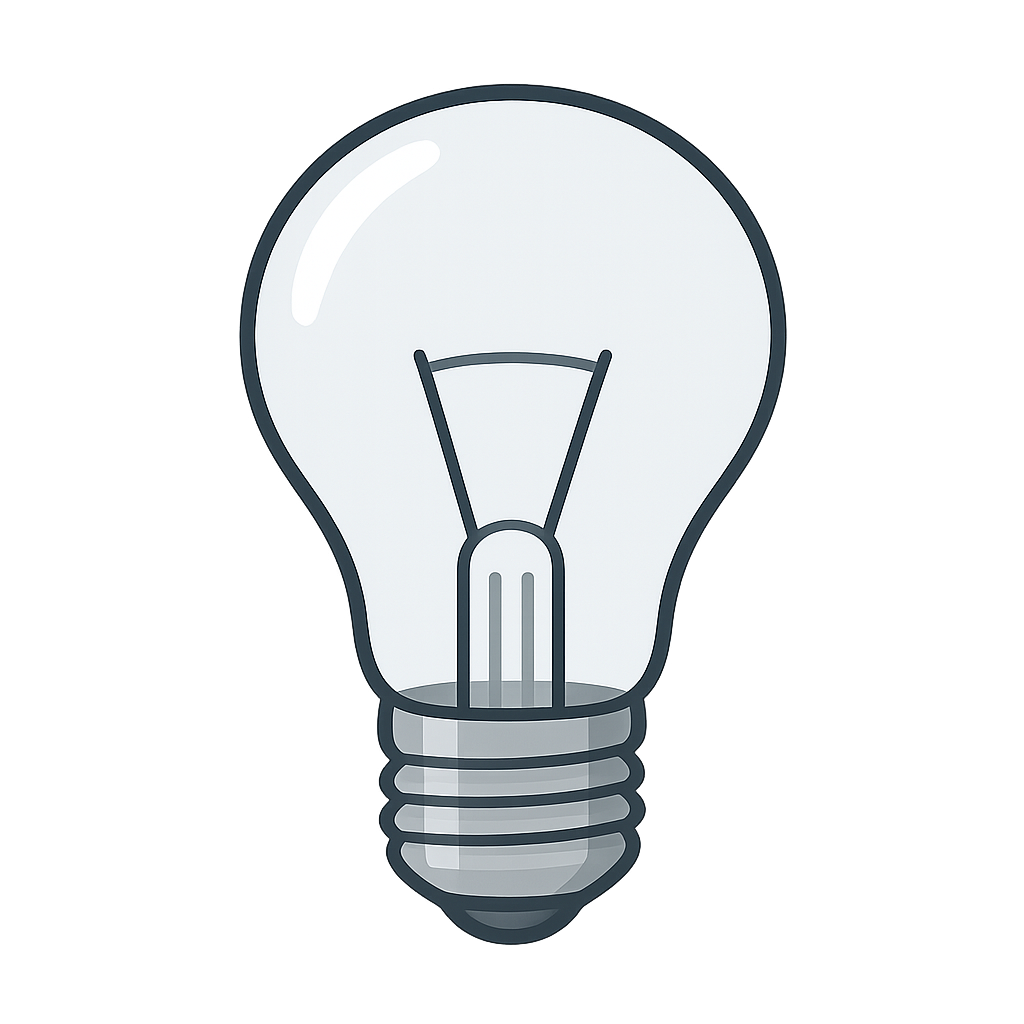
Hello there. You might not recognize me at first glance, because I’m one of the originals, a relic from the dawn of a new age. I am the Light Bulb. Before you casually flick a switch and flood your room with clean, clear light, I want you to do something for me. I want you to imagine a world without me, a world lit only by fire. Picture a time when the setting sun signaled a retreat, as the world plunged into a vast sea of flickering shadows and deep, impenetrable darkness. For thousands of years, humanity’s only defense against the night was an open flame. People would huddle around a crackling hearth for warmth and a bit of light, their faces illuminated in a dance of orange and black. If you wanted to read, you’d strain your eyes by the soft, wavering glow of a single candle. That light was alive, yes, but it was also weak, smoky, and incredibly demanding. Candles dripped hot wax, filled the air with soot, and could easily be snuffed out by a sudden draft, plunging you back into darkness. In the grander homes and along the main streets of growing cities, gas lamps hissed from posts and walls. They cast a sickly yellow, often gloomy, glow and were notoriously temperamental. They smelled strange and were quite dangerous; a leak in the line could have devastating consequences for a whole building. Nighttime wasn't just dark; it was a boundary. It was a time when most work stopped, when travel became treacherous, and when the world for most people shrank to the small, fragile circle of light cast by their flame. The darkness held a certain power, limiting what people could achieve, learn, or create. This was the world waiting for a new kind of star, one that could be summoned on command. That was the challenge, the great problem I was conceived to solve: the universal human desire for a safe, steady, and brilliant light to finally conquer the night.
My existence wasn't a single 'Eureka!' moment in a dark laboratory. I am not the product of one person, but the culmination of many brilliant minds, from many different places, all dreaming of a steady, controllable glow. My family tree begins long before my most famous creator. A clever English chemist named Humphry Davy first showed the world a dazzling, powerful light in the early 1800s by passing a powerful electric current between two charcoal rods. He called it an 'arc lamp,' and while it was astonishingly bright—perfect for a lighthouse—it was far too intense, and it burned out too quickly to be practical for a home. Not far away, another Englishman, the thoughtful Joseph Swan, worked tirelessly for years, experimenting with carbonized paper filaments inside glass bulbs. He was getting so close, wrestling with the very same problems that inventors across the ocean were facing. And that’s where my most well-known chapter begins, in a place that sounded like it came from a storybook: Menlo Park, New Jersey. This wasn't just a workshop; it was an 'invention factory,' the brainchild of a man with boundless energy and determination named Thomas Edison. Edison wasn't just an inventor; he was a master organizer of brilliant minds and a champion of persistence. He gathered a team of creative thinkers and skilled craftspeople, the 'Muckers' as they were called, and gave them a single, monumental task: create a practical, affordable electric light. They knew the secret to my success lay in finding the perfect filament—the tiny, delicate thread inside me that would glow brightly without vaporizing. So they adopted a famous method: try everything. They tested materials from every corner of the earth and every shelf in the workshop. They tried platinum and iridium, then moved on to natural fibers: cotton, wood splints, coconut husks, and even, as the legend goes, hairs from a visitor's red beard! For every successful step, there were hundreds of failures. A filament would burn out in seconds. The glass would crack from the heat. But Edison famously said, 'I have not failed. I've just found 10,000 ways that won't work.' Each burnt-out filament wasn't a mistake; it was a lesson. It was a piece of new knowledge, a clue that guided them closer to the answer. Their relentless, systematic, and collaborative dedication was the true energy source that would eventually bring me to life.
Then, on a crisp autumn day in October 1879, the air in the Menlo Park laboratory crackled with anticipation. After countless trials, the team had settled on a new candidate for my filament: a simple piece of cotton sewing thread that they had carefully baked in an oven until it turned into pure carbon. With the delicate touch of surgeons, they placed this fragile, blackened loop inside my clear glass sphere. Then came the next crucial step: they used a powerful vacuum pump to suck all the air out of my glass home. An oxygen-free environment was essential; otherwise, my filament would just burn up in a flash, like a tiny matchstick. The moment of truth arrived. A switch was flipped, and a current of electricity, like a tiny, controlled river of lightning, flowed into the filament. The team held its breath. A soft, orange-red glow appeared. It wasn't a dazzling flash; it was a steady, warm, and persistent light. It didn't flicker. It didn't die. One hour passed. Then two. Then ten. It glowed for over thirteen hours straight! Cheers erupted in the laboratory. This was it. To prove I wasn't a fluke, Edison held a grand demonstration on New Year's Eve. He and his team lined the roads and buildings of Menlo Park with hundreds of my glowing siblings. Thousands of people came by train to witness the spectacle, staring in awe at the steady, magical light that had turned night into day. The age of fire was ending, and my age was just beginning.
That first triumphant glow was only the start. Once I was perfected, I began to change the world in ways my creators had only dreamed of. Suddenly, the day didn't have to end when the sun went down. People could read books, children could do their homework, and families could gather in brightly lit rooms long into the evening. Factories, once silenced by darkness, could now operate through the night, transforming industry and economies. City streets, which had been perilous and dark, became safer pathways for everyone. I made homes feel cozier and the world feel bigger. But I was more than just a source of light; I was the ambassador for an entire electrical age. My success helped build the power grids and infrastructure that would eventually power everything from radios to refrigerators. I was the first, most visible sign of a new kind of power that was clean, convenient, and could be delivered right into your home. Today, you can see my legacy everywhere. My direct descendants, the incandescent bulbs, are becoming rare, but my spirit lives on in my more modern and super-efficient relatives: the compact fluorescent lamps and the brilliant LED lights that illuminate your phones, your homes, and your cities. I am proof that a single bright idea, when powered by relentless curiosity and tireless hard work, can do more than just light up a room—it can illuminate the entire world.