English

The Steam Engine
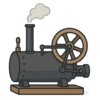
The steam engine is a machine that uses the power of hot steam from boiling water to create motion.
Reads at Grades 6–8 Listens at Grades 4–8
Print & create
Answer keys·No prep·Free with an account
28 worksheets · answer keys · full story · quiz · Ages 10-12 · CEFR B2
Plus adds 244,000+ more stories in 27 languages, audio for every one, and printables for all of them.
Just want The Steam Engine?
Before I was made of iron and brass, I was just an idea, a whisper of power noticed in the dance of steam rising from a hot spring or the forceful puff of a boiling kettle. You see, the world before me ran on muscle. The strength of people and animals, the push of the wind in a ship's sail, the turn of a waterwheel in a river—that was the limit of power. It was a world of hard work and slow progress. My story begins deep underground in the coal mines of England. As miners dug deeper for the black rock that fueled their fires, the mines would fill with water, threatening to flood their tunnels and halt their work. They needed a hero, something strong enough to pump the water out, day and night, without ever getting tired. They needed a new kind of muscle, one born not of flesh, but of fire and water. They needed me, the Steam Engine.
My first true form was a bit clumsy, I must admit. I was born in 1712, a colossal, clanking machine built by a clever ironmonger named Thomas Newcomen. They called me an "atmospheric engine," and my job was to pump water from those very mines. My heart was a great iron cylinder. My creators would let steam from a boiler fill this cylinder, pushing a large piston up. Then, they would spray cold water inside, and poof. The steam would instantly condense back into a few drops of water, creating a vacuum. The pressure of the air outside would then slam the piston down with incredible force, pulling the pump rod up and lifting gallons of water from the mine's dark depths. It was a simple, powerful rhythm: hiss, spray, clank. Hiss, spray, clank. I was slow and terribly inefficient, gulping down mountains of coal just to keep my boiler hot after each cold spray, but I worked. For over fifty years, I was the best solution anyone had. Then, a thoughtful man came along who saw that I could be so much more. His name was James Watt. He was an instrument maker at the University of Glasgow, and in 1763, he was given a small model of me to repair. He was fascinated but also frustrated. "Why does this little engine use so much steam?" he wondered. He realized that the constant heating and cooling of my main cylinder was a colossal waste of energy. The story goes that on a Sunday walk in 1765, the solution struck him like a bolt of lightning. "What if the steam condensed somewhere else?" he thought. He rushed back to his workshop, filled with an idea that would change my life, and the world, forever.
I Am the Steam Engine: The Engine That Changed the World
Before I was made of iron and brass, I was just an idea, a whisper of power noticed in the dance of steam rising from a hot spring or the forceful puff of a boiling kettle. You see, the world before me ran on muscle. The strength of people and animals, the push of the wind in a ship's sail, the turn of a waterwheel in a river—that was the limit of power. It was a world of hard work and slow progress. My story begins deep underground in the coal mines of England. As miners dug deeper for the black rock that fueled their fires, the mines would fill with water, threatening to flood their tunnels and halt their work. They needed a hero, something strong enough to pump the water out, day and night, without ever getting tired. They needed a new kind of muscle, one born not of flesh, but of fire and water. They needed me, the Steam Engine.
My first true form was a bit clumsy, I must admit. I was born in 1712, a colossal, clanking machine built by a clever ironmonger named Thomas Newcomen. They called me an "atmospheric engine," and my job was to pump water from those very mines. My heart was a great iron cylinder. My creators would let steam from a boiler fill this cylinder, pushing a large piston up. Then, they would spray cold water inside, and poof. The steam would instantly condense back into a few drops of water, creating a vacuum. The pressure of the air outside would then slam the piston down with incredible force, pulling the pump rod up and lifting gallons of water from the mine's dark depths. It was a simple, powerful rhythm: hiss, spray, clank. Hiss, spray, clank. I was slow and terribly inefficient, gulping down mountains of coal just to keep my boiler hot after each cold spray, but I worked. For over fifty years, I was the best solution anyone had. Then, a thoughtful man came along who saw that I could be so much more. His name was James Watt. He was an instrument maker at the University of Glasgow, and in 1763, he was given a small model of me to repair. He was fascinated but also frustrated. "Why does this little engine use so much steam?" he wondered. He realized that the constant heating and cooling of my main cylinder was a colossal waste of energy. The story goes that on a Sunday walk in 1765, the solution struck him like a bolt of lightning. "What if the steam condensed somewhere else?" he thought. He rushed back to his workshop, filled with an idea that would change my life, and the world, forever.
James Watt didn't just repair me; he reinvented me. His brilliant idea was something called a separate condenser. It was like giving me a second, more efficient lung. My main cylinder could now stay hot all the time, while the steam was drawn into a separate, constantly cool chamber to condense. The result was astonishing. I suddenly required less than a third of the coal to do the same amount of work. I became faster, more powerful, and much more practical. But Watt didn't stop there. He knew my up-and-down pumping motion was useful, but limited. He wanted me to be able to turn wheels. He devised a system of gears called the "sun and planet gear," which elegantly converted my piston's reciprocal motion into smooth, continuous rotary motion. This was the key that unlocked my true potential. I was no longer chained to the mines. I marched into the factories, my spinning flywheel turning the belts and gears that powered hundreds of looms in textile mills. The clatter of machinery became the new music of the cities, and they called it the Industrial Revolution. I was its beating heart. Then, my creators gave me the ultimate freedom: they put me on wheels. I became the steam locomotive, a powerful iron horse breathing clouds of white steam. I thundered across continents on tracks of steel, pulling passengers and cargo faster and farther than ever imagined. I connected towns and created cities. I even went to sea, powering steamships that crossed oceans without relying on the unpredictable wind. The world began to shrink, all because of me.
Today, you might think of me as a relic, a noisy, smoke-belching giant from a history book. It's true that you won't see me powering a factory or pulling the main express train anymore. My classic form, with its chugging piston and hissing steam, has been replaced by sleeker, quieter sources of power. But don't be mistaken—my spirit is everywhere. The very principle that gave me life, the incredible energy released when water turns to steam, is still the powerhouse of the modern world. In massive power plants, heat from coal, gas, or even nuclear reactions is used to boil water, creating immense volumes of high-pressure steam. This steam doesn't push a piston anymore; instead, it spins a massive fan-like object called a turbine at incredible speeds. That turbine is connected to a generator, and it produces the electricity that lights your home, charges your phone, and runs your world. So, the next time you flip a switch, remember me. Remember the simple idea, born from a rattling kettle lid and a flooded mine, that grew through the curiosity and ingenuity of people like Newcomen and Watt to reshape civilization. Their work proves that one clever thought can set the whole world in motion.
Wow facts
About
The steam engine is a machine that uses the power of hot steam from boiling water to create motion. Its invention and improvement powered the Industrial Revolution, changing transportation, manufacturing, and daily life forever.
Take a Quiz
Question 1 of 5
What were James Watt's key motivations for improving the steam engine, and what character traits did he show?
Explore next






Want to do even more?
Go beyond exploring. Unlock tools that turn every story into real learning.

Storypie Plus for families
Full stories, quizzes, and printables. Nights and car rides, sorted.
- Unlimited audio stories
- Create Mode: your child stars in the story
- Offline downloads
- Printable worksheets & coloring pages

Why Storypie for Schools
Students engaged. Prep in seconds. Evenings back to you.
- Worksheets & Quizzes
- Classroom Management
- Formative Assessment
- Custom Curriculum & Lesson Plans
- 27 Languages

Why Storypie for Homeschool
Curriculum done. They'll ask for more. Hours back in your day.
- Worksheet Generator
- First-Person Audio Stories
- Built-in Comprehension Quizzes
- Custom Curriculum & Lesson Plans
- Print & Go Activities