English

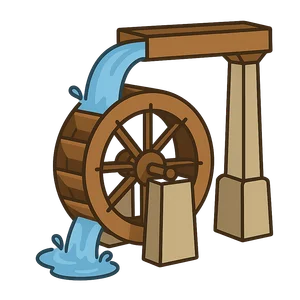
Water Wheel
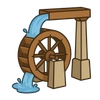
The water wheel is an ancient machine that uses flowing or falling water to create power by means of a set of…
Reads at Grades 6–8 Listens at Grades 4–8
Print & create
Answer keys·No prep·Free with an account
28 worksheets · answer keys · full story · quiz · Ages 10-12 · CEFR B2
Plus adds 244,000+ more stories in 27 languages, audio for every one, and printables for all of them.
Just want Water Wheel?
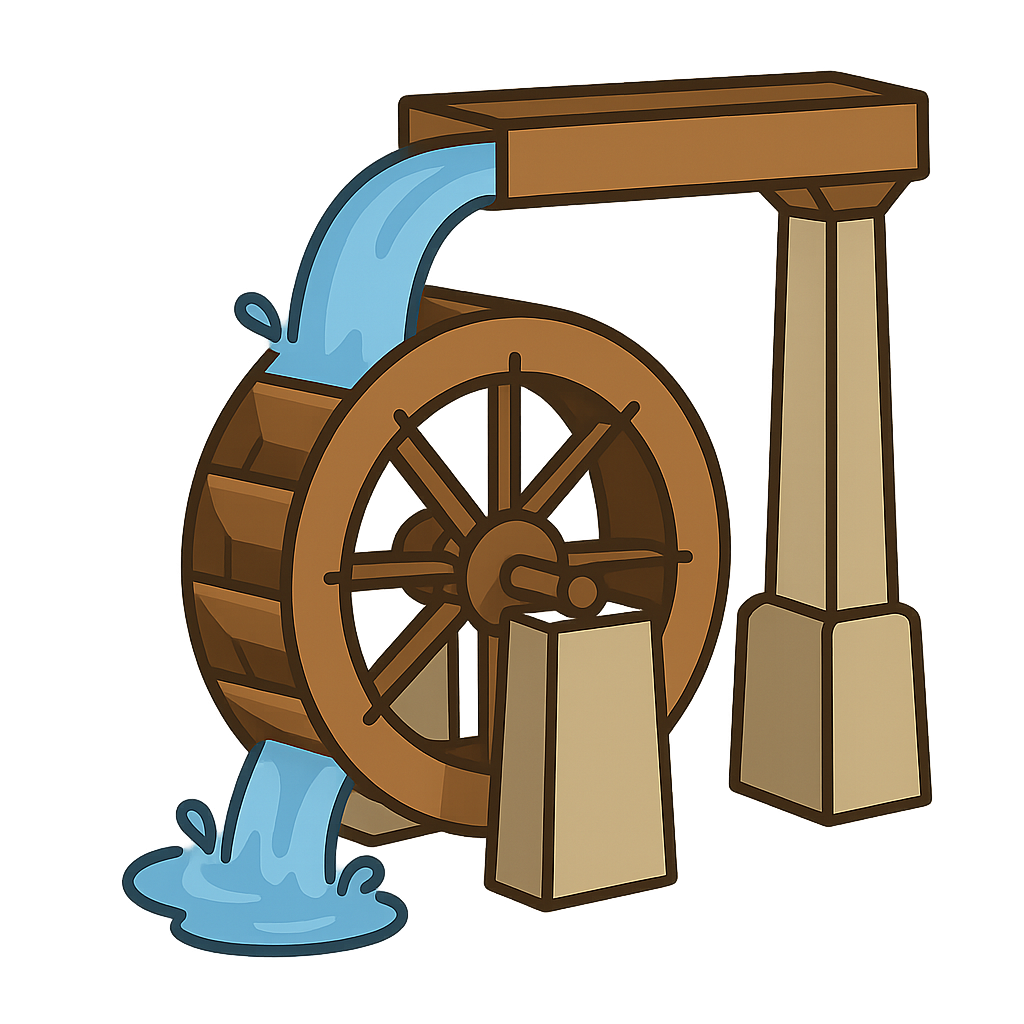
Before you hear my story, you must first imagine a world powered by muscle alone. Picture the endless, grinding work of turning stone against stone to make flour for a single loaf of bread, a task that stole hours from every day. The air would be thick with dust, and the sound would be the scrape of rock and the weary sighs of people. I was born from a whisper on a river, a simple yet profound idea that changed everything. I am the Water Wheel, and my story began when someone looked at the tireless flow of a river and saw not just water, but power. The water never grew tired, never asked for rest, and its strength was immense. Why should people and animals break their backs when the river could do the work for them? My earliest ancestors were humble creations. One of the first that history remembers is the Greek Perachora wheel, which turned slowly around the 3rd century BCE. It was a simple, horizontal wheel that dipped its paddles into a current, proving that the river’s push could be harnessed. It was a quiet beginning, but it was the start of a revolution, a promise that the heavy burdens of the world could be lifted by the gentle, persistent force of nature.
My potential truly began to shine during the age of the Roman Empire, a civilization of brilliant builders and engineers. They saw in me not just a helper, but a powerhouse. A Roman engineer named Vitruvius was so impressed that he wrote all about me in his famous books on architecture around the year 25 BCE. He carefully described my two main forms. There was the undershot wheel, which dipped its bottom paddles into a fast-moving stream, and the more complex but far more powerful overshot wheel, where water was directed to pour over my top, letting gravity and the weight of the water do most of the work. The Romans took this idea and built on a scale the world had never seen. My most magnificent moment came in the 2nd century CE at the Barbegal mill complex in southern France. Imagine not one, but sixteen of me, all made of sturdy oak, arranged in a double cascade down a steep hill. Water flowed from an aqueduct, spilling over the top of the first pair of wheels, then channeling down to the next, and the next, until all sixteen of me were spinning in perfect, thundering harmony. Together, we ground enough flour every single day to feed the 12,000 people in the nearby city. I was a symbol of Roman ingenuity, and they put me to work all across their vast empire, not just grinding grain, but crushing olives for oil, sawing massive blocks of marble for their grand buildings, and powering machines I had never dreamed of.
I Am the Water Wheel
Before you hear my story, you must first imagine a world powered by muscle alone. Picture the endless, grinding work of turning stone against stone to make flour for a single loaf of bread, a task that stole hours from every day. The air would be thick with dust, and the sound would be the scrape of rock and the weary sighs of people. I was born from a whisper on a river, a simple yet profound idea that changed everything. I am the Water Wheel, and my story began when someone looked at the tireless flow of a river and saw not just water, but power. The water never grew tired, never asked for rest, and its strength was immense. Why should people and animals break their backs when the river could do the work for them? My earliest ancestors were humble creations. One of the first that history remembers is the Greek Perachora wheel, which turned slowly around the 3rd century BCE. It was a simple, horizontal wheel that dipped its paddles into a current, proving that the river’s push could be harnessed. It was a quiet beginning, but it was the start of a revolution, a promise that the heavy burdens of the world could be lifted by the gentle, persistent force of nature.
My potential truly began to shine during the age of the Roman Empire, a civilization of brilliant builders and engineers. They saw in me not just a helper, but a powerhouse. A Roman engineer named Vitruvius was so impressed that he wrote all about me in his famous books on architecture around the year 25 BCE. He carefully described my two main forms. There was the undershot wheel, which dipped its bottom paddles into a fast-moving stream, and the more complex but far more powerful overshot wheel, where water was directed to pour over my top, letting gravity and the weight of the water do most of the work. The Romans took this idea and built on a scale the world had never seen. My most magnificent moment came in the 2nd century CE at the Barbegal mill complex in southern France. Imagine not one, but sixteen of me, all made of sturdy oak, arranged in a double cascade down a steep hill. Water flowed from an aqueduct, spilling over the top of the first pair of wheels, then channeling down to the next, and the next, until all sixteen of me were spinning in perfect, thundering harmony. Together, we ground enough flour every single day to feed the 12,000 people in the nearby city. I was a symbol of Roman ingenuity, and they put me to work all across their vast empire, not just grinding grain, but crushing olives for oil, sawing massive blocks of marble for their grand buildings, and powering machines I had never dreamed of.
When the Roman Empire eventually faded, one might think my story would fade with it. But my usefulness was too great to be forgotten. Through the long centuries that followed, known as the Middle Ages, I became more important than ever. I was no longer a marvel of a distant empire; I was the essential, beating heart of every town and village. My presence was so vital that when the king of England ordered a great survey of his kingdom in the year 1086, the famous Domesday Book, his officials counted over 5,000 mills powered by me in England alone. I was everywhere. My rhythmic turning was the sound of daily life, the pulse of the community. During this time, I learned many new trades. I stopped being just a gristmill for flour. Blacksmiths built me to lift and drop giant trip hammers, whose rhythmic blows shaped iron into tools, horseshoes, and armor with a force no human could match. I was connected to enormous bellows that fanned the flames of furnaces, making them hot enough to produce stronger, better iron. In the growing textile industry, I powered fulling machines that pounded and cleaned wool, making the cloth thicker and more durable. I was building the very foundations of new industries, transforming raw materials into the goods that built kingdoms.
My journey continued as the world moved toward a new era of invention. In the late 18th century, I became a central figure in the early days of the Industrial Revolution. Before steam, there was me. The very first factories, especially the enormous textile mills that sprang up across the English countryside, were built on riverbanks for one reason: to be near me. I was the engine that powered it all. Inside these massive brick buildings, my steady turning motion was transferred through a complex system of gears and belts to power hundreds of spinning jennies and looms. The clatter of machinery was deafening, but it was the sound of progress, all driven by the simple force of the river. Of course, my time as the primary source of industrial power couldn't last forever. A brilliant new invention, the steam engine, perfected by innovators like James Watt around 1769, began to take my place. Steam had a great advantage: it could be created anywhere, freeing factories from the riverbanks. But my story does not end there. I taught humanity a fundamental lesson: that immense power could be drawn from the natural world. My direct descendants live on today, larger and more powerful than I ever was. They are the giant hydroelectric turbines nestled inside modern dams, using the same principle of falling water to generate the electricity that lights up your homes. I was the first to show the way, and the lesson I taught continues to power the world.
Wow facts
About
The water wheel is an ancient machine that uses flowing or falling water to create power by means of a set of paddles or buckets mounted around a wheel.
Take a Quiz
Question 1 of 5
Retell the water wheel's story, focusing on its key roles in the Roman Empire, the Middle Ages, and the Industrial Revolution.
Explore next

Want to do even more?
Go beyond exploring. Unlock tools that turn every story into real learning.

Storypie Plus for families
Full stories, quizzes, and printables. Nights and car rides, sorted.
- Unlimited audio stories
- Create Mode: your child stars in the story
- Offline downloads
- Printable worksheets & coloring pages

Why Storypie for Schools
Students engaged. Prep in seconds. Evenings back to you.
- Worksheets & Quizzes
- Classroom Management
- Formative Assessment
- Custom Curriculum & Lesson Plans
- 27 Languages

Why Storypie for Homeschool
Curriculum done. They'll ask for more. Hours back in your day.
- Worksheet Generator
- First-Person Audio Stories
- Built-in Comprehension Quizzes
- Custom Curriculum & Lesson Plans
- Print & Go Activities