English

Aeneas - Roman
Aeneas was a Trojan hero, son of the goddess Venus, who escaped the fall of Troy and led his people to Italy…
Reads at Grades 6–8 Listens at Grades 4–8
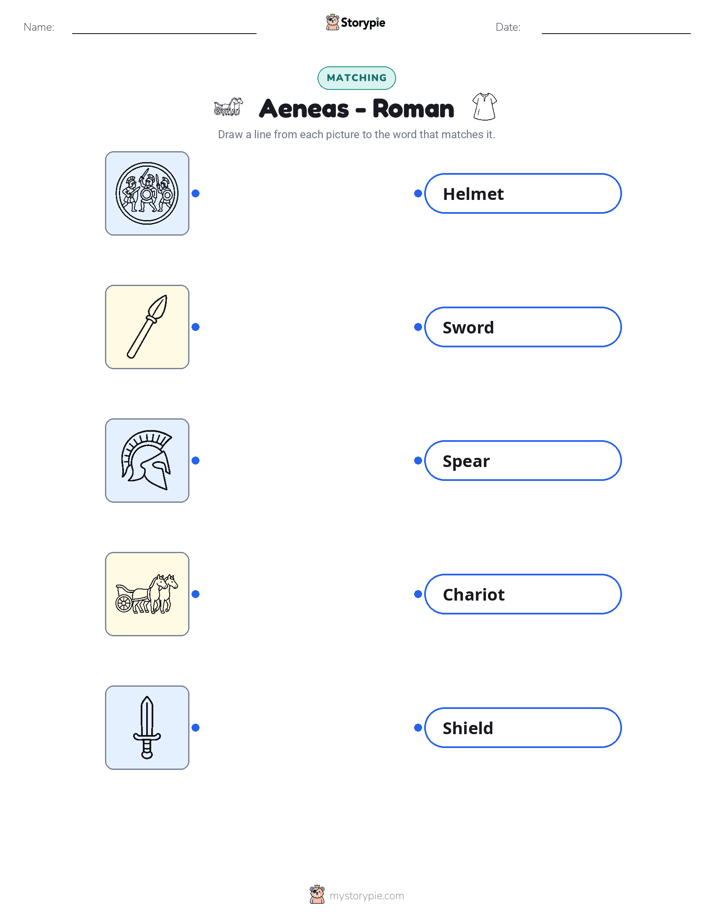
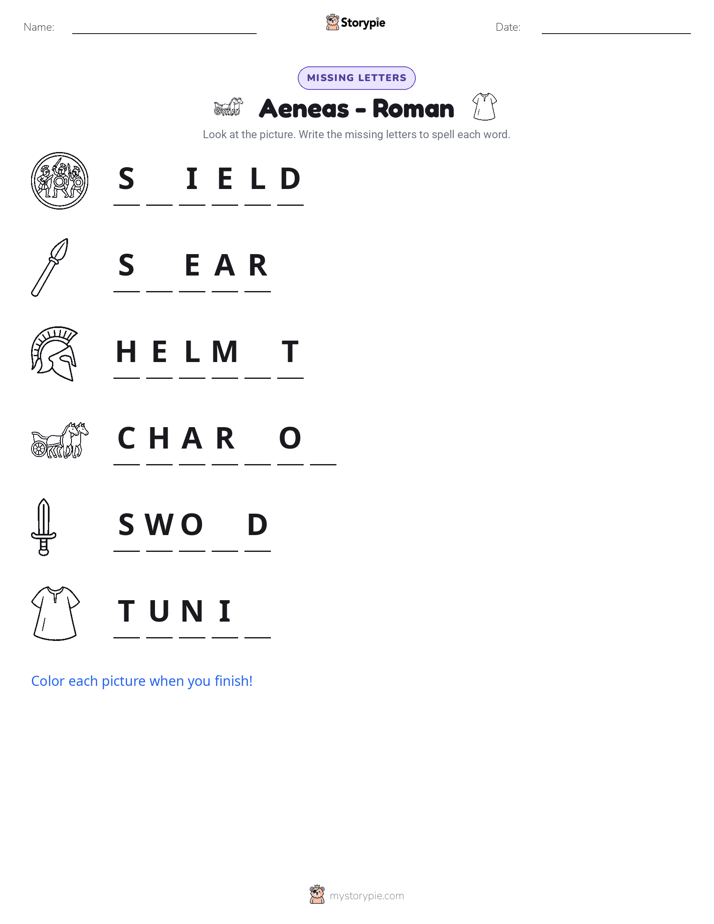
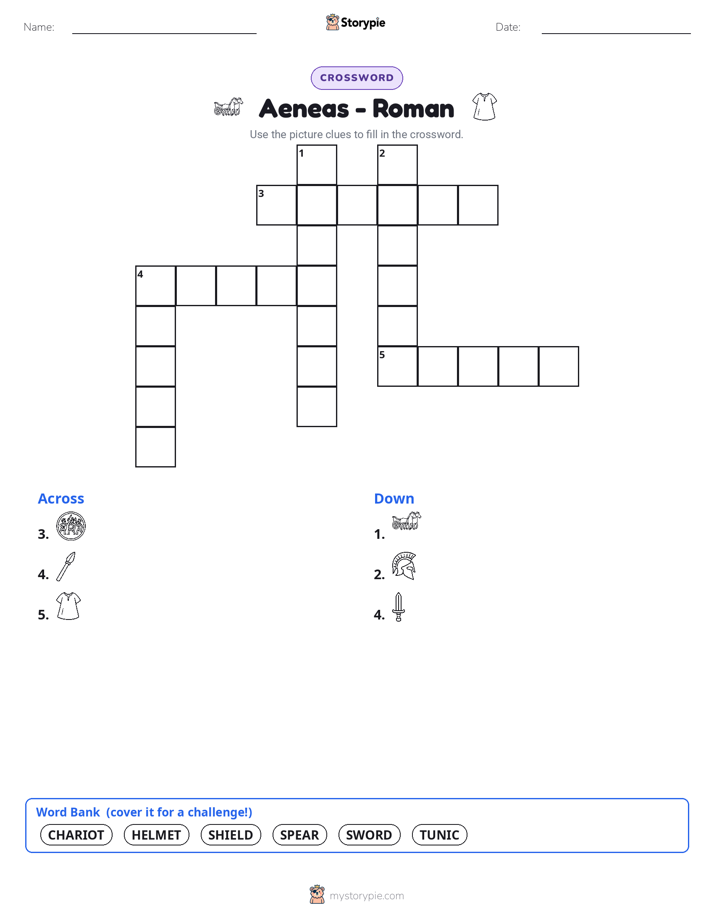
Print & create
Answer keys·No prep·Free with an account
28 worksheets · answer keys · full story · quiz · Ages 10-12 · CEFR B2
Plus adds 164,000+ more stories in 27 languages, audio for every one, and printables for all of them.
Just want Aeneas - Roman?
The air still smells of smoke and sorrow, a scent I can never forget. My name is Aeneas, and I was a prince of the great city of Troy, a place of towering walls and golden sunshine, now lost to fire and war. But this story is not just about an end; it is about a new beginning, a journey across a treacherous sea guided by fate itself—the story of my quest to found a new Troy, which the world would one day call Rome. This is the myth of Aeneas.
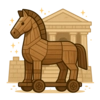
That final night, the city celebrated a false victory, duped by a giant wooden horse left by the Greeks. As Troy slept, soldiers poured from its hollow belly, and our home was set ablaze. I was jolted from a deep sleep by a dream, a vision of our greatest warrior, Hector, his ghost warning me, “The city is lost, Aeneas. Flee. Take our sacred symbols and find a new home across the sea.” I awoke to the roar of flames and the clash of swords. I had to act. I found my elderly father, Anchises, who was too frail to run, and my young son, Ascanius, his eyes wide with fear. My beloved wife, Creusa, was by my side. With my father on my shoulders and my son’s hand in mine, we plunged into the burning streets. In the chaos, I lost Creusa. After hiding my father and son, I ran back into the inferno, calling her name, but it was her spirit that answered, telling me not to grieve, for a great destiny in a new land awaited me. Her words were a painful blessing, giving me the strength to go on.
My followers and I, the last survivors of Troy, set sail on the vast Mediterranean Sea. Our journey was long and agonizing, for the goddess Juno, who despised Trojans, relentlessly hounded us. She sent furious storms that tossed our ships like toys, the waves rising like angry mountains around us. We were constantly thrown off course, landing on strange shores. On one island, we were attacked by the Harpies, monstrous bird-women with the faces of crones, who shrieked and stole our food before we could eat. The greatest sorrow of our wandering, however, was personal. We found a peaceful harbor in Sicily, but there my wise father, Anchises, passed away from old age and exhaustion. My grief was a storm inside me, but I knew I had to honor him. A prophetess told me I could seek his guidance one last time by journeying to the Underworld. Guided by her, I entered the land of the dead—a place of mist and whispers, not terror. I saw the shades of fallen heroes, and finally, I found my father. He showed me a vision that took my breath away: a magnificent parade of souls, the spirits of our descendants waiting to be born. He pointed them out one by one—the brave generals, wise senators, and mighty emperors who would one day build the Roman Empire. This prophecy gave me clarity. My suffering was not meaningless; it was the foundation for something greater than I could ever imagine.
The Myth of Aeneas
The air still smells of smoke and sorrow, a scent I can never forget. My name is Aeneas, and I was a prince of the great city of Troy, a place of towering walls and golden sunshine, now lost to fire and war. But this story is not just about an end; it is about a new beginning, a journey across a treacherous sea guided by fate itself—the story of my quest to found a new Troy, which the world would one day call Rome. This is the myth of Aeneas.
That final night, the city celebrated a false victory, duped by a giant wooden horse left by the Greeks. As Troy slept, soldiers poured from its hollow belly, and our home was set ablaze. I was jolted from a deep sleep by a dream, a vision of our greatest warrior, Hector, his ghost warning me, “The city is lost, Aeneas. Flee. Take our sacred symbols and find a new home across the sea.” I awoke to the roar of flames and the clash of swords. I had to act. I found my elderly father, Anchises, who was too frail to run, and my young son, Ascanius, his eyes wide with fear. My beloved wife, Creusa, was by my side. With my father on my shoulders and my son’s hand in mine, we plunged into the burning streets. In the chaos, I lost Creusa. After hiding my father and son, I ran back into the inferno, calling her name, but it was her spirit that answered, telling me not to grieve, for a great destiny in a new land awaited me. Her words were a painful blessing, giving me the strength to go on.
My followers and I, the last survivors of Troy, set sail on the vast Mediterranean Sea. Our journey was long and agonizing, for the goddess Juno, who despised Trojans, relentlessly hounded us. She sent furious storms that tossed our ships like toys, the waves rising like angry mountains around us. We were constantly thrown off course, landing on strange shores. On one island, we were attacked by the Harpies, monstrous bird-women with the faces of crones, who shrieked and stole our food before we could eat. The greatest sorrow of our wandering, however, was personal. We found a peaceful harbor in Sicily, but there my wise father, Anchises, passed away from old age and exhaustion. My grief was a storm inside me, but I knew I had to honor him. A prophetess told me I could seek his guidance one last time by journeying to the Underworld. Guided by her, I entered the land of the dead—a place of mist and whispers, not terror. I saw the shades of fallen heroes, and finally, I found my father. He showed me a vision that took my breath away: a magnificent parade of souls, the spirits of our descendants waiting to be born. He pointed them out one by one—the brave generals, wise senators, and mighty emperors who would one day build the Roman Empire. This prophecy gave me clarity. My suffering was not meaningless; it was the foundation for something greater than I could ever imagine.
Another of Juno’s storms, the most violent yet, shipwrecked us on the coast of North Africa. We were found, exhausted and hopeless, by scouts from the nearby city of Carthage. We were brought before its ruler, the powerful and beautiful Queen Dido. She, too, had fled her home to build a new city, and she listened to my story with deep empathy. In Carthage, for a time, I found peace. Dido and I fell in love, and I helped her build her magnificent city, its new walls rising strong and proud. I almost forgot my quest, content to have found a home and a heart to share it with. But the gods had not forgotten. The mighty Jupiter sent his messenger, Mercury, who appeared before me in a flash of light. “Aeneas,” he commanded, “remember your destiny. You are to found a kingdom in Italy. Your son’s future awaits.” My heart split in two. How could I leave Dido? But my duty—to my son, my people, and the future of Rome—was a sacred vow. I made the agonizing choice to leave. I ordered my men to prepare the ships in secret, but Dido discovered my betrayal. Her love turned to fury and then to profound sorrow. As my ships sailed away, I looked back and saw smoke rising from her palace, a sight that would haunt me forever. A leader, I learned, must sometimes make choices that break his own heart for the good of his people.
At long last, we reached the shores of Latium in Italy, the land promised by fate. The local king, Latinus, welcomed us. A prophecy had told him that his daughter, Lavinia, must marry a foreigner to create a great new people. He saw that foreigner in me and offered her hand in marriage. But this promise enraged Turnus, a proud and fierce local prince who was already betrothed to Lavinia. The goddess Juno, ever my enemy, saw her chance. She fanned the flames of Turnus’s jealousy and pride, whispering poison into the hearts of the Latins until their welcome turned to suspicion and then to war. I had not come seeking a fight; I wanted only a home for my people. But I could not back down. I was forced to become a warrior once more. I sought allies among the local tribes who also opposed Turnus. The god Vulcan, at the request of my mother, the goddess Venus, forged for me a new set of armor. On the shield, he had depicted the entire future of Rome—its heroes, its triumphs, and its glory. Holding it, I held my destiny in my hand. The war was brutal, and many good men died on both sides. Finally, to end the bloodshed, it came down to a single duel between Turnus and me. As we fought, I was fueled not by anger, but by the weight of my father’s prophecy and the images on my shield. I struck the final blow, and with Turnus’s defeat, the war was over. I could finally marry Lavinia, uniting our two peoples and laying the foundation for our shared future.
The story of my journey was immortalized in an epic poem called the Aeneid, written by the Roman poet Virgil during the reign of the first Roman Emperor, Augustus, around the 1st century BCE. For the people of ancient Rome, I became their founding father, a hero who represented their most important value: pietas. This was not just piety in a religious sense, but a profound sense of duty to one’s family, gods, and country—a responsibility I had to honor even when it meant sacrificing my own happiness. My journey from a refugee of a fallen city to the founder of a civilization that would rule the world gave the Romans a powerful origin story. It taught them that greatness could be born from tragedy and that through perseverance, sacrifice, and an unshakeable sense of duty, an empire could be built. Today, the myth of Aeneas continues to inspire. It appears in art, music, and literature, reminding us that our own journeys are often filled with storms and sorrows. But by holding onto our responsibilities and believing in a better future, we can overcome the greatest of challenges and build a legacy that endures.
Wow facts
About
Aeneas was a Trojan hero, son of the goddess Venus, who escaped the fall of Troy and led his people to Italy, where his descendants founded Rome. His story is told in Virgil's epic poem, the Aeneid.
Take a Quiz
Question 1 of 5
Aeneas is often described by the word 'pious,' which means dutiful. How did Aeneas show he was pious in the story?
Explore next



Want to do even more?
Go beyond exploring. Unlock tools that turn every story into real learning.

Storypie Plus for families
Full stories, quizzes, and printables. Nights and car rides, sorted.
- Unlimited audio stories
- Create Mode: your child stars in the story
- Offline downloads
- Printable worksheets & coloring pages

Why Storypie for Schools
Students engaged. Prep in seconds. Evenings back to you.
- Worksheets & Quizzes
- Classroom Management
- Formative Assessment
- Custom Curriculum & Lesson Plans
- 27 Languages

Why Storypie for Homeschool
Curriculum done. They'll ask for more. Hours back in your day.
- Worksheet Generator
- First-Person Audio Stories
- Built-in Comprehension Quizzes
- Custom Curriculum & Lesson Plans
- Print & Go Activities