English


Akbar and Birbal - Indian
Akbar and Birbal stories are a collection of Indian folktales celebrating the wit and wisdom of Birbal…
Reads at Grades 6–8 Listens at Grades 4–8
Print & create
Answer keys·No prep·Free with an account
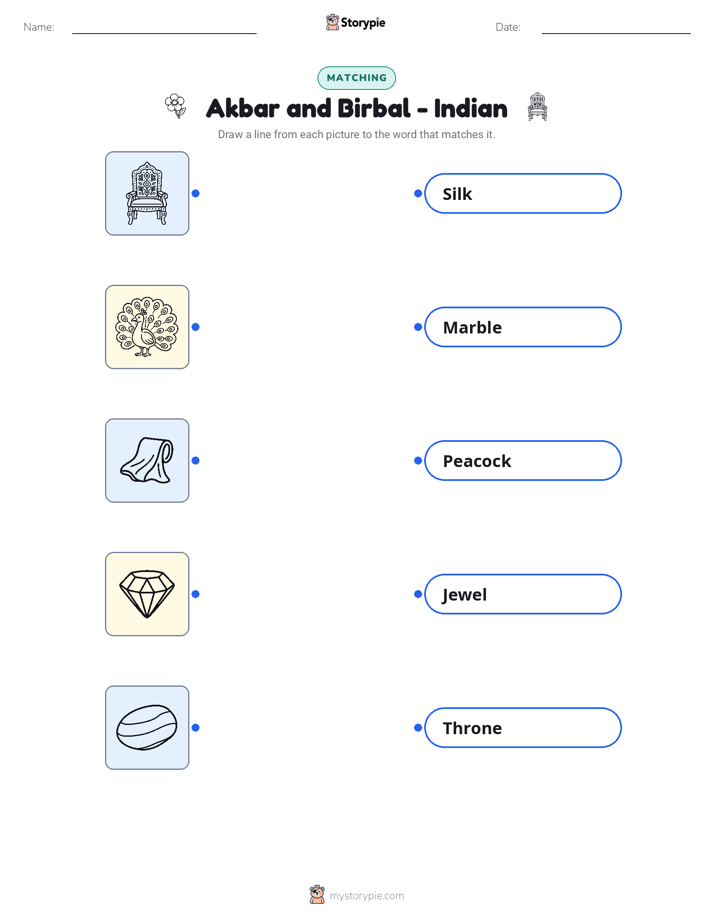
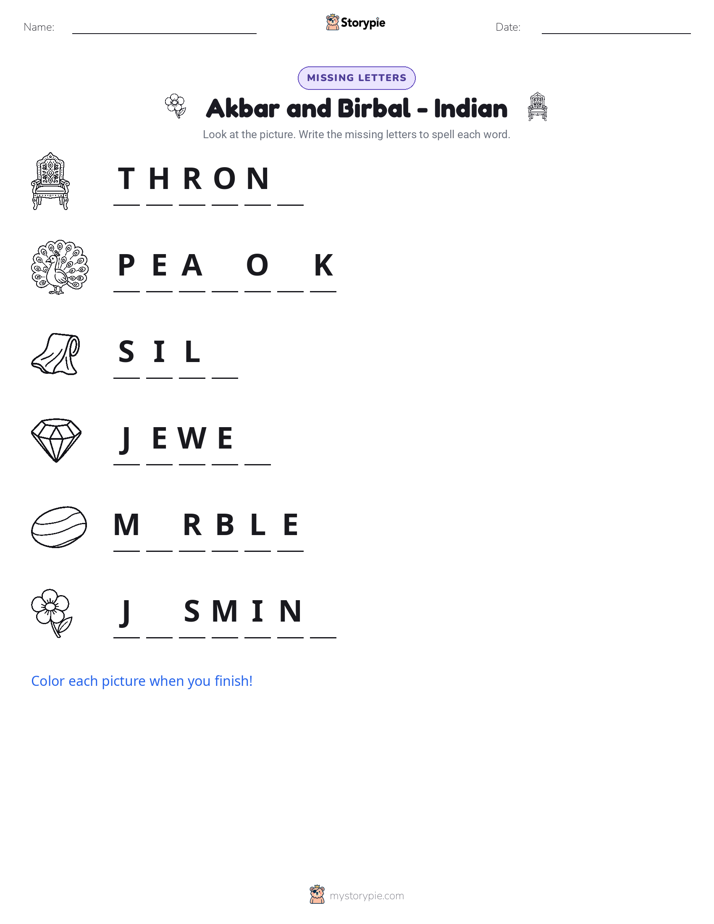
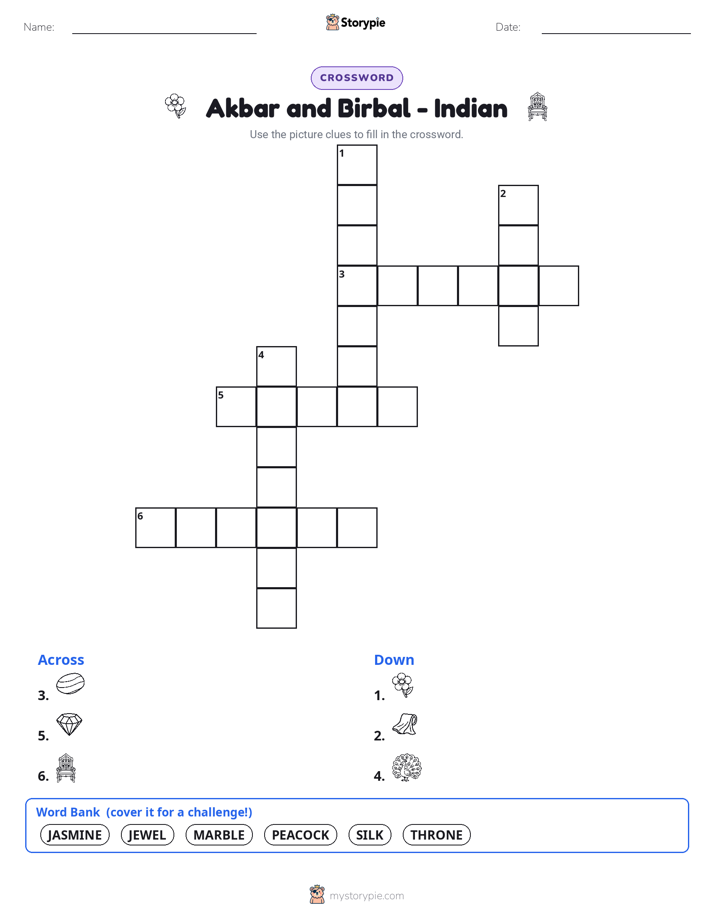
28 worksheets · answer keys · full story · quiz · Ages 10-12 · CEFR B2
Plus adds 164,000+ more stories in 27 languages, audio for every one, and printables for all of them.
Just want Akbar and Birbal - Indian?

The air in the Diwan-i-Khas, the Hall of Private Audience, always hummed with a special kind of energy, thick with the scent of jasmine and rosewater. I should know, for my name is Birbal, and for many years, I had the honor of serving as the advisor to the great Mughal Emperor, Akbar. He was a ruler of immense power, with a mind as sharp as a sword and a curiosity as vast as the empire itself, and he delighted in posing riddles that would stump even the wisest of his courtiers. One sun-drenched afternoon, as peacocks strolled in the gardens outside, the Emperor leaned forward on his throne, a playful glint in his eyes, and set a challenge that would become one of our most famous tales, a story people now call 'Counting the Crows'.
Emperor Akbar surveyed his court, filled with ministers and nobles in their finest silks and jewels. 'My dear courtiers,' he announced, his voice echoing off the marble walls, 'I have a simple question for you today. Tell me, exactly how many crows are there in our capital city of Agra?'. A wave of murmurs swept through the hall. The other ministers looked at each other in disbelief, their brows furrowed in confusion. How could anyone possibly know such a thing? One minister, a man who always favored complicated solutions, suggested a city-wide count, a preposterous task that would take months and occupy hundreds of men. Another, hoping to flatter the Emperor with a quick reply, proposed a wild guess. I could see the frustration and a little bit of fear on their faces; many of them were jealous of my position and secretly hoped I would fail spectacularly. The Emperor watched them all, his smile growing wider. He was not looking for an impossible fact; he was looking for intelligence, for a mind that could see beyond the literal question. He turned his gaze to me. 'And you, Birbal? Surely you have an answer for your Emperor.'
Akbar and Birbal: Counting the Crows
The air in the Diwan-i-Khas, the Hall of Private Audience, always hummed with a special kind of energy, thick with the scent of jasmine and rosewater. I should know, for my name is Birbal, and for many years, I had the honor of serving as the advisor to the great Mughal Emperor, Akbar. He was a ruler of immense power, with a mind as sharp as a sword and a curiosity as vast as the empire itself, and he delighted in posing riddles that would stump even the wisest of his courtiers. One sun-drenched afternoon, as peacocks strolled in the gardens outside, the Emperor leaned forward on his throne, a playful glint in his eyes, and set a challenge that would become one of our most famous tales, a story people now call 'Counting the Crows'.
Emperor Akbar surveyed his court, filled with ministers and nobles in their finest silks and jewels. 'My dear courtiers,' he announced, his voice echoing off the marble walls, 'I have a simple question for you today. Tell me, exactly how many crows are there in our capital city of Agra?'. A wave of murmurs swept through the hall. The other ministers looked at each other in disbelief, their brows furrowed in confusion. How could anyone possibly know such a thing? One minister, a man who always favored complicated solutions, suggested a city-wide count, a preposterous task that would take months and occupy hundreds of men. Another, hoping to flatter the Emperor with a quick reply, proposed a wild guess. I could see the frustration and a little bit of fear on their faces; many of them were jealous of my position and secretly hoped I would fail spectacularly. The Emperor watched them all, his smile growing wider. He was not looking for an impossible fact; he was looking for intelligence, for a mind that could see beyond the literal question. He turned his gaze to me. 'And you, Birbal? Surely you have an answer for your Emperor.'
I bowed low, a calm smile on my face as I felt the weight of every noble's stare. The court fell silent, waiting for me to stumble. 'Your Majesty,' I began, my voice clear and steady, 'the answer is quite precise. There are exactly fifty thousand, five hundred and eighty-nine crows in Agra.'. The Emperor raised an eyebrow, intrigued and slightly amused. The other ministers gasped, whispering among themselves about my audacity. 'How can you be so certain, Birbal?' he asked, the challenge clear in his tone. 'It is simple, Your Majesty,' I replied, meeting his gaze. 'Have your men count the crows. If you find there are more, it means their relatives have come to visit from neighboring cities. If you find there are fewer, then some of our crows have gone to visit their relatives elsewhere.'. For a moment, there was complete silence as my logic settled in the air. Then, a ripple of laughter started from a corner of the hall and spread, growing louder until the entire court was chuckling. The Emperor himself let out a hearty laugh, his shoulders shaking with amusement. He wasn't angry at my clever sidestepping of the question; he was delighted by the wit behind it. He understood that the answer demonstrated a deeper truth: some problems are best solved not with brute force, but with creative thinking.
That day, like many others, the lesson was not about crows. It was about perspective. It showed everyone that wisdom isn't just about knowing facts, but about how you think. Our stories, his questions and my answers, were never just games. They were exercises in justice, logic, and understanding human nature. These tales were first shared by word of mouth in the bustling markets and quiet courtyards of the Mughal Empire. People would gather to hear of the Emperor's latest riddle and my clever reply. Over centuries, they were written down, becoming a beloved part of Indian folklore, told to children by their parents and grandparents. They teach us that a sharp mind is more powerful than a sword, that humor can solve conflicts, and that there is always a clever way to look at a problem. Even today, the stories of Akbar and Birbal inspire people to think outside the box, to challenge assumptions, and to find the wisdom hidden within a simple, funny story. They remind us that curiosity and wit are timeless treasures that connect us all, from an emperor's court long ago to the world we live in today.
Wow facts
About
Akbar and Birbal stories are a collection of Indian folktales celebrating the wit and wisdom of Birbal, an advisor in the court of the Mughal Emperor Akbar.
Take a Quiz
Question 1 of 5
Retell the main events of the story, from the moment Emperor Akbar asks his question to Birbal's final answer.
Explore next




Want to do even more?
Go beyond exploring. Unlock tools that turn every story into real learning.

Storypie Plus for families
Full stories, quizzes, and printables. Nights and car rides, sorted.
- Unlimited audio stories
- Create Mode: your child stars in the story
- Offline downloads
- Printable worksheets & coloring pages

Why Storypie for Schools
Students engaged. Prep in seconds. Evenings back to you.
- Worksheets & Quizzes
- Classroom Management
- Formative Assessment
- Custom Curriculum & Lesson Plans
- 27 Languages

Why Storypie for Homeschool
Curriculum done. They'll ask for more. Hours back in your day.
- Worksheet Generator
- First-Person Audio Stories
- Built-in Comprehension Quizzes
- Custom Curriculum & Lesson Plans
- Print & Go Activities