English


Akbar and Birbal - Indian
Akbar and Birbal stories are a collection of Indian folktales celebrating the wit and wisdom of Birbal…
Reads at Grades 3–5 Listens at Grades 1–5
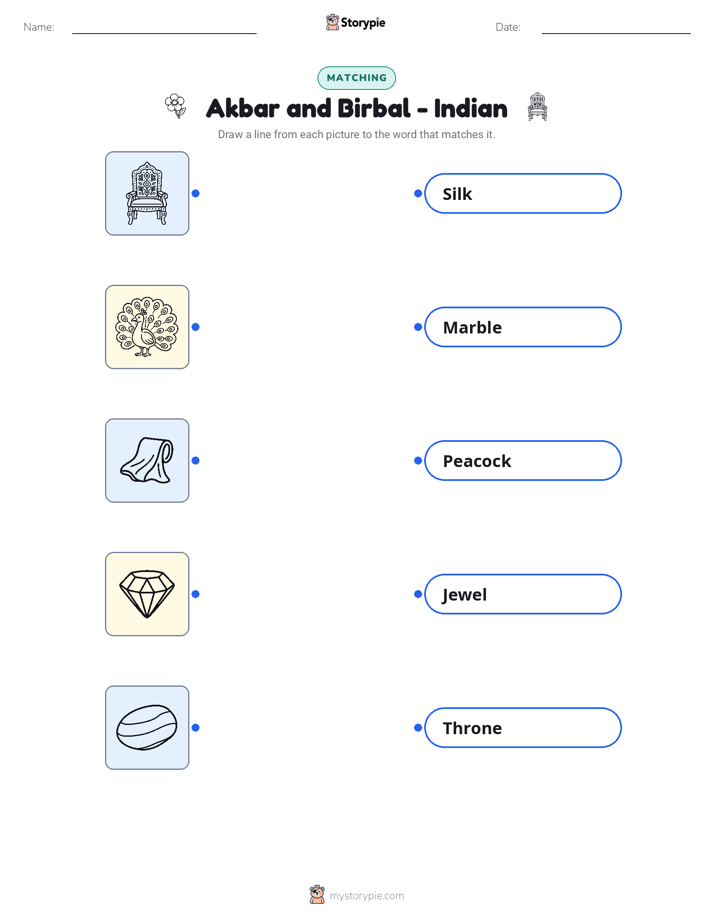
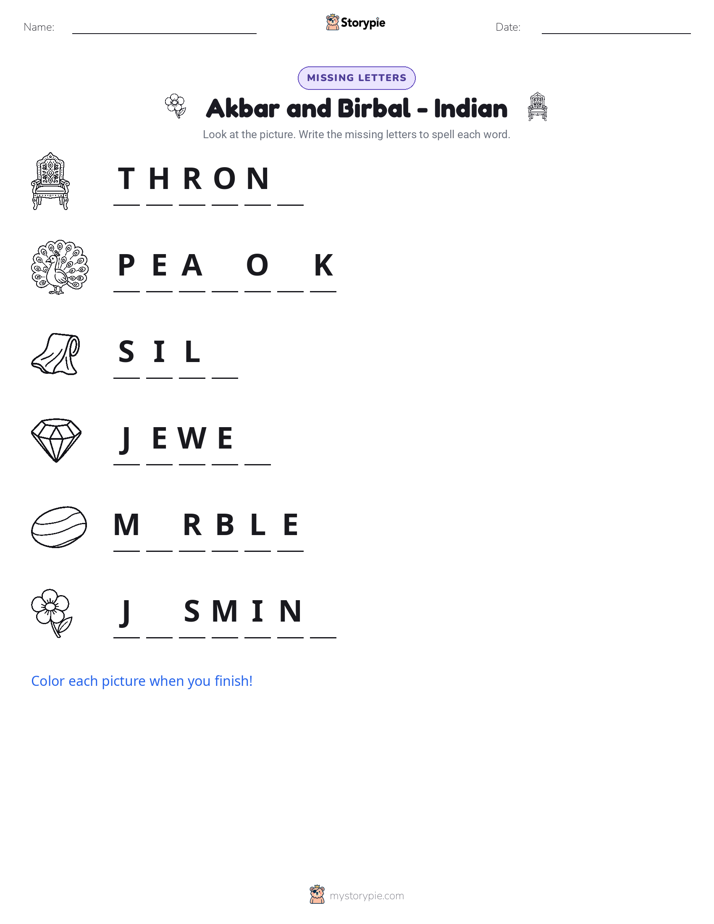
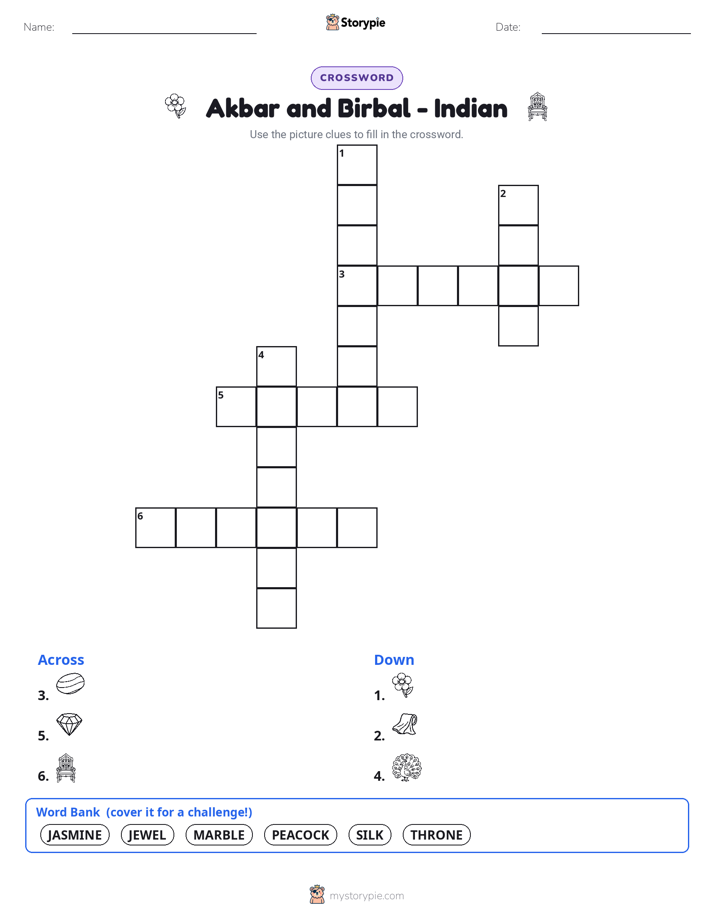
Print & create
Answer keys·No prep·Free with an account
28 worksheets · answer keys · full story · quiz · Ages 8-10 · CEFR B1
Plus adds 164,000+ more stories in 27 languages, audio for every one, and printables for all of them.
Just want Akbar and Birbal - Indian?

My name is Birbal, and for many years, I had the honor of serving in the magnificent court of the Mughal Emperor, Akbar the Great. Our capital city, Fatehpur Sikri, buzzed with the sounds of merchants, the scent of spices, and the sight of grand sandstone palaces under the warm Indian sun. The Emperor was a wise and powerful ruler, but he also had a playful mind that loved a good puzzle, and he often turned to me and his other courtiers for a challenge. This is the story of how a simple line drawn on the floor taught everyone a lesson about thinking differently, a tale we now call 'The Shorter Line.' One afternoon, as the court was in session, Emperor Akbar stood up with a piece of chalk in his hand, a mischievous twinkle in his eye. He bent down and drew a perfectly straight line on the smooth stone floor. 'My dear courtiers,' he announced, his voice echoing in the grand hall, 'I have a challenge for you. You must make this line shorter, but you are forbidden from erasing any part of it. You cannot touch it at all.' A murmur went through the crowd. How could anyone make a line shorter without removing a piece of it. It seemed impossible.
The Emperor’s courtiers, many of them clever and learned men, gathered around the line. They stroked their beards, whispered to one another, and stared at the chalk mark as if it held a secret message. One minister suggested covering a part of the line with a rug, but the Emperor shook his head. 'That is the same as erasing it,' he said. Another suggested breaking the stone tile, but that was a silly idea and would only make the Emperor angry. For a long time, no one could think of a solution. They were all stuck thinking about the line itself—how to shrink it, hide it, or change it. I watched them from my usual spot, feeling a smile grow on my face. They were looking at the problem from only one direction. They saw the line as the only thing that mattered, but I knew the secret was to look at what was *not* there. The Emperor caught my eye and gestured for me to come forward. 'Well, Birbal,' he said, 'you have been quiet. Does my puzzle have you stumped as well?' I bowed respectfully and picked up another piece of chalk. The other courtiers watched, curious to see what I would do. I didn't go near the Emperor's line. Instead, I knelt a little below it.
Birbal and the Shorter Line
My name is Birbal, and for many years, I had the honor of serving in the magnificent court of the Mughal Emperor, Akbar the Great. Our capital city, Fatehpur Sikri, buzzed with the sounds of merchants, the scent of spices, and the sight of grand sandstone palaces under the warm Indian sun. The Emperor was a wise and powerful ruler, but he also had a playful mind that loved a good puzzle, and he often turned to me and his other courtiers for a challenge. This is the story of how a simple line drawn on the floor taught everyone a lesson about thinking differently, a tale we now call 'The Shorter Line.' One afternoon, as the court was in session, Emperor Akbar stood up with a piece of chalk in his hand, a mischievous twinkle in his eye. He bent down and drew a perfectly straight line on the smooth stone floor. 'My dear courtiers,' he announced, his voice echoing in the grand hall, 'I have a challenge for you. You must make this line shorter, but you are forbidden from erasing any part of it. You cannot touch it at all.' A murmur went through the crowd. How could anyone make a line shorter without removing a piece of it. It seemed impossible.
The Emperor’s courtiers, many of them clever and learned men, gathered around the line. They stroked their beards, whispered to one another, and stared at the chalk mark as if it held a secret message. One minister suggested covering a part of the line with a rug, but the Emperor shook his head. 'That is the same as erasing it,' he said. Another suggested breaking the stone tile, but that was a silly idea and would only make the Emperor angry. For a long time, no one could think of a solution. They were all stuck thinking about the line itself—how to shrink it, hide it, or change it. I watched them from my usual spot, feeling a smile grow on my face. They were looking at the problem from only one direction. They saw the line as the only thing that mattered, but I knew the secret was to look at what was not there. The Emperor caught my eye and gestured for me to come forward. 'Well, Birbal,' he said, 'you have been quiet. Does my puzzle have you stumped as well?' I bowed respectfully and picked up another piece of chalk. The other courtiers watched, curious to see what I would do. I didn't go near the Emperor's line. Instead, I knelt a little below it.
With a steady hand, I drew a new line parallel to the Emperor's. But my line was much, much longer. When I stood up, everyone in the court gasped, and then they began to laugh and applaud. The Emperor himself beamed with delight. Without touching his line, I had made it shorter. Next to the much longer line I had drawn, his original line looked small in comparison. He had not said his line had to be the only line on the floor! 'Brilliant, Birbal!' the Emperor declared. 'You have proven once again that the cleverest solution is often the simplest one, if only we can see the problem from a new perspective.' This story, and many others like it, became famous throughout India. For hundreds of years, parents and grandparents have told the tales of Akbar and Birbal to teach children that you don't solve a problem by getting stuck on it. Sometimes, you solve it by adding something new, by making your world bigger, or by changing how you look at things. These stories remind us that wit and wisdom are more powerful than force, and they continue to inspire people to think creatively and find clever solutions to life's many puzzles, just as I did so long ago in the Emperor's court.
Wow facts
About
Akbar and Birbal stories are a collection of Indian folktales celebrating the wit and wisdom of Birbal, an advisor in the court of the Mughal Emperor Akbar.
Take a Quiz
Question 1 of 5
Why did the other courtiers fail to solve the Emperor's puzzle?
Explore next






Want to do even more?
Go beyond exploring. Unlock tools that turn every story into real learning.

Storypie Plus for families
Full stories, quizzes, and printables. Nights and car rides, sorted.
- Unlimited audio stories
- Create Mode: your child stars in the story
- Offline downloads
- Printable worksheets & coloring pages

Why Storypie for Schools
Students engaged. Prep in seconds. Evenings back to you.
- Worksheets & Quizzes
- Classroom Management
- Formative Assessment
- Custom Curriculum & Lesson Plans
- 27 Languages

Why Storypie for Homeschool
Curriculum done. They'll ask for more. Hours back in your day.
- Worksheet Generator
- First-Person Audio Stories
- Built-in Comprehension Quizzes
- Custom Curriculum & Lesson Plans
- Print & Go Activities