English


Ariadne
In Greek mythology, Ariadne was a Cretan princess, daughter of King Minos…
Reads at Grades 6–8 Listens at Grades 4–8
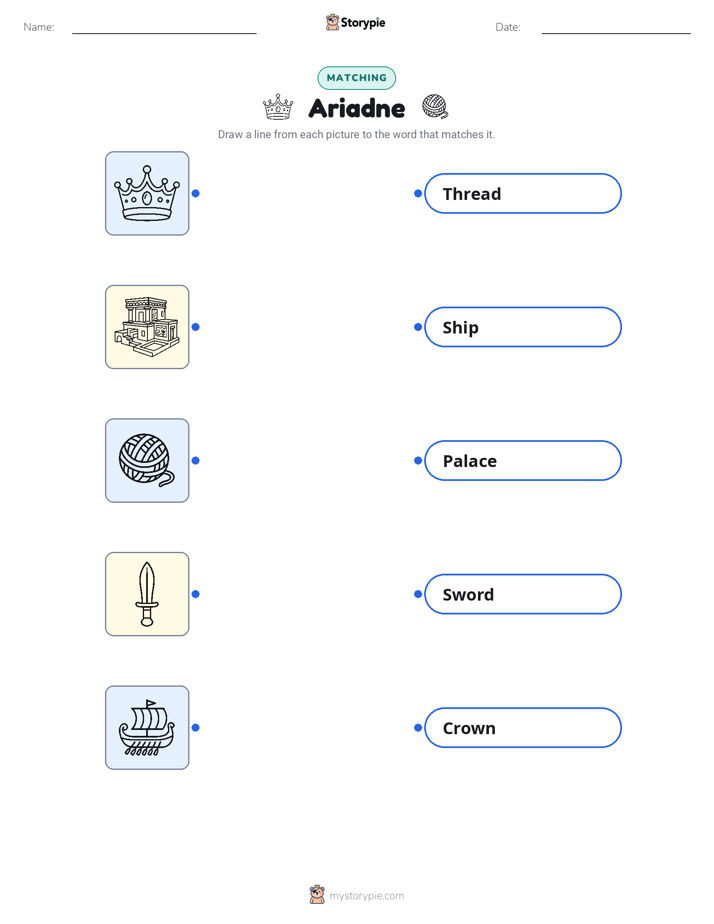
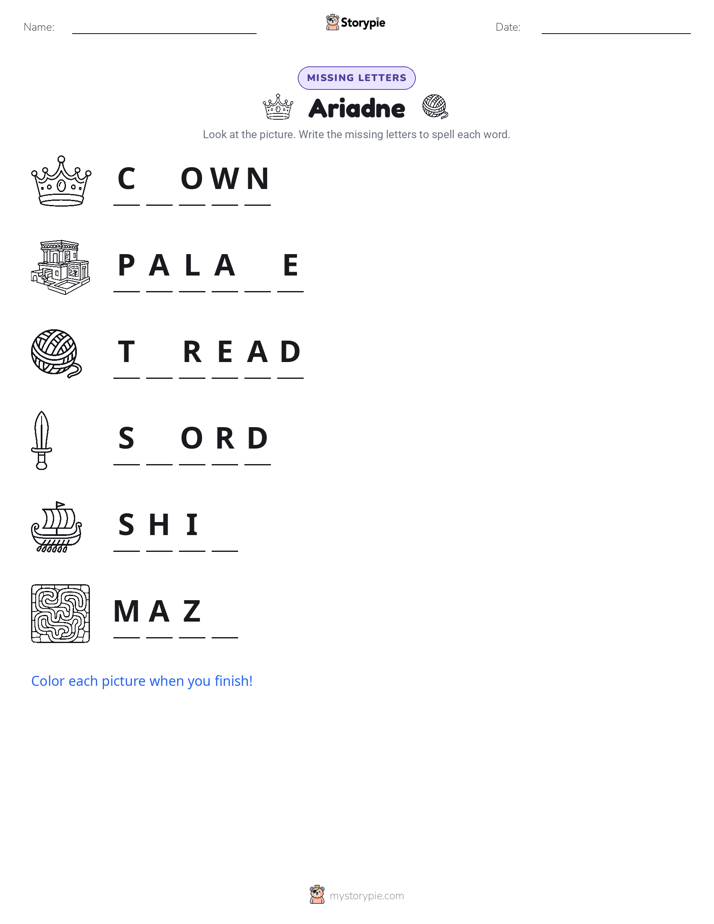
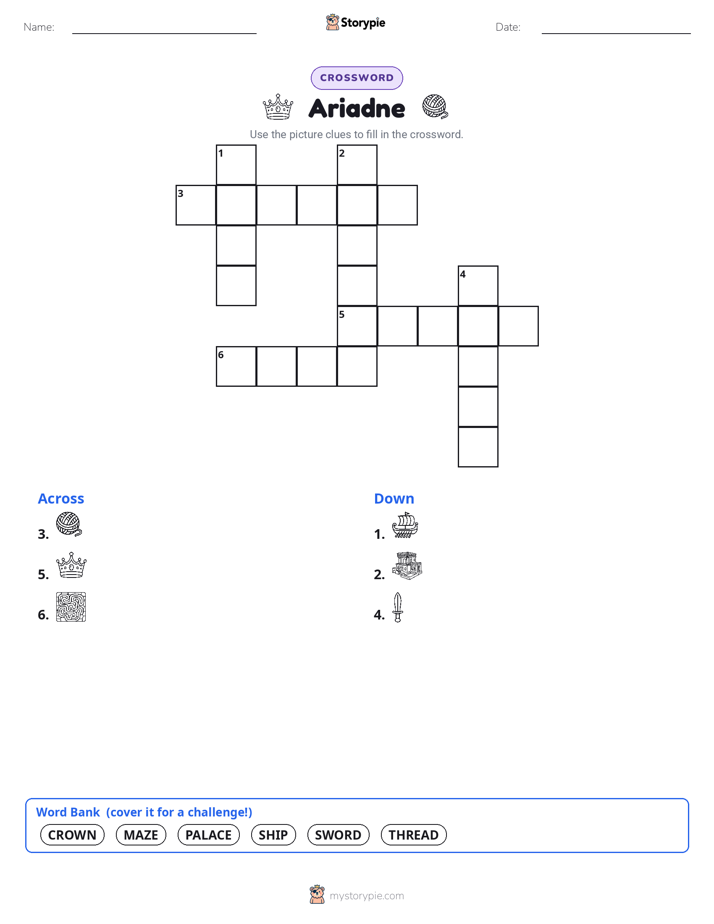
Print & create
Answer keys·No prep·Free with an account
28 worksheets · answer keys · full story · quiz · Ages 10-12 · CEFR B2
Plus adds 164,000+ more stories in 27 languages, audio for every one, and printables for all of them.
Just want Ariadne?

My name is Ariadne, and I was a princess on the island of Crete, a place where the sun warms the stones and the air smells of salt and olive groves. My home was the grand Palace of Knossos, a place of bright frescoes and winding corridors, but beneath it lay a shadow, a terrible secret known to all but spoken of by none. It was the Labyrinth, a maze from which no one could escape, and inside lived my half-brother, a creature of sorrow and rage called the Minotaur. Every nine years, a ship with black sails would arrive from Athens, bringing a tribute of seven young men and seven young women to be sacrificed to the beast. This is the story of how I chose to defy fate, the story of Theseus and the Minotaur.
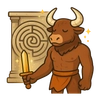
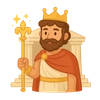
When the latest tribute ship arrived on October 12th, one of the young men stood apart from the others. He was Theseus, the prince of Athens, and he had volunteered to come, vowing to slay the Minotaur and end the suffering of his people. I saw in his eyes not fear, but a burning determination that stirred something in my heart. I was torn. To help him would be to betray my father, King Minos, and my kingdom. But to let him die, along with the others, felt like a betrayal of my own conscience. I thought of the Minotaur, a monster born of a curse, but also a part of my family, trapped in eternal darkness and loneliness. My choice became clear. I sought out Daedalus, the brilliant inventor who had designed the very maze that imprisoned the beast. He was an old, clever man who saw the conflict in my eyes. “The Labyrinth confounds all who enter,” he warned. “Strength alone is not enough.” Taking pity on me, he gave me the secret to conquering it: not with strength, but with cleverness. He advised that the way in must also be the way out.
Ariadne and the Labyrinth's Secret
My name is Ariadne, and I was a princess on the island of Crete, a place where the sun warms the stones and the air smells of salt and olive groves. My home was the grand Palace of Knossos, a place of bright frescoes and winding corridors, but beneath it lay a shadow, a terrible secret known to all but spoken of by none. It was the Labyrinth, a maze from which no one could escape, and inside lived my half-brother, a creature of sorrow and rage called the Minotaur. Every nine years, a ship with black sails would arrive from Athens, bringing a tribute of seven young men and seven young women to be sacrificed to the beast. This is the story of how I chose to defy fate, the story of Theseus and the Minotaur.
When the latest tribute ship arrived on October 12th, one of the young men stood apart from the others. He was Theseus, the prince of Athens, and he had volunteered to come, vowing to slay the Minotaur and end the suffering of his people. I saw in his eyes not fear, but a burning determination that stirred something in my heart. I was torn. To help him would be to betray my father, King Minos, and my kingdom. But to let him die, along with the others, felt like a betrayal of my own conscience. I thought of the Minotaur, a monster born of a curse, but also a part of my family, trapped in eternal darkness and loneliness. My choice became clear. I sought out Daedalus, the brilliant inventor who had designed the very maze that imprisoned the beast. He was an old, clever man who saw the conflict in my eyes. “The Labyrinth confounds all who enter,” he warned. “Strength alone is not enough.” Taking pity on me, he gave me the secret to conquering it: not with strength, but with cleverness. He advised that the way in must also be the way out.
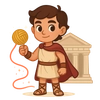
That night, under the cover of darkness, I met Theseus at the stone entrance to the Labyrinth. The air was cold and heavy with dread. I pressed two things into his hands: a sharp, gleaming sword and a simple ball of string. “Unravel this thread as you go,” I whispered, my heart pounding like a drum against my ribs. “It is your only hope. When you have defeated the beast, you can follow it back to the light. Back to me.” He looked at me, his face serious in the moonlight. “I will return,” he promised. Then he turned and disappeared into the suffocating blackness of the maze. I waited for what felt like an eternity, clutching the end of the thread as if it were my own lifeline. The silence from the Labyrinth was more terrifying than any scream. I imagined every wrong turn, every dead end, every roar of the monster. Finally, after hours of agonizing silence, I felt a tug on the string. Soon after, Theseus emerged from the darkness, exhausted and bruised but victorious, followed by the other thirteen young Athenians. The curse was broken.
We fled Crete that very night, our ship sailing swiftly across the dark, star-dusted sea toward Athens. I had left everything behind—my home, my family, my title—for a future with Theseus. As the island faded behind us, I felt a sense of thrilling freedom I had never known. The world felt vast and full of promise. We stopped on the island of Naxos to rest and gather supplies. Exhausted from the escape, I fell asleep on the beach, the sound of the waves lulling me into dreams of our new life together in a city free from fear. But when I awoke on the morning of October 14th, the sun was warm on my face, but a chill crept into my heart. The shore was empty. The ship was a tiny speck on the distant horizon. Theseus was gone. He had abandoned me. The pain of his betrayal was a cold, cruel wave that washed over me, leaving me utterly alone on a deserted shore. I had been a princess, a savior, and now I was nothing but a forsaken girl.
As I wept, my tears mixing with the sand, a wondrous procession appeared, led by a chariot drawn by leopards. It was the god Dionysus, the master of celebrations and wine, and his followers. He was kind and his eyes did not see a forsaken girl, but a courageous and clever woman who had risked everything. He offered me comfort, and then his hand in marriage. He took me as his wife, and as a wedding gift, he took the beautiful crown I wore and tossed it into the sky. As it spun upwards, its jewels transformed into a constellation of stars—the Corona Borealis, or Northern Crown. My story is not just about a hero slaying a monster. It is a story of a difficult choice, of using intelligence to solve an impossible problem, and of finding unexpected hope after deep sorrow. For thousands of years, people have told this myth, reminding us that your path might not be the one you planned, but your courage and cleverness can still lead you to become a star.
Wow facts
About
In Greek mythology, Ariadne was a Cretan princess, daughter of King Minos, who famously helped the Athenian hero Theseus escape the Labyrinth after slaying the Minotaur.
Take a Quiz
Question 1 of 5
Why did Ariadne decide to help Theseus, even though it meant betraying her father?
Explore next


Want to do even more?
Go beyond exploring. Unlock tools that turn every story into real learning.

Storypie Plus for families
Full stories, quizzes, and printables. Nights and car rides, sorted.
- Unlimited audio stories
- Create Mode: your child stars in the story
- Offline downloads
- Printable worksheets & coloring pages

Why Storypie for Schools
Students engaged. Prep in seconds. Evenings back to you.
- Worksheets & Quizzes
- Classroom Management
- Formative Assessment
- Custom Curriculum & Lesson Plans
- 27 Languages

Why Storypie for Homeschool
Curriculum done. They'll ask for more. Hours back in your day.
- Worksheet Generator
- First-Person Audio Stories
- Built-in Comprehension Quizzes
- Custom Curriculum & Lesson Plans
- Print & Go Activities