English

Demeter
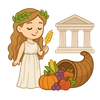
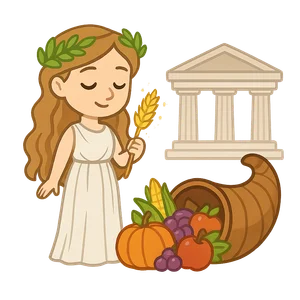
Demeter is the ancient Greek goddess of the harvest, agriculture, and fertility.
Reads at Grades 6–8 Listens at Grades 4–8
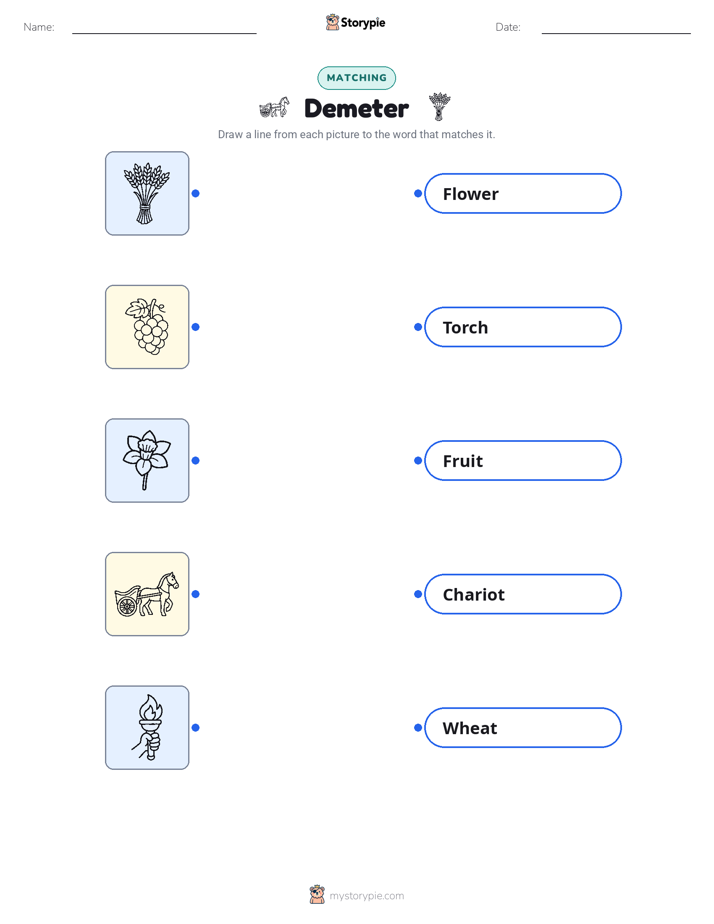
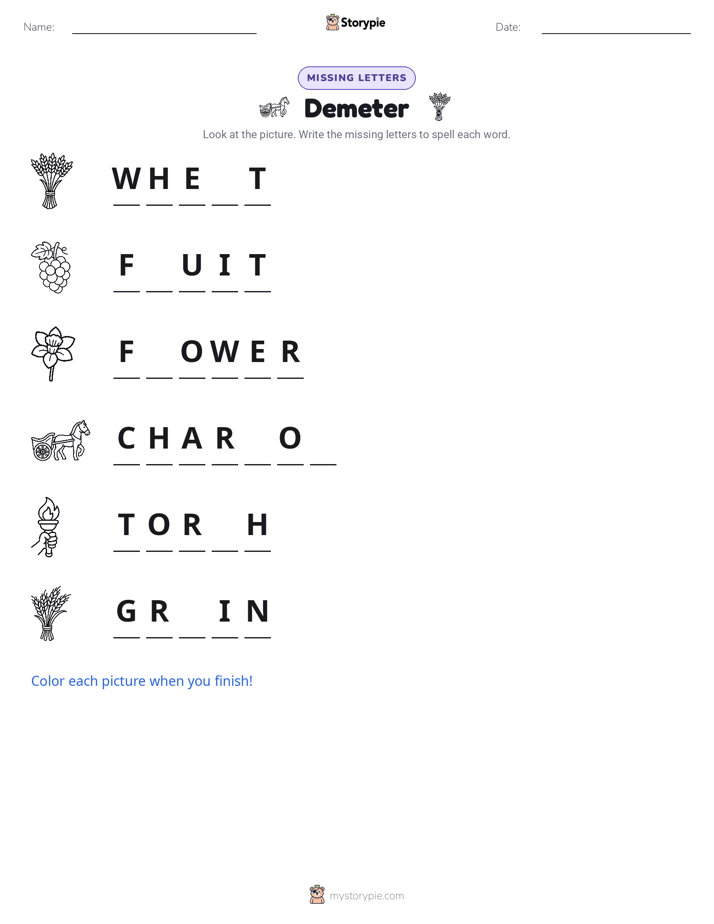
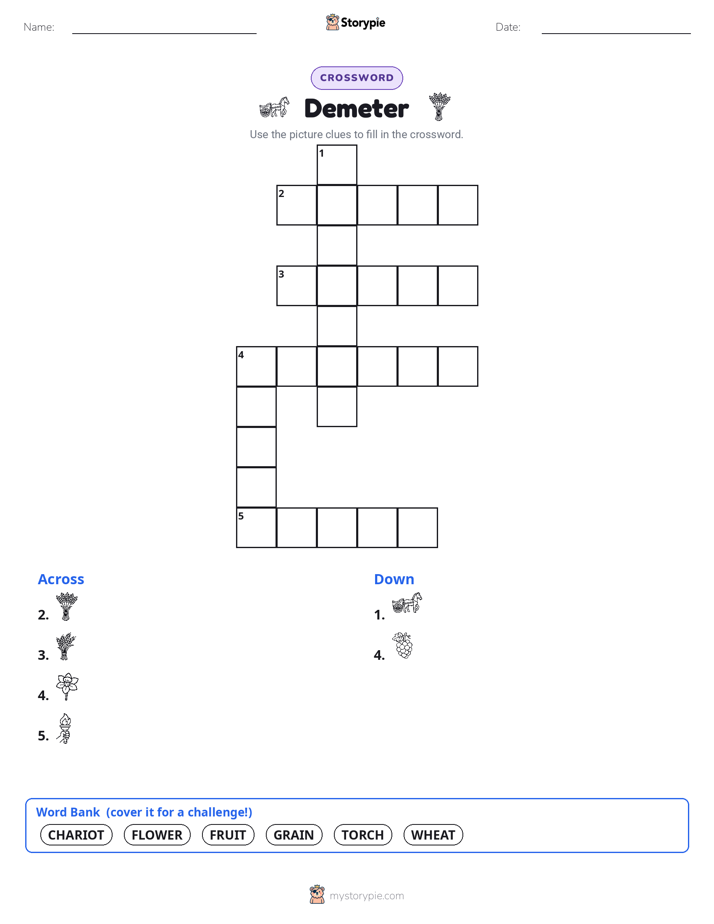
Print & create
Answer keys·No prep·Free with an account
28 worksheets · answer keys · full story · quiz · Ages 10-12 · CEFR B2
Plus adds 164,000+ more stories in 27 languages, audio for every one, and printables for all of them.
Just want Demeter?
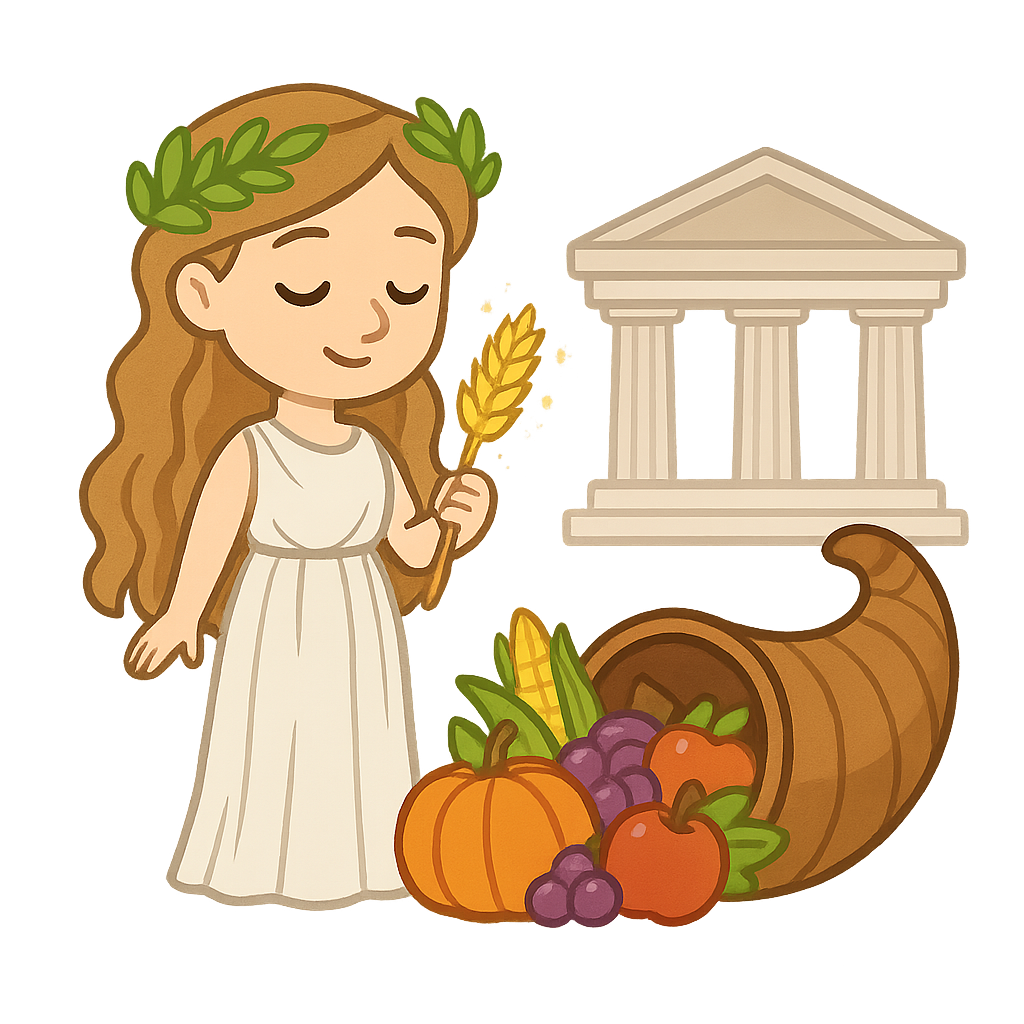
My name is Demeter, and I hold the warmth of the sun in my hands. Long ago, before the world knew the chill of winter, the earth was a garden of endless summer, and every field bloomed under my watchful eye. My greatest joy was not the golden wheat or the heavy fruit on the vine, but my daughter, Persephone. Her laughter was the sound of bubbling springs, and where she danced, wildflowers of every color would spring from the soil. We were inseparable, two parts of the same happy song. But even a goddess cannot see all the shadows that gather at the edge of the light, and I never imagined a darkness was waiting to steal my sun away. This is the story of how my love and my sorrow created the seasons, a tale the ancient Greeks told to understand the turning of their year.
The story begins on a day that felt like any other. Persephone was in a meadow with her friends, the Oceanids, gathering flowers. Her favorite was the narcissus, a flower with a scent so sweet it could make you dream. But this particular flower was a trick, placed there by Hades, the ruler of the Underworld, who had fallen in love with my daughter from his shadowy kingdom below. As she reached for it, the earth split open with a deafening roar. A golden chariot pulled by black horses thundered out, and Hades swept Persephone into his arms, carrying her down into the darkness before the ground sealed itself shut, leaving only silence and a scattering of dropped flowers. When she did not return, a cold fear gripped my heart. I called her name until my voice was raw, but only the echo answered. For nine days and nine nights, I wandered the earth, holding two burning torches, not eating, drinking, or resting. The world began to feel my sorrow. The green leaves on the trees turned brown and brittle, the vibrant flowers drooped and faded, and the fields of grain withered into dust. The joyful sounds of nature fell silent. I had become a grieving mother, and the whole world grieved with me. Finally, I met Hecate, the goddess of magic, who had heard a scream but had not seen who had taken my daughter. She guided me to Helios, the sun god, who sees everything from his chariot in the sky. It was he who told me the terrible truth: my own brother, Zeus, the king of the gods, had allowed Hades to take my daughter to be his queen in the Underworld. My sorrow turned to fury. I abandoned my home on Mount Olympus and came to live among mortals, disguised as an old woman, vowing that the earth would bear no fruit until my daughter was returned to me.
Demeter and Persephone: The First Seasons
My name is Demeter, and I hold the warmth of the sun in my hands. Long ago, before the world knew the chill of winter, the earth was a garden of endless summer, and every field bloomed under my watchful eye. My greatest joy was not the golden wheat or the heavy fruit on the vine, but my daughter, Persephone. Her laughter was the sound of bubbling springs, and where she danced, wildflowers of every color would spring from the soil. We were inseparable, two parts of the same happy song. But even a goddess cannot see all the shadows that gather at the edge of the light, and I never imagined a darkness was waiting to steal my sun away. This is the story of how my love and my sorrow created the seasons, a tale the ancient Greeks told to understand the turning of their year.
The story begins on a day that felt like any other. Persephone was in a meadow with her friends, the Oceanids, gathering flowers. Her favorite was the narcissus, a flower with a scent so sweet it could make you dream. But this particular flower was a trick, placed there by Hades, the ruler of the Underworld, who had fallen in love with my daughter from his shadowy kingdom below. As she reached for it, the earth split open with a deafening roar. A golden chariot pulled by black horses thundered out, and Hades swept Persephone into his arms, carrying her down into the darkness before the ground sealed itself shut, leaving only silence and a scattering of dropped flowers. When she did not return, a cold fear gripped my heart. I called her name until my voice was raw, but only the echo answered. For nine days and nine nights, I wandered the earth, holding two burning torches, not eating, drinking, or resting. The world began to feel my sorrow. The green leaves on the trees turned brown and brittle, the vibrant flowers drooped and faded, and the fields of grain withered into dust. The joyful sounds of nature fell silent. I had become a grieving mother, and the whole world grieved with me. Finally, I met Hecate, the goddess of magic, who had heard a scream but had not seen who had taken my daughter. She guided me to Helios, the sun god, who sees everything from his chariot in the sky. It was he who told me the terrible truth: my own brother, Zeus, the king of the gods, had allowed Hades to take my daughter to be his queen in the Underworld. My sorrow turned to fury. I abandoned my home on Mount Olympus and came to live among mortals, disguised as an old woman, vowing that the earth would bear no fruit until my daughter was returned to me.
As I wandered, my grief kept the world in a grip of ice and hunger. The first winter fell upon the land. The ground became hard and barren, and snow covered the fields where wheat once grew. People prayed and made offerings, but their cries went unanswered. They began to starve, and Zeus realized that without mortals, there would be no one left to honor the gods. He sent messenger after messenger to plead with me, offering beautiful gifts and promising great honors, but I refused them all. “I will not let a single seed sprout until I see my daughter's face again,” I declared. Seeing that I would not yield, Zeus finally sent Hermes, the swift messenger god, down to the Underworld with a command for Hades: Persephone must be returned. Hades knew he could not defy the king of the gods, but he was clever. Before he let Persephone go, he offered her a single, shimmering pomegranate. Starving from her time in the darkness, she ate six of the sweet, jewel-like seeds. She did not know that this was a trick. Anyone who eats the food of the Underworld is bound to it forever. When Persephone returned to me, the world bloomed in a rush of joy. The snows melted, the trees grew new leaves, and the fields turned green overnight. Our reunion was the first spring. But when I learned of the pomegranate seeds, I knew our happiness was not complete. Because she had eaten the six seeds, Persephone had to return to the Underworld for six months of every year. And so, a bargain was struck that shaped the world forever.
This is how the seasons were born. For the half of the year that Persephone is with me, my heart is full of joy. I cover the earth in flowers and sunshine, and the fields overflow with grain. This is spring and summer. But when the time comes for her to return to the Underworld, my sorrow returns, and I let the world grow cold and quiet. The leaves fall, and the earth sleeps under a blanket of snow. This is autumn and winter. The ancient Greeks who first told this story saw it not just as an explanation for the seasons, but as a powerful tale about love, loss, and the promise of return. They held great festivals called the Eleusinian Mysteries in my honor, celebrating the endless cycle of life, death, and rebirth. Today, this myth continues to inspire us. It lives in paintings, poems, and songs that capture the beauty of a mother's love and the changing face of the earth. It reminds us that even after the coldest, darkest winter, life always returns, and the world will bloom once more. It is a story that connects us to the rhythm of the world and the hope that is always waiting to be reborn.
Wow facts
About
Demeter is the ancient Greek goddess of the harvest, agriculture, and fertility. Her myth, particularly the story of her daughter Persephone's abduction by Hades, was used to explain the cycle of the seasons.
Take a Quiz
Question 1 of 5
How did Demeter's feelings directly affect the world around her? Use evidence from the story.
Explore next




Want to do even more?
Go beyond exploring. Unlock tools that turn every story into real learning.

Storypie Plus for families
Full stories, quizzes, and printables. Nights and car rides, sorted.
- Unlimited audio stories
- Create Mode: your child stars in the story
- Offline downloads
- Printable worksheets & coloring pages

Why Storypie for Schools
Students engaged. Prep in seconds. Evenings back to you.
- Worksheets & Quizzes
- Classroom Management
- Formative Assessment
- Custom Curriculum & Lesson Plans
- 27 Languages

Why Storypie for Homeschool
Curriculum done. They'll ask for more. Hours back in your day.
- Worksheet Generator
- First-Person Audio Stories
- Built-in Comprehension Quizzes
- Custom Curriculum & Lesson Plans
- Print & Go Activities