English

Ancient Greeks
The Ancient Greeks were a civilization centered in the northeastern Mediterranean that made foundational…
Reads at Grades 3–5 Listens at Grades 1–5
Print & create
Answer keys·No prep·Free with an account
28 worksheets · answer keys · full story · quiz · Ages 8-10 · CEFR B1
Plus adds 116,000+ more stories in 27 languages, audio for every one, and printables for all of them.
Just want Ancient Greeks?
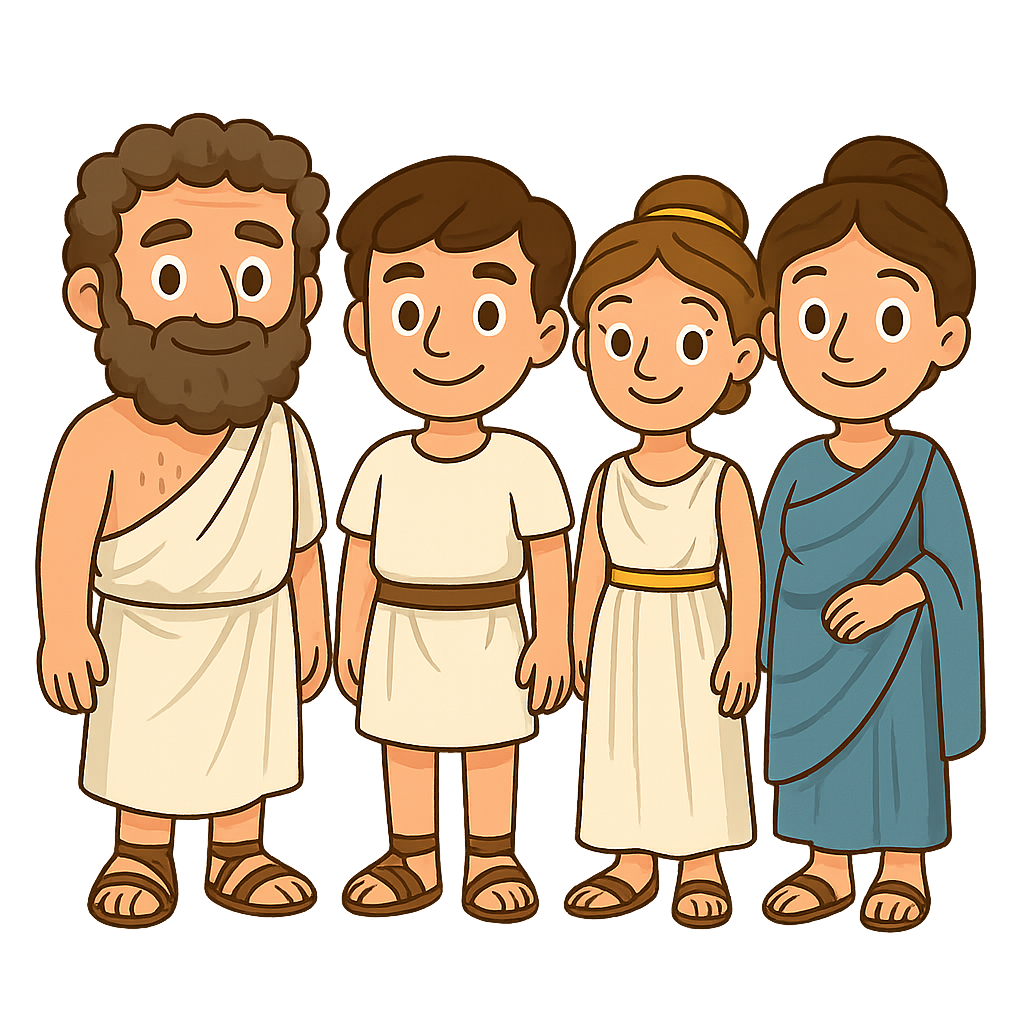
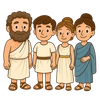
Hello! We are the people you know as the Ancient Greeks, and we are excited to share our story with you. Our civilization flourished thousands of years ago in a beautiful land in Europe. It was a sunny, rocky place, with tall mountains that separated our communities and a bright blue sea that surrounded us on almost every side. The sea was our great highway, connecting our islands and coastlines and allowing us to travel and trade with people from faraway lands. One of the most important things to understand about us is that we didn't live in one big country with a single ruler. Our world was a collection of powerful, independent communities that we called city-states, or *poleis* in our language. Each *polis* governed itself, with its own laws, its own leaders, and its own army to defend its lands. We were fiercely proud of our home cities. While we spoke the same language and worshipped the same gods, we often competed with each other. Two of our most well-known city-states, Athens and Sparta, show just how different our communities could be. Athens was a bustling center for new ideas, great thinkers, and amazing art, while Sparta was famous for raising some of the toughest and most disciplined warriors in the world.
We were always searching for better ways to live and organize our communities, and this led to some very big ideas. In the city-state of Athens, around the year 507 BCE, we developed a revolutionary form of government that we called democracy. This idea, which means "rule by the people," allowed citizens to gather together and vote on the laws that would shape their lives. It was a powerful new way of thinking that gave a voice to ordinary people. Our curiosity didn't stop with government. We loved to ask deep questions about life, knowledge, and fairness. This way of thinking became known as philosophy, which means "love of wisdom." Great thinkers among us, like Socrates and Plato, encouraged people to question everything and to seek truth through reason and discussion. We also had a deep love for storytelling. We told thrilling myths about our powerful gods, such as Zeus, the ruler of the heavens, and celebrated brave heroes like the incredibly strong Heracles. To share these stories and explore important ideas, we built enormous outdoor theaters. Thousands of people would gather on the stone seats of a hillside to watch plays that were full of drama, adventure, and lessons about life.
Our Story from Ancient Greece
Hello! We are the people you know as the Ancient Greeks, and we are excited to share our story with you. Our civilization flourished thousands of years ago in a beautiful land in Europe. It was a sunny, rocky place, with tall mountains that separated our communities and a bright blue sea that surrounded us on almost every side. The sea was our great highway, connecting our islands and coastlines and allowing us to travel and trade with people from faraway lands. One of the most important things to understand about us is that we didn't live in one big country with a single ruler. Our world was a collection of powerful, independent communities that we called city-states, or poleis in our language. Each polis governed itself, with its own laws, its own leaders, and its own army to defend its lands. We were fiercely proud of our home cities. While we spoke the same language and worshipped the same gods, we often competed with each other. Two of our most well-known city-states, Athens and Sparta, show just how different our communities could be. Athens was a bustling center for new ideas, great thinkers, and amazing art, while Sparta was famous for raising some of the toughest and most disciplined warriors in the world.
We were always searching for better ways to live and organize our communities, and this led to some very big ideas. In the city-state of Athens, around the year 507 BCE, we developed a revolutionary form of government that we called democracy. This idea, which means "rule by the people," allowed citizens to gather together and vote on the laws that would shape their lives. It was a powerful new way of thinking that gave a voice to ordinary people. Our curiosity didn't stop with government. We loved to ask deep questions about life, knowledge, and fairness. This way of thinking became known as philosophy, which means "love of wisdom." Great thinkers among us, like Socrates and Plato, encouraged people to question everything and to seek truth through reason and discussion. We also had a deep love for storytelling. We told thrilling myths about our powerful gods, such as Zeus, the ruler of the heavens, and celebrated brave heroes like the incredibly strong Heracles. To share these stories and explore important ideas, we built enormous outdoor theaters. Thousands of people would gather on the stone seats of a hillside to watch plays that were full of drama, adventure, and lessons about life.
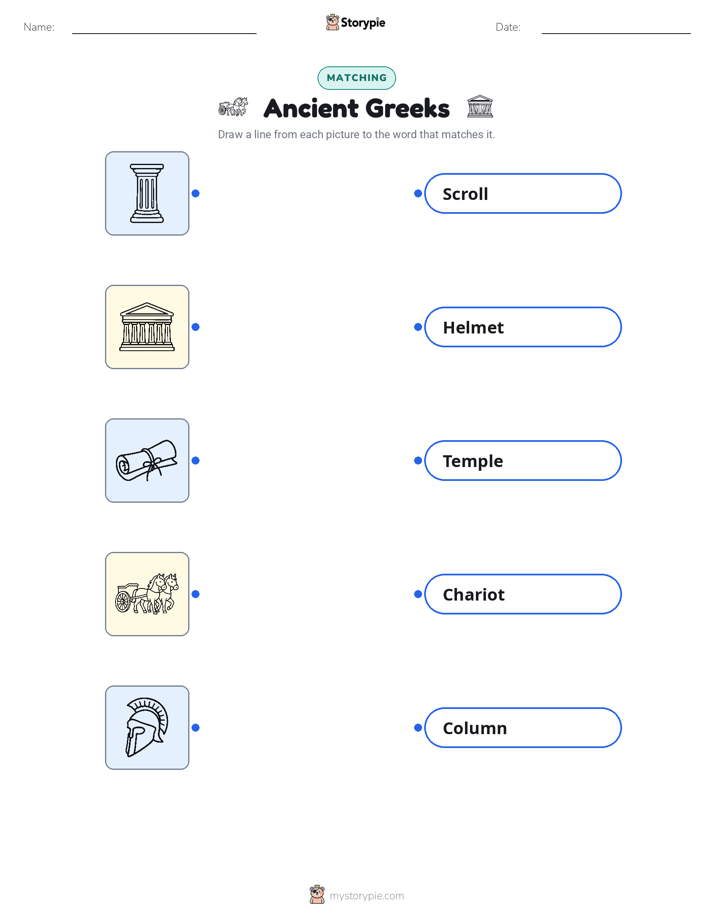
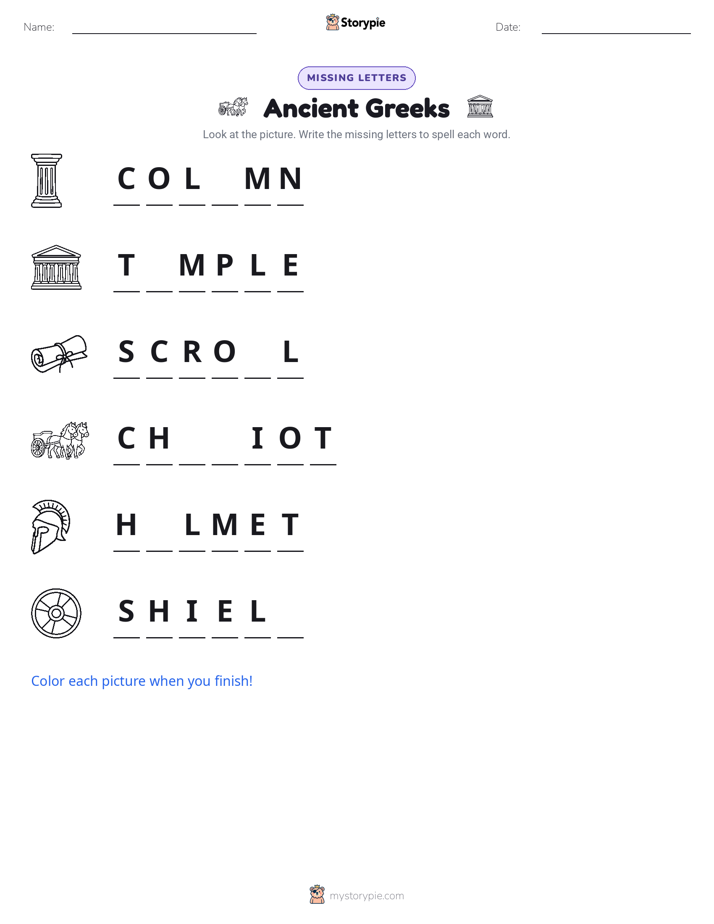
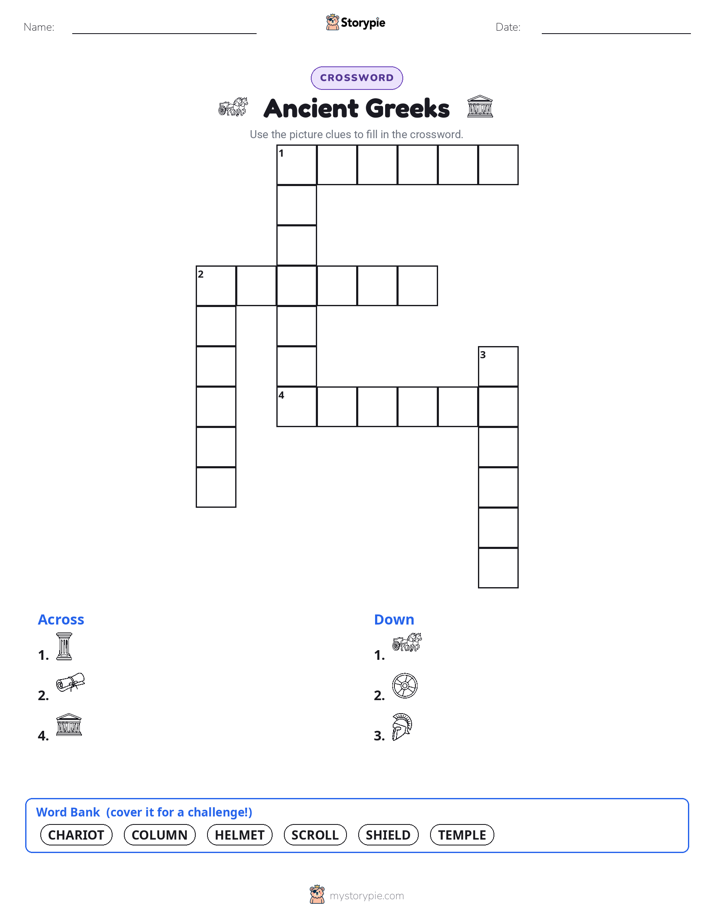
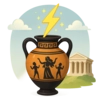
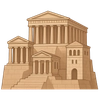
Our relationship with our gods was central to our lives, and we found many ways to show our respect and honor. One of the most famous traditions we started was the Olympic Games, which first took place in 776 BCE. These games were held every four years in a sacred place called Olympia as a great festival to honor our most powerful god, Zeus. Our finest athletes would travel from every polis to participate. For them, it was a chance to bring glory to their home city. They competed in many events, including running and wrestling, showing off their strength and skill. We also expressed our devotion by constructing incredible temples. We took great pride in our architecture and developed three distinct and beautiful styles for the columns that supported these magnificent structures. You can still see them today: the simple and sturdy Doric style, the more elegant Ionic with its scroll-like shapes, and the very decorative Corinthian style, topped with leaves. The most famous example of our work is the Parthenon, a grand temple that we built on a high hill in Athens. It was dedicated to the goddess Athena, the wise protector of our city, and it stood as a symbol of our skill and our faith.
Though our ancient civilization came to an end, our ideas have traveled through time and continue to shape your world in many ways. Our concept of democracy, the belief that people should have the power to govern themselves, became a model for governments all over the globe. The tradition of theater, with its powerful stories and performances, began with us and remains a vital part of art and culture. The work of our philosophers still inspires people to think critically and ask important questions. The Olympic Games, once a festival for our god Zeus, have been reborn as a worldwide celebration of sport and friendship that brings nations together. Our architectural designs also have a lasting legacy. When you see a courthouse, a library, or a government building with grand columns, you are looking at an echo of our temples, like the Parthenon. Even the language you use has pieces of our world in it. Many English words, especially those used in science and medicine, come from our ancient Greek language. We may belong to the past, but our achievements and ideas are still very much alive, continuing to be studied, admired, and used by people every day.
Wow facts
About
The Ancient Greeks were a civilization centered in the northeastern Mediterranean that made foundational contributions to Western philosophy, democracy, art, theater, and science.
Take a Quiz
Question 1 of 5
What was a Greek city-state, or *polis*?
Explore next


Want to do even more?
Go beyond exploring. Unlock tools that turn every story into real learning.

Storypie Plus for families
Full stories, quizzes, and printables. Nights and car rides, sorted.
- Unlimited audio stories
- Create Mode: your child stars in the story
- Offline downloads
- Printable worksheets & coloring pages

Why Storypie for Schools
Students engaged. Prep in seconds. Evenings back to you.
- Worksheets & Quizzes
- Classroom Management
- Formative Assessment
- Custom Curriculum & Lesson Plans
- 27 Languages

Why Storypie for Homeschool
Curriculum done. They'll ask for more. Hours back in your day.
- Worksheet Generator
- First-Person Audio Stories
- Built-in Comprehension Quizzes
- Custom Curriculum & Lesson Plans
- Print & Go Activities