English

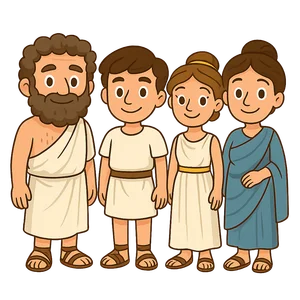
Ancient Greeks
The Ancient Greeks were a civilization centered in the northeastern Mediterranean that made foundational…
Reads at Grades 6–8 Listens at Grades 4–8
Print & create
Answer keys·No prep·Free with an account
28 worksheets · answer keys · full story · quiz · Ages 10-12 · CEFR B2
Plus adds 116,000+ more stories in 27 languages, audio for every one, and printables for all of them.
Just want Ancient Greeks?
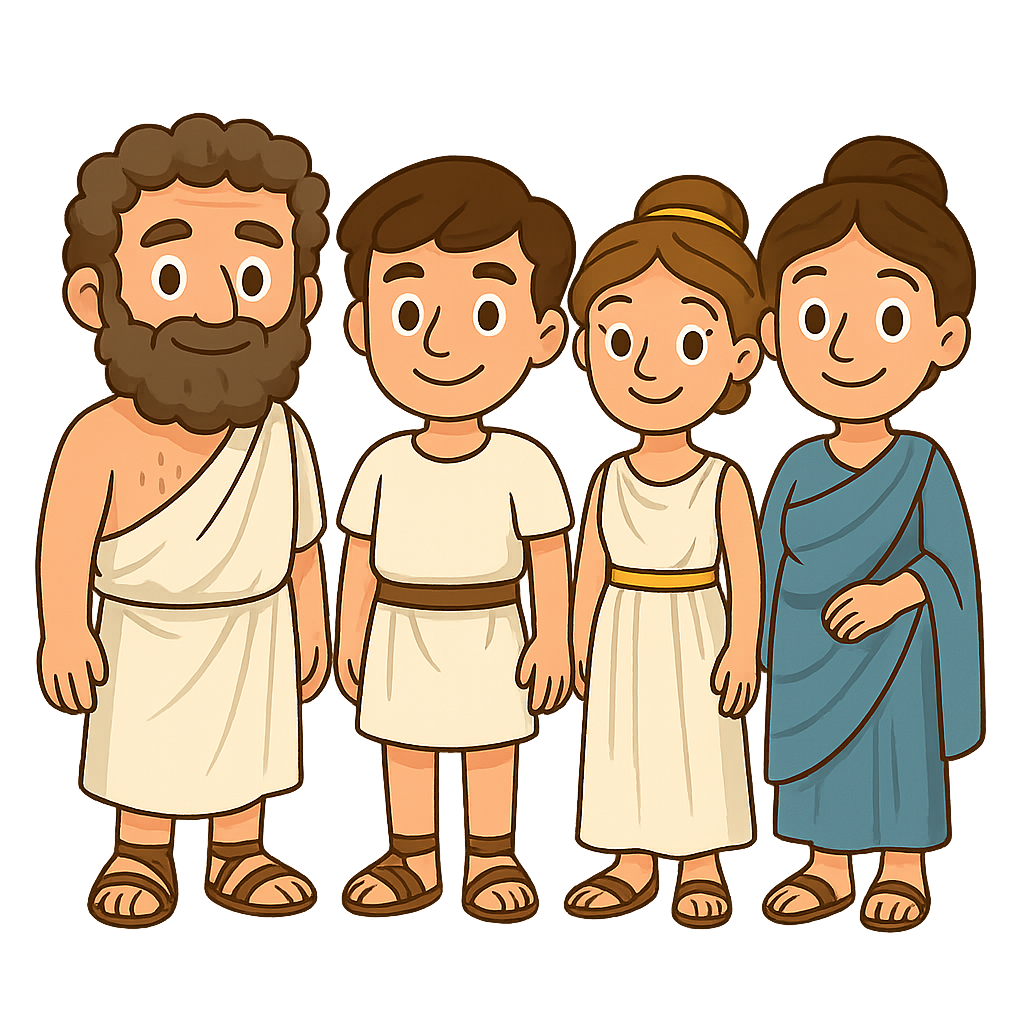
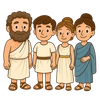
Hello! We are the people of ancient Greece. Our world flourished thousands of years ago in southeastern Europe, on a peninsula of rocky mountains and beautiful coastlines surrounded by the sea. For much of our history, we were not a single, unified country with one ruler. Instead, our world was a collection of many independent communities that we called a *polis*, or city-state. Imagine a city that acts like its own small nation. Each polis had its own distinct identity, complete with its own set of laws, its own government, and its own army to defend itself. This independence was a source of great pride for us, but it also led to frequent conflicts and rivalries.
Two of our most famous city-states, Athens and Sparta, show just how different life could be from one polis to another. They were great rivals, each believing their way of life was the best. In Athens, we valued art, philosophy, and new ideas, while life in Sparta was centered around military strength and discipline. The constant tension and competition between our city-states shaped much of our history, leading to great achievements but also to destructive wars. This system of separate, powerful city-states defined who we were and how we interacted with the world around us.
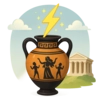
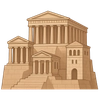
To make sense of the world and our place in it, we looked to the stories of our gods and goddesses. We believed they were a powerful family who lived atop the highest peak in our land, Mount Olympus. At the head of this family was Zeus, the mighty king of the gods and ruler of the sky. Among the many others was Athena, the wise goddess of wisdom and warfare, who was the special protector of the city of Athens. These stories were more than just entertainment; they taught us important lessons about courage, justice, and the challenges of being human. To show our respect and ask for their favor, we built magnificent temples. The most famous of these is the Parthenon in Athens, a stunning temple dedicated to Athena that stood as a symbol of our devotion and our city's power.
A Story from Ancient Greece
Hello! We are the people of ancient Greece. Our world flourished thousands of years ago in southeastern Europe, on a peninsula of rocky mountains and beautiful coastlines surrounded by the sea. For much of our history, we were not a single, unified country with one ruler. Instead, our world was a collection of many independent communities that we called a polis, or city-state. Imagine a city that acts like its own small nation. Each polis had its own distinct identity, complete with its own set of laws, its own government, and its own army to defend itself. This independence was a source of great pride for us, but it also led to frequent conflicts and rivalries.
Two of our most famous city-states, Athens and Sparta, show just how different life could be from one polis to another. They were great rivals, each believing their way of life was the best. In Athens, we valued art, philosophy, and new ideas, while life in Sparta was centered around military strength and discipline. The constant tension and competition between our city-states shaped much of our history, leading to great achievements but also to destructive wars. This system of separate, powerful city-states defined who we were and how we interacted with the world around us.
To make sense of the world and our place in it, we looked to the stories of our gods and goddesses. We believed they were a powerful family who lived atop the highest peak in our land, Mount Olympus. At the head of this family was Zeus, the mighty king of the gods and ruler of the sky. Among the many others was Athena, the wise goddess of wisdom and warfare, who was the special protector of the city of Athens. These stories were more than just entertainment; they taught us important lessons about courage, justice, and the challenges of being human. To show our respect and ask for their favor, we built magnificent temples. The most famous of these is the Parthenon in Athens, a stunning temple dedicated to Athena that stood as a symbol of our devotion and our city's power.
While our myths gave us meaning, we also developed another powerful tool for understanding the universe: our minds. We were among the first people to use logic and reason to search for answers to life's biggest mysteries. Our great thinkers, whom we called philosophers, challenged everyone to think more deeply. Three of the most important were Socrates, Plato, and Aristotle. They didn't just accept old explanations. Instead, they asked difficult questions about the nature of life, the meaning of justice, and the limits of human knowledge. This new way of thinking—based on observation, debate, and logical argument—was revolutionary. It laid the groundwork for a tradition of inquiry that continues to influence how people seek truth today.
In our city-state of Athens, our love for new ideas led to one of our most famous contributions to the world. Around the year 507 BCE, we created a new form of government we called democracy, which means “rule by the people.” This was a radical idea at a time when most places were ruled by kings or small groups of powerful individuals. In our democracy, male citizens had the right and the responsibility to participate directly in the government. They could gather to debate issues, vote on laws, and make decisions for the city. This idea that ordinary citizens should have a say in how they are governed was truly revolutionary, and it has inspired people for centuries.
We also found ways to come together despite our rivalries. The most famous example was the Olympic Games, which were first held in the year 776 BCE. Every four years, athletes from all across the Greek world would travel to Olympia to compete. The games were held to honor our god Zeus. During the games, a sacred truce was called, which meant that all wars between city-states had to stop so that athletes and spectators could travel safely. Competitors took part in events like running and wrestling, not for money, but for the honor of victory. The Olympics were a powerful expression of our shared culture and a celebration of the human spirit.
Our time as a world of independent city-states eventually came to an end. After years of internal conflict, we were conquered by a rising power from the west, the Romans, in 146 BCE. Though our civilization was absorbed into their empire, our ideas and achievements were not lost. In fact, they spread farther than ever before. The legacy of our work can still be seen and felt all over the world. Our architectural styles, with their famous columns, have been copied in important government buildings and monuments for centuries.
Our influence continues in many other ways. The plays we wrote for the theater, both comedies and tragedies, are still performed and studied in schools and theaters. Many words from our language form the roots of modern terms used in science, technology, and medicine. Perhaps most importantly, our inventions in mathematics and the questions asked by our philosophers became the foundation for much of modern Western thought. Our story is a reminder of how powerful ideas can be, crossing borders and centuries to shape the world long after the people who first imagined them are gone.
Wow facts
About
The Ancient Greeks were a civilization centered in the northeastern Mediterranean that made foundational contributions to Western philosophy, democracy, art, theater, and science.
Take a Quiz
Question 1 of 5
What was the basic political unit of the ancient Greek world described in the story?
Explore next


Want to do even more?
Go beyond exploring. Unlock tools that turn every story into real learning.

Storypie Plus for families
Full stories, quizzes, and printables. Nights and car rides, sorted.
- Unlimited audio stories
- Create Mode: your child stars in the story
- Offline downloads
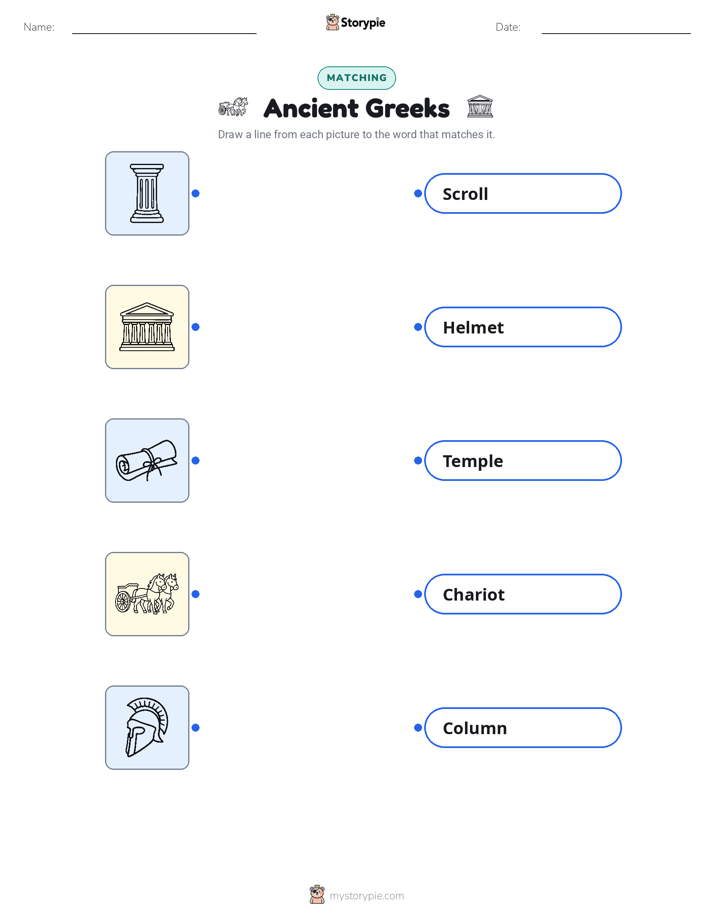
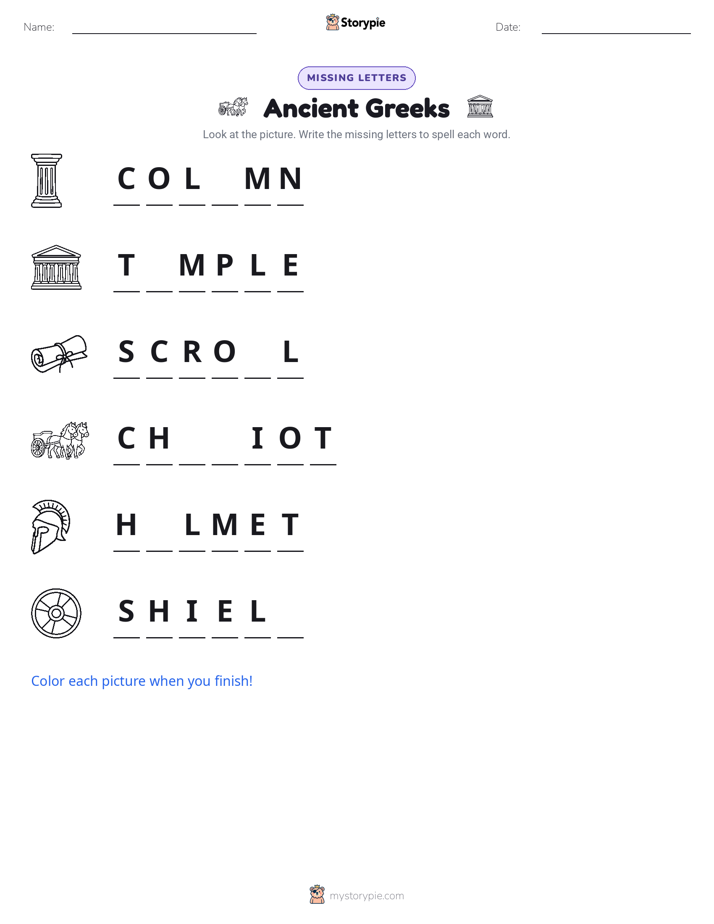
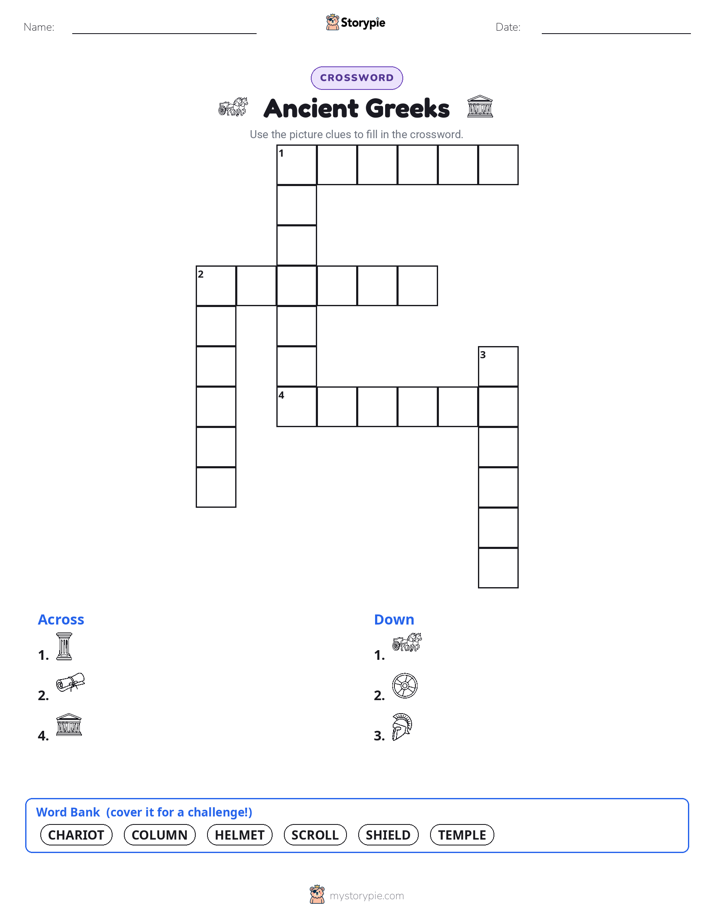
- Printable worksheets & coloring pages

Why Storypie for Schools
Students engaged. Prep in seconds. Evenings back to you.
- Worksheets & Quizzes
- Classroom Management
- Formative Assessment
- Custom Curriculum & Lesson Plans
- 27 Languages

Why Storypie for Homeschool
Curriculum done. They'll ask for more. Hours back in your day.
- Worksheet Generator
- First-Person Audio Stories
- Built-in Comprehension Quizzes
- Custom Curriculum & Lesson Plans
- Print & Go Activities