English

Epimetheus
Epimetheus is a Titan in Greek mythology…
Reads at Grades 6–8 Listens at Grades 4–8
Print & create
Answer keys·No prep·Free with an account
28 worksheets · answer keys · full story · quiz · Ages 10-12 · CEFR B2
Plus adds 208,000+ more stories in 27 languages, audio for every one, and printables for all of them.
Just want Epimetheus?
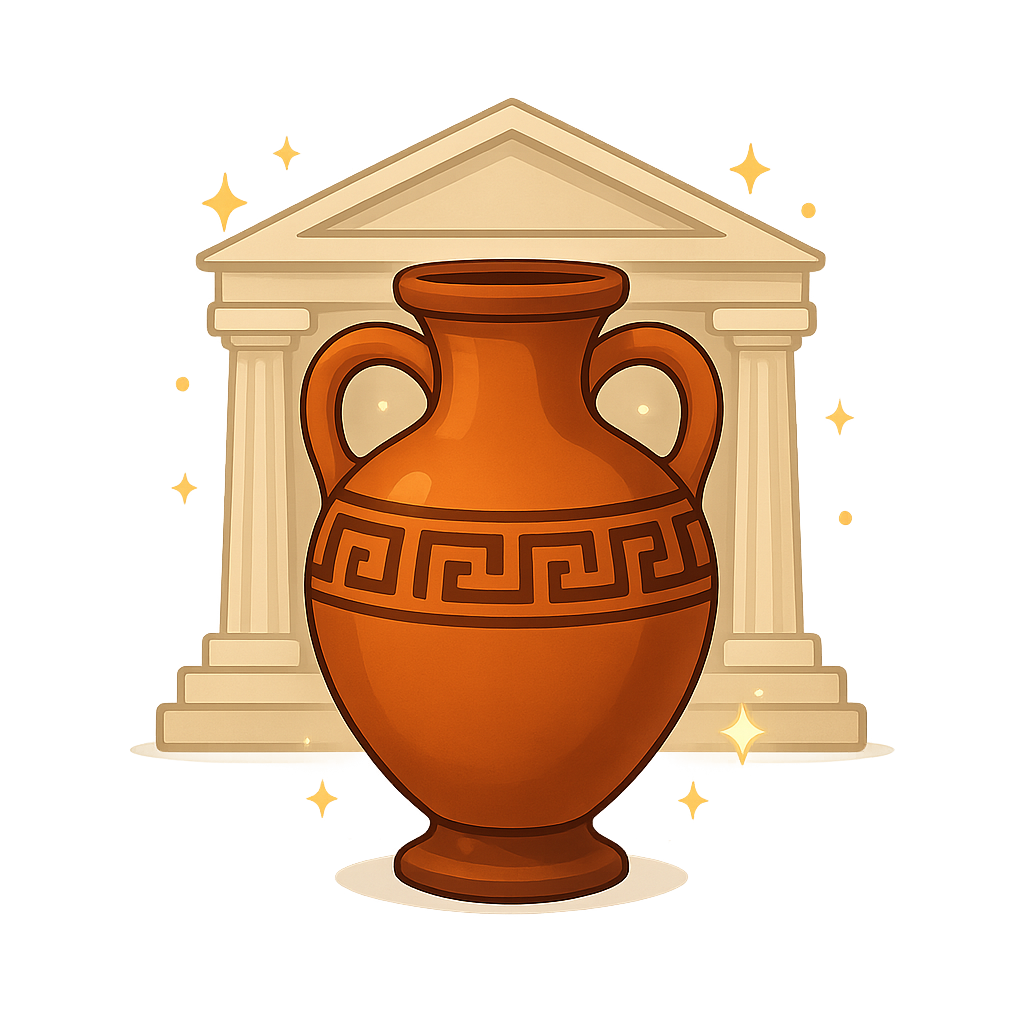
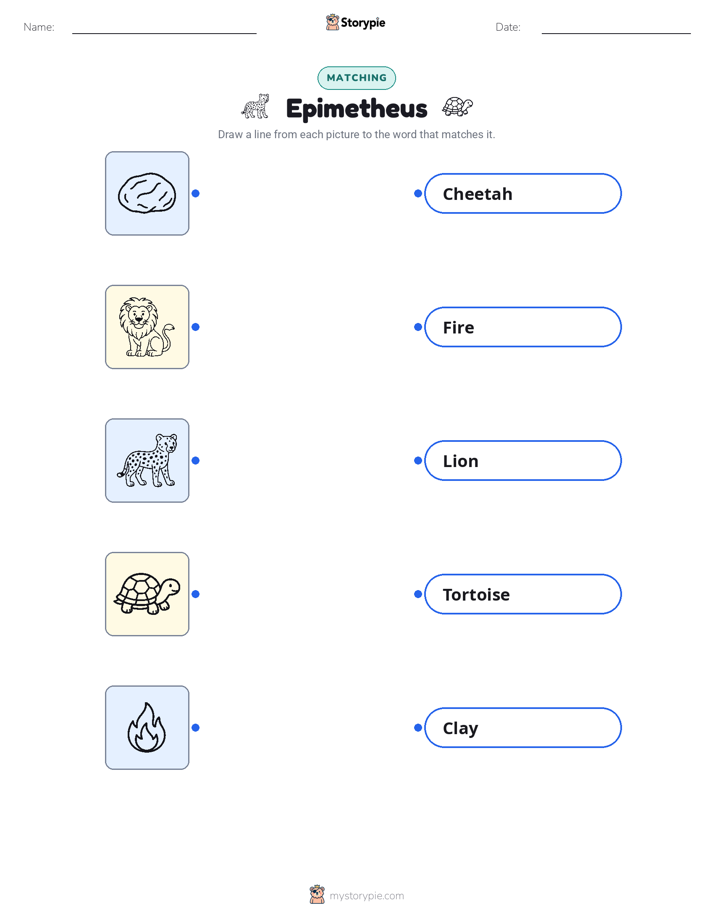
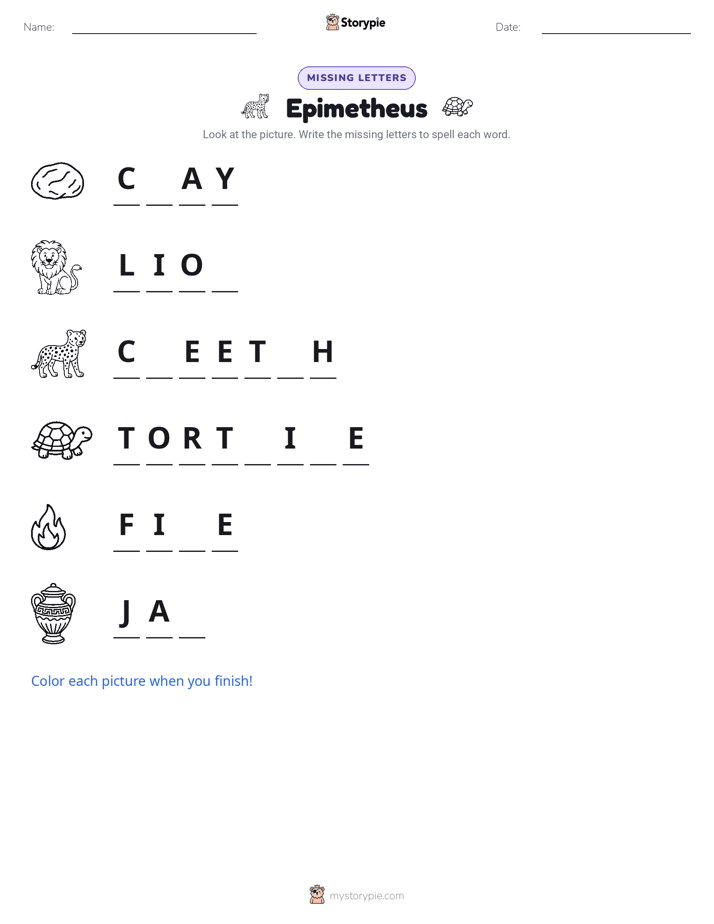
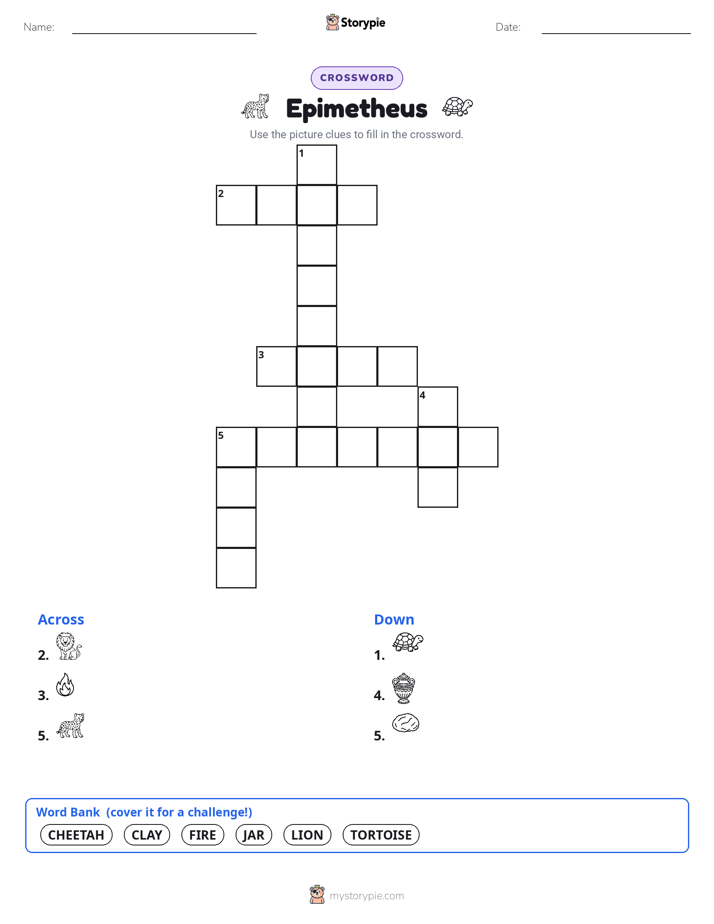
My name is Epimetheus, and I have a confession. My name means 'hindsight,' or 'he who thinks after,' and I have spent my long existence thinking about one moment in particular. Long ago, when the world was new and shimmered with promise, my brother Prometheus and I were given a very important task by the gods of Olympus: to create the creatures that would populate the Earth. Prometheus, whose name means 'forethought,' was clever and wise. He sculpted mankind from clay, giving them a noble form. I, on the other hand, was tasked with giving the animals their various gifts: courage to the lion, speed to the cheetah, a hard shell to the tortoise. I was so caught up in my work, so generous with the gifts, that by the time I got to mankind, I had nothing left to give. Prometheus, ever the champion of his creation, felt pity for the defenseless humans. In a daring act of defiance, he stole fire from the heavens and gave it to them, a gift that would allow them to forge tools, cook food, and warm their homes. But this act angered Zeus, the king of the gods, mightily. He punished my brother terribly, and he devised a punishment for mankind as well, a punishment that would involve me. Prometheus warned me, his eyes full of worry, 'Epimetheus, accept no gifts from Zeus.' I promised I would heed his words, but I am not a creature of forethought. I am a creature of impulse, of heart, and that was my undoing. This is the story of how I failed to listen, and it is the story of a myth you may have heard of: Pandora's Box.
The Story of Pandora's Jar
My name is Epimetheus, and I have a confession. My name means 'hindsight,' or 'he who thinks after,' and I have spent my long existence thinking about one moment in particular. Long ago, when the world was new and shimmered with promise, my brother Prometheus and I were given a very important task by the gods of Olympus: to create the creatures that would populate the Earth. Prometheus, whose name means 'forethought,' was clever and wise. He sculpted mankind from clay, giving them a noble form. I, on the other hand, was tasked with giving the animals their various gifts: courage to the lion, speed to the cheetah, a hard shell to the tortoise. I was so caught up in my work, so generous with the gifts, that by the time I got to mankind, I had nothing left to give. Prometheus, ever the champion of his creation, felt pity for the defenseless humans. In a daring act of defiance, he stole fire from the heavens and gave it to them, a gift that would allow them to forge tools, cook food, and warm their homes. But this act angered Zeus, the king of the gods, mightily. He punished my brother terribly, and he devised a punishment for mankind as well, a punishment that would involve me. Prometheus warned me, his eyes full of worry, 'Epimetheus, accept no gifts from Zeus.' I promised I would heed his words, but I am not a creature of forethought. I am a creature of impulse, of heart, and that was my undoing. This is the story of how I failed to listen, and it is the story of a myth you may have heard of: Pandora's Box.
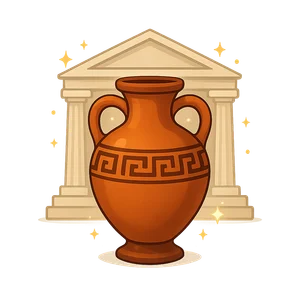
One day, the god Hermes arrived at my door, and with him was the most beautiful woman I had ever seen. Her skin glowed like honey in the sun, and her eyes held the curiosity of the stars. Hermes introduced her as Pandora, a 'gift' to me from Zeus himself. In that moment, all of my brother’s warnings evaporated like mist in the morning sun. I was enchanted. I welcomed her into my home, and soon, we were married. With her, Pandora brought a wedding present from Zeus: a large, ornate jar, sealed tightly. Hermes delivered Zeus's message with a sly smile: we were to have this jar, but we must never, ever open it. At first, it was easy to ignore. Our days were filled with the simple joys of the new world. But the jar sat in the corner of our home, a silent, mysterious presence. Pandora was consumed by curiosity. 'What do you think is inside?' she would ask daily, her fingers tracing the intricate patterns on its surface. 'It must be something wonderful,' she’d muse, 'Why else would the gods give it to us?' I would remind her of the warning, but even I felt a pull toward it. What treasure could be so great that it had to be kept hidden? The question gnawed at us. The temptation grew stronger with each passing day, a constant whisper in our minds. Finally, one afternoon, Pandora could bear it no longer. With trembling hands, she lifted the heavy lid just a tiny crack, just to peek inside. I stood by, my heart pounding, too late to stop her. It was the biggest mistake of my life.
From the tiny opening burst a swarm of dark, shadowy things, not treasures or jewels, but terrible spirits. They swirled around the room like a plague of insects: Sickness, Jealousy, Greed, Anger, Sadness, and all the other miseries that had been unknown to the world until that moment. They flew out the window and scattered across the Earth, to plague humanity forever. We were horrified. Pandora slammed the lid shut, but it was too late. The world outside, once so peaceful, was now filled with the cries of pain and sorrow. I finally understood the true nature of Zeus’s 'gift.' It was a punishment, a trap, and my thoughtlessness had sprung it. We sat in despair for a long time, listening to the world change. Then, we heard a tiny, fluttering sound from inside the jar. It was faint, almost too quiet to hear. Hesitantly, Pandora lifted the lid one more time. A single, bright, beautiful creature with shimmering wings emerged, glowing with a soft, warm light. It was Elpis, the spirit of Hope. It did not fly away to cause trouble; instead, it circled our heads gently before flying out into the world to comfort those afflicted by the new evils. This ancient Greek myth, first written down by the poet Hesiod around the 8th century BCE, was a way for people to understand a difficult question: why is there suffering in the world? But it also gave them an answer: even when things are at their worst, we still have hope. For centuries, the story of 'Pandora's Box' has inspired countless paintings, poems, and stories. It reminds us that our actions can have consequences we don't expect, but it also teaches us that hope is the most powerful force of all, a light that can never be extinguished. And that is a gift worth holding onto forever.
Wow facts
About
Epimetheus is a Titan in Greek mythology, whose name means 'afterthought.' He was the brother of Prometheus and is best known for accepting Zeus's gift of Pandora, which led to the release of evils into the world from her box.
Take a Quiz
Question 1 of 5
Why did Epimetheus ignore his brother Prometheus's warning about accepting gifts from Zeus?
Explore next



Want to do even more?
Go beyond exploring. Unlock tools that turn every story into real learning.

Storypie Plus for families
Full stories, quizzes, and printables. Nights and car rides, sorted.
- Unlimited audio stories
- Create Mode: your child stars in the story
- Offline downloads
- Printable worksheets & coloring pages

Why Storypie for Schools
Students engaged. Prep in seconds. Evenings back to you.
- Worksheets & Quizzes
- Classroom Management
- Formative Assessment
- Custom Curriculum & Lesson Plans
- 27 Languages

Why Storypie for Homeschool
Curriculum done. They'll ask for more. Hours back in your day.
- Worksheet Generator
- First-Person Audio Stories
- Built-in Comprehension Quizzes
- Custom Curriculum & Lesson Plans
- Print & Go Activities