English

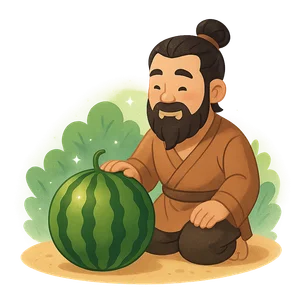
Mai An Tiêm and the Watermelon - Vietnamese
A Vietnamese legend about Mai An Tiêm, a foreign-born slave who rose to prominence in the Hùng King's court…
Reads at Grades 6–8 Listens at Grades 4–8
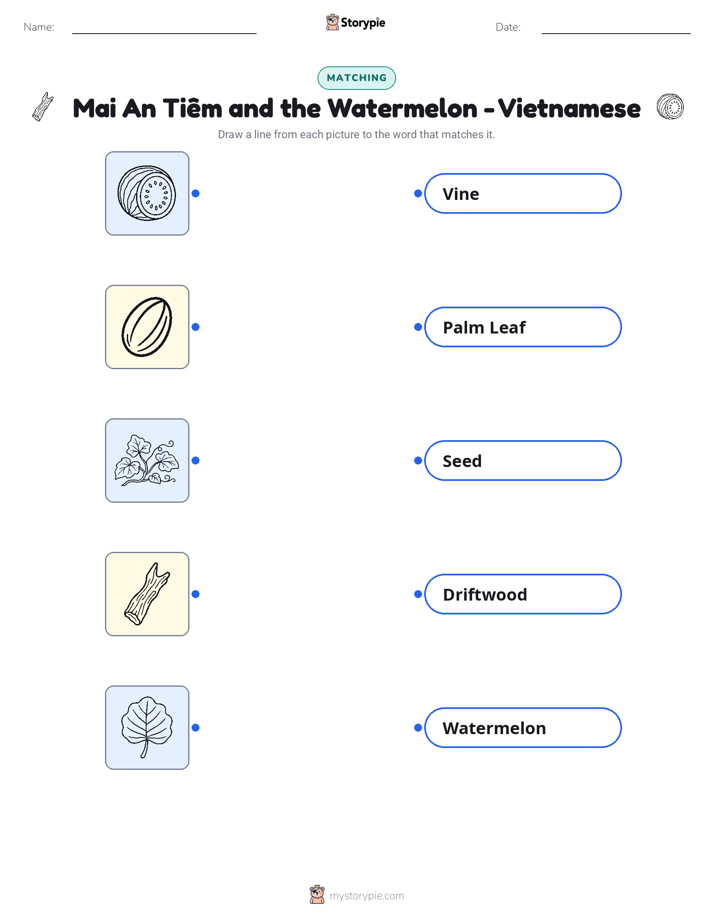
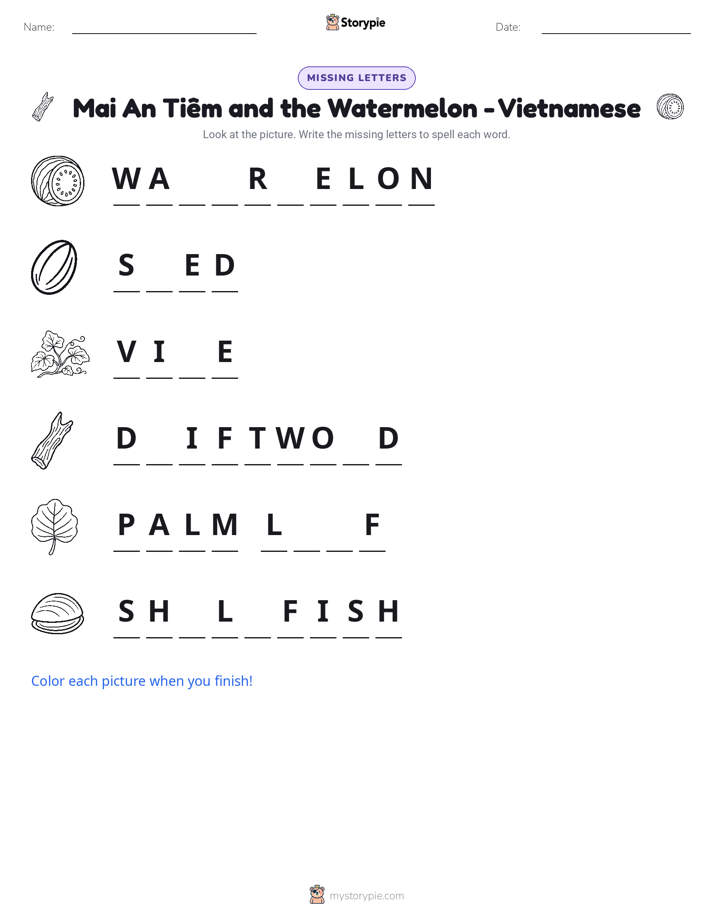
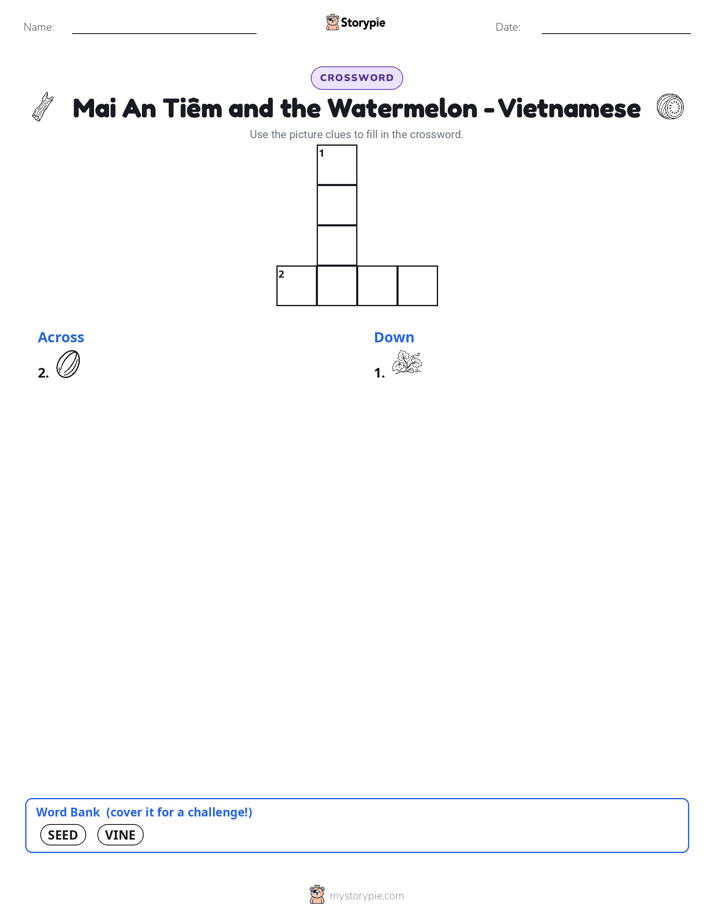
Print & create
Answer keys·No prep·Free with an account
28 worksheets · answer keys · full story · quiz · Ages 10-12 · CEFR B2
Plus adds 164,000+ more stories in 27 languages, audio for every one, and printables for all of them.
Just want Mai An Tiêm and the Watermelon - Vietnamese?
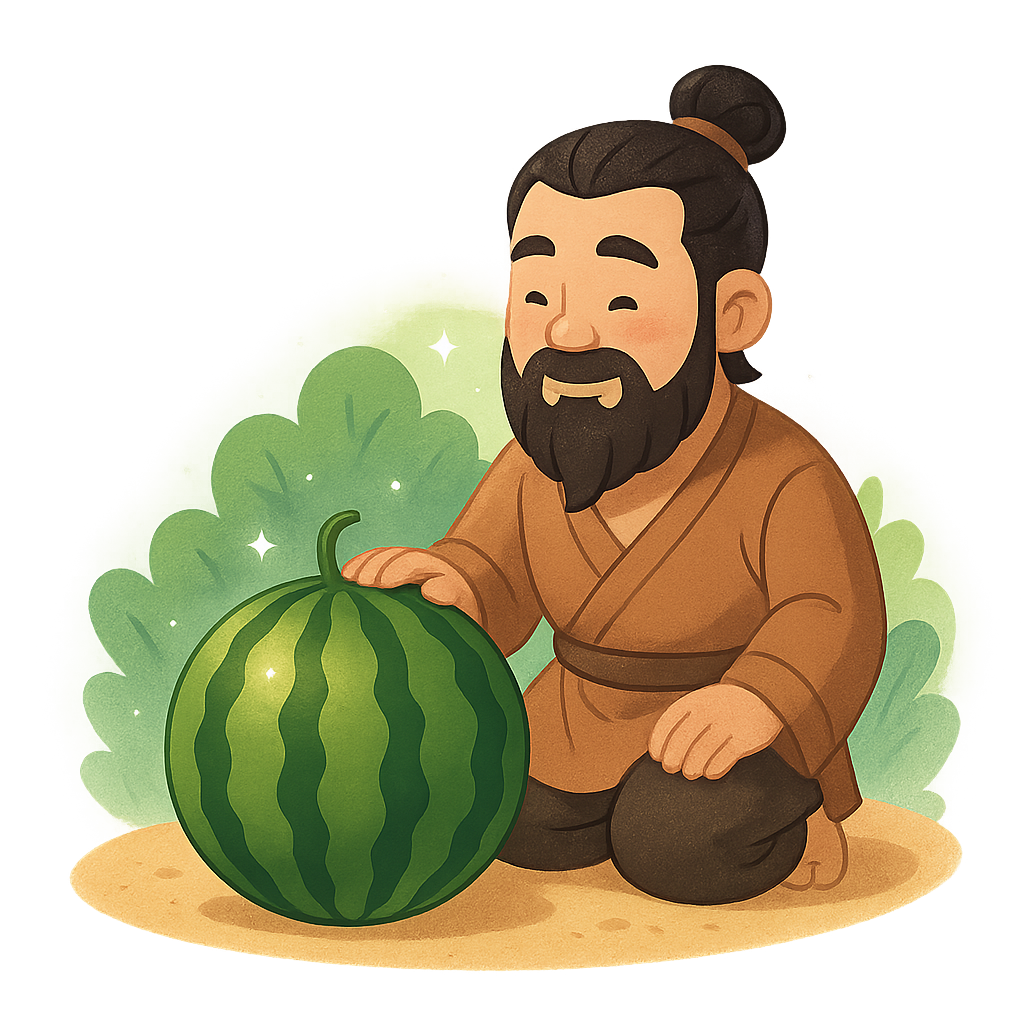
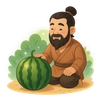
My name is Mai An Tiêm, and I was once the cherished adopted son of the formidable King Hung, living a life of luxury in the kingdom of Văn Lang. Surrounded by silk and endless banquets, I often remarked, “All gifts are but debts. Only what we create with our own two hands is truly ours.” This belief, however, did not sit well with the jealous court officials, who saw it as a sign of arrogance rather than wisdom. This is the story of how my simple philosophy led to my exile and an unexpected discovery, a tale that is now known as the myth of Mai An Tiêm and the Watermelon. The officials, whose own positions depended entirely on the King's favor, began to whisper poisonous words in the King's ear. They twisted my gratitude into insolence, suggesting I believed myself superior to the King’s generosity. “He scoffs at your gifts, Your Majesty,” they would murmur. “He implies that your royal favor is a burden.” Hurt and angered by what he perceived as profound ingratitude, King Hung’s heart hardened against me. One fateful morning on the 5th of March, he summoned me to his throne room. His voice, usually warm, was as cold as stone. “You believe so strongly in the power of your own hands,” the King declared, his voice echoing through the grand hall. “Then let us see if they can sustain you. You and your family are hereby exiled to a barren island. Let your hands provide for you there.”
The Deserted Island and a Mysterious Seed
The royal decree was absolute. My wife, our children, and I were taken by boat to a remote, windswept island and left with only a few basic tools and a small supply of food. The island was a harsh and lonely place. The sun beat down relentlessly, the salty air stung our skin, and the jagged rocks that lined the shore offered little comfort. Behind the rocky coast lay a dense, unfamiliar jungle, filled with strange sounds and shadows. Our first days were a desperate struggle for survival. I worked tirelessly to build a crude shelter from driftwood and palm leaves, while my wife and children scoured the beach for shellfish and edible roots. We were constantly hungry, and despair was a frequent, unwelcome visitor. One afternoon, as I was searching for fresh water, I saw a large flock of seabirds fly overhead. As they passed, one of them dropped something small and dark near my feet. It was a single, black seed, unlike any I had ever seen. A flicker of hope ignited within me. This tiny seed felt like a message from the heavens, a chance. I carefully cleared a small patch of earth, enriched it with seaweed, and planted the mysterious seed. My family and I tended to it with unwavering devotion. We protected the small sprout from the harsh winds and gave it our precious fresh water. Our patience and teamwork were rewarded. The seed grew into a sprawling vine that snaked across the sandy soil, producing large, round, green orbs with faint stripes. We watched them grow, our curiosity and anticipation mounting with each passing day. Were they poisonous? Were they edible? The suspense was almost unbearable. Finally, on a scorching day in late August, we decided we could wait no longer. I took my sharpest tool and carefully sliced one of the heavy orbs in half. We gasped. Inside, the flesh was a brilliant, vibrant red, dotted with black seeds and glistening with sweet juice. Hesitantly, I took a bite. It was the most refreshing, delicious thing I had ever tasted.
The Prince and the Watermelon Seed
My name is Mai An Tiêm, and I was once the cherished adopted son of the formidable King Hung, living a life of luxury in the kingdom of Văn Lang. Surrounded by silk and endless banquets, I often remarked, “All gifts are but debts. Only what we create with our own two hands is truly ours.” This belief, however, did not sit well with the jealous court officials, who saw it as a sign of arrogance rather than wisdom. This is the story of how my simple philosophy led to my exile and an unexpected discovery, a tale that is now known as the myth of Mai An Tiêm and the Watermelon.
The officials, whose own positions depended entirely on the King's favor, began to whisper poisonous words in the King's ear. They twisted my gratitude into insolence, suggesting I believed myself superior to the King’s generosity. “He scoffs at your gifts, Your Majesty,” they would murmur. “He implies that your royal favor is a burden.” Hurt and angered by what he perceived as profound ingratitude, King Hung’s heart hardened against me. One fateful morning on the 5th of March, he summoned me to his throne room. His voice, usually warm, was as cold as stone. “You believe so strongly in the power of your own hands,” the King declared, his voice echoing through the grand hall. “Then let us see if they can sustain you. You and your family are hereby exiled to a barren island. Let your hands provide for you there.”
The Deserted Island and a Mysterious Seed
The royal decree was absolute. My wife, our children, and I were taken by boat to a remote, windswept island and left with only a few basic tools and a small supply of food. The island was a harsh and lonely place. The sun beat down relentlessly, the salty air stung our skin, and the jagged rocks that lined the shore offered little comfort. Behind the rocky coast lay a dense, unfamiliar jungle, filled with strange sounds and shadows. Our first days were a desperate struggle for survival. I worked tirelessly to build a crude shelter from driftwood and palm leaves, while my wife and children scoured the beach for shellfish and edible roots. We were constantly hungry, and despair was a frequent, unwelcome visitor. One afternoon, as I was searching for fresh water, I saw a large flock of seabirds fly overhead. As they passed, one of them dropped something small and dark near my feet. It was a single, black seed, unlike any I had ever seen. A flicker of hope ignited within me. This tiny seed felt like a message from the heavens, a chance. I carefully cleared a small patch of earth, enriched it with seaweed, and planted the mysterious seed. My family and I tended to it with unwavering devotion. We protected the small sprout from the harsh winds and gave it our precious fresh water. Our patience and teamwork were rewarded. The seed grew into a sprawling vine that snaked across the sandy soil, producing large, round, green orbs with faint stripes. We watched them grow, our curiosity and anticipation mounting with each passing day. Were they poisonous? Were they edible? The suspense was almost unbearable. Finally, on a scorching day in late August, we decided we could wait no longer. I took my sharpest tool and carefully sliced one of the heavy orbs in half. We gasped. Inside, the flesh was a brilliant, vibrant red, dotted with black seeds and glistening with sweet juice. Hesitantly, I took a bite. It was the most refreshing, delicious thing I had ever tasted.
A Message in a Melon
We named the marvelous fruit “dưa hấu,” or watermelon, and it transformed our existence. The sweet, watery flesh quenched our thirst and filled our stomachs, providing a reliable source of both food and hydration. Life on the island was no longer a desperate struggle but a manageable challenge. My spirit, which had been battered by hardship, was renewed. My belief in the power of my own hands had been validated. I began to cultivate the watermelons with purpose, clearing more land and carefully planting the seeds from the fruits we ate. Soon, we had a thriving field of watermelons, more than we could ever consume ourselves. Mere survival was not enough for me; I yearned to prove my worth and reconnect with the world I had lost. That was when my ingenuity sparked a new plan. I realized the melons were buoyant and had a tough, durable rind perfect for carving. I began to select the largest, ripest watermelons and carefully carve my name, Mai An Tiêm, and a brief message explaining our location onto their green skins. I wanted the world to know who had grown this incredible fruit. With a prayer on my lips, I would carry the melons to the shore and push them out into the ocean, hoping the currents would guide them into the path of a passing ship. My family would watch with me, our hearts filled with a patient, unwavering hope each time a green messenger bobbed away on the waves, carrying our story out to sea. Many seasons passed, and we sent countless melons on their journey, never knowing if a single one would ever be found.
Return and a Lasting Legacy
One day, a merchant ship sailing far from our island spotted a strange green orb floating in the water. The curious sailors fished it out and were astonished by the markings on its rind. When they cut it open and tasted the sweet, red fruit, they knew they had found something special. They followed the currents, finding more melons, until they eventually reached our island. The merchants reported their discovery to King Hung, presenting him with one of the carved watermelons. Upon seeing my name and hearing the tale of our survival and ingenuity, the King was overwhelmed with a mix of remorse and immense pride. He finally understood that my words had come not from arrogance, but from a deep well of self-reliance and strength. He immediately dispatched a royal vessel to bring us home. Our reunion was emotional. The King embraced me, his eyes filled with tears, and acknowledged the profound wisdom in my philosophy. I returned not as a disgraced exile, but as a hero who had created prosperity from nothing. I introduced the watermelon to the people of Văn Lang, and it quickly became a beloved fruit throughout the kingdom. The story of my ordeal and triumph became a powerful myth, teaching generations of Vietnamese people the values of perseverance, innovation, and the dignity of hard work. To this day, the watermelon is a symbol of good fortune and family togetherness, especially during the Lunar New Year celebration, known as Tết. It serves as a sweet and enduring reminder that even when faced with desolation, one can cultivate their own destiny and that true wealth is grown from one’s own hands and heart.
Wow facts
About
A Vietnamese legend about Mai An Tiêm, a foreign-born slave who rose to prominence in the Hùng King's court, who uses his ingenuity and perseverance to cultivate watermelons, proving the value of self-reliance. Mai An Tiêm was exiled to a remote, uninhabited area surrounded by sea and sand. He discovered watermelon seeds dropped by a white bird from the West and cultivated them.
Take a Quiz
Question 1 of 5
Why did King Hung initially exile Mai An Tiêm, and what does this reveal about the King's character at the start of the story?
Explore next



Want to do even more?
Go beyond exploring. Unlock tools that turn every story into real learning.

Storypie Plus for families
Full stories, quizzes, and printables. Nights and car rides, sorted.
- Unlimited audio stories
- Create Mode: your child stars in the story
- Offline downloads
- Printable worksheets & coloring pages

Why Storypie for Schools
Students engaged. Prep in seconds. Evenings back to you.
- Worksheets & Quizzes
- Classroom Management
- Formative Assessment
- Custom Curriculum & Lesson Plans
- 27 Languages

Why Storypie for Homeschool
Curriculum done. They'll ask for more. Hours back in your day.
- Worksheet Generator
- First-Person Audio Stories
- Built-in Comprehension Quizzes
- Custom Curriculum & Lesson Plans
- Print & Go Activities