English

Pachamama - Andean
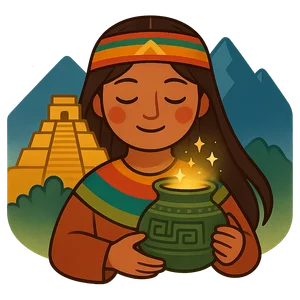
Pachamama is the revered goddess of the earth and fertility in the mythology of the indigenous peoples of the…
Reads at Grades 6–8 Listens at Grades 4–8
Print & create
Answer keys·No prep·Free with an account
28 worksheets · answer keys · full story · quiz · Ages 10-12 · CEFR B2
Plus adds 164,000+ more stories in 27 languages, audio for every one, and printables for all of them.
Just want Pachamama - Andean?
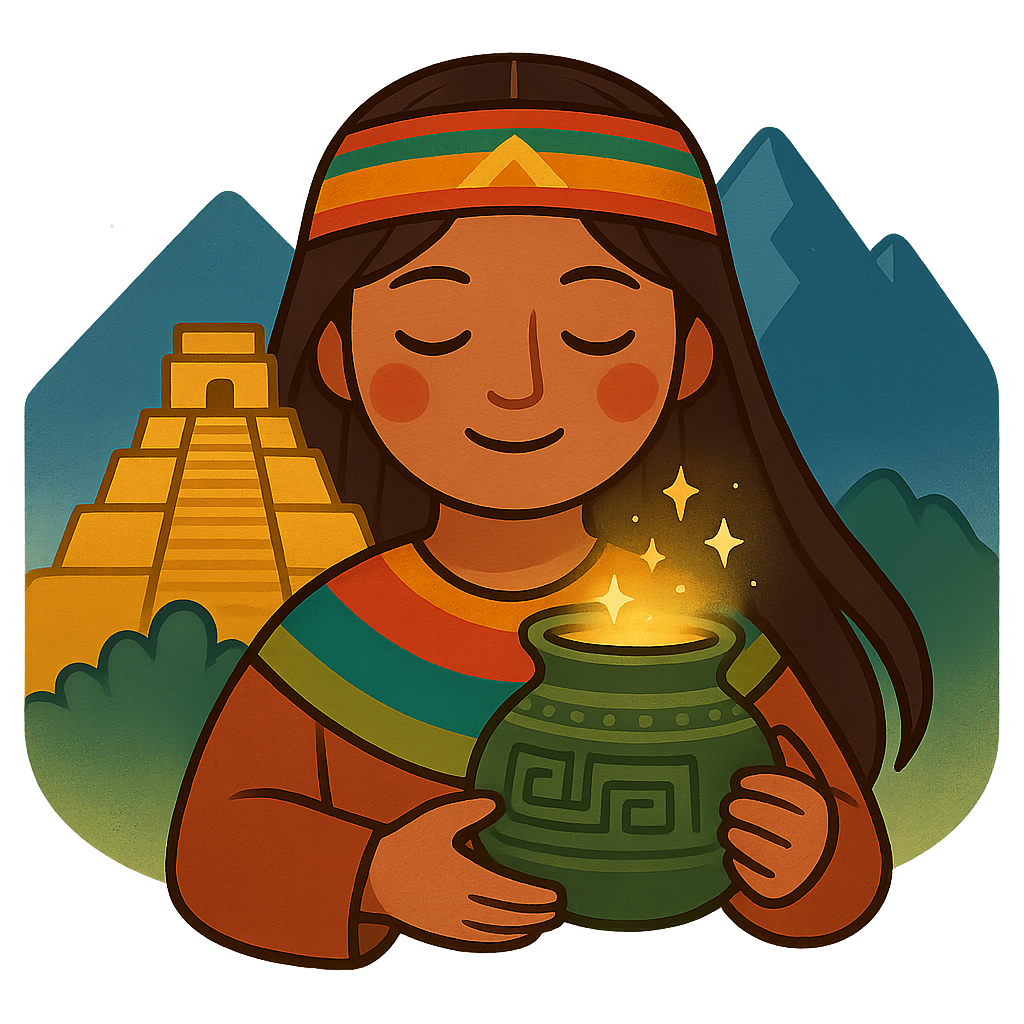
My name is Inti, and I live where the world touches the sky, in a village nestled high in the Andes mountains. The air here is thin and tastes of stone and ice, and the great mountain spirits, the Apus, watch over us with their snowy peaks. Every morning, I feel the solid earth beneath my feet, a warmth that travels up through my sandals, and I know I am not alone. It is a feeling of being held, of being home. My grandmother says this feeling is the hug of our truest mother, the one who gives us everything from the potatoes we eat to the ground we walk on. This is the story of that mother, the spirit of our world, known to my people for longer than anyone can remember. This is the myth of Pachamama.
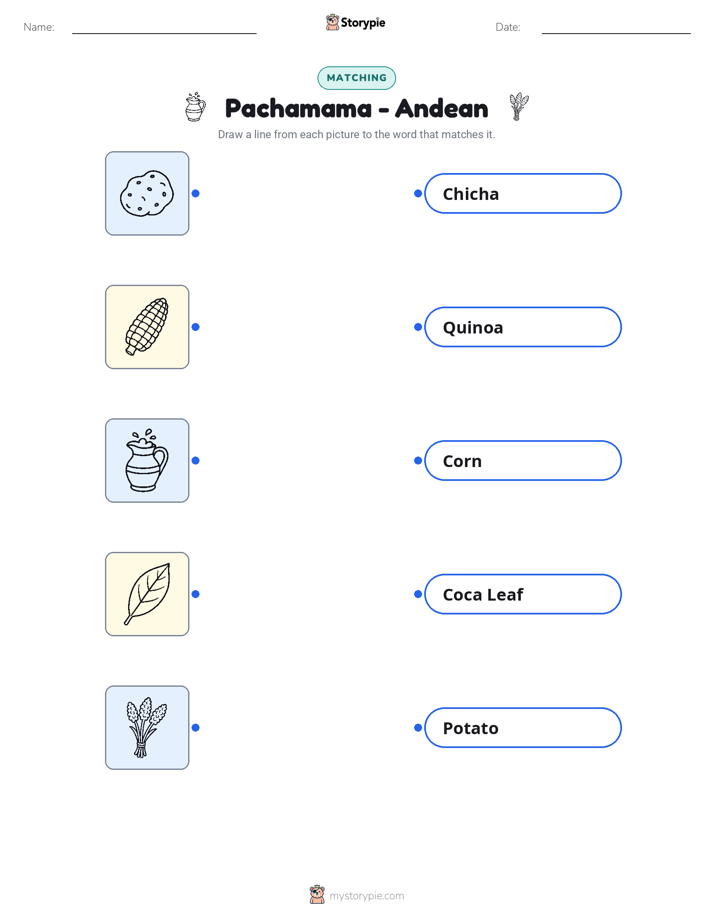
Pachamama is not a character in a faraway tale; she is all around us. She is the dark, rich soil that cradles our seeds, the clay we shape into pots, and the stone that forms our homes. My people have always lived by a sacred rule called 'ayni,' which means reciprocity. It is a promise between us and Pachamama: we care for her, and she cares for us. When it is time to plant, my father does not simply break the ground. First, he kneels, digs a small hole, and 'feeds' the earth. He gives her offerings, called a 'challa,' placing the finest coca leaves, golden kernels of corn, and a splash of chicha, a special drink, into the ground. He whispers his thanks and asks for her blessing to grow strong crops. Throughout the year, we treat the land as a respected elder. We never take more than we need, and we are careful not to harm the streams or the wild vicuñas that graze on the slopes. We understand that Pachamama is generous and nurturing, providing us with food and shelter. But she is also powerful. If people become greedy and take too much without giving back, or if they poison her soil, she can tremble with earthquakes or withhold her life-giving rains, causing droughts. This is not a punishment, but a reminder that we must live in balance. The harvest is a time of great joy. We sing songs as we gather potatoes, quinoa, and corn. And before we take any for ourselves, we offer the very first and best of the harvest back to Pachamama, completing the circle of ayni. It is a beautiful dance of giving and receiving that has sustained us for countless generations.
Pachamama: A Promise with the Earth
My name is Inti, and I live where the world touches the sky, in a village nestled high in the Andes mountains. The air here is thin and tastes of stone and ice, and the great mountain spirits, the Apus, watch over us with their snowy peaks. Every morning, I feel the solid earth beneath my feet, a warmth that travels up through my sandals, and I know I am not alone. It is a feeling of being held, of being home. My grandmother says this feeling is the hug of our truest mother, the one who gives us everything from the potatoes we eat to the ground we walk on. This is the story of that mother, the spirit of our world, known to my people for longer than anyone can remember. This is the myth of Pachamama.
Pachamama is not a character in a faraway tale; she is all around us. She is the dark, rich soil that cradles our seeds, the clay we shape into pots, and the stone that forms our homes. My people have always lived by a sacred rule called 'ayni,' which means reciprocity. It is a promise between us and Pachamama: we care for her, and she cares for us. When it is time to plant, my father does not simply break the ground. First, he kneels, digs a small hole, and 'feeds' the earth. He gives her offerings, called a 'challa,' placing the finest coca leaves, golden kernels of corn, and a splash of chicha, a special drink, into the ground. He whispers his thanks and asks for her blessing to grow strong crops. Throughout the year, we treat the land as a respected elder. We never take more than we need, and we are careful not to harm the streams or the wild vicuñas that graze on the slopes. We understand that Pachamama is generous and nurturing, providing us with food and shelter. But she is also powerful. If people become greedy and take too much without giving back, or if they poison her soil, she can tremble with earthquakes or withhold her life-giving rains, causing droughts. This is not a punishment, but a reminder that we must live in balance. The harvest is a time of great joy. We sing songs as we gather potatoes, quinoa, and corn. And before we take any for ourselves, we offer the very first and best of the harvest back to Pachamama, completing the circle of ayni. It is a beautiful dance of giving and receiving that has sustained us for countless generations.
This way of life, this deep connection to the Earth, is a wisdom that has been passed down long before the great Inca Empire rose and fell. It is a truth whispered on the wind from our ancestors. Every year, on August 1st, my village and communities all across the Andes hold special ceremonies for Pachamama. We build altars, share food, and give thanks for her protection and generosity. It is a day to renew our promise to live in harmony with her. The story of Pachamama has never been more important than it is today. In a world where the environment is in danger, her message of respect and balance inspires people everywhere. You can see her image in vibrant murals on city walls, hear her name in songs of protest and hope, and feel her spirit in the global movement to protect our planet. Pachamama teaches us that the Earth is not just a resource to be used, but a living, breathing being that we are a part of. Her story is a timeless invitation to listen to the world around us, to care for our home, and to remember that we are all her children, connected by the ground beneath our feet. It is a myth that helps us imagine a future where we all live in balance, just as my ancestors did.
Wow facts
About
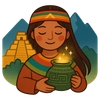
Pachamama is the revered goddess of the earth and fertility in the mythology of the indigenous peoples of the Andes. She is seen as the all-encompassing Mother Earth who provides life, sustenance, and protection, and to whom respect and reciprocity are owed.
Take a Quiz
Question 1 of 5
Why does Inti's father give offerings to the earth before planting crops?
Explore next


Want to do even more?
Go beyond exploring. Unlock tools that turn every story into real learning.

Storypie Plus for families
Full stories, quizzes, and printables. Nights and car rides, sorted.
- Unlimited audio stories
- Create Mode: your child stars in the story
- Offline downloads
- Printable worksheets & coloring pages

Why Storypie for Schools
Students engaged. Prep in seconds. Evenings back to you.
- Worksheets & Quizzes
- Classroom Management
- Formative Assessment
- Custom Curriculum & Lesson Plans
- 27 Languages

Why Storypie for Homeschool
Curriculum done. They'll ask for more. Hours back in your day.
- Worksheet Generator
- First-Person Audio Stories
- Built-in Comprehension Quizzes
- Custom Curriculum & Lesson Plans
- Print & Go Activities