English


Popocatépetl and Iztaccíhuatl - Mexican
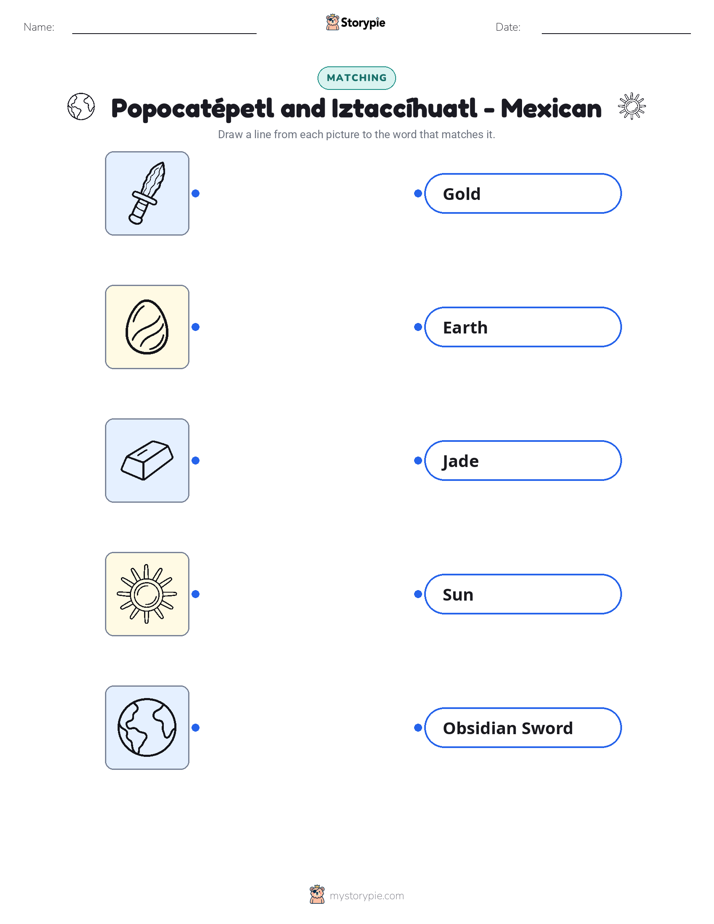
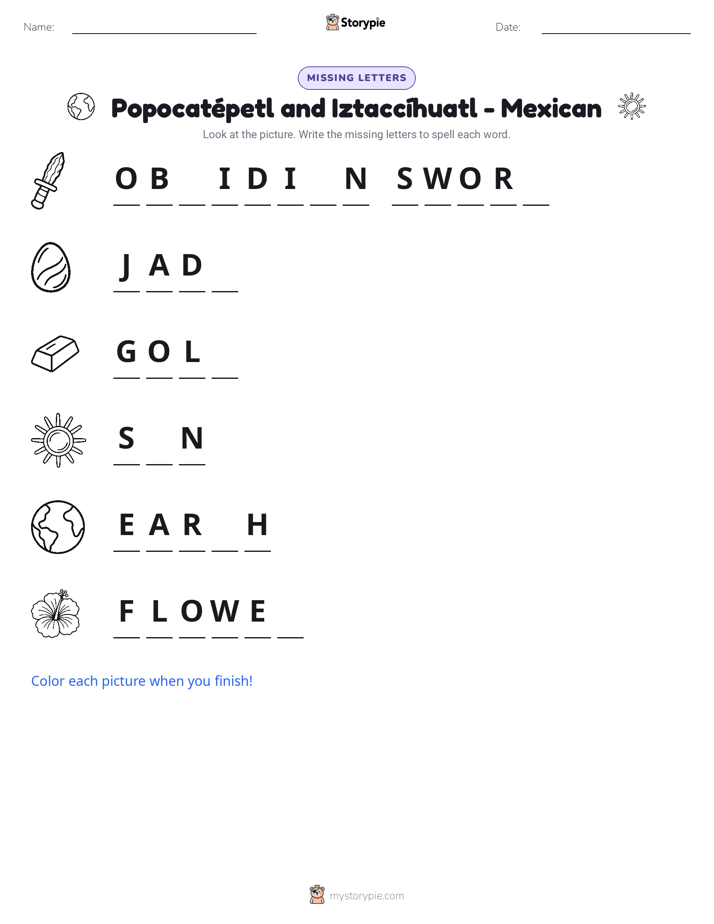
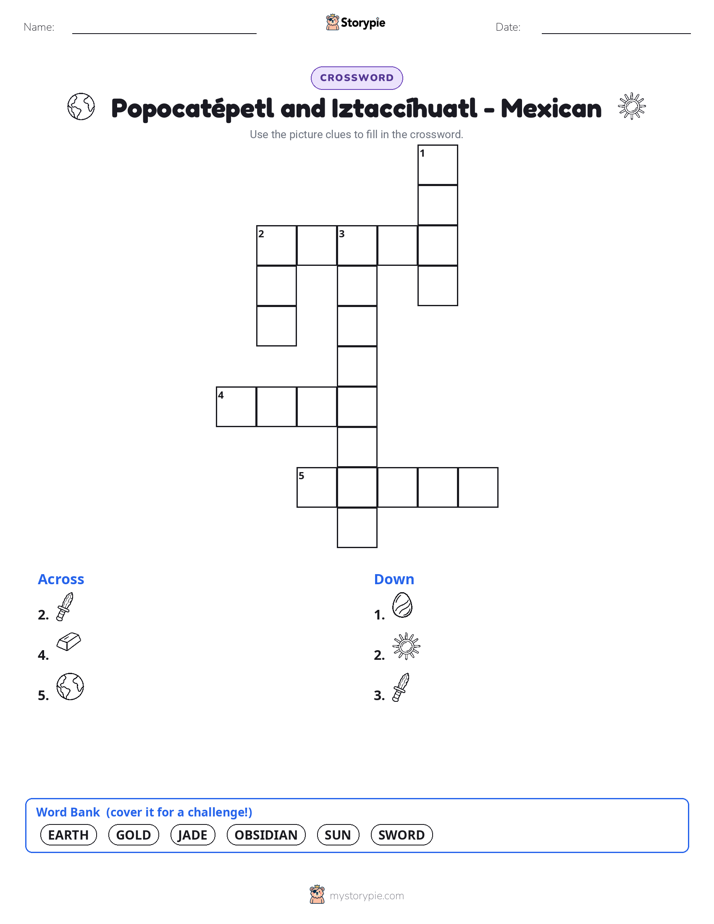
An Aztec myth from Mexico explaining the origin of the Popocatépetl and Iztaccíhuatl volcanoes…
Reads at Grades 6–8 Listens at Grades 4–8
Print & create
Answer keys·No prep·Free with an account
28 worksheets · answer keys · full story · quiz · Ages 10-12 · CEFR B2
Plus adds 164,000+ more stories in 27 languages, audio for every one, and printables for all of them.
Just want Popocatépetl and Iztaccíhuatl - Mexican?
My name is Popocatépetl. From where I stand, my breath rises like smoke in the crisp mountain air, a constant sigh for the love I keep watch over. Long before I was a mountain of fire and stone, I was a warrior in the flourishing Aztec empire, where my heart belonged to the beautiful Princess Iztaccíhuatl. Her name meant "White Woman," and she was as serene and graceful as the snowy peaks that touched the sky. Our story is one of loyalty and sorrow, a tale etched into the very landscape of Mexico, known as the myth of Popocatépetl and Iztaccíhuatl. It began when her father, the great emperor, saw the love between us. He was a stern but fair ruler, and he knew I was one of his most trusted warriors. He promised me her hand in marriage, a treasure more valuable than all the jade and gold in his kingdom, but there was a condition. I had to prove my valor in a distant war against our enemies and return victorious. The challenge was immense, but for Iztaccíhuatl, I would have faced the entire world. My heart soared with hope, even as the shadow of the coming conflict loomed over us.
The day of my departure arrived far too quickly. I found Iztaccíhuatl in the palace gardens, where the vibrant colors of the flowers seemed to pale in her presence. “I will return,” I vowed, taking her hands in mine. “I swear upon the sun and the earth that I will come back for you. Wait for me.” Her eyes, deep as cenotes, filled with tears, but her voice was steady. “My heart goes with you, Popocatépetl. Fight with courage, and return to me a hero.” That promise became the shield around my heart. In the thick of battle, amidst the clash of obsidian-edged swords and the war cries of my men, her face was a beacon. I fought with the strength of ten warriors, driven by the thought of our future together. We faced formidable foes, but my leadership and the bravery of my soldiers were unyielding. After many long months, victory was finally ours. We had secured the empire’s borders, and I was hailed as a hero. My thoughts were consumed with returning to Tenochtitlan, to Iztaccíhuatl, to the life we would build. But while I was fighting for our future, a venomous seed of jealousy was being planted back home. Another warrior, one who had long coveted my position and the princess’s affection, saw his opportunity. He was a coward at heart, choosing deceit over valor. He fled the final battle and raced back to the capital, arriving weeks before me. He presented himself to the emperor, cloaked in false sorrow. “Popocatépetl was a brave warrior,” he announced to the court, his voice ringing with feigned grief. “He fell in a final, glorious charge. I saw it myself.” The lie spread through the city like a plague. When the terrible news reached my beloved Iztaccíhuatl, her world crumbled. She refused to eat, to speak, to believe that the light of our love had been extinguished. But the lie was relentless, and her heart, unable to bear the weight of such sorrow, simply gave out. She fell into a deep sleep from which she would never awaken. I, meanwhile, was marching home, my spirit soaring. The journey was long, but every step brought me closer to her. I imagined her smile, the celebration, the moment the emperor would finally call me his son. I had no idea that I was walking toward the greatest silence of my life.
The Myth of Popocatépetl and Iztaccíhuatl
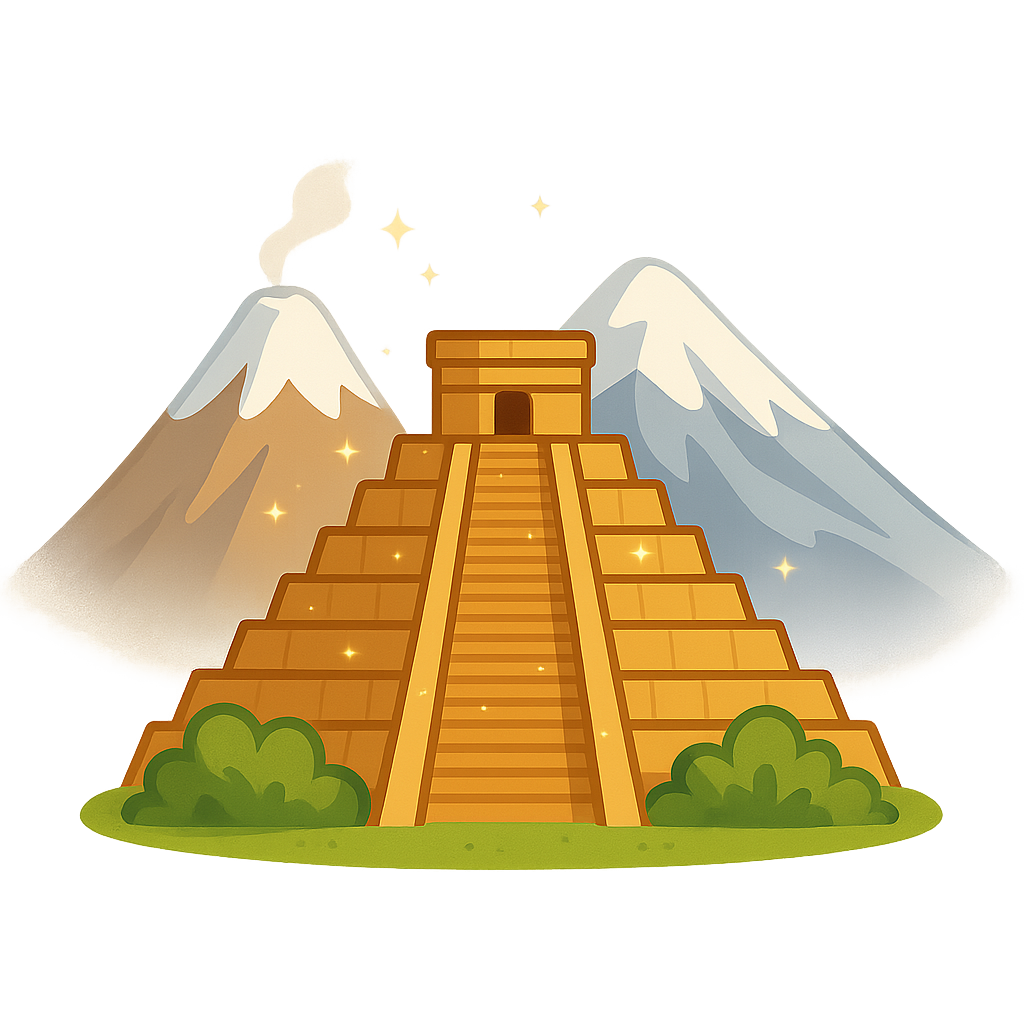
My name is Popocatépetl. From where I stand, my breath rises like smoke in the crisp mountain air, a constant sigh for the love I keep watch over. Long before I was a mountain of fire and stone, I was a warrior in the flourishing Aztec empire, where my heart belonged to the beautiful Princess Iztaccíhuatl. Her name meant "White Woman," and she was as serene and graceful as the snowy peaks that touched the sky. Our story is one of loyalty and sorrow, a tale etched into the very landscape of Mexico, known as the myth of Popocatépetl and Iztaccíhuatl. It began when her father, the great emperor, saw the love between us. He was a stern but fair ruler, and he knew I was one of his most trusted warriors. He promised me her hand in marriage, a treasure more valuable than all the jade and gold in his kingdom, but there was a condition. I had to prove my valor in a distant war against our enemies and return victorious. The challenge was immense, but for Iztaccíhuatl, I would have faced the entire world. My heart soared with hope, even as the shadow of the coming conflict loomed over us.
The day of my departure arrived far too quickly. I found Iztaccíhuatl in the palace gardens, where the vibrant colors of the flowers seemed to pale in her presence. “I will return,” I vowed, taking her hands in mine. “I swear upon the sun and the earth that I will come back for you. Wait for me.” Her eyes, deep as cenotes, filled with tears, but her voice was steady. “My heart goes with you, Popocatépetl. Fight with courage, and return to me a hero.” That promise became the shield around my heart. In the thick of battle, amidst the clash of obsidian-edged swords and the war cries of my men, her face was a beacon. I fought with the strength of ten warriors, driven by the thought of our future together. We faced formidable foes, but my leadership and the bravery of my soldiers were unyielding. After many long months, victory was finally ours. We had secured the empire’s borders, and I was hailed as a hero. My thoughts were consumed with returning to Tenochtitlan, to Iztaccíhuatl, to the life we would build. But while I was fighting for our future, a venomous seed of jealousy was being planted back home. Another warrior, one who had long coveted my position and the princess’s affection, saw his opportunity. He was a coward at heart, choosing deceit over valor. He fled the final battle and raced back to the capital, arriving weeks before me. He presented himself to the emperor, cloaked in false sorrow. “Popocatépetl was a brave warrior,” he announced to the court, his voice ringing with feigned grief. “He fell in a final, glorious charge. I saw it myself.” The lie spread through the city like a plague. When the terrible news reached my beloved Iztaccíhuatl, her world crumbled. She refused to eat, to speak, to believe that the light of our love had been extinguished. But the lie was relentless, and her heart, unable to bear the weight of such sorrow, simply gave out. She fell into a deep sleep from which she would never awaken. I, meanwhile, was marching home, my spirit soaring. The journey was long, but every step brought me closer to her. I imagined her smile, the celebration, the moment the emperor would finally call me his son. I had no idea that I was walking toward the greatest silence of my life.
The gates of Tenochtitlan opened to me not with cheers, but with a somber, unnerving quiet. The people stared with pity in their eyes. I strode into the throne room, my armor still dusty from the road, expecting to see the emperor and my love. Instead, I saw the emperor, his face a mask of tragedy, and the treacherous rival standing smugly at his side. “Where is Iztaccíhuatl?” I demanded, my joyous anticipation curdling into dread. The emperor’s words were heavy stones that crushed my soul. “She is gone, Popocatépetl. We were told you had fallen in battle… her grief was too much to bear.” The rival’s lie was revealed, and though he was banished for his treachery, it was no comfort. My victory felt like ash in my mouth. The world lost all its color and sound. The emperor, filled with remorse, offered me the throne as promised. “You are the greatest warrior in our empire,” he declared. “Rule beside me.” But I wanted no throne, no glory, no empire. My world had been Iztaccíhuatl, and without her, it was an empty wasteland. I shook my head, my voice hollow. “I want only her.” I went to the chamber where she lay, looking as if she were merely asleep, a pale flower untouched by death. A great and terrible purpose filled me. I gently lifted her into my arms, her body as light as a memory, and carried her out of the city, away from the whispers and the pity. For days I walked, climbing higher and higher into the cold, silent mountains that touched the clouds. There, amidst the grandest peaks, I commanded my most loyal men to build a colossal tomb, a mountain of stone for my princess. We laid her upon its summit, facing the sky. Then, on an adjacent, even taller peak, I took my stand. I lit a torch, its smoke a prayer to the heavens. “I will watch over her,” I swore to the silent stars. “My fire will never go out. I will stand guard for all eternity.” The gods, watching from their celestial thrones, were moved by a love so profound it defied even death. They looked down upon my lonely vigil and decided that such devotion should never be forgotten. With a gentle, cosmic sigh, they cloaked us in earth and snow, transforming us. Iztaccíhuuatl’s resting place became a dormant volcano, her form forever etched against the sky like a sleeping woman. And I became the mighty volcano Popocatépetl, the “Smoking Mountain.” My torch became my crater, forever sending plumes of smoke and ash into the sky—a sign that I am still here, still awake, still watching over my beloved.
And so, I stand here still. To this day, the two volcanoes stand tall in the Valley of Mexico, a breathtaking testament to eternal love and loyalty. My periodic rumbles are the sighs of my unending grief, and the smoke that rises from my peak is the flame of my eternal torch. Our story has been passed down through generations of Aztecs, and later, the people of Mexico, inspiring countless poems, paintings, and songs. It teaches a lesson that echoes through the ages: that true love is a force powerful enough to reshape the world itself, to turn warriors and princesses into mountains. Our legend invites you to look at the landscape not just as rock and snow, but as a story of devotion. So when you see my plume of smoke against the blue sky, know that it is not just geology at work. It is the heart of a warrior, still burning, still watching, still waiting. The greatest legends are not just told; they are lived, written in the heart and on the earth itself, continuing to spark wonder for all who see them.
Wow facts
About
An Aztec myth from Mexico explaining the origin of the Popocatépetl and Iztaccíhuatl volcanoes, personifying them as a warrior and a princess whose tragic love story transformed them into mountains.
Take a Quiz
Question 1 of 5
Why did the rival warrior lie about Popocatépetl's death?
Explore next






Want to do even more?
Go beyond exploring. Unlock tools that turn every story into real learning.

Storypie Plus for families
Full stories, quizzes, and printables. Nights and car rides, sorted.
- Unlimited audio stories
- Create Mode: your child stars in the story
- Offline downloads
- Printable worksheets & coloring pages

Why Storypie for Schools
Students engaged. Prep in seconds. Evenings back to you.
- Worksheets & Quizzes
- Classroom Management
- Formative Assessment
- Custom Curriculum & Lesson Plans
- 27 Languages

Why Storypie for Homeschool
Curriculum done. They'll ask for more. Hours back in your day.
- Worksheet Generator
- First-Person Audio Stories
- Built-in Comprehension Quizzes
- Custom Curriculum & Lesson Plans
- Print & Go Activities