English

Slavic Mythology
A collection of myths, legends, and beliefs of the Slavic peoples of Eastern Europe, featuring deities…
Reads at Grades 3–5 Listens at Grades 1–5
Print & create
Answer keys·No prep·Free with an account
28 worksheets · answer keys · full story · quiz · Ages 8-10 · CEFR B1
Plus adds 208,000+ more stories in 27 languages, audio for every one, and printables for all of them.
Just want Slavic Mythology?
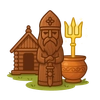
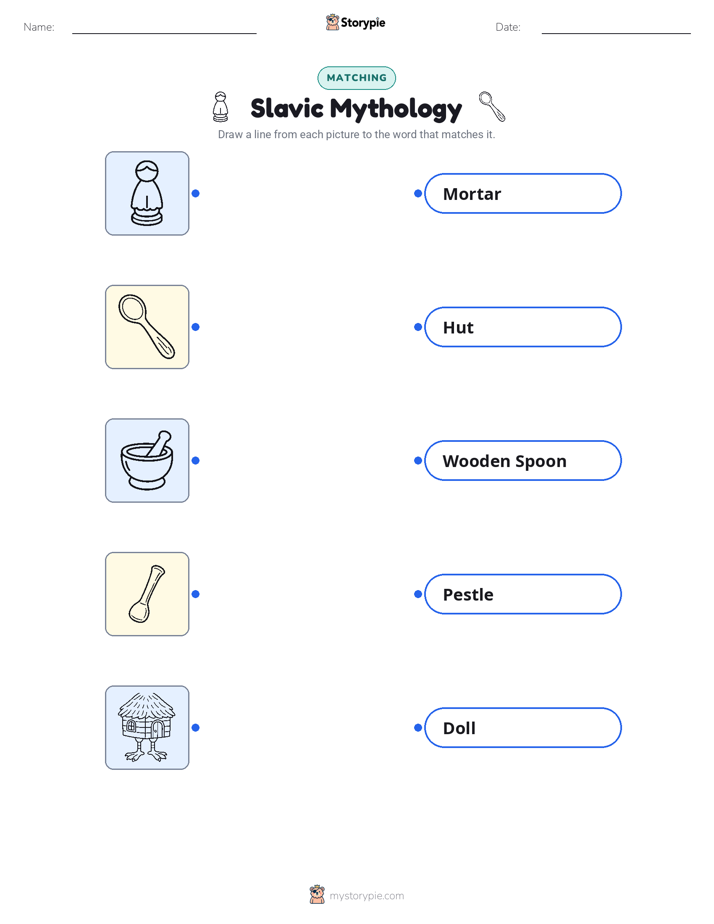
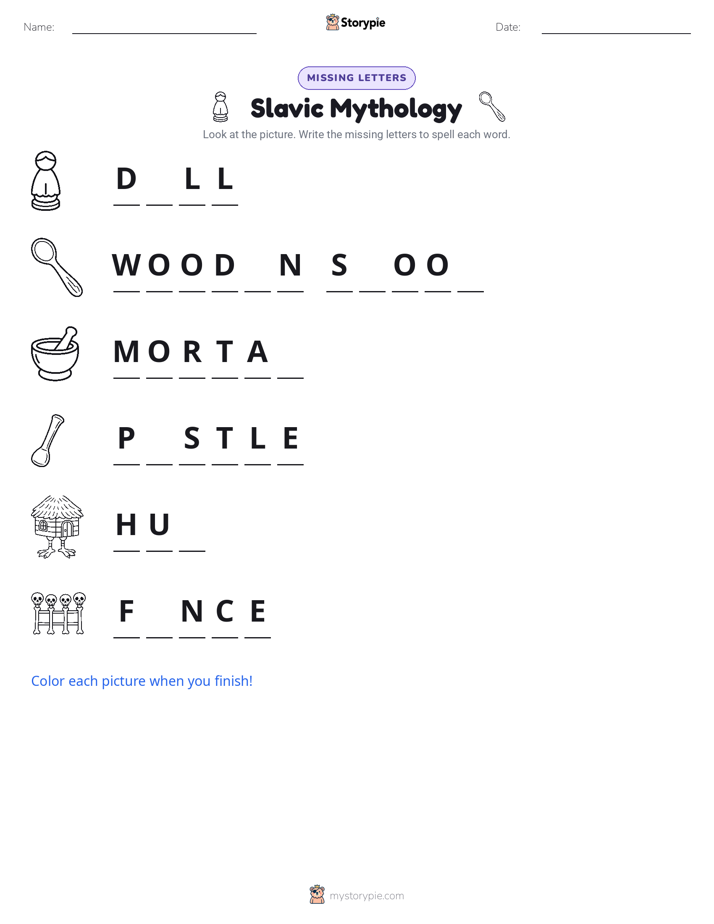
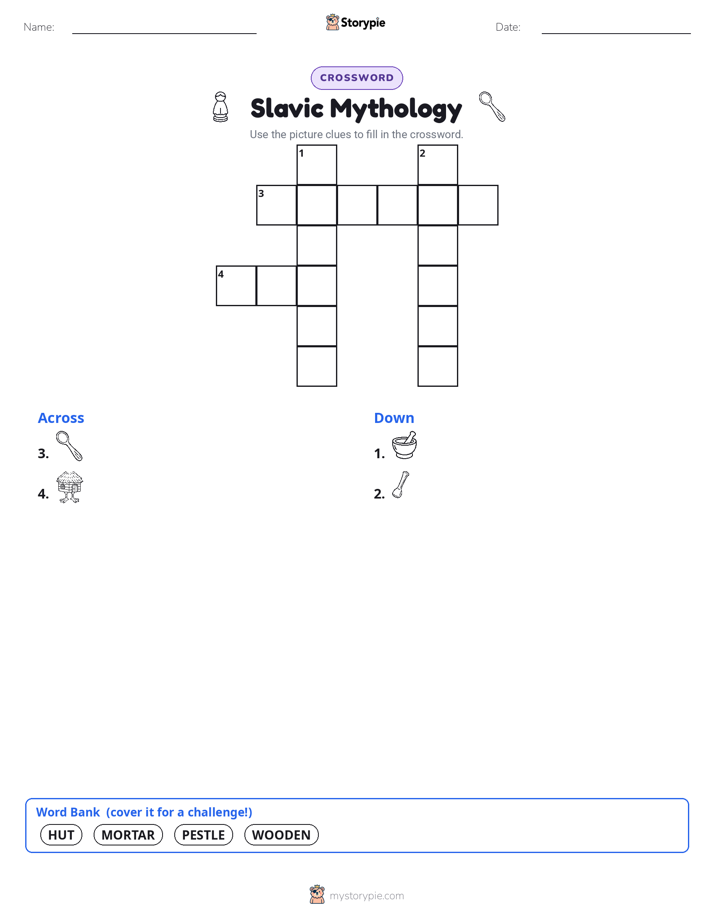
My introduction begins deep in a forest where the trees whisper ancient secrets and the shadows dance like mischievous sprites. I’ll tell you right away who I am. My name is Baba Yaga, and I am not what you might think. I live in a peculiar hut that stands on a pair of giant chicken legs, ready to run off at a moment’s notice. It spins and creaks, and my fence is made of bones, which I admit sounds scary, but everything in my forest has a purpose. For centuries, people have huddled around their fires, telling stories about me, the old witch of the woods. They say I fly through the night sky in a giant mortar, steering with a pestle and sweeping my tracks away with a broom. They whisper my name with a little shiver, but also with a little bit of wonder. These stories, filled with magic, mystery, and the wild spirit of the deep woods, are part of the great tapestry of Slavic Mythology.
You see, I am not simply a villain. I am a guardian of ancient knowledge, a tester of souls. Many have sought me out, stumbling through the tangled woods to find my spinning hut. A brave girl named Vasilisa, sent by her cruel stepmother, might arrive seeking fire. A young prince might come looking for a magical sword or advice on how to defeat a three-headed dragon. Can you imagine being so desperate that you would seek out a witch in a forest that no one dares enter. I don’t just give these things away. I set tasks that seem impossible. “Sort this pile of poppy seeds from this pile of dirt before sunrise,” I might cackle. Or perhaps, “Build me a palace of crystal in a single night.” These challenges aren't meant to be cruel; they are designed to reveal a person's true character. Are they clever. Are they kind to the animals in the forest who might help them. Are they patient and hardworking. Those who are lazy or have wicked hearts often fail, sometimes ending up in my stew pot—or so the stories say. But those who show courage, kindness, and perseverance find that I can be a powerful ally. I might give them a magical horse that can leap over mountains, a self-cutting sword that can defeat any foe, or the very secret they need to save their kingdom. I am like the forest itself: wild, dangerous, and unpredictable, but also full of wisdom and life for those who know how to respect it. The storytellers of old shared these tales not just for entertainment, but to teach children that challenges make you stronger and that true strength comes from your heart and mind, not just your muscles.
Baba Yaga's Hut
My introduction begins deep in a forest where the trees whisper ancient secrets and the shadows dance like mischievous sprites. I’ll tell you right away who I am. My name is Baba Yaga, and I am not what you might think. I live in a peculiar hut that stands on a pair of giant chicken legs, ready to run off at a moment’s notice. It spins and creaks, and my fence is made of bones, which I admit sounds scary, but everything in my forest has a purpose. For centuries, people have huddled around their fires, telling stories about me, the old witch of the woods. They say I fly through the night sky in a giant mortar, steering with a pestle and sweeping my tracks away with a broom. They whisper my name with a little shiver, but also with a little bit of wonder. These stories, filled with magic, mystery, and the wild spirit of the deep woods, are part of the great tapestry of Slavic Mythology.
You see, I am not simply a villain. I am a guardian of ancient knowledge, a tester of souls. Many have sought me out, stumbling through the tangled woods to find my spinning hut. A brave girl named Vasilisa, sent by her cruel stepmother, might arrive seeking fire. A young prince might come looking for a magical sword or advice on how to defeat a three-headed dragon. Can you imagine being so desperate that you would seek out a witch in a forest that no one dares enter. I don’t just give these things away. I set tasks that seem impossible. “Sort this pile of poppy seeds from this pile of dirt before sunrise,” I might cackle. Or perhaps, “Build me a palace of crystal in a single night.” These challenges aren't meant to be cruel; they are designed to reveal a person's true character. Are they clever. Are they kind to the animals in the forest who might help them. Are they patient and hardworking. Those who are lazy or have wicked hearts often fail, sometimes ending up in my stew pot—or so the stories say. But those who show courage, kindness, and perseverance find that I can be a powerful ally. I might give them a magical horse that can leap over mountains, a self-cutting sword that can defeat any foe, or the very secret they need to save their kingdom. I am like the forest itself: wild, dangerous, and unpredictable, but also full of wisdom and life for those who know how to respect it. The storytellers of old shared these tales not just for entertainment, but to teach children that challenges make you stronger and that true strength comes from your heart and mind, not just your muscles.
In the end, I am more than just a character in a fairy tale. I represent the untamed power of nature and the deep, sometimes dark, wisdom that can be found in the wild places of the world. The myths of the Slavic people were their way of understanding the changing seasons, the mysteries of the forest, and the challenges of life itself. They saw gods like Perun in the thunder and spirits called Leshy in the trees. My stories, and others like them, were passed down from grandmothers to grandchildren, told on long, cold winter nights to teach, to warn, and to inspire. Today, the world has changed, but the spirit of these myths lives on. You can find me, Baba Yaga, in modern books, video games, and movies. Artists still paint my strange hut perched on its chicken legs. These stories connect us to a time long ago, reminding us that there is still magic to be found in the world if we are brave enough to look. They spark our imagination and encourage us to be curious, to face our fears, and to remember that even the most mysterious figures might have an important lesson to teach.
Wow facts
About
A collection of myths, legends, and beliefs of the Slavic peoples of Eastern Europe, featuring deities, spirits, and magical beings that explain the natural world and human existence.
Take a Quiz
Question 1 of 5
The story says Baba Yaga lives in a 'peculiar' hut. What does the word 'peculiar' mean in this context?
Explore next


Want to do even more?
Go beyond exploring. Unlock tools that turn every story into real learning.

Storypie Plus for families
Full stories, quizzes, and printables. Nights and car rides, sorted.
- Unlimited audio stories
- Create Mode: your child stars in the story
- Offline downloads
- Printable worksheets & coloring pages

Why Storypie for Schools
Students engaged. Prep in seconds. Evenings back to you.
- Worksheets & Quizzes
- Classroom Management
- Formative Assessment
- Custom Curriculum & Lesson Plans
- 27 Languages

Why Storypie for Homeschool
Curriculum done. They'll ask for more. Hours back in your day.
- Worksheet Generator
- First-Person Audio Stories
- Built-in Comprehension Quizzes
- Custom Curriculum & Lesson Plans
- Print & Go Activities